Table of Contents >> Show >> Hide
- What Does “That’s Fine” Mean?
- Why “That’s Fine” Can Be So Hard to Read
- When “That’s Fine” Sounds Neutral or Positive
- When “That’s Fine” Sounds Annoyed, Cold, or Passive-Aggressive
- How Tone Changes the Meaning
- Using “That’s Fine” in Texts, Emails, and Everyday Conversation
- Similar Phrases to Use Instead of “That’s Fine”
- When You Should Avoid Saying “That’s Fine”
- How to Tell What Someone Means When They Say “That’s Fine”
- Example Sentences by Situation
- How to Use “That’s Fine” Without Sounding Rude
- Final Thoughts
- Experiences Related to “That’s Fine” Meaning, Usage, & Similar Phrases
Note: This is HTML body content only, ready to copy and publish on the web.
“That’s fine” is one of those everyday English phrases that looks harmless, sounds simple, and somehow still manages to start tiny emotional earthquakes. On paper, it seems easy. In real life, though? It can mean yes, I accept that, I’m not thrilled but okay, please stop talking, or the legendary classic: I am absolutely not fine, but congratulations on your confidence.
That’s why this phrase is so useful and so risky at the same time. It lives in that crowded little neighborhood between politeness, indifference, and frustration. If you use it well, it sounds calm and flexible. If you use it badly, it can sound cold, annoyed, dismissive, or secretly dramatic without even trying.
In this guide, we’ll break down what “that’s fine” really means, how people use it in conversation, when it sounds friendly, when it sounds passive-aggressive, and which similar phrases work better depending on the situation. Think of this as a phrase tune-up for your texts, emails, casual chats, and workplace messages.
What Does “That’s Fine” Mean?
At its core, “that’s fine” means something is acceptable, satisfactory, or good enough to proceed. It usually signals that the speaker is willing to accept an idea, plan, change, or outcome. In the simplest version, it means: “I’m okay with that.”
Here are the most common meanings:
1. Acceptance
This is the most neutral meaning. Someone suggests an option, and you approve it.
Example: “We can meet at 3 instead of 2.”
“That’s fine.”
2. Mild approval
Sometimes the phrase means the choice is not amazing, but it works well enough.
Example: “We only have seats near the back.”
“That’s fine.”
3. Reluctant agreement
In some cases, the speaker accepts something without much enthusiasm. This version often depends on voice, facial expression, or punctuation.
Example: “I can’t help until tomorrow.”
“That’s fine.”
4. Conversation shutdown
Sometimes “that’s fine” is less about agreement and more about ending a discussion. It can act like a polite lid on a boiling pot.
Example: “I already made the decision.”
“That’s fine.”
So yes, the phrase is simple. But it is not always transparent. It often depends on the hidden extras: tone of voice, relationship, context, and timing.
Why “That’s Fine” Can Be So Hard to Read
Language is not just about dictionary meaning. It is also about how words land. “That’s fine” is a perfect example of a phrase whose literal meaning and social meaning can drift apart.
For instance, if a friend says, “I forgot to bring your charger,” and you reply, “That’s fine!” with a smile, it sounds forgiving and easygoing. But if you text back, “That’s fine.” after waiting three hours, the period alone may feel like it is wearing sunglasses indoors and refusing to elaborate.
That’s because short phrases leave room for interpretation. When people do not hear your voice or see your face, they fill in the emotional blanks themselves. And humans, being wonderfully chaotic, often fill them in with suspicion.
In other words, “that’s fine” is not confusing because the words are hard. It is confusing because the emotion behind the words is often unstated.
When “That’s Fine” Sounds Neutral or Positive
Used in the right moment, “that’s fine” is perfectly normal. It can sound calm, cooperative, and low-pressure. This is especially true when the issue is small and the speaker genuinely has no objection.
Common neutral uses
- Agreeing to a schedule change
- Accepting a minor inconvenience
- Approving a suggestion
- Showing flexibility in casual conversation
Examples:
- “Can I call you later tonight?” “That’s fine.”
- “I’ll send the file in the morning.” “That’s fine.”
- “Do you want soup instead of salad?” “That’s fine.”
In these cases, the phrase works because the stakes are low and the tone is clear. Nobody is reading it like a courtroom transcript. It simply means the speaker is okay with what was proposed.
When “That’s Fine” Sounds Annoyed, Cold, or Passive-Aggressive
Now we enter the danger zone.
“That’s fine” can sound passive-aggressive when the speaker appears to be accepting something outwardly while communicating disappointment, irritation, or emotional distance underneath. It is the verbal equivalent of closing a door very gently, yet somehow making it feel loud.
Signs the phrase may sound negative
- It follows a conflict or disagreement
- It appears in a short text with no extra context
- The speaker has a flat or clipped tone
- It ends the conversation abruptly
- The situation matters more than the phrase suggests
Examples:
- “Sorry I canceled again.” “That’s fine.”
- “I already invited someone else.” “That’s fine.”
- “I forgot what you asked me to do.” “That’s fine.”
In all three examples, the literal message is acceptance. But the emotional message may be closer to: “I’m upset, but I’m not getting into it right now.” That’s why the phrase can feel sharp even when it is technically polite.
How Tone Changes the Meaning
Say the same two words in five different ways, and you can create five different realities. That is the magic trick and the trap.
Compare these versions
- “That’s fine!” upbeat, reassuring, friendly
- “That’s fine.” neutral, formal, or chilly depending on context
- “That’s… fine.” hesitant, doubtful, possibly unhappy
- “That’s fine, no worries.” warm and forgiving
- “That’s fine, I guess.” reluctant, mildly dissatisfied
This is why context matters so much. In speech, intonation helps. In writing, punctuation, timing, and word choice do the heavy lifting. A fast reply may seem casual. A delayed one-word answer may feel loaded. The phrase itself has not changed, but the interpretation definitely has.
Using “That’s Fine” in Texts, Emails, and Everyday Conversation
In text messages
Texts are where “that’s fine” gets into trouble most often. Because texting removes vocal tone, people notice punctuation, emojis, and word count more than usual.
Safer texting versions:
- That’s fine!
- That’s totally fine
- No worries, that’s fine
- That works for me
These versions sound warmer because they reduce ambiguity. They make it harder for the reader to assume irritation.
In emails
In professional settings, “that’s fine” is acceptable, but it can sound blunt if the rest of the email is short. Workplace writing usually benefits from a little extra clarity.
Better email alternatives:
- That works for me.
- No problem at all.
- I’m fine with that plan.
- That sounds good, thank you.
- I’m happy to proceed with that approach.
These options keep the meaning while sounding more deliberate and professional.
In face-to-face conversation
Spoken conversation is more forgiving because body language helps people understand you. A smile, relaxed voice, or nod can turn “that’s fine” into a perfectly friendly response. A tight jaw and crossed arms can turn it into the opening credits of a difficult evening.
Similar Phrases to Use Instead of “That’s Fine”
If you want more precision, choose a phrase that matches your real intention. Here are some useful alternatives.
Friendly and casual alternatives
- No worries warm, relaxed, forgiving
- All good casual and upbeat
- Works for me clear and cooperative
- Sure, that’s okay soft and flexible
- No problem easygoing and common
Professional alternatives
- That works well polished and neutral
- I’m okay with that direct and clear
- That sounds good positive and collaborative
- I’m comfortable with that plan confident and specific
- That arrangement is acceptable formal, but useful in business contexts
Reluctant but honest alternatives
- I can work with that not thrilled, but willing
- That will do for now temporary acceptance
- I’d prefer something else, but this works honest without being rude
- It’s not ideal, but I can make it work clear and mature
These alternatives are useful because they reveal more of your actual meaning. The less guesswork your reader has to do, the better.
When You Should Avoid Saying “That’s Fine”
There are moments when this phrase is just too vague.
Avoid it when:
- You are actually upset and need to say so
- The issue is important and needs a clear decision
- You want to sound enthusiastic
- You are writing to someone who may misread brief messages
- You need to set a boundary, not just accept something
Weak: “That’s fine.”
Better: “I understand, but I’d appreciate more notice next time.”
Weak: “That’s fine.”
Better: “I can agree to that, but I still have concerns about the timeline.”
Sometimes the kindest thing is not the shortest thing. A few extra words can save a lot of confusion.
How to Tell What Someone Means When They Say “That’s Fine”
If someone says “that’s fine” to you and you are not sure what they mean, look at the full situation instead of obsessing over the phrase alone.
Ask yourself:
- What happened right before they said it?
- Was there a disagreement or disappointment?
- Did they sound warm, flat, rushed, or tense?
- Was the message unusually short?
- Did they continue the conversation or shut it down?
If the answer still feels unclear, you can gently clarify.
Examples:
- “Just checking: are you okay with that plan?”
- “I want to make sure that really works for you.”
- “If you’d rather do something else, I’m open to it.”
That approach is much better than playing detective with punctuation for the next six hours.
Example Sentences by Situation
At work
“We need to move the meeting to Thursday.”
“That’s fine. Thursday afternoon works on my end.”
With friends
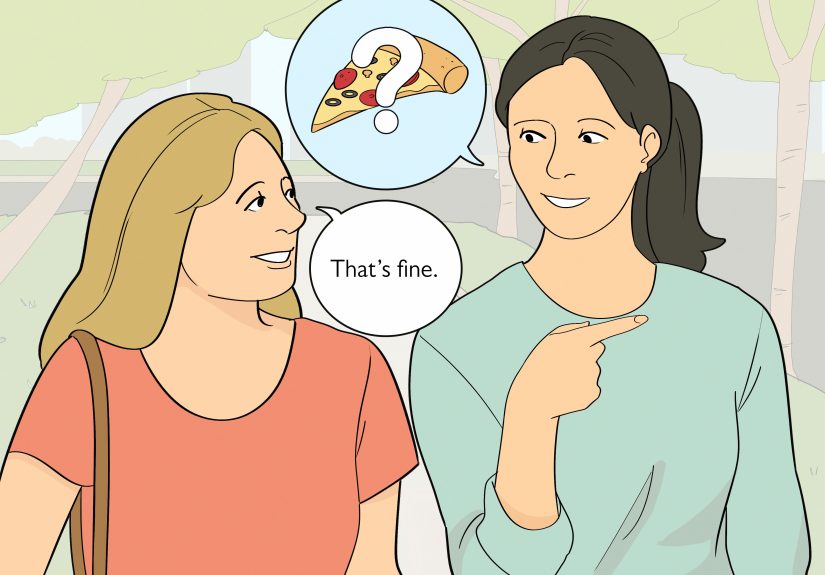
“Can we order pizza instead?”
“That’s fine. I was too lazy to cook anyway.”
In a tense moment
“I already promised them you’d help.”
“That’s fine.”
In this version, the phrase may not be fine at all. It may simply be restrained.
In a forgiving tone
“Sorry I’m running late.”
“That’s fine, drive safely.”
Notice how the extra words change everything. Adding “drive safely” removes coldness and communicates care.
How to Use “That’s Fine” Without Sounding Rude
If you want to keep the phrase but make it safer, try these tips:
- Add warmth: “That’s fine, thanks for letting me know.”
- Add clarity: “That’s fine with me.”
- Add reassurance: “That’s fine, no worries at all.”
- Add specifics: “That’s fine. We can move ahead tomorrow.”
The phrase works best when it does not have to carry the whole emotional message by itself. Give it a supporting cast.
Final Thoughts
“That’s fine” is a small phrase with a surprisingly wide emotional range. Its basic meaning is simple: something is acceptable, satisfactory, or okay. But in real life, it can signal calm agreement, reluctant acceptance, quiet frustration, or even a subtle attempt to end a conversation.
The trick is not to fear the phrase. The trick is to use it with intention. When you want to sound warm, add warmth. When you want to sound professional, add clarity. When you are not actually okay with something, say more than two words and save everyone the emotional archaeology later.
In short, “that’s fine” is fine. But only when your meaning is, too.
Experiences Related to “That’s Fine” Meaning, Usage, & Similar Phrases
Anyone who has used English long enough has probably had at least one “that’s fine” moment that was not, in fact, fine. The phrase shows up in daily life because it is fast, familiar, and flexible. People use it with coworkers, family members, classmates, friends, and customer service agents. That convenience is exactly why it creates so many mixed signals.
A common experience happens in texting. Someone sends a change of plans at the last minute: “Can we reschedule?” The reply comes back: “That’s fine.” Nothing else. No emoji. No extra sentence. No hint of mood. The sender instantly starts wondering whether the other person is genuinely okay with it or quietly irritated. The message is grammatically clear but socially blurry. That is the classic “that’s fine” experience: the words say one thing, while the silence around them suggests three other possibilities.
Another familiar situation happens in workplaces. A manager proposes a new deadline, and an employee answers, “That’s fine.” In one office, that phrase may sound cooperative and efficient. In another, it may sound resigned, especially if the employee has already raised concerns. Professional environments often magnify tone because people are trying to stay polite while also protecting time, boundaries, and credibility. Many workers eventually learn that “That’s fine, I can make that deadline work” sounds more confident and less emotionally mysterious.
Friends also run into this phrase when they are trying to avoid conflict. Imagine one friend forgets a plan or arrives very late. The other says, “That’s fine,” even though they are clearly disappointed. This version of the phrase acts like emotional duct tape. It holds the conversation together for the moment, but it does not actually fix the crack underneath. Later, that unspoken frustration may pop up in a completely different conversation, which is how a simple phrase sometimes turns into delayed drama.
There are positive experiences with “that’s fine,” too. In healthy communication, the phrase can be genuinely useful. It can calm a nervous person, reduce pressure, and show flexibility. If someone apologizes for a small mistake and hears, “That’s fine, don’t worry about it,” the effect is reassuring. Used warmly, the phrase tells people that not every inconvenience is a crisis and not every change needs a committee meeting.
Over time, many speakers become more strategic with similar phrases. They may switch to “works for me,” “no worries,” “all good,” or “I’m okay with that” depending on the audience. That change usually comes from experience. After enough misunderstood texts and awkward pauses, people realize that a tiny phrase can carry a lot of emotional freight. “That’s fine” remains useful, but experienced communicators learn when to soften it, when to replace it, and when to say what they really mean instead.