Table of Contents >> Show >> Hide
- Why Fermentation Control Matters in Biofuel Work
- What a Biofuel Fermentation Controller Project Should Include
- Lessons from Real Biofuel and Fermentation Research
- Designing the Project Without Turning It Into a Chemistry Stunt
- Why This Project Actually Matters
- Field Notes and Real-World Experience with a Biofuel Fermentation Controller Project
- Conclusion
- SEO Tags
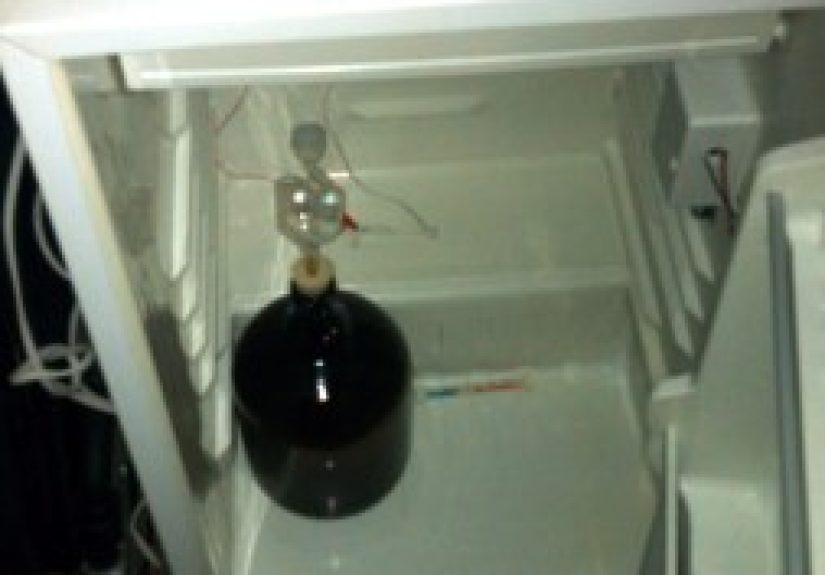
At first glance, a biofuel fermentation controller project can look suspiciously like a homebrew setup that took a wrong turn at the engineering department. There is a vessel. There are bubbles. There is a smell that says, “science is happening,” which is usually a polite way of saying, “please crack a window.” But this is not a beer story. It is a control story.
In biofuel work, fermentation is not just about letting yeast or microbes do their thing while humans hover nearby with optimism. It is about maintaining the right conditions so biological systems stay productive instead of dramatic. Temperature drifts, pH swings, contamination, and poor monitoring can turn a promising run into a very expensive bucket of disappointment. That is exactly why a biofuel fermentation controller matters. The controller becomes the calm adult in the room, watching the vessel, logging the data, nudging the process back into range, and generally preventing the microbes from acting like tiny biochemical divas.
This article explores what a smart, modern fermentation controller project should do, why it matters for bioethanol and related biofuel research, and what real-world U.S. research teaches us about building one. The goal is not to hand someone a recipe for fuel production. The goal is to explain the engineering logic behind a controller that monitors a nonpotable fermentation test rig safely, legally, and intelligently.
Why Fermentation Control Matters in Biofuel Work
A fermentation vessel is basically a tiny economy under pressure. Sugars go in, microbes get to work, heat builds up, byproducts appear, and everything is fine right up until it is not. In biofuel systems, that “not” usually arrives as reduced yield, stressed cells, stalled conversion, or contamination. None of those outcomes looks great on a project report, and even fewer look good after you have spent weeks wiring sensors and explaining to your team that this build would absolutely be worth it.
Temperature Is the First Boss Fight
Temperature control is one of the most important jobs in any fermentation controller project. Fermentation creates heat, and microbes can be surprisingly picky about how much of it they are willing to tolerate. Too cool, and the process slows down. Too warm, and the organism gets stressed, viability drops, and yields can sag. In industrial ethanol systems, temperature is tightly managed because even small drifts can alter conversion rates and downstream performance. In a smaller project, that means your controller should not merely measure temperature. It should manage it with purpose.
A smart controller setup usually pairs a reliable temperature probe with a heating element, cooling loop, or recirculation strategy. Even a modest test rig benefits from closed-loop logic: sense, compare, respond, repeat. That sounds simple because, in theory, it is. In practice, biology enjoys proving that “simple” is an unstable concept.
pH Is Quiet Until It Isn’t
pH often behaves like the overlooked character who turns out to be running the plot. In fuel fermentation, pH affects microbial health, enzyme performance, contamination risk, and overall process stability. Industrial and research settings frequently use acidic operating windows because low pH can help limit bacterial contamination while still allowing selected microbes to perform. That does not mean every project needs aggressive chemistry or industrial-style treatment. It means the controller should track pH carefully, issue alarms when drift appears, and help operators understand when biology is moving off script.
If temperature is the obvious control variable, pH is the one that quietly decides whether your process remains civilized. Ignore it, and the vessel may still bubble along for a while. It just will not be bubbling in a useful direction.
Fermentation Is Also a Data Problem
Modern biofuel systems are no longer judged by whether bubbles exist. Bubbles are nice, but numbers pay the rent. A solid biofuel fermentation controller project should log time-series data for temperature, pH, run duration, agitation state, and any available indicators of gas or ethanol production. In more advanced builds, that may include CO2 trends, ethanol sensor readings, near-infrared monitoring, or estimates generated from software models.
Data logging turns fermentation from a guessing game into an engineering problem. It helps you compare runs, spot contamination early, identify heat spikes, and refine control logic over time. It also gives you the deeply satisfying ability to say, “Actually, the problem started 47 minutes after the feed phase changed,” which is the kind of sentence that makes a controller project feel gloriously real.
What a Biofuel Fermentation Controller Project Should Include
A good controller is not just a box with wires and ambition. It is a system. The most effective builds treat the fermentation vessel, sensors, software, and operator interface as one coordinated unit.
The Core Monitoring Stack
At the practical level, the controller should center on a few essential measurements:
- Temperature sensing: the most basic and most necessary measurement.
- pH monitoring: essential for process stability and contamination awareness.
- Gas or fermentation activity tracking: CO2 trends can reveal whether the biology is accelerating, stalling, or heading for a nap.
- Ethanol or process-output estimation: direct sensing, sampling, or inferred modeling can all help.
- Agitation or mixing status: especially useful where mass transfer matters.
University-scale educational and research systems in the United States show a clear pattern: useful fermentation rigs are increasingly instrumented, not improvised. Sensorized mini-fermenters, FT-NIR monitored fed-batch systems, and bench-scale bioreactors all point toward the same lesson. The future is not “set it and forget it.” The future is “measure it, log it, learn from it, and try not to let it foam onto the lab bench.”
The Control Layer
Once the sensors are in place, the controller needs a brain. That can be a microcontroller, a single-board computer, or a hybrid arrangement where fast local control happens on one device and data visualization happens on another. The exact hardware matters less than the control philosophy.
For most small biofuel fermentation controller builds, the software should handle threshold alarms, state-based control, and simple proportional or PID-style loops for temperature. A more advanced version can add feed logic, predictive alerts, and trend analysis. For instance, if temperature rises faster than expected while CO2 suddenly falls, the controller can flag possible stress or contamination rather than simply waiting for a limit to be crossed.
That difference matters. A basic controller reacts after something goes wrong. A better one notices that something is about to go wrong and starts tapping you on the shoulder before the vessel starts acting haunted.
The Interface Matters More Than Engineers Admit
Every project team says the interface is a small detail right up until the moment they need to use it at 11:30 p.m. while staring at a tank that is misbehaving. A good dashboard should show live temperature, pH, activity trends, alarm history, and run notes. It should also make calibration status painfully obvious. Nothing ruins confidence faster than discovering that your beautiful chart is based on a sensor that stopped telling the truth three hours ago.
For web publishing and SEO-minded readers, this is where the story becomes bigger than hardware. A bioethanol control system is not interesting because it has probes. It is interesting because it translates biology into decisions. That is the entire point of process engineering.
Lessons from Real Biofuel and Fermentation Research
Real U.S. research offers a remarkably consistent message. Whether the work involves corn ethanol, lignocellulosic fermentation, syngas systems, or educational bioreactor designs, process control keeps showing up as the adult supervision layer. Temperature and pH are repeatedly identified as key variables. Low-pH operation appears in contamination-control discussions. Online and at-line monitoring, including near-infrared approaches, continues to gain attention because direct process visibility improves performance and troubleshooting.
Research-oriented builds also show that fermentation is rarely just about one variable. A fed-batch system may be designed to reduce osmotic stress by keeping sugar concentrations from climbing too high. A gas fermentation setup may care deeply about mixing and mass transfer because poor gas-liquid contact becomes the limiting step. An educational mini-fermenter may add ethanol and CO2 sensors to help users see change over time rather than treating fermentation like a mysterious black box full of bubbles and hope.
That is why the best controller project is not the one with the most parts. It is the one that understands the process it is trying to govern. If you are controlling temperature beautifully but ignoring contamination signals, you are not running a smart system. You are just chauffeuring a problem.
Designing the Project Without Turning It Into a Chemistry Stunt
The safest and smartest version of this project focuses on process monitoring and control architecture, not on maximizing fuel output. That distinction matters. A legitimate educational or research controller can be built around water-based simulations, benign fermentation demonstrations, or nonpotable lab test conditions with proper supervision. The engineering challenge is still real: sensor integration, calibration, control logic, data logging, alarm handling, and dashboard design all remain central.
In other words, the project becomes a platform for applied automation. It can teach embedded systems, process control, data analysis, and bioprocess engineering without pretending that the exciting part is making a questionable liquid in a bucket. The exciting part is making the system reliable.
Common Mistakes That Sink Otherwise Good Builds
One classic mistake is trusting cheap sensors without a calibration plan. Another is assuming fermentation is linear when it is, in fact, a moody biological process that enjoys changing behavior mid-run. Teams also underestimate thermal lag, overestimate the usefulness of a single sensor, and forget that contamination often announces itself as a pattern shift long before it becomes visually obvious.
Then there is the fan favorite: collecting mountains of data and designing absolutely no logic to interpret it. That is not monitoring. That is digital hoarding.
Why This Project Actually Matters
A biofuel fermentation controller project sits at the intersection of clean energy, automation, and biological manufacturing. That is a genuinely important place to be. Biofuels rely on living systems or biologically derived pathways, which makes control more delicate than in many conventional chemical processes. Better monitoring and smarter control can improve consistency, reduce waste, support safer operation, and make experimental systems more useful for research and education.
It also tells a bigger story about energy technology in America. The field is not just chasing new feedstocks or tougher microbes. It is also improving the intelligence of the systems around them. Sensors are getting cheaper. Monitoring is getting better. Data handling is getting smarter. And even small project rigs can now borrow ideas once reserved for full industrial process development.
So no, it is not beer. It just happens to share some visual similarities with things found in a garage, a basement, and the dreams of every person who has ever looked at a bubbling vessel and thought, “I should absolutely add a dashboard to that.”
Field Notes and Real-World Experience with a Biofuel Fermentation Controller Project
What surprises most people about a fermentation controller project is how quickly it stops feeling like a science fair build and starts feeling like a relationship. Not a romantic relationship, obviously. More like the relationship you have with a car that occasionally invents new warning lights. On day one, the controller feels clean and logical. Sensors are mounted. The interface is neat. The vessel is quiet. Everyone on the team feels smart. Then the first real run begins, and the project starts teaching humility at industrial speed.
One of the first lessons is that live fermentation never reads the manual. Bench tests may show stable temperature control, but a real run introduces lag, foam, probe noise, condensation, and the deeply annoying discovery that cables routed beautifully on a dry table can become chaos magnets near a warm, active vessel. This is where the project becomes valuable. The controller stops being a class assignment and starts becoming an instrument of observation. You see the exact moment the vessel begins generating more heat than expected. You notice how long it takes a heating adjustment to show up in the liquid. You learn that a drifting pH value is not just a number. It is a clue.
Teams also discover that the best part of the controller is not the control. It is the record. A saved run log becomes a story with timestamps. You can compare a smooth run to a messy one and ask useful questions. Why did fermentation activity flatten earlier this time? Why did the temperature overshoot after the lid was opened? Why did one sensor look stable while another showed instability? Good engineering often begins with better questions, and a good controller gives you the evidence to ask them.
Another common experience is realizing how important interface design becomes under pressure. During development, it seems perfectly reasonable to hide calibration information behind a submenu or color-code alarms in some “intuitive” way only the original designer understands. During an actual run, that approach feels like sabotage. A practical dashboard must be blunt. What is the current state? What changed? What needs attention now? Those are not glamorous questions, but they are the ones operators ask when the system gets weird.
There is also a strong emotional arc to this kind of project. Early runs are usually messy. Something drifts. Something sticks. A sensor lies. A relay clicks at the wrong moment. The trend line looks like it was drawn by a caffeinated squirrel. But after refinement, the same system starts behaving like a real tool. Temperatures stabilize faster. Alarm thresholds become meaningful instead of noisy. Data begins to line up with what the vessel is actually doing. That moment is enormously satisfying because it proves the project has crossed the line from gadget to process system.
Perhaps the biggest experience-related takeaway is this: fermentation control teaches respect for biological variability. Mechanical systems are often predictable when built well. Biological systems remain partly negotiable no matter how good the build is. The controller does not eliminate uncertainty. It helps you live with uncertainty intelligently. That is what makes the project worth building, worth writing about, and worth remembering. In the end, the best biofuel fermentation controller project is not the one that looks most impressive in a photo. It is the one that helps people understand what the vessel is doing, why it is doing it, and how to respond before a promising run turns into another cautionary tale in a lab notebook.
Conclusion
A biofuel fermentation controller project is a lot more than a techy accessory for a bubbling tank. It is the control center for a process where biology, heat, chemistry, and time all try to negotiate at once. Real research keeps pointing to the same truth: better monitoring and smarter control create better fermentation systems. Whether the project is educational, experimental, or part of early-stage process development, the value comes from turning hidden biological behavior into visible, manageable data.
That is the real punchline behind the title. It may look like beer from across the room, but the engineering story is far more interesting. This is about biofuel fermentation, process stability, and building a controller smart enough to keep the microbes productive and the humans informed. And honestly, that is a lot cooler than a bucket with bubbles.