Table of Contents >> Show >> Hide
- First, Understand What “the Japanese Art of the Sword” Really Means
- Respect the Sword as More Than a Weapon
- Find a Legitimate Teacher and a Legitimate Dojo
- Mastery Begins With Etiquette, Not Technique
- Choose Consistency Over Heroics
- Train the Body That Carries the Art
- Study History, Craftsmanship, and Context
- Let Repetition Change Your Character
- Know What Not to Do
- What Mastery Actually Looks Like
- Experiences Students Often Have on the Road to Mastery
- Conclusion
Note: This article is a safety-first, culture-forward guide to studying Japanese sword arts. It focuses on disciplined practice, history, etiquette, and responsible training rather than combat instruction.
Mastering the Japanese art of the sword sounds wonderfully dramatic. It brings to mind moonlit courtyards, whispering bamboo, and someone in impeccable robes doing something impossibly elegant while the rest of us are still trying to fold a T-shirt properly. But real mastery is much less cinematic and much more meaningful. It is built through humility, repetition, breath control, etiquette, cultural understanding, and years of consistent practice.
If that sounds less like an action montage and more like a lifelong relationship, good. That is exactly the point. Japanese sword arts are not simply about wielding a blade. They are about developing character through form, learning composure under pressure, and understanding why the sword became not just a weapon in Japanese history, but also a symbol of craftsmanship, social identity, discipline, and aesthetic refinement.
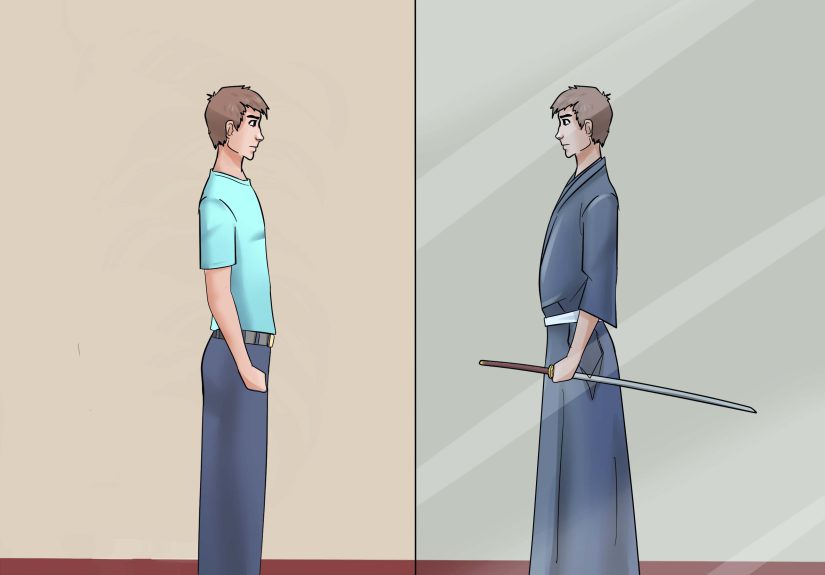
So if you want to master the Japanese art of the sword, start by setting aside the fantasy of becoming a weekend samurai by next Tuesday. Real progress comes from choosing the right path, finding qualified instruction, respecting tradition, training your body and mind, and learning to appreciate the sword as both cultural object and disciplined practice. In other words, you are not just learning what to hold. You are learning how to carry yourself.
First, Understand What “the Japanese Art of the Sword” Really Means
This phrase covers several traditions, and treating them all like one big katana-flavored smoothie will only confuse you. The best-known modern path is kendo, a form of Japanese fencing practiced with protective armor and a bamboo sword called a shinai. Another major path is iaido, which emphasizes solo forms, control, awareness, timing, and smooth, deliberate handling of the sword in kata-based practice. Then there are older classical traditions often grouped under kenjutsu, which refer to older schools of swordsmanship preserved through formal lineages.
Why does this matter? Because you cannot master what you have not defined. Someone who loves dynamic partner training and athletic intensity may thrive in kendo. Someone drawn to controlled solo practice, precision, and internal focus may connect more deeply with iaido. Someone fascinated by historical lineages may spend years studying a traditional school under a qualified teacher. None of these paths is “better” in a universal sense. They simply shape the practitioner in different ways.
The smartest beginners ask a humble question first: What kind of study actually fits my temperament, schedule, and goals? That question is far more useful than asking which path looks coolest in photos. Spoiler: they all look cool in photos. Photos are traitors.
Respect the Sword as More Than a Weapon
One reason Japanese sword arts continue to fascinate people is that the sword occupies a rare space between function and beauty. Historically, the Japanese blade was prized for metallurgy, form, and symbolism. Its making required highly skilled craft, specialized steel, repeated refinement, and an obsessive attention to detail that would make perfectionists feel seen. Even the fittings, mountings, and guards were not just practical accessories. They also reflected social status, taste, artistic values, and the changing culture of the samurai class.
That matters for modern students because it changes the mindset. If you approach the sword as a prop for pretending to be dangerous, you will miss the heart of the tradition. If you approach it as a cultural art form that demands care, patience, and respect, you begin in the right place.
Real students learn quickly that the Japanese sword is part engineering, part art, part ritual object, and part mirror. It tends to reveal whether you are careless, impatient, vain, or disciplined. The sword is honest that way. Almost rude, really.
Find a Legitimate Teacher and a Legitimate Dojo
If you are serious about mastery, your first big move is not buying expensive gear. It is finding good instruction. A qualified teacher does more than correct posture or explain terminology. They give context, establish safety, teach etiquette, and stop you from building bad habits that can take years to unwind.
Look for a dojo connected to a recognized federation or a clearly established lineage. Observe how the class is run. Is the environment respectful? Are senior students helpful without acting like unpaid movie villains? Is etiquette treated as meaningful rather than decorative? Are beginners taught patiently? Does the instructor emphasize control, consistency, and character, not just intensity?
A good dojo will feel disciplined, but not theatrical. Serious, but not self-important. Traditional, but not frozen in cosplay. The goal is not to perform “samurai vibes.” The goal is to study with integrity.
Questions Worth Asking Before You Join
Ask what beginners normally start with. Ask how often new students should train. Ask whether the school focuses on kendo, iaido, or a specific classical tradition. Ask what equipment is needed at the beginning and what can wait. If the answer is “You need to buy everything immediately, including five mysterious accessories and a wallet transplant,” proceed with caution.
Mastery Begins With Etiquette, Not Technique
One of the most overlooked truths about Japanese sword arts is that etiquette is not filler. It is foundational. In many dojo traditions, proper manners are considered the frame that makes practice meaningful. Bowing, entering the space correctly, caring for equipment, addressing teachers respectfully, and handling training tools with attention are not empty rituals. They train your mind to become deliberate.
That is a huge part of mastery. Before advanced skill, there is reliable behavior. Before elegant movement, there is steady attention. Before confidence, there is humility.
Beginners often want to “get to the real stuff.” But etiquette is the real stuff. It teaches awareness of place, awareness of others, and awareness of yourself. It reminds you that sword training is not only about performance. It is also about conduct. You are learning how to move in a room, how to receive instruction, how to manage your ego, and how to honor a tradition larger than yourself.
Think of etiquette as the operating system. Without it, everything else gets glitchy.
Choose Consistency Over Heroics
Mastery is usually imagined as a breakthrough moment. In real life, it looks more like showing up on a random Wednesday when your legs are tired, your week has been chaos, and your brain would rather become a houseplant. Progress comes from steady attendance and careful repetition.
A student who trains twice a week for three years with focus, patience, and curiosity will often outgrow the student who trains like a maniac for one month, disappears for two, then returns with a shopping bag full of confidence and zero fundamentals.
Build a practice rhythm you can sustain. That may mean two dojo classes a week plus a short block of quiet solo review at home for approved basics such as posture, breathing, terminology, note-taking, and etiquette. It may mean recording what your teacher corrected after class so you do not forget it by the time you reach the parking lot and become a different person.
The point is not to train until you feel epic. The point is to train until discipline becomes normal.
Train the Body That Carries the Art
Japanese sword arts are not only mental disciplines. Your body matters. Balance matters. Mobility matters. Core stability matters. Breath matters. Endurance matters. If your shoulders tighten at every small challenge and your hips move like they were assembled from old office chairs, your practice will eventually show it.
You do not need to become a fitness influencer with suspiciously polished vegetables in the background. But you do need a body capable of moving with control. Supplement your dojo practice with mobility work, leg strength, posture awareness, light cardio, and recovery habits that keep you trainable. Sleep is useful. Hydration is useful. Stretching after class is extremely useful, especially after the age when your knees begin sending formal complaint letters.
Also remember that tension is the enemy of fluid movement. Many beginners think seriousness means stiffness. It does not. Seriousness means attention. Stiffness just means your neck is auditioning for a statue.
Study History, Craftsmanship, and Context
If you want deeper mastery, study beyond the floor. Learn how Japanese swords were made, why different mounting styles existed, how samurai identity evolved, and why the sword remained culturally important even as warfare changed. Study the Edo period, the symbolism of paired swords, the role of sword fittings, and the way beauty and utility coexisted in samurai material culture.
This kind of study does two things. First, it keeps you from reducing the tradition to fantasy clichés. Second, it enriches practice. A movement, an object, or a phrase lands differently when you understand the world that produced it.
Read museum essays. Watch conservators discuss blades. Visit collections if you can. Pay attention to how institutions describe not just the weapon, but the artistry of steel, lacquer, guards, mountings, and ornament. The more you learn, the more you realize that Japanese sword arts are not merely about force. They are about refinement under discipline.
Let Repetition Change Your Character
At some point, every sincere student discovers the same surprising truth: the hardest opponent is not another person. It is your own inconsistency. It is distraction. It is impatience. It is the desire to skip basics because basics are not flashy. It is the internal monologue that says, “Surely I have transcended correction by now,” right before being corrected on something beautifully basic.
This is where mastery stops being romantic and starts being transformative. The Japanese art of the sword teaches you to repeat without becoming lazy, to focus without becoming rigid, and to improve without becoming arrogant. That is rare. Many hobbies make you busy. Fewer make you better.
Done properly, sword practice shapes how you stand, breathe, listen, and respond. You become a little calmer. A little more observant. A little less chaotic. Ideally, you also become the sort of person who stops leaving jackets on chairs like you are claiming territory.
Know What Not to Do
If you want to advance faster, avoid the classic beginner traps. Do not collect fancy equipment before you understand what it is for. Do not imitate movies and internet clips without context. Do not jump between styles every few weeks because novelty is entertaining. Do not assume intensity equals depth. Do not treat Japanese terms as magic spells that automatically make you skilled.
Most importantly, do not practice with live blades outside proper supervision and legal conditions. Responsible schools progress students carefully for a reason. Safety is not a side note. It is part of the art.
Another mistake is confusing performance with understanding. Looking composed is not the same as being composed. Wearing the uniform is not the same as carrying the tradition. Mastery is quiet. It does not need to announce itself every seven minutes.
What Mastery Actually Looks Like
Mastery in Japanese sword arts does not usually arrive with trumpets, cherry blossoms, and a soundtrack. It looks smaller and deeper than that. It looks like entering the dojo with focus. It looks like handling training tools correctly without being reminded. It looks like accepting correction without defensiveness. It looks like moving with less wasted effort. It looks like understanding that the point is not domination, but cultivation.
A master is not simply someone with advanced rank. Rank matters, but character matters too. The person worth learning from is usually the one who combines technical depth, self-control, generosity, and respect for the tradition. They do not just know a lot. They embody the spirit of practice.
So yes, mastering the Japanese art of the sword involves training. But more than that, it involves becoming the kind of person who can be trusted with a demanding tradition. That is a much higher bar than “owns a sword-adjacent aesthetic.”
Experiences Students Often Have on the Road to Mastery
Ask serious students what this journey feels like, and you will hear a pattern. In the beginning, many arrive carrying excitement, nerves, and a backpack full of misconceptions. They think progress will be dramatic. Instead, the first memorable experience is often something wonderfully ordinary: learning how to enter the dojo properly, where to stand, how to bow, how to listen, and how not to look like a confused coat rack in borrowed clothing.
Then comes the humbling phase. This is the season when a student realizes that “paying attention” and “actually paying attention” are not the same thing. They may spend a full class trying to coordinate breath, posture, and timing, only to leave feeling as if their arms and legs met for the first time that evening. Oddly enough, that is progress. The art is introducing them to themselves.
Many students describe a moment when they stop chasing speed and start noticing quality. A bow feels more grounded. A still moment feels less empty. Repetition begins to reveal small layers they were too impatient to see before. What once seemed repetitive becomes rich. The same form, the same correction, the same reminder suddenly lands differently after six months than it did on day six.
There is also the experience of discovering how much sword arts affect life outside class. Students often report becoming more patient, more aware of posture, more deliberate in movement, and more careful in speech. They start to appreciate precision in ordinary things. Some begin cleaning and organizing gear with a kind of quiet satisfaction that would once have seemed wildly out of character. Apparently, nothing says personal growth like folding clothing correctly on purpose.
Another common experience is realizing that the dojo is not just a training hall. It becomes a community. Senior students remember your first awkward week. Instructors notice when you are trying. Peers improve alongside you. Over time, the room starts to feel familiar in the best possible way: demanding, respectful, and strangely calming. You do not go there to escape effort. You go there to meet it honestly.
Eventually, students experience something subtler than excitement: trust in the process. They stop asking, “When will I master this?” and start asking better questions like, “How can I practice more cleanly today?” or “What did I miss in that correction?” That shift is enormous. It marks the move from consuming the art to serving it.
And perhaps the most meaningful experience of all is this: the longer someone trains sincerely, the less they feel the need to perform mastery. They grow quieter, steadier, and more respectful. They understand that the Japanese art of the sword is not conquered. It is practiced, protected, and carried forward. That realization does not make the path smaller. It makes it deeper.
Conclusion
To master the Japanese art of the sword, you need more than fascination with samurai history or admiration for the katana. You need a real teacher, a real training structure, and a real willingness to be a beginner for longer than your ego would prefer. You need to study etiquette as seriously as movement, appreciate craftsmanship as much as practice, and choose patience over performance again and again.
The sword, in this tradition, is never just steel. It is discipline made visible. It is a cultural inheritance shaped by craft, ritual, status, beauty, and years of human effort. Mastering it means learning how to move with intention, how to behave with respect, and how to let repetition refine your character.
That is the real art. Not looking dangerous. Not sounding impressive. Not collecting enough vocabulary to frighten your friends at dinner. The real art is becoming steadier, sharper, and more respectful through the discipline of practice. And that kind of mastery, unlike movie swordplay, tends to age very well.