Table of Contents >> Show >> Hide
- How This List Was Built
- The 12 Best Trampolines (By Real-Life Use Case)
- 1) Best Overall Safety-Focused Family Pick: Springfree Medium Round
- 2) Best Performance Trampoline for Big Bounce: Acon Air 16 Sport HD
- 3) Best Large-Backyard Value: Skywalker 15-Foot Round (Jump N’ Dunk style models)
- 4) Best for Mixed-Age Families: Zupapa 15-Foot
- 5) Best Balance of Price + Features: Jumpzylla 14-Foot
- 6) Best Small-Yard Outdoor Option: Skywalker 10-Foot Round
- 7) Best Premium In-Ground Experience: BERG Champion InGround
- 8) Best for Younger Kids (Early Elementary): Clevr 7-Foot Kids Trampoline
- 9) Best Toddler-Focused Option: Little Tikes Climb ’N Slide Trampoline
- 10) Best Premium Fitness Rebounder: JumpSport 350 Fitness Trampoline
- 11) Best Value Rebounder: BCAN Foldable Mini Trampoline
- 12) Best Portable Rebounder for Small Spaces: MaXimus Pro Foldable Rebounder
- How to Choose the Right Trampoline Without Buyer’s Remorse
- Non-Negotiable Trampoline Safety Rules
- 500+ Words of Real-World Trampoline Experience Notes
- Final Verdict
Buying a trampoline sounds simple until you realize there are more options than toppings at a frozen yogurt bar.
Round, rectangular, springless, in-ground, mini rebounders, toddler models, basketball add-ons, and about twelve
different ways to “just bounce a little” into a full Saturday project.
This guide cuts through the noise with an in-depth, practical list of the 12 best trampolines for families, fitness
users, and fun-first backyards. The ranking is based on real-world criteria that matter: safety design, bounce quality,
frame durability, weight capacity, space fit, setup complexity, and overall value. You’ll also get a no-fluff buying
framework, a safety section every parent should read, and a long-form experience section at the end with relatable
scenarios that help you avoid common buyer regret.
The headline takeaway: the “best trampoline” is not one universal model. It’s the one that matches your space, your
users, and your safety discipline. If you buy a high-performance model and treat it like a toy with no rules, it’s a bad buy.
If you buy a modest model, enforce one-jumper-at-a-time, and maintain it well, that’s a smart win.
How This List Was Built
I synthesized product patterns across multiple U.S. review publishers and safety organizations, then filtered the list
into use-case winners. Instead of chasing “hype picks,” I prioritized models and brands repeatedly recognized for
protective features, reliable construction, and practical ownership experience.
- Safety first: enclosure quality, spring coverage, frame design, and stability.
- Bounce profile: recreational bounce vs. athletic bounce vs. low-impact rebound.
- Fit: yard footprint, ceiling clearance (for indoor rebounders), and access points.
- Durability: weather resistance, rust protection, stitching quality, and replacement-part ecosystem.
- Ownership reality: assembly difficulty, maintenance needs, and long-term value.
Translation: this is not a “prettiest product card” ranking. This is a “you’ll still like it six months later” ranking.
The 12 Best Trampolines (By Real-Life Use Case)
1) Best Overall Safety-Focused Family Pick: Springfree Medium Round
If your main goal is reducing common pinch and edge-impact risks, Springfree remains a standout thanks to its
springless architecture and safety-first perimeter design. It’s a premium choice with premium pricing, but the
engineering focus is exactly why families with younger jumpers keep it at the top of their shortlist.
Best for: safety-priority households with room in the budget.
2) Best Performance Trampoline for Big Bounce: Acon Air 16 Sport HD
Want the kind of bounce that makes older kids and athletic teens grin immediately? Acon’s larger rectangular
format delivers high-energy performance and a more consistent response across the mat than many round models.
It’s built for users who actually care about jump quality, not just “something in the yard.”
Best for: active families, older kids, and confident jumpers.
3) Best Large-Backyard Value: Skywalker 15-Foot Round (Jump N’ Dunk style models)
Skywalker’s larger round units hit a practical sweet spot: wide jump zone, family-friendly pricing, and widely
available accessories. The value equation is strong if you want that classic backyard trampoline experience without
stepping into luxury-tier pricing.
Best for: bigger yards and budget-aware households.
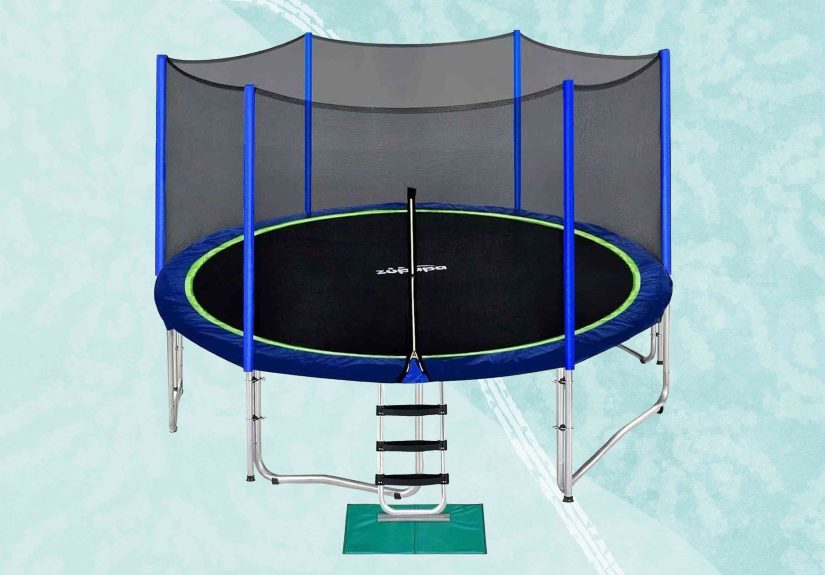
4) Best for Mixed-Age Families: Zupapa 15-Foot
Zupapa shows up again and again for families who need a sturdier-feeling frame and higher-capacity options.
The brand is especially popular with buyers who want one trampoline that can handle different ages over several
years, not just one growth stage.
Best for: families who want one long-term backyard setup.
5) Best Balance of Price + Features: Jumpzylla 14-Foot
Jumpzylla is often cited as a “good all-rounder” for consumers who want modern safety styling, decent bounce,
and manageable pricing. It’s the model people pick when they say, “I want quality, but I still need to pay my electric bill.”
Best for: mainstream buyers who want solid performance at mid-tier cost.
6) Best Small-Yard Outdoor Option: Skywalker 10-Foot Round
Not everyone has a football-field backyard. A 10-foot class model can still deliver good fun while fitting tighter
spaces. Skywalker’s 10-foot options are popular for smaller lots, first-time trampoline owners, and households that
prioritize footprint control.
Best for: compact yards and first-time buyers.
7) Best Premium In-Ground Experience: BERG Champion InGround
In-ground models reduce visual bulk and lower climb height, which many families prefer. BERG’s in-ground line is
typically chosen by buyers who care about aesthetics and a cleaner yard profile. Installation planning matters more
here, but the finished result can look significantly more integrated.
Best for: design-conscious homeowners and permanent setups.
8) Best for Younger Kids (Early Elementary): Clevr 7-Foot Kids Trampoline
This smaller-size category works well for younger children who are not ready for large backyard platforms.
A lower-profile, smaller diameter approach can be easier to supervise and less intimidating for beginners.
Best for: young kids transitioning into structured backyard play.
9) Best Toddler-Focused Option: Little Tikes Climb ’N Slide Trampoline
Designed with little ones in mind, this style combines toddler-scale motion play with simple entry/exit flow.
It’s less about big-air bounce and more about age-appropriate movement confidence, supervised fun, and basic
gross-motor play.
Best for: toddlers and preschool play under close adult supervision.
10) Best Premium Fitness Rebounder: JumpSport 350 Fitness Trampoline
For adults who want cardio, rhythm work, and joint-friendlier movement than road running, JumpSport is one of
the most respected rebounder names. It tends to feel stable and controlled, which matters when workouts progress
from simple bounces to structured routines.
Best for: home fitness users and low-impact cardio routines.
11) Best Value Rebounder: BCAN Foldable Mini Trampoline
BCAN frequently appears in value-centered rebounder lists because it balances affordability with useful basics:
foldability, practical footprint, and enough stability for regular cardio sessions. If you want an entry-level rebounder
that still feels purposeful, this is a common starting point.
Best for: beginners building a realistic home workout habit.
12) Best Portable Rebounder for Small Spaces: MaXimus Pro Foldable Rebounder
If your workout corner shares space with a living room, portability matters. MaXimus Pro-style foldable rebounders
are useful for people who need to train, then hide the equipment quickly. It’s less “centerpiece of the backyard”
and more “smart apartment cardio tool.”
Best for: small homes, multipurpose rooms, and routine-focused adults.
How to Choose the Right Trampoline Without Buyer’s Remorse
1) Choose Shape Based on Use, Not Trend
Round trampolines are common for family recreation and tend to feel forgiving. Rectangular models usually provide
more uniform lift across the mat and are often preferred by experienced jumpers. In-ground models win on yard
appearance and lower profile. Mini rebounders are for fitness, not backyard group play.
2) Treat Weight Capacity as a Safety Number, Not a Challenge
Published weight limits are not suggestions. Exceeding them can compromise bounce behavior, strain frame components,
and increase injury risk. If your household includes heavier users or older teens, buy with margin.
3) Prioritize Protective Details Before Accessories
Net quality, pad coverage, frame integrity, and stable legs matter more than cosmetic extras. A basketball hoop is fun.
A properly secured enclosure is non-negotiable.
4) Think in “Ownership Years,” Not Launch Week
Ask the boring but essential questions: Are replacement pads available? Can I buy parts in two years? How hard is
seasonal maintenance? Great ownership is rarely about day one; it’s about month eighteen.
5) Measure Yard Clearance Honestly
Confirm safe overhead and side clearance, distance from fences/trees, and level ground. A trampoline squeezed into
a compromised area becomes a problem, no matter how good the model is.
6) Match the Trampoline to the User’s Actual Behavior
If your kids are rule-followers, one type of setup may work well. If they are thrill-seekers who treat every surface as
a stunt audition, choose a sturdier model and enforce stricter use rules.
Non-Negotiable Trampoline Safety Rules
Whether you buy a premium trampoline or a budget model, these rules are what truly reduce injuries:
- One jumper at a time.
- No flips or somersaults without professional coaching and proper setup.
- No full-size trampoline use for children under 6.
- Always use complete spring/frame padding and a properly installed enclosure.
- Supervise every session and inspect equipment regularly for wear, rips, and loosened parts.
Think of a trampoline like a bicycle: the hardware matters, but behavior and rules matter more.
500+ Words of Real-World Trampoline Experience Notes
Experience #1: The “Bigger Is Better” Mistake. A family buys a massive trampoline because they assume
more diameter equals safer fun. The result? It barely fits the yard, sits too close to a fence, and parents spend every
session yelling “Watch the edge!” The lesson is simple: practical clearance beats bragging rights. A slightly smaller unit
in the right location is safer and more enjoyable than a giant model in a cramped corner.
Experience #2: The Budget Buy That Actually Worked. Another household chooses a mid-priced round
trampoline with basic accessories and strict rules. They enforce one-jumper-at-a-time from day one, do monthly checks,
and replace worn pads early. Five seasons later, the unit still works and the kids still use it. The key wasn’t a luxury
badge; it was consistent supervision and maintenance discipline.
Experience #3: The “We’ll Add Rules Later” Trap. A common pattern in user reviews is this: assembly
gets finished, excitement spikes, rules are postponed, and injuries happen in the first week. Families that succeed do the
opposite. They set rules before the first bounce, review them often, and keep sessions short when kids are tired (fatigue
causes sloppy landings). The best trampoline strategy is behavioral design, not wishful thinking.
Experience #4: Fitness Rebounder Surprise. Adults who buy rebounders often expect a novelty and end
up with a routine. Ten to twenty minutes of regular bouncing can feel easier mentally than treadmill sessions, so
adherence improves. The hidden win is consistency. People who “hate cardio” often stick to rebounders because they feel
playful rather than punishing. If your goal is long-term movement, this emotional factor matters.
Experience #5: Weather and Wear Reality Check. The first months usually look perfect. Then sun, rain,
temperature swings, and repeated use start testing stitching, padding, and spring covers. Experienced owners inspect
monthly and after storms. They tighten hardware, clean debris, and replace small worn components early. Tiny preventive
fixes are cheap; delayed fixes are expensiveand riskier.
Experience #6: Siblings, Friends, and “Just One Minute Together.” Most households report the same
challenge: social momentum. One child is bouncing, another climbs in “for only a second,” and suddenly it’s double-bounce
chaos. Families that manage this well create a visible waiting zone and use turn systems. Is it less spontaneous? Yes.
Is it dramatically safer? Also yes.
Experience #7: The In-Ground Aesthetic Payoff. Some homeowners choose in-ground models mainly for
visual reasons and end up loving the practical side too: lower profile, easier yard flow, and less visual bulk. The tradeoff
is installation complexity and reduced portability. But if your plan is long-term and your landscape design matters, in-ground
can feel like a better fit than a towering above-ground frame.
Experience #8: The “Kid Energy” Benefit Is Real. Parents consistently describe trampolines as one of
the few backyard items that still get daily use after the novelty phase. On days when kids are restless, fifteen minutes of
supervised bouncing can noticeably improve mood and attention. It’s not a parenting miracle, but it is a practical movement
outlet that often beats another hour of passive screen time.
Experience #9: Why Buyers Upgrade. Many second-time trampoline buyers say their first model taught
them exactly what they needed: higher weight limit, stronger enclosure poles, easier entry, or better bounce consistency.
If you’re unsure now, that’s normal. Use this first purchase as a learning cycle: buy safely, measure actual usage, then upgrade
intentionally later if needed.
Experience #10: The Best Owners Treat It Like Equipment. The households with the best outcomes do
not treat a trampoline like “set and forget” furniture. They treat it like active equipment: rules, checks, replacement parts,
supervision, and seasonal care. That mindset usually predicts satisfaction better than brand name alone.
Final Verdict
The best trampoline is the one that fits your space, your users, and your willingness to enforce safety standards.
For safety-first premium buying, Springfree is a top choice. For high-energy backyard performance, Acon stands out.
For mainstream value, Skywalker, Zupapa, and Jumpzylla remain reliable shortlists. For adult fitness, JumpSport and BCAN
are practical rebounder leaders.
If you remember only one thing, remember this: one jumper at a time wins more than any spec sheet ever will.