Table of Contents >> Show >> Hide
- Why Sci-Fi Moments Matter
- The 50 Best Moments in Sci-Fi History
- 1. Mary Shelley Publishes “Frankenstein”
- 2. Jules Verne Makes Adventure Scientific
- 3. H.G. Wells Weaponizes Wonder
- 4. “Metropolis” Builds the First Great Sci-Fi City
- 5. “Amazing Stories” Gives Sci-Fi a Home
- 6. The Golden Age of Science Fiction Begins
- 7. Isaac Asimov Introduces the Three Laws of Robotics
- 8. Ray Bradbury Makes Mars Poetic
- 9. The Hugo Awards Begin
- 10. “The Twilight Zone” Enters Television
- 11. “Doctor Who” Materializes
- 12. “Dune” Turns Ecology Into Epic
- 13. The Nebula Awards Launch
- 14. “Star Trek” Premieres
- 15. Kirk and Uhura Share a Landmark TV Moment
- 16. “2001: A Space Odyssey” Rewrites the Movie Rulebook
- 17. “Planet of the Apes” Delivers the Ultimate Twist
- 18. The Moon Landing Changes Sci-Fi Forever
- 19. “Star Wars” Turns Sci-Fi Into a Pop-Culture Supernova
- 20. “Close Encounters” Makes Alien Contact Feel Spiritual
- 21. “Alien” Makes Space Terrifying
- 22. “The Empire Strikes Back” Deepens the Saga
- 23. “Blade Runner” Defines Cyberpunk Cinema
- 24. “Tron” Pushes Computer Worlds Onto the Screen
- 25. “Neuromancer” Names the Cyberpunk Future
- 26. “The Terminator” Turns AI Anxiety Into a Chase
- 27. “Back to the Future” Makes Time Travel Fun
- 28. “Aliens” Reinvents the Action Hero
- 29. “Akira” Expands Global Cyberpunk
- 30. “Star Trek: The Next Generation” Proves a Franchise Can Evolve
- 31. “Jurassic Park” Makes CGI Roar
- 32. “The X-Files” Makes Paranoia Prime-Time
- 33. Octavia Butler Receives a MacArthur Fellowship
- 34. “Ghost in the Shell” Questions the Digital Soul
- 35. “Independence Day” Turns Invasion Into Spectacle
- 36. “Contact” Puts Science and Faith in Conversation
- 37. “The Matrix” Redefines Reality
- 38. “Battlestar Galactica” Makes Space Opera Political
- 39. “Doctor Who” Returns
- 40. “Children of Men” Makes Dystopia Intimate
- 41. “WALL-E” Finds Humanity in a Robot
- 42. “Avatar” Pushes 3D Worldbuilding
- 43. “Inception” Turns Dreams Into Architecture
- 44. “Black Mirror” Makes the Near Future Uncomfortably Close
- 45. “Ex Machina” Updates the AI Question
- 46. “The Martian” Celebrates Practical Science
- 47. “Arrival” Makes Language the Alien Frontier
- 48. “The Expanse” Brings Hard Sci-Fi to Prestige TV
- 49. “Dune” Returns to the Big Screen
- 50. “Everything Everywhere All at Once” Makes the Multiverse Personal
- What These Moments Reveal About Sci-Fi
- Personal Viewing Experience: Why These Sci-Fi Moments Still Hit Hard
- Conclusion
Science fiction is the genre that looks at a toaster and asks, “But what if it developed feelings, joined a rebellion, and judged humanity’s playlist?” From gothic laboratories to galaxy-sized empires, sci-fi has never been just about robots, rockets, or dramatically glowing buttons. It is about fear, hope, technology, identity, survival, and the very human habit of poking the unknown with a stick.
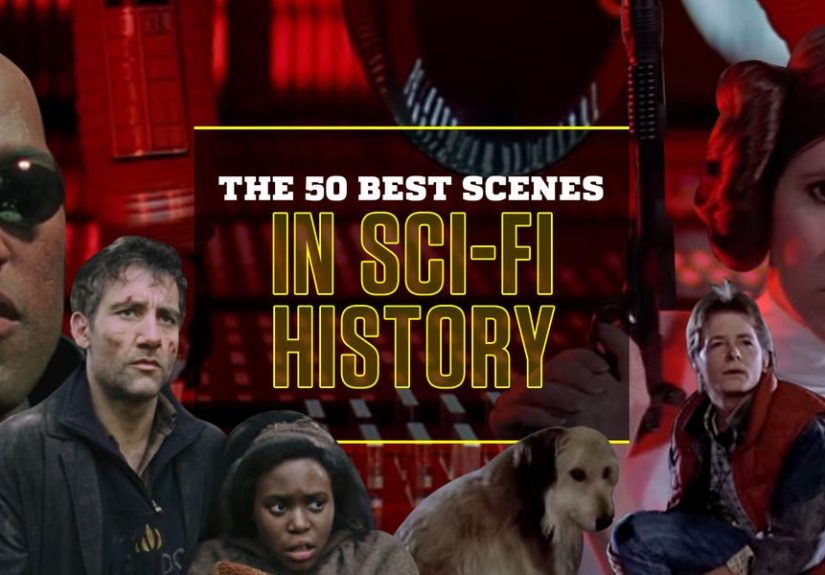
This list of the 50 best moments in sci-fi history celebrates the scenes, books, shows, films, awards, and creative breakthroughs that changed the genre. Some moments made audiences gasp. Some made studios suddenly realize space could sell popcorn by the metric ton. Others quietly rewired literature, television, gaming, animation, and visual effects forever.
Why Sci-Fi Moments Matter
The best science fiction moments do more than entertain. They give culture new metaphors. A time machine becomes regret with gears. An alien becomes a mirror. A spaceship becomes a family drama with worse Wi-Fi. Great sci-fi asks: What happens when humanity meets technology, the cosmos, or itself without the polite filter?
That is why these moments matter. They helped turn science fiction from a niche shelf in the bookstore into one of the most powerful storytelling engines in modern culture.
The 50 Best Moments in Sci-Fi History
1. Mary Shelley Publishes “Frankenstein”
In 1818, Mary Shelley gave the world a scientist, a creation, and one enormous ethical headache. “Frankenstein” helped establish the DNA of modern science fiction: discovery, ambition, responsibility, and consequences that refuse to stay politely in the basement.
2. Jules Verne Makes Adventure Scientific
With works like “Twenty Thousand Leagues Under the Seas” and “From the Earth to the Moon,” Verne made scientific imagination feel thrilling, physical, and oddly practical. He turned speculation into travel plans, minus the airline fees.
3. H.G. Wells Weaponizes Wonder
“The Time Machine,” “The Invisible Man,” and “The War of the Worlds” showed how sci-fi could become social criticism wearing a very stylish Martian helmet. Wells made the future dangerous, philosophical, and impossible to ignore.
4. “Metropolis” Builds the First Great Sci-Fi City
Fritz Lang’s 1927 film “Metropolis” gave cinema one of its most influential futuristic worlds: towering cities, exploited workers, artificial beings, and machinery that seemed hungry. Nearly every dystopian city since owes it rent.
5. “Amazing Stories” Gives Sci-Fi a Home
When Hugo Gernsback launched “Amazing Stories” in 1926, science fiction gained a dedicated magazine space. The genre could now gather its readers, writers, arguments, and wonderfully dramatic cover art under one roof.
6. The Golden Age of Science Fiction Begins
The late 1930s and 1940s helped define classic American science fiction. Editors, magazines, and writers pushed harder toward scientific plausibility, big concepts, and stories that treated rockets and ethics with equal seriousness.
7. Isaac Asimov Introduces the Three Laws of Robotics
Asimov’s robot stories turned mechanical beings into legal, moral, and philosophical puzzles. Suddenly robots were not just metal servants; they were walking debates about obedience, safety, autonomy, and loopholes.
8. Ray Bradbury Makes Mars Poetic
“The Martian Chronicles” brought lyricism to space colonization. Bradbury’s Mars was not only a destination; it was memory, grief, longing, and human foolishness wearing a red desert coat.
9. The Hugo Awards Begin
Established in the 1950s, the Hugo Awards gave science fiction fandom a major annual celebration of excellence. The awards helped canonize beloved works and turned passionate readers into cultural tastemakers.
10. “The Twilight Zone” Enters Television
Rod Serling’s anthology series proved that sci-fi television could be sharp, strange, moral, and unforgettable. Its twist endings did not just surprise viewers; they quietly handed them homework about society.
11. “Doctor Who” Materializes
In 1963, a blue police box became one of television’s greatest sci-fi symbols. “Doctor Who” made time travel playful, scary, emotional, and endlessly renewable. Regeneration was not just a plot device; it was franchise survival with cheekbones.
12. “Dune” Turns Ecology Into Epic
Frank Herbert’s “Dune” made planets feel politically alive. Its desert world, resource conflicts, religion, ecology, and empire-building transformed the scale of science fiction worldbuilding.
13. The Nebula Awards Launch
The Nebula Awards, first presented by professional science fiction and fantasy writers, gave the genre another prestigious standard. Fittingly, “Dune” became an early major winner, because apparently one revolution was not enough.
14. “Star Trek” Premieres
Gene Roddenberry’s “Star Trek” imagined a future where humanity survived itself and found a better mission than arguing in traffic. Its diverse crew and hopeful exploration became a blueprint for socially conscious sci-fi television.
15. Kirk and Uhura Share a Landmark TV Moment
The 1968 “Star Trek” kiss between Captain Kirk and Lieutenant Uhura remains one of the most discussed interracial moments in American television history. Its cultural impact outgrew the episode and became part of TV history.
16. “2001: A Space Odyssey” Rewrites the Movie Rulebook
Stanley Kubrick’s 1968 masterpiece treated space not as a backdrop but as an existential cathedral. Its visual effects, silence, artificial intelligence, and cosmic mystery made sci-fi cinema feel enormous.
17. “Planet of the Apes” Delivers the Ultimate Twist
The ending of “Planet of the Apes” remains one of science fiction’s great gut-punch reveals. It showed that the future could be shocking because it was, in a terrible way, about us.
18. The Moon Landing Changes Sci-Fi Forever
When humans reached the Moon in 1969, science fiction lost one fantasy and gained a thousand new questions. Space was no longer only imagined; it was televised, dusty, and very real.
19. “Star Wars” Turns Sci-Fi Into a Pop-Culture Supernova
In 1977, “Star Wars” made space opera mainstream entertainment on a massive scale. Its mythology, effects, music, toys, heroes, villains, and laser-sword drama reshaped blockbuster culture.
20. “Close Encounters” Makes Alien Contact Feel Spiritual
Steven Spielberg’s “Close Encounters of the Third Kind” imagined contact not as invasion, but as awe. It made communication with the unknown feel musical, mysterious, and oddly comforting.
21. “Alien” Makes Space Terrifying
Ridley Scott’s “Alien” fused science fiction with horror and industrial realism. The Nostromo felt like a workplace where the coffee was bad, the lighting was worse, and the company policy was extremely suspicious.
22. “The Empire Strikes Back” Deepens the Saga
The second “Star Wars” film proved that blockbuster sci-fi could grow darker, stranger, and more emotionally complex. Its famous family revelation became one of cinema’s most enduring shocks.
23. “Blade Runner” Defines Cyberpunk Cinema
Released in 1982, “Blade Runner” gave audiences neon rain, artificial humans, moral ambiguity, and urban decay so stylish it practically needed its own fashion line. It became a defining cyberpunk vision.
24. “Tron” Pushes Computer Worlds Onto the Screen
“Tron” imagined digital space before most people had a home computer worth bragging about. Its glowing grids and virtual battles helped popularize the idea that computers could become cinematic worlds.
25. “Neuromancer” Names the Cyberpunk Future
William Gibson’s 1984 novel helped shape the language of cyberspace, hackers, networks, and corporate dystopia. It made the digital future feel grimy, cool, and dangerously plausible.
26. “The Terminator” Turns AI Anxiety Into a Chase
James Cameron’s “The Terminator” made artificial intelligence feel immediate and unstoppable. It was not just about future war; it was about technology arriving at your door with terrible social skills.
27. “Back to the Future” Makes Time Travel Fun
Time travel can be confusing. “Back to the Future” made it fast, funny, and emotionally clear. It gave sci-fi one of its most beloved vehicles and made paradoxes feel like popcorn entertainment.
28. “Aliens” Reinvents the Action Hero
James Cameron’s sequel transformed Ellen Ripley into one of science fiction’s greatest protagonists. The film mixed military action, corporate greed, found family, and survival without losing the dread of the original.
29. “Akira” Expands Global Cyberpunk
“Akira” brought explosive anime style, psychic power, urban collapse, and political anxiety to international audiences. Its influence on animation, cyberpunk, and visual storytelling is impossible to politely overstate.
30. “Star Trek: The Next Generation” Proves a Franchise Can Evolve
The return of “Star Trek” in the late 1980s showed that sci-fi television could renew itself with new characters, new ethical dilemmas, and a captain who could make diplomacy sound like Shakespeare in space pajamas.
31. “Jurassic Park” Makes CGI Roar
In 1993, “Jurassic Park” changed visual effects by blending animatronics and computer-generated creatures. The dinosaurs felt real enough that audiences collectively reconsidered the wisdom of theme parks.
32. “The X-Files” Makes Paranoia Prime-Time
“The X-Files” fused conspiracy, aliens, horror, government secrecy, and skeptical banter. It proved that sci-fi could thrive on weekly television by making uncertainty addictive.
33. Octavia Butler Receives a MacArthur Fellowship
Octavia E. Butler’s recognition by the MacArthur Foundation marked a major cultural moment for science fiction. Her work brought power, race, survival, biology, and history into fierce speculative focus.
34. “Ghost in the Shell” Questions the Digital Soul
The 1995 anime classic explored identity, consciousness, cybernetic bodies, and networked existence. It influenced cyberpunk cinema and helped make “What am I?” sound cooler and more terrifying.
35. “Independence Day” Turns Invasion Into Spectacle
Roland Emmerich’s blockbuster made alien invasion a global fireworks show. It was not subtle, but neither is a city-sized spaceship, and that was exactly the point.
36. “Contact” Puts Science and Faith in Conversation
Based on Carl Sagan’s novel, “Contact” treated alien communication as a scientific, emotional, and philosophical event. It asked whether proof and wonder could sit at the same table.
37. “The Matrix” Redefines Reality
In 1999, “The Matrix” fused cyberpunk, philosophy, martial arts, simulation theory, and visual innovation. Its ideas about artificial reality became part of everyday cultural vocabulary.
38. “Battlestar Galactica” Makes Space Opera Political
The 2000s reboot used survival sci-fi to explore war, faith, leadership, trauma, and identity. It proved that spaceships could carry moral complexity as well as dramatically flickering lights.
39. “Doctor Who” Returns
The 2005 revival of “Doctor Who” introduced the Time Lord to new generations. It balanced adventure, emotion, monsters, humor, and heartbreak with impressive confidence.
40. “Children of Men” Makes Dystopia Intimate
Alfonso Cuarón’s film imagined a collapsing future through painfully human details. Its power came not from gadgetry, but from atmosphere, urgency, and the fragile possibility of hope.
41. “WALL-E” Finds Humanity in a Robot
Pixar’s “WALL-E” told a love story, environmental warning, and consumer-culture satire with very little dialogue. Somehow, a trash-compacting robot became one of sci-fi’s sweetest philosophers.
42. “Avatar” Pushes 3D Worldbuilding
James Cameron’s “Avatar” became a technological and box-office landmark. Its immersive alien world helped redefine expectations for digital environments and theatrical spectacle.
43. “Inception” Turns Dreams Into Architecture
Christopher Nolan’s “Inception” made subconscious landscapes feel like puzzle boxes with suits. It brought cerebral sci-fi back into blockbuster conversation and made spinning tops suspicious forever.
44. “Black Mirror” Makes the Near Future Uncomfortably Close
“Black Mirror” became a defining anthology for the smartphone era. Its best episodes feel less like distant prophecy and more like tomorrow’s app update with worse consequences.
45. “Ex Machina” Updates the AI Question
“Ex Machina” turned artificial intelligence into a chamber drama about manipulation, desire, control, and consciousness. It reminded viewers that the scariest room in sci-fi may be a very expensive minimalist house.
46. “The Martian” Celebrates Practical Science
“The Martian” made problem-solving heroic. Its charm came from watching science, humor, botany, and stubborn optimism keep one astronaut alive on Mars.
47. “Arrival” Makes Language the Alien Frontier
Denis Villeneuve’s “Arrival” treated first contact as a problem of language, time, grief, and perception. It proved that a conversation can be as thrilling as a space battle.
48. “The Expanse” Brings Hard Sci-Fi to Prestige TV
“The Expanse” built a politically tense solar system with believable physics, class conflict, and interplanetary ambition. It gave modern television one of its richest sci-fi worlds.
49. “Dune” Returns to the Big Screen
Denis Villeneuve’s “Dune” films brought Herbert’s dense universe back with scale, patience, and sand. So much sand. The result reintroduced ecological and political sci-fi epic storytelling to blockbuster audiences.
50. “Everything Everywhere All at Once” Makes the Multiverse Personal
The multiverse could have been a gimmick. Instead, this film made it emotional, chaotic, funny, and deeply human. It proved that cosmic possibility can still come down to family, regret, kindness, and one very overwhelmed laundromat.
What These Moments Reveal About Sci-Fi
The best sci-fi history is not a straight line from ray guns to robots. It is a conversation. “Frankenstein” asks what creators owe their creations. “Dune” asks what power does to ecology and belief. “Star Trek” asks whether humanity can mature. “Blade Runner” asks what makes a person real. “The Matrix” asks whether reality is trustworthy. “Arrival” asks whether language can reshape time, memory, and grief.
That range is why science fiction keeps surviving every prediction of its death. It can be literary, pulpy, silly, terrifying, political, romantic, philosophical, or gloriously weird. It is the genre where a giant sandworm and a moral argument can share the same parking space.
Personal Viewing Experience: Why These Sci-Fi Moments Still Hit Hard
Experiencing the 50 best moments in sci-fi history is a little like walking through a museum where half the exhibits are whispering, “Careful, humanity, you might be the problem.” What makes these moments so memorable is not only their historical importance but how they feel when you encounter them for the first time.
Watching “2001: A Space Odyssey” can feel slow if you are used to modern editing, but that slowness becomes part of the spell. The silence of space, the strange confidence of the images, and the calm menace of HAL create a mood that lingers. It is not a movie that grabs your shirt and shouts. It sits across from you, folds its hands, and quietly rearranges your brain furniture.
“Star Wars,” by contrast, is pure ignition. It works because it understands myth better than most films understand plot. You do not need a technical manual to feel the thrill of rebels, empires, mentors, destiny, and impossible odds. It is science fiction as campfire legend, only the campfire is floating somewhere near a moon-sized space station.
Then there are the darker experiences. “Alien” is a masterpiece of discomfort. The ship feels used, corporate, and claustrophobic. Nobody seems glamorous. Nobody seems safe. That realism makes the terror stronger because the future looks less like a shiny dream and more like a job where management forgot to mention the monster clause.
“Blade Runner” offers a different kind of unease. Its world is beautiful in the way a broken neon sign is beautiful. The question at its center is not simply whether artificial humans deserve sympathy. It is whether human beings are as emotionally advanced as they claim. That is a rude question, which is exactly why the film lasts.
Modern sci-fi adds new emotional textures. “Arrival” is quiet and devastating because it turns alien contact into a story about understanding, loss, and choice. “The Martian” is joyful because it makes intelligence feel useful, collaborative, and funny. “Everything Everywhere All at Once” takes the multiverse, a concept that could become nonsense in ten seconds, and uses it to explore love, exhaustion, and possibility.
The biggest lesson from revisiting these moments is that sci-fi works best when the spectacle has a heartbeat. The spaceship matters, but the person inside it matters more. The robot matters, but the question of personhood matters more. The alien planet matters, but the human choices made there matter most. That is why science fiction history is not only about effects, technology, or predictions. It is about stories that help us rehearse the future before it arrives wearing boots.
Conclusion
The 50 best moments in sci-fi history show a genre that refuses to sit still. It began with literary experiments, grew through pulp magazines and awards, conquered television, reshaped blockbuster cinema, and now lives across streaming, games, animation, novels, comics, and every corner of fan culture.
Science fiction remains powerful because it is flexible. It can warn us, comfort us, scare us, inspire us, and occasionally remind us that building a theme park full of resurrected predators is not a business plan; it is a lawsuit with teeth. The future may be uncertain, but sci-fi will be there first, taking notes, asking rude questions, and probably naming the robot something memorable.