Table of Contents >> Show >> Hide
- Why Raised Beds + Organic Gardening Work So Well
- Planning Your Raised Bed Like a Pro (Without Becoming One)
- Materials: Building an Organic Bed That Won’t Haunt You
- The Real Secret: Your Raised Bed Soil Mix
- Compost: The MVP of Organic Raised Beds
- Watering Raised Beds: The Goldilocks Zone
- Organic Fertility: Feed the Soil, Not Just the Plant
- Weeds: Win the War With Prevention
- Organic Pest & Disease Control: IPM, Not Panic Sprays
- Companion Planting: Helpful, But Not Magic Spells
- Crop Rotation in Raised Beds (Yes, Still Necessary)
- Food Safety: Soil Contamination and Raised Beds
- Seasonal Maintenance: Keep the Bed Improving Every Year
- Quick Start: Your First Organic Raised Bed Plan
- Experience-Based Lessons From Raised Beds ()
- Conclusion
Raised garden beds are the “cheat code” of home gardening: they let you start with better soil, better drainage, fewer weeds, and fewer back complaints.
Pair that with organic gardeningfeeding the soil so the soil can feed the plantsand you’ve got a setup that’s beginner-friendly, productive, and surprisingly relaxing
(until the squirrels discover your strawberries and declare themselves the homeowners).
This guide walks through the real fundamentals of organic raised-bed gardening: planning and building beds, mixing healthy soil, watering smart, organic fertility,
and low-drama pest control. You’ll get specific examples, a simple “first bed” plan, and a final section of experience-based lessons that gardeners learn the muddy way.
Why Raised Beds + Organic Gardening Work So Well
Organic gardening is all about building a living soil ecosystemmicrobes, earthworms, organic matter, and minerals working together to grow sturdier plants with fewer
inputs over time. Raised beds make that easier because you control the soil from day one. Instead of fighting compacted clay, rocky fill, or mystery dirt, you build
a loose, nutrient-rich growing zone where roots can actually breathe.
Benefits you’ll notice fast
- Better drainage (but still good moisture retention) when your soil mix is balanced.
- Warmer soil in spring, which can help you plant earlier and get a head start.
- Fewer weeds because you’re not constantly inviting the neighborhood weed seeds to a free buffet.
- Less compaction because you garden from the sides and don’t step on the growing area.
- Cleaner produce since plants are less likely to be splashed with soil during rain.
Planning Your Raised Bed Like a Pro (Without Becoming One)
Most raised-bed heartbreak comes from skipping the boring stuff: location, layout, and access. The good news: this is 15 minutes of planning that saves you months of
“Why did I do it like this?” later.
Pick the right spot
- Sun: Aim for 6–8+ hours of direct sun for fruiting crops (tomatoes, peppers, squash). Leafy greens can handle less.
- Water access: If the hose doesn’t comfortably reach, you’ll “temporarily” hand-water… forever.
- Airflow: Good circulation helps reduce fungal issues like powdery mildew.
- Level ground: Slight slope is workable, but major slope turns watering into a science experiment.
Choose a bed size that fits real humans
A classic, comfortable width is 3–4 feet so you can reach the center from either side without stepping into the bed. Height is commonly 8–12 inches for a basic raised bed,
with deeper options if you want more root room or easier access for your back and knees.
- Beginner-friendly size: 4 ft × 8 ft × 12 in (easy to reach, plenty of growing space).
- Pathways: Plan walkways wide enough for a wheelbarrow and your own two feet carrying a bag of compost like it’s a trophy.
Materials: Building an Organic Bed That Won’t Haunt You
“Organic” refers to how you grow, not what your bed is made of. Still, bed materials matter for durability, safety, and cost. You want something that lasts,
doesn’t leach scary stuff, and doesn’t collapse the first time you lean on it like a proud garden parent.
Common raised-bed materials
- Cedar or redwood: Naturally rot-resistant and popular for a reason. Costs more, lasts longer.
- Metal (galvanized/steel kits): Long-lasting and tidy. Watch for sharp edges; consider heat in very hot climates.
- Composite/recycled plastic lumber: Durable and low-rot. Quality varies by brand.
- Concrete blocks: Sturdy and flexible, but heavy. Choose products intended for landscape use.
What about pressure-treated wood?
Modern residential pressure-treated lumber typically uses copper-based preservatives (not the older arsenic-based treatments used decades ago for some products).
Many gardeners use it for raised beds, but if you’d rather keep it simple, choose cedar or metal and call it a day.
If you do use treated wood, consider lining the inner wall with a physical barrier (like heavy plastic sheeting) to reduce soil contact with the boardsespecially if that helps you sleep.
The Real Secret: Your Raised Bed Soil Mix
Organic raised-bed success is mostly soil. Not vibes. Not inspirational garden quotes. Soil.
The goal is a mix that holds moisture but drains well, stays fluffy, feeds plants steadily, and supports soil life.
Don’t fill raised beds with compost alone
Compost is amazing, but it’s not a complete “soil” by itself. A productive bed needs mineral soil (sand/silt/clay particles), organic matter, and structure.
Compost is best as a portion of the mix plus a top-dressing over timenot the whole bed.
A practical soil mix recipe (easy math, big results)
Simple starting ratio: about 70% soil + 30% compost by volume.
For a 4 ft × 8 ft bed that’s 12 inches deep, you’ll need about 32 cubic feet of soil mix (4 × 8 × 1 = 32).
That’s roughly:
- ~22–24 cu ft quality topsoil or “raised bed mix” base (not the bargain bin mystery stuff)
- ~8–10 cu ft finished compost (plant-based compost is beginner-friendly; manure-based compost can be great but may be higher in salts depending on source)
Want extra structure? Add a small portion of aeration material like coconut coir, pine fines, or aged shredded leaves.
Avoid adding lots of sand unless you know what you’re doingsand + clay can become “DIY concrete.”
How much organic matter is “enough”?
Raised beds often perform well with a relatively high organic matter content compared with native soilsthink of compost as the “life support system” for soil biology.
The trick is balance: enough to feed soil life and hold water, not so much that the bed turns into a shrinking sponge.
Soil testing: the organic gardener’s shortcut
Before you chase fertilizer trends on social media, do a soil test. It tells you your pH and nutrient levels so you can amend precisely instead of guessing.
Organic gardening is not “never add nutrients”it’s “add what’s needed, in forms that build soil health over time.”
Compost: The MVP of Organic Raised Beds
If organic gardening had a mascot, it would be compost: dark, crumbly, and capable of making mediocre soil dramatically better.
Compost improves soil structure, supports beneficial microbes, and helps the soil hold moisture and nutrients.
Backyard compost basics
- Greens (nitrogen): fruit/veg scraps, coffee grounds, fresh grass clippings
- Browns (carbon): dry leaves, shredded cardboard (no wax), shredded paper (non-glossy)
- Moisture + air: keep it like a wrung-out sponge; turn occasionally
Keep backyard compost simple: avoid meat, dairy, fats/oils, and pet waste to reduce pests and safety concerns.
If you don’t compost at home, you can still garden organically by buying high-quality compost from a trusted supplier.
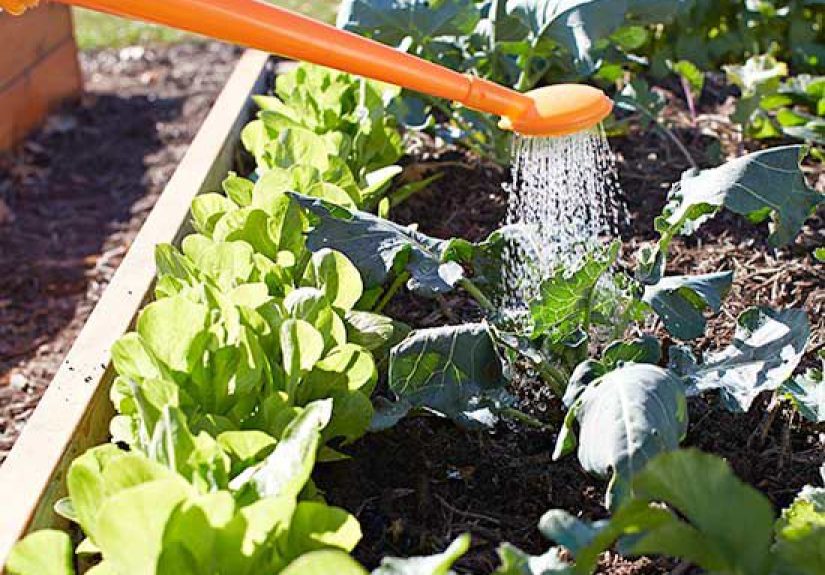
Watering Raised Beds: The Goldilocks Zone
Raised beds usually drain faster than in-ground gardens, especially if the mix contains a lot of compost or soilless materials.
Your job is to keep moisture consistentbecause many garden problems (bitterness, cracking, blossom-end rot, bolting) are essentially plants screaming, “My watering schedule is chaos!”
Best watering strategies
- Drip irrigation or soaker hoses: efficient, less disease pressure than overhead watering, and you can automate it.
- Water deeply, not constantly: encourage deeper roots and more resilient plants.
- Mulch: reduces evaporation and keeps soil temperature steadier.
- Morning watering: plants start the day hydrated; leaves dry faster if you do overhead watering.
Mulch that plays well with organic gardens
- Straw (seed-free when possible)
- Shredded leaves (light layer, not a thick soggy blanket)
- Untreated grass clippings (thin layers to avoid matting)
- Compost as a thin mulch/top-dress
Organic Fertility: Feed the Soil, Not Just the Plant
Organic fertility is slow-release, soil-first nutrition. Instead of dumping fast fertilizer and hoping for the best, you build a system:
compost, gentle amendments, and ongoing organic matter that supports nutrient cycling.
Simple organic fertility plan for raised beds
- At planting: mix compost into the top few inches (or use compost as part of your soil mix from the start).
- Midseason boost: side-dress heavy feeders (tomatoes, squash, corn) with compost or an organic fertilizer per label directions.
- End of season: top-dress with about 1 inch of compost and cover with mulch to protect the soil.
Common organic amendments include worm castings, alfalfa meal, feather meal, kelp meal, and rock minerals.
Use them intentionally: “more” isn’t automatically “better,” especially with phosphorus-heavy materials.
Weeds: Win the War With Prevention
The fastest way to reduce weeding is to block weeds from getting started. The second-fastest way is to stop inviting weed seeds to the party.
Weed control that doesn’t require heroic effort
- Cardboard base layer: if placing beds over grass, lay overlapping cardboard and wet it before adding soil.
- Mulch pathways: keeps mud down and weeds from colonizing your walkways.
- Plant spacing + canopy: once plants fill in, they shade the soil and suppress weeds naturally.
- Hand pull early: baby weeds are a 30-second task; mature weeds are a weekend and a personal feud.
Organic Pest & Disease Control: IPM, Not Panic Sprays
Organic gardening doesn’t mean “never deal with pests.” It means you deal with them thoughtfully, starting with the least disruptive options.
Think of it as Integrated Pest Management (IPM): observe, identify, prevent, and only then treat.
The organic IPM ladder (use in order)
- Healthy soil: vigorous plants are harder to overwhelm.
- Physical barriers: row covers, insect netting, collars for cutworms.
- Hand removal: yes, it’s weirdly satisfying.
- Water spray: many soft-bodied pests (like aphids) can be knocked off with a strong stream of water.
- Least-toxic products: insecticidal soaps and horticultural oils when needed, used correctly and sparingly.
Example: Aphids in a raised bed
If you see curled leaves and clusters of tiny insects, start by blasting them off with water and checking back over the next few days.
Encourage beneficial insects by planting a few flowers nearby (alyssum, calendula, dill allowed to bloom).
If the infestation persists, insecticidal soap or a light horticultural oil application can helpfollowing label directions and spraying when temperatures are moderate.
Companion Planting: Helpful, But Not Magic Spells
Companion planting gets hyped like a gardening horoscope (“Plant basil near tomatoes and your life will improve!”).
Some pairings are genuinely usefulespecially for attracting beneficial insects and maximizing spacewhile other claims are more folklore than fact.
Use it as a tool, not a superstition.
Companion strategies that make sense
- Flowers for beneficial insects: tuck in small blooms to support predators and pollinators.
- Vertical + low crops: trellis cucumbers with lettuce beneath to shade soil and save space.
- Trap crops (advanced): sacrificial plants that lure pests away from your main crop.
Crop Rotation in Raised Beds (Yes, Still Necessary)
Even in a small raised bed, rotating plant families helps reduce disease and pest buildup and balances nutrient demand.
You don’t need a perfect four-year spreadsheet. You need a basic plan that avoids planting the same family in the same spot every year.
A simple rotation approach
- Nightshades: tomatoes, peppers, eggplant, potatoes
- Cucurbits: cucumbers, squash, melons
- Legumes: beans, peas (often lighter feeders, helpful in rotations)
- Brassicas: broccoli, cabbage, kale
- Roots/alliums: carrots, beets, onions, garlic
If you have only one bed, rotate sections within it or alternate what you grow each year (for example: tomatoes one year, beans the next, then greens/roots).
Food Safety: Soil Contamination and Raised Beds
If you live near older homes or urban areas, soil contaminationespecially leadcan be a real concern. Raised beds filled with clean soil are a common risk-reduction strategy.
Also practice smart habits: mulch to reduce splash, wash produce well, peel root crops when appropriate, and keep soil from tracking into your home.
Extra-safe steps if you’re concerned about lead
- Consider a soil test for contaminants if your site history suggests risk (older paint, near roads, industrial areas).
- Use raised beds with clean soil and compost if contamination is suspected.
- Maintain near-neutral soil pH and keep soil covered with mulch to reduce exposure.
- Wash hands after gardening (yes, even if you wore gloves and feel invincible).
Seasonal Maintenance: Keep the Bed Improving Every Year
Raised beds settle over time. That’s normal: organic matter breaks down (which is good), and the soil level drops (which is mildly annoying).
Plan to top up annually and you’ll keep the bed productive without starting over.
Spring
- Loosen the top few inches gently (avoid deep digging that disrupts soil structure).
- Add compost as a top-dress and pull it into the surface lightly.
- Set up drip/soaker irrigation before plants get big and dramatic.
Summer
- Mulch, monitor moisture, and scout for pests weekly.
- Succession plant quick crops (radishes, lettuce, bush beans) in open spots.
Fall/Winter
- Remove diseased plant debris (compost healthy material; discard the questionable stuff).
- Top-dress with compost and cover with mulch or a cover crop.
- Clean tools and store supports so next season starts smoothly.
Quick Start: Your First Organic Raised Bed Plan
If you want a simple win, start with one 4×8 bed and grow a mix of “high reward, low heartbreak” crops:
- Leafy greens: lettuce, spinach, kale (quick payoff, forgiving)
- Herbs: basil, parsley, chives (expensive at the store, easy in the garden)
- Roots: carrots or beets (satisfying, space-efficient)
- One showpiece: a tomato or cucumber on a trellis (because you deserve a main character)
Build the soil mix, mulch early, water consistently, and keep notes. Gardening is part biology, part weather roulette, and part learning what works in your exact yard.
Experience-Based Lessons From Raised Beds ()
Gardeners rarely mess up because they’re lazy. They mess up because gardening looks deceptively simple on the internet.
A raised bed photo shows tidy seedlings and perfect spacingwhat it doesn’t show is the week the temperature hit 96°F, the hose nozzle vanished,
and the basil decided to bolt like it had a flight to catch.
One of the most common “first bed” mistakes is filling the whole thing with compost because compost feels like pure goodness. The bed looks rich and dark, plants grow fast…
and then the soil level drops like a bad soufflé. Compost breaks down. That’s part of its magic. But when it’s the whole bed, that breakdown can mean shrinking volume,
inconsistent moisture, and nutrient imbalances. The lesson most gardeners eventually learn is boring but powerful: a balanced mix (soil + compost) behaves better all season long.
The second classic lesson: raised beds can dry out faster than you expect, especially during heat or wind. Many gardeners start by watering “a little every day”
because it feels nurturing. But shallow, frequent watering trains roots to stay near the surfaceexactly where soil swings from wet to bone-dry in a raised bed.
The more reliable approach is deep watering less often, then using mulch as a moisture manager. If your bed is mulched and you’re watering deeply,
you’ll notice fewer bitter cucumbers, fewer cracked tomatoes, and fewer moments where you stare at your plants like, “Why are you being so dramatic?”
Another experience-based reality: spacing is emotional. Seed packets recommend spacing that seems comically wide when your seedlings are tiny.
So gardeners crowd everything in, because it feels efficient… until midsummer when the bed becomes a leafy jungle with poor airflow,
and suddenly powdery mildew is throwing a party. A simple trick gardeners adopt is to plant in “generous” spacing early, then use the extra gaps for quick crops:
radishes, baby lettuce, or green onions. That way you get more harvest without turning your bed into a humidity dome.
Pest control also evolves with experience. Beginners often go from “I will live in harmony with nature” to “I will declare war on all insects”
the first time aphids show up. Experienced organic gardeners do something calmer: they scout, they identify, they start with physical solutions,
and they accept that a little pest pressure is normal. A strong spray of water can solve more problems than people expect.
And when you plant a few flowers or let herbs bloom, you begin to notice helperslady beetles, lacewings, tiny parasitic waspsdoing free labor.
Finally, gardeners learn to design for convenience. If your path is too narrow, you’ll step where you shouldn’t. If the bed is too wide,
you’ll compact soil reaching for that one stubborn weed in the middle. If you have to drag the hose across the yard, you’ll water less consistently.
The best raised-bed gardens aren’t just fertilethey’re easy to use. When the garden fits your routine, you show up more often, and the bed rewards you.
That’s the real secret: not perfection, but consistency with a system that makes consistency feel effortless.
Conclusion
Organic gardening in raised beds is a practical, high-success way to grow food: build a reachable bed, fill it with a balanced soil/compost mix, water deeply and mulch,
feed the soil steadily, rotate crops as best you can, and handle pests with calm IPM steps instead of panic.
Each season, the bed gets betterbecause organic gardening is less about chasing quick fixes and more about building a living foundation that improves over time.