Table of Contents >> Show >> Hide
- Quick Answer: Which Step Ladder Is Best Overall?
- Bob Vila’s Tested Top Picks at a Glance
- What Actually Makes a Step Ladder Good?
- How to Use a Step Ladder Safely
- Best Step Ladder by Use Case
- What We Learn From Bob Vila’s Testing
- 500 Extra Words of Real-World Experience With Step Ladders
- Final Thoughts
If you have ever tried to change a lightbulb while balancing on a dining chair, this article is your gentle intervention. A good step ladder is one of those tools that seems boring until the exact moment you need it. Then suddenly it becomes the MVP of painting projects, closet organization, garage cleanups, and every “I’ll just reach that real quick” mission that has ever ended with regret.
According to Bob Vila’s expert-tested roundup, the standout pick was the Louisville Ladder 6-Foot Fiberglass Cross Step Ladder, praised for its stability, smart accessory tray, and versatile cross-step design that can lean more securely against flat walls or outside corners. That makes it a strong all-around choice for homeowners and pros who want one ladder that does not wobble like it just drank three espressos.
But the best step ladder for you depends on what you actually do. Need a lightweight helper for pantry shelves and picture frames? That is different from needing a tall outdoor ladder for gutters, or a platform model for longer paint sessions. So instead of tossing random product names at you like confetti, this guide breaks down the best step ladders, what Bob Vila’s testing suggests, and how to choose one without turning a simple home project into an accidental acrobatics routine.
Quick Answer: Which Step Ladder Is Best Overall?
If you want the headline first and the details second, here it is: the Louisville Ladder 6-Foot Fiberglass Cross Step Ladder is the best overall step ladder in Bob Vila’s tested roundup. It earned that spot because it checks the boxes that matter most: solid stability, safe footing, durable construction, and practical features like a tray for tools and supplies.
It also represents what many experts look for in a dependable ladder: a duty rating suited to real work, a material choice that fits the job, and a design that feels secure underfoot. In other words, it is not just a ladder. It is a confidence booster with rungs.
Bob Vila’s Tested Top Picks at a Glance
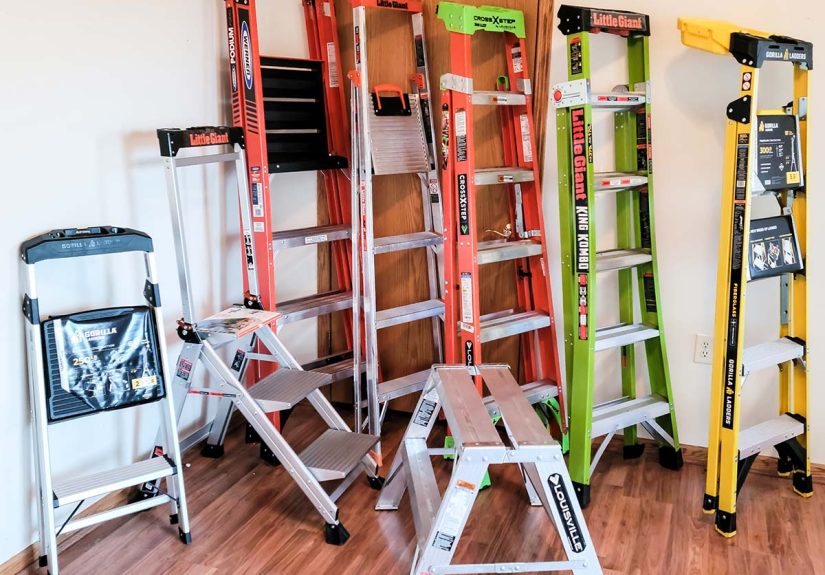
Bob Vila’s experts tested nine step ladders after researching a much larger field, and several models stood out for different needs. Here is the short version of the lineup:
Best Overall
Louisville Ladder 6-Foot Fiberglass Cross Step Ladder Best for shoppers who want stability, versatility, and professional-grade feel in one package.
Best Bang for the Buck
Gorilla Ladders 2-Step Aluminum Step Stool Ladder A compact, affordable option that works well for quick indoor tasks like reaching upper cabinets, swapping décor, or finally dealing with that smoke detector battery that has been chirping like a tiny villain.
Best Hands-Free
Louisville Ladder 2-Foot Aluminum Sawhorse A clever hybrid pick that doubles as a sawhorse, making it useful for people who want one tool to do more than one job.
Best Lightweight
Little Giant Flip-N-Lite 6-Foot Aluminum Ladder A smart choice if portability is high on your list. It is easier to carry around the house or jobsite, though lightweight models can sometimes feel slightly less planted on slick flooring.
Best Outdoor
Louisville Ladder 10-Foot Aluminum Step Ladder Great for single-story exterior work such as windows, gutters, and trim. It offers more reach while staying in the familiar step ladder format.
Best Dual-Platform
Gorilla Ladders Fiberglass Dual-Platform Ladder Useful for overhead tasks where a roomier standing surface can make a long project more comfortable.
Best Extendable
Little Giant King Kombo Professional Ladder A versatile option for shoppers who want a ladder that can adapt to more than one setup.
Taken together, those picks show an important truth: there is no single “best step ladder” for every person and every job. There is only the best match between the work, the height, the weight load, and the user’s comfort level.
What Actually Makes a Step Ladder Good?
A quality step ladder should feel boring in the best possible way. It should open smoothly, stand solidly, and inspire exactly zero dramatic speeches while you are on it. The key factors are reach, material, duty rating, stability, and convenience features.
1. Duty Rating Matters More Than Marketing
One of the most important things to check is the ladder’s duty rating. This tells you how much weight the ladder is designed to handle, including the user plus tools, paint cans, hardware, and anything else going up with you. That “plus tools” detail is where many people accidentally get overconfident.
Common ladder duty ratings include:
- Type III: 200 pounds
- Type II: 225 pounds
- Type I: 250 pounds
- Type IA: 300 pounds
- Type IAA: 375 pounds
For most homeowners, a Type I or Type IA ladder is a practical sweet spot. If you carry tools often, want something sturdier, or simply prefer extra margin, Type IA is a very sensible choice.
2. Fiberglass vs. Aluminum
This is the classic ladder showdown.
Fiberglass step ladders are usually heavier, but they are favored for work near electricity because they are non-conductive. They also tend to feel more planted and substantial. If you are doing electrical work, replacing fixtures, or working anywhere near wiring, fiberglass is the smarter pick.
Aluminum step ladders are lighter and easier to carry, which makes them appealing for everyday household jobs. They also resist corrosion well, making them handy for indoor and outdoor use. The catch is simple: aluminum conducts electricity, so it is not the material to choose around live electrical hazards.
If you are torn between the two, ask yourself a brutally honest question: “Do I want maximum portability, or maximum electrical safety?” Your answer will usually decide the material for you in about three seconds.
3. Ladder Height Should Match the Job
Bigger is not always better. A ladder that is too short encourages overreaching, while one that is too tall can feel awkward indoors and annoying to store. Buying the right size is less glamorous than buying the flashiest model, but it is far more useful.
As a general rule, step ladders are ideal for indoor tasks and places where you do not have a wall to lean against. Retail buying guides note that users should not stand on the top step or top cap, and many suggest thinking in terms of safe reach rather than raw ladder height. For many home tasks, a 4-foot or 6-foot step ladder is the practical workhorse. Taller 8-foot and 10-foot models are better suited to larger rooms, foyers, and exterior work.
4. Stability Beats Fancy Features
A ladder can have every tray, hook, bucket, and gadget known to humankind, but if it feels shaky, it is not the right ladder. Stability comes from good spreaders, secure locking, quality feet, sturdy rails, and a design that stays planted without slipping or twisting.
That is one reason Bob Vila’s best overall pick earned such praise. Its nonslip feet and stable construction performed well in testing, and its cross-step design added practical versatility without sacrificing security.
5. Features That Make Life Easier
Once the safety basics are covered, convenience features really can improve the user experience. Tool trays, pail shelves, magnetic holders, project buckets, and handrails may sound minor, but they can save a lot of climbing up and down. And your knees, back, and patience tend to appreciate fewer trips.
Platform-style ladders are especially appealing for longer tasks like painting, because they give you a larger standing area and often a rail for extra contact and confidence. If you spend more than a few minutes at a time on a ladder, a platform design can feel like a luxury upgrade.
How to Use a Step Ladder Safely
Let us now have the least exciting but most important conversation in ladder ownership: safety. OSHA guidance is wonderfully direct here, which is appropriate because gravity is not a negotiator.
- Always fully open the ladder and lock the spreaders before climbing.
- Place it on a stable, level, non-slippery surface.
- Maintain three points of contact when climbing up or down.
- Do not stand on the top step or the top cap.
- Do not move the ladder while someone is on it.
- Do not overload it beyond the rated capacity.
- Inspect it regularly for cracks, bent parts, loose feet, or other defects.
- Do not use metal ladders near power lines or electrical equipment.
Those rules are not there to ruin anyone’s DIY fun. They are there because ladder accidents are common, predictable, and often completely preventable. In fact, even experienced users can get careless with overreaching, leaning sideways, or improvising on uneven ground. A good ladder helps, but safe habits matter just as much.
Best Step Ladder by Use Case
For Everyday Indoor Tasks
A 2-step or 3-step aluminum model works well for kitchens, pantries, closets, and laundry rooms. If your usual job is “reach something five inches beyond normal human dignity,” a compact step stool ladder may be all you need.
For Painting and Longer Projects
A 4-foot or 6-foot fiberglass or platform ladder is often the sweet spot. The extra height, wider standing area, and room for tools make longer projects less tiring.
For Exterior Home Maintenance
If you are cleaning first-story gutters, trimming around windows, or touching up fascia boards, a taller step ladder such as a 10-foot aluminum model may be appropriate. Just make sure a step ladder is actually the right ladder for the task. For some exterior jobs, an extension ladder may be a better and safer fit.
For Pros or Heavy Tool Loads
Look for Type IA or Type IAA duty ratings. These higher-capacity ladders are better suited to users carrying tools, materials, or heavier gear. This is not the place to save twenty bucks and gain twenty extra worries.
What We Learn From Bob Vila’s Testing
The biggest takeaway from Bob Vila’s tested roundup is that step ladders are no longer just simple folding A-frames with no personality. Today’s better models are designed around how people actually work. That means more secure footing, smarter trays, better portability, and specialty designs for painters, tradespeople, and homeowners.
It also shows that practical details matter. A ladder that is slightly heavier may be worth it if it feels more stable. A compact ladder may be perfect for quick tasks, but not ideal for side-leaning or extended overhead work. A platform ladder may cost more, yet feel dramatically better during a half-day painting project. In short, the “best” ladder is often the one that reduces hassle while quietly keeping you safe.
500 Extra Words of Real-World Experience With Step Ladders
Anyone who has used step ladders for a few years learns the same lesson: the difference between a decent ladder and a great ladder becomes obvious the second you step onto it. On paper, many ladders seem similar. They all fold. They all climb. They all promise stability in cheerful product descriptions. But real life is less forgiving than product copy.
A flimsy ladder announces itself immediately. It shifts a little on the floor. It makes you hesitate before climbing that next step. It gives you that tiny voice in your head that says, “Maybe let us not lean two inches to the left while holding a paint roller.” A better ladder feels calm. It opens without a wrestling match, locks with confidence, and stays where you put it. That feeling matters more than people expect, especially during repetitive jobs.
Take painting, for example. On a short task like hanging one picture frame, almost any decent ladder may seem fine. But spend an hour cutting in paint along a ceiling line, and every design choice becomes noticeable. A narrow standing area gets old fast. A missing tray means constant trips down for brushes, tape, or a rag. A ladder without a good top rail can make overhead work feel much less secure. That is why platform designs and ladders with accessory storage get so much love from people who actually use them.
The same goes for seasonal house chores. Pulling down holiday bins from a garage shelf sounds simple until you realize you are holding a bulky plastic tote while trying to stay centered on the ladder. In those moments, a wide stance, strong feet, and a stable frame are not “nice extras.” They are the whole game. Even a little wobble feels ten times bigger when your arms are full and your balance is doing advanced mathematics.
There is also the portability factor. Some homeowners genuinely need a heavier fiberglass ladder because they work around electrical fixtures or prefer the planted feel. Others know they will carry the ladder from room to room every weekend, and a lighter aluminum model makes more sense. Neither group is wrong. The best ladder often depends on whether you are a “one project in the foyer” person or a “drag this thing all over the house while muttering about baseboards” person.
Storage is another underappreciated issue. A great ladder that is miserable to store can become a great ladder that you stop using. Compact folding models earn points here, especially in apartments, townhouses, and garages already filled with bikes, bins, and mystery extension cords that somehow reproduce in the dark.
Over time, most experienced DIYers stop chasing the cheapest ladder and start looking for the one they trust. Trust is the real product. It is the confidence that the feet will grip, the spreaders will lock, and the steps will feel solid when the task takes longer than expected. That is why Bob Vila’s tested results resonate. The top picks are not just ladders that look good in a listing. They are ladders that perform in the messy, ordinary, very human world of actual projects.
And honestly, that is what you want. Not drama. Not thrills. Just a ladder that helps you reach the high shelf, finish the room, clean the gutters, and step down again with your dignity fully intact.
Final Thoughts
The best step ladders are the ones that match your work, support your weight safely, and make overhead tasks feel steady instead of sketchy. Bob Vila’s tested roundup points clearly to the Louisville Ladder 6-Foot Fiberglass Cross Step Ladder as the best overall option thanks to its stability, versatility, and practical design. But shoppers with different needs may be better served by a compact aluminum step stool, a roomier platform ladder, or a taller outdoor model.
If you remember just three things, make them these: buy the right height, choose the right material, and respect the duty rating. Do that, and your step ladder will become one of the most useful tools in your home instead of one of the most regrettable impulse buys in your garage.