Table of Contents >> Show >> Hide
- Why Coca-Cola’s Holiday Ads Matter More Than Most Ads
- What Coca-Cola Was Actually Trying to Do
- Why Critics Had a Field Day
- This Was Not Just a Bad Vibes Moment. It Revealed a Bigger AI Advertising Problem
- Why the “AI Bubble-Popping” Framing Fits
- What Brands Should Learn From Coca-Cola’s Holiday Experiment
- The Viewer Experience: When Holiday Magic Turns Slightly Robotic
- Conclusion
The holiday season has always been a friendly ambush. One minute you are buying toothpaste, the next minute you are being emotionally body-slammed by snow, sleigh bells, red trucks, and a beverage brand whispering, “Remember joy?” That formula has worked beautifully for Coca-Cola for decades. So when the company rolled out AI-generated holiday commercials inspired by its beloved Holidays Are Coming campaign, it did not just release an ad. It poked a glitter-covered stick directly into one of advertising’s most sentimental beehives.
The backlash came quickly, loudly, and with the subtlety of a fruitcake through a window. Critics called the campaign eerie, hollow, uncanny, and a little too machine-made for a season built on warmth and human feeling. Supporters argued that Coca-Cola was simply experimenting with new creative tools. But the real reason this story blew up is bigger than one commercial. It exposed a growing tension in modern marketing: brands love AI for speed, scale, and novelty, while audiences still want ads to feel like they were made by actual people with actual pulse rates.
In other words, the soda was fizzy. The mood was not.
Why Coca-Cola’s Holiday Ads Matter More Than Most Ads
Coca-Cola is not just another brand that runs seasonal commercials. It owns a giant piece of holiday advertising mythology. Its Christmas imagery has been shaping festive culture for generations, and its 1995 Holidays Are Coming truck ad became one of those rare commercials that people do not just watch, but ritualize. For many viewers, seeing those illuminated trucks roll through snow is less like receiving a sales message and more like hearing the starter pistol for December.
That emotional history is exactly why the company’s AI remake triggered such a strong response. Coca-Cola was not tinkering with a forgettable banner ad or an experimental social clip buried in an app. It was revisiting sacred holiday advertising territory. Nostalgia is powerful, but it is also picky. If you remake something people genuinely love, the new version had better earn its place at the table instead of showing up like a weird cousin generated by prompt.
To be fair, Coca-Cola did not hide the fact that it was experimenting. The company said creative technologists from three production houses reimagined the 1995 commercial using AI tools and emphasized that human storytelling remained part of the process. It also highlighted AI’s ability to personalize and localize content at scale, so different viewers could see small regional touches in the same campaign. From a marketing innovation perspective, that sounds smart. From a viewer-emotion perspective, it is a little like saying, “Sure, the gingerbread house collapsed, but look how efficient the frosting pipeline was.”
What Coca-Cola Was Actually Trying to Do
Before we join the internet in throwing candy canes at the screen, it helps to understand Coca-Cola’s bigger strategy. The company had already been leaning into AI well before this holiday ad became a lightning rod. In 2023, it launched Create Real Magic, a platform built with OpenAI and Bain that let digital artists generate branded artwork using GPT-4 and DALL-E. Coca-Cola framed that initiative as co-creation rather than replacement, positioning AI as a tool for experimentation, iteration, and creative access.
By late 2024, the brand had pushed further into AI-driven holiday experiences, including digital interactions with an AI-powered Santa and personalized snow globe content. Seen from inside the company, the holiday commercials were not a random stunt. They were another step in a broader effort to fuse heritage branding with emerging technology. Coca-Cola’s executives and partners described the goal as a blend of human artistry and machine-assisted production.
That logic makes sense on paper. AI can help brands move faster, make variations more efficiently, and produce hyper-local creative without rebuilding every asset from scratch. Fast Company reported that Coca-Cola asked three different studios to create their own interpretations of the 1995 spot using models such as Leonardo, Luma, and Runway. That is not a tiny experiment. That is a major brand saying, “We are going to see what happens when we remix tradition with the hottest technology in the room.”
The problem is that audiences do not grade ads like product managers. They do not hand out points for workflow efficiency. They react to how something feels. And once holiday advertising stops feeling warm and starts feeling algorithmically assembled, people notice fast.
Why Critics Had a Field Day
The Uncanny Valley Showed Up Wearing a Santa Hat
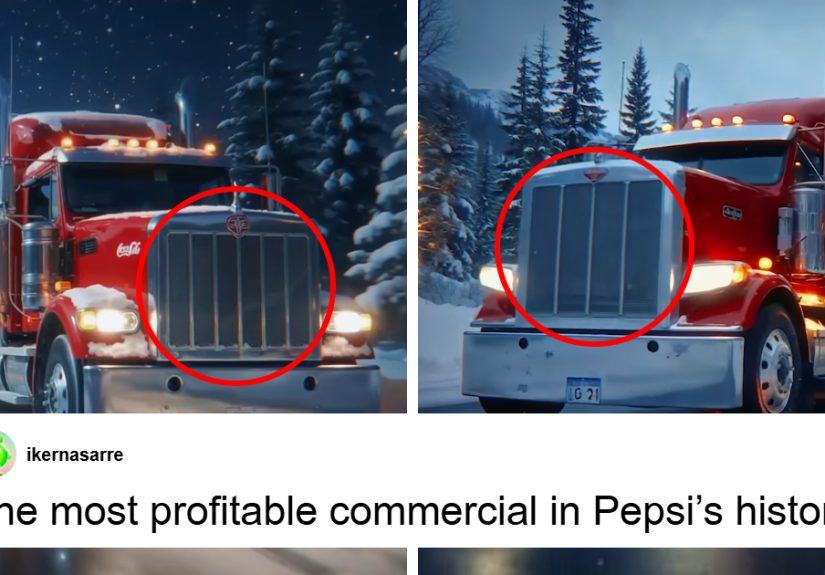
The biggest complaint was visual. Many viewers felt the ad looked almost right, which is often much worse than looking obviously fake. AI-generated video can now deliver atmosphere, movement, lighting, and spectacle at impressive speed, but it still struggles with consistency, natural human presence, and that tiny invisible thing people call “believability” when they do not want to say “soul.”
Gizmodo summed up the reaction by describing the comments under one of the videos as a war zone. The outlet noted that the ad had the hallmarks of AI imagery that makes people uncomfortable: characters that seemed just slightly off, frames that moved too quickly, and human figures that felt more mannequin than memory. That reaction matters because Christmas advertising is supposed to feel emotionally inviting. When viewers are busy scanning faces for weirdness, the magic has already left the building.
Nostalgia Is Hard to Fake
Coca-Cola’s gamble relied on nostalgia doing a lot of heavy lifting. The company was not inventing a new holiday symbol. It was borrowing affection from an old one. That can work brilliantly when the remake adds a fresh perspective or deepens the emotional connection. It works less well when the audience feels like the original has been copied, polished, and run through a synthetic-image blender.
This is where the backlash became more philosophical than technical. Critics were not merely saying, “The animation is weird.” They were asking whether a brand can automate the feeling of tradition without draining it of authenticity. Holiday ads are little emotional machines built from memory, music, ritual, and comfort. If the audience senses that the warmth has been manufactured too mechanically, the whole thing starts to feel like a department store Santa with suspiciously perfect eyelashes.
The Creative Labor Anxiety Was Always in the Room
Another reason the campaign got hammered is that AI in advertising is no longer a neutral novelty. It comes with baggage. When audiences hear that a giant brand used generative AI for a major campaign, many do not hear “cool new tool.” They hear “cost cutting,” “creative replacement,” or “another sign that human artists are being nudged toward the exit.”
Fortune noted that some critics said the Coca-Cola ads felt unnatural and accused the company of undermining the value of human artists and animators. That concern helped turn an ad critique into a cultural critique. Once viewers believe a campaign symbolizes a larger shift away from human creativity, they are no longer reviewing a commercial. They are judging a business decision, an industry trend, and maybe civilization before lunch.
This Was Not Just a Bad Vibes Moment. It Revealed a Bigger AI Advertising Problem
The Coca-Cola backlash landed in a market where consumer trust in AI was already shaky. Marketing Dive highlighted research showing that simply labeling something as “AI-powered” can lower purchasing intention, largely because the term reduces emotional trust. That is a huge clue for marketers. AI is not just a production method; for many consumers, it is a loaded signal. It can suggest efficiency, yes, but it can also imply risk, distance, impersonality, and a reduced human role.
That helps explain why people can react so strongly even when an AI-generated ad is technically competent. The issue is not only whether the visuals pass inspection. It is whether the audience believes the brand is using technology in a way that respects the emotional stakes of the moment. In a product demo, viewers may be forgiving. In a holiday commercial built on warmth and memory, tolerance drops fast.
Industry research from IAB reinforces the same point. The group found a widening gap between how positively advertising executives think younger consumers feel about AI-generated ads and how those consumers actually feel. That disconnect is important because it suggests the people building AI campaigns may be more enthusiastic about the technology than the people watching the final result. That is not innovation. That is a vibes mismatch with a media budget.
Disclosure plays into this too. People increasingly want to know when AI is being used, but disclosure alone does not automatically solve the trust problem. If the work still feels cold, artificial, or undercooked, a label will not rescue it. Transparency matters. So does quality. So does judgment. An ad can be honestly disclosed and still land like a robotic caroler at your front door.
Why the “AI Bubble-Popping” Framing Fits
The phrase “AI bubble-popping” feels dramatic, but it captures something real. For a while, the loudest conversation around generative AI in marketing was all upside: faster production, infinite variations, lower costs, bigger personalization, endless scale. Coca-Cola’s holiday campaign helped puncture that hype by showing the limits of what happens when efficiency collides with emotional branding.
This does not mean AI is useless in advertising. Not even close. It means the fantasy that audiences will happily accept machine-made creative just because the tools are fast or novel is fading. The market is maturing. People are not dazzled by AI simply because it is AI anymore. They are asking harder questions. Does it look good? Does it feel human? Does it serve the story? Was it used thoughtfully, or was it used because the brand wanted to say it used AI?
Coca-Cola’s defenders argue that the company is doing what major brands should do: experiment in public, learn quickly, and push creative technology forward. There is truth in that. Fast Company even made the case that the real issue is not AI itself but the quality of the creative execution and the humans guiding it. Fair enough. But that defense still leads to the same conclusion critics were making. If the execution does not work, the audience does not care that the workflow was innovative.
Holiday advertising is a brutal testing ground because it amplifies emotional expectations. A tech-forward sneaker ad can get away with a little surrealism. A Christmas ad tied to a beloved tradition cannot. When people reach for holiday nostalgia, they want glow, comfort, and sincerity. They do not want to feel like they are trapped inside a very expensive software demo.
What Brands Should Learn From Coca-Cola’s Holiday Experiment
Use AI Where It Adds Value, Not Where It Replaces Feeling
AI can be fantastic for rapid ideation, versioning, localization, background asset generation, and testing. Coca-Cola itself highlighted hyper-local customization as one of the campaign’s advantages. That makes sense. The lesson is not “never use AI.” The lesson is “do not make AI the star when the audience came for emotion.”
Do Not Remake a Beloved Classic Unless You Can Beat the Memory of It
Remaking iconic creative is risky even with traditional tools. Doing it with AI raises the difficulty level. People compare the new version not just to the original ad, but to their own holiday memories attached to it. That is an unfair contest, and unfair contests are where backlash goes to breed.
Human Craft Needs to Be More Than a Press Release Talking Point
Coca-Cola repeatedly stressed that humans were involved. That is good. But audiences want to feel that human touch in the work itself, not just read about it afterward. If viewers finish the ad thinking about prompts, pipelines, and missing soul, the communication strategy has already failed.
Trust Is Now Part of the Creative Brief
Brands can no longer treat trust as a legal or public relations issue that gets handled after launch. If AI use is likely to raise concerns about authenticity, labor, or transparency, those concerns need to be designed for from the start. In 2025 and beyond, “Can we make this?” is no longer enough. “How will people feel about the way we made this?” belongs in the same room.
The Viewer Experience: When Holiday Magic Turns Slightly Robotic
What makes the Coca-Cola story fascinating is not just the ad itself, but the experience of watching it in the current cultural moment. For a lot of viewers, the reaction unfolds in stages. First comes recognition: the trucks, the snow, the music, the familiar visual language that says, “Ah yes, the holidays have arrived and apparently they are sponsored.” Then comes the second beat, the weird one. Something feels off. Maybe it is the movement. Maybe it is a face that looks polished but strangely vacant. Maybe it is the overall texture, which appears glossy in a way that feels less cinematic and more computational. You do not always notice the issue in a single frame. You notice it in your nervous system.
That is the uncanny valley doing its cheerful little tap dance. Viewers know what warmth is supposed to look like in a holiday ad. They know what a shared smile, a neighborhood street, or a magical truck convoy is supposed to feel like. When the image gets close but not close enough, the mind stops relaxing and starts auditing. Instead of being swept into the story, people begin inspecting it for clues. Is that hand strange? Why did that motion feel slippery? Why does everything seem correct and yet faintly haunted?
That experience is especially jarring during the holidays because seasonal advertising does not function like ordinary advertising. It is tied to ritual. Families watch the same movies, hear the same songs, unwrap the same decorations, and yes, sometimes anticipate the same commercials. The emotional contract is simple: make me feel something familiar, but do it well. AI-generated creative can absolutely participate in that world someday, but when it misses, it misses loudly because it is stepping into a space people protect with unusual intensity.
There is also a social experience layered on top of the visual one. The moment viewers suspect AI, many no longer respond privately. They turn into critics, meme makers, amateur animation detectives, and philosophers of decline. A single ad becomes a group project in cultural interpretation. Some people focus on the glitches. Some focus on labor. Some defend the experiment because they are tired of anti-AI panic. Others just feel sad that a classic holiday campaign now seems optimized by the same logic that automates everything else.
That is why the conversation around Coca-Cola’s commercial ballooned so quickly. People were not merely rating an ad from one to ten. They were using it as a stand-in for a larger fear: that brands may decide “good enough” synthetic feeling is acceptable, especially if it is cheaper, faster, and easier to scale. During the holidays, that fear hits harder. Consumers will tolerate many things from brands, but a machine-made version of comfort is a tricky sell. If joy starts looking mass-rendered, people do not just dislike the ad. They begin to wonder whether the people behind it understand what they loved about the original in the first place.
And that, more than any glitch or awkward frame, is the real experience at the center of this story. The ad reminded viewers that AI can imitate the symbols of holiday magic. What it cannot automatically generate is the trust that magic depends on. That still has to be earned the old-fashioned way: with taste, judgment, human craft, and a very good reason for changing something people already loved.
Conclusion
Coca-Cola’s AI-generated holiday commercial became a lightning rod because it collided with three sensitive things at once: nostalgia, trust, and creative labor. The company saw a chance to modernize a classic campaign with faster tools, personalized variations, and flashy new production methods. Critics saw uncanny visuals, emotional flatness, and a brand trying to automate warmth. Both views matter, but the backlash revealed the deeper truth. In emotionally charged advertising, audiences do not reward innovation for its own sake. They reward work that feels honest, human, and worth remembering.
So yes, the holidays are coming. But Coca-Cola’s AI ad showed that the public is also entering a more skeptical phase of the generative AI era. The hype is no longer enough. The novelty is wearing off. If brands want to use AI in major campaigns, especially ones built on sentiment and tradition, they will need more than impressive tools. They will need better taste, clearer disclosure, stronger human stewardship, and creative that does not feel like it was assembled by a snow globe with server access.