Table of Contents >> Show >> Hide
- Why This Intro Hits Different Than the Original
- What We Actually Know (And What the Intro Is Only Hinting At)
- The Intro’s Biggest Mysteries (Aka: “Pause This Like You’re Studying the Zapruder Film”)
- 1) Why do the Hills leave… and who’s in their house?
- 2) “Gribble for Mayor” (or: the most terrifying sentence in local politics)
- 3) Nancy and John Redcorn: did that story really come back?
- 4) The pandemic era exists here, and the intro doesn’t tiptoe around it
- 5) Bill: is he okay, and what does “okay” even mean for Bill?
- 6) Boomhauer with a kid? Boomhauer with responsibilities? Who wrote this sci-fi?
- 7) Ladybird’s absence is loud (even when the intro is silent about it)
- 8) Arlen itself: modern life is the new antagonist
- Why Hulu Dropped the Intro First (And Why It Worked)
- What the Intro Suggests the Revival Is Really About
- The Questions Fans Want Answered (Because the Intro Started This)
- Conclusion: An Intro That’s Basically a Thesis Statement
- Viewer Experiences: Watching the Intro Like It’s a Mini-Episode (And Loving the Chaos)
Some TV intros are just a vibe. King of the Hill’s original opening was basically a cozy time machine: the same alley, the same fence, the same cold beers, and the comforting reminder thatno matter what life throws at youHank, Dale, Bill, and Boomhauer will still be right there doing the most important work in America: standing.
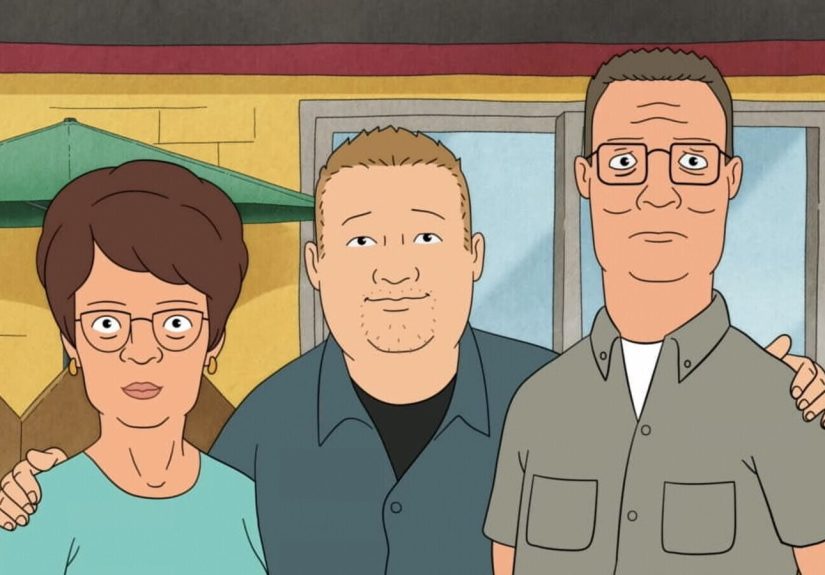
Then Hulu dropped the revival’s opening credits and said, “Here. Enjoy this 30-second emotional roller coaster. Also, good luck.” Because the new intro doesn’t just reintroduce the show. It teases an entire missing decade like a polite Texas neighbor casually mentioning, “Oh yeah, we moved away, the town changed, and several major life events happened. Anyway, how ’bout that weather?”
The result is an intro that feels less like a theme sequence and more like a mystery trailer: it’s packed with visual breadcrumbs, quick-cut clues, and blink-and-you-miss-it moments that practically beg viewers to pause, rewind, and form a conspiracy board (which, frankly, Dale would respect).
Why This Intro Hits Different Than the Original
The classic intro’s genius was simple: time sped up, but the guys didn’t. Days turned into nights, weather changed, holidays happened, and the alley crew stayed planted like four mildly judgmental lawn gnomes with better dialogue.
The revival intro borrows the same basic ideatime moves fastbut turns the dial from “days” to “years.” Instead of showing that the guys will stand there through anything, it shows that life happened without Hank… and Arlen didn’t exactly sit quietly in a waiting room.
That’s the first big shift: the intro isn’t only comforting nostalgia. It’s also a teaser for consequences. It’s essentially saying, “You loved these characters in the late ’90s and early 2000s. Cool. Now meet the version of them who survived modern America.”
What We Actually Know (And What the Intro Is Only Hinting At)
The revival isn’t a reboot so much as a time-jump continuation
A lot of coverage has described this as a “reboot,” but the intent is closer to a revivalthe same characters, same world, but pushed forward into a present-day setting. The premise that’s been widely reported is that Hank and Peggy have been away for years, then return to a changed Arlen. Bobby, meanwhile, is no longer a kid doing prop comedy in the drivewayhe’s an adult building a life of his own.
Hank and Peggy’s “where were you?” era is part of the point
Reports about the revival’s setup make one detail especially deliciously weird in the most King of the Hill way: Hank took a propane-related job overseas (yes, really), and the family spent years away. It’s the kind of premise that sounds absurd until you remember this is a show where grown men have screamed at each other about lawn mower engines with Shakespearean intensity.
The show’s success means this isn’t a one-and-done nostalgia lap
The revival didn’t just arriveit performed. Post-premiere coverage reported major viewership numbers and, importantly, more seasons planned. Hulu also signaled confidence by moving forward with additional season orders beyond the initial return, meaning the intro’s “questions” aren’t just marketing fluff. They’re story fuel.
The Intro’s Biggest Mysteries (Aka: “Pause This Like You’re Studying the Zapruder Film”)
1) Why do the Hills leave… and who’s in their house?
One of the most immediately jarring reveals in the opening sequence is the sense that the Hills pack up and gowhile Arlen keeps Arlen-ing without them. The intro strongly suggests a full-on departure, not just a weekend at Peggy’s idea of “a relaxing getaway” (which would still somehow involve a seminar, a certificate, and a binder).
And if the house changes hands, even temporarily, that’s not just a plot pointit’s an identity crisis. The Hill home is basically a character. It’s where Hank’s moral code lives, where Peggy’s confidence does push-ups, and where Bobby once tried to be a wizard. So if someone else moved in, even for a short stretch, the question becomes: what did the Hills come back to?
2) “Gribble for Mayor” (or: the most terrifying sentence in local politics)
The intro includes a rapid-fire glimpse that suggests Dale might run for mayoror at least that a campaign sign exists in the neighborhood ecosystem. On one hand, Dale as a public official sounds like a prank the town plays on itself. On the other hand, the last decade has taught everyone that “this would never happen” is not a serious argument anymore.
The bigger question isn’t whether Dale wins. The bigger question is what happens to Dale when the world catches up to his paranoia. If conspiracy culture has gone mainstream, does that make Dale feel validated… or replaced?
3) Nancy and John Redcorn: did that story really come back?
The intro flashes moments that feel like relationship breadcrumbsshots that look like they’re implying old dynamics might be resurfacing. And that’s a classic King of the Hill move: it never treated relationship drama as soap opera fireworks; it treated it as small-town reality with awkward consequences.
If the revival revisits that relationship, it raises immediate character questions. Has Nancy changed? Has Dale changed (emotionally… or just in the sense that he has newer, weirder sunglasses)? And what does it mean for Joseph, who’s now older and inevitably more aware?
4) The pandemic era exists here, and the intro doesn’t tiptoe around it
For a show that thrives on everyday life, it would be strange to pretend the pandemic never happened. The intro appears to nod at that era with masks and behavior that reads as “yes, that happened in this universe too.”
The sharpest question is how the show handles it tonally. King of the Hill was always gentle satirenever mean, never preachy, never trying to dunk on you for living in the wrong ZIP code. So if it touches on pandemic life, the best version of that story would be human-scale: Hank trying to make sense of rules, Peggy trying to optimize them, Dale trying to weaponize confusion, and Boomhauer saying something that sounds like a full epidemiology lecture if you slow it down to 0.25x speed.
5) Bill: is he okay, and what does “okay” even mean for Bill?
Bill has always been the show’s ongoing emotional “oof.” He’s sweet, lonely, frequently spiraling, and somehow still part of the gang’s daily rhythm. If the intro shows him strugglingphysically, emotionally, sociallyit raises a big concern: did Bill retreat further into isolation, or does the revival finally give him a stable chapter?
The show has never pretended Bill’s life is easy, but it also never treated him as a punchline without a heart. If the intro is hinting at a new “Bill era,” fans want to know: is it tragedy, growth, or the same old pain with a shinier streaming-era coat of paint?
6) Boomhauer with a kid? Boomhauer with responsibilities? Who wrote this sci-fi?
The intro includes quick moments that make viewers wonder whether Boomhauer has a family nowor at least a child in his orbit. That’s a massive character shift, because Boomhauer’s whole original energy was “cool uncle who never stops being cool,” even when the cool is confusing.
If he’s a dad or stepdad, the show gets a brand-new angle: Boomhauer navigating responsibility while still being Boomhauer. Which sounds impossible… until you remember this series specializes in making impossible things feel strangely realistic.
7) Ladybird’s absence is loud (even when the intro is silent about it)
Ladybird wasn’t just a petshe was Hank’s emotional support Texan. If the intro doesn’t show her, the implication lands without anyone saying a word. Fans can “fill in the blanks,” but that doesn’t make it less sad.
If the revival addresses Ladybird, the best-case approach is the show’s usual style: understated, respectful, and quietly real. No melodrama, no manipulationjust Hank being Hank, processing change in the only way he knows how: carefully, stubbornly, and with a long pause.
8) Arlen itself: modern life is the new antagonist
One of the smartest reported ideas behind the revival is that Hank returns to a culture that moved on without him. The intro and surrounding reporting lean into modern detailsapps, tech, new etiquette, and “why is everyone riding that tiny scooter like it owes them money?”
That’s where King of the Hill always shines: not in big political statements, but in cultural friction. Hank isn’t “right” and the world isn’t “wrong.” It’s just different. And comedy lives in the gap between “the way it was” and “the way it is.”
Why Hulu Dropped the Intro First (And Why It Worked)
Nostalgia with a hook, not nostalgia as a museum exhibit
Reboots often make the mistake of treating nostalgia like a display case: “Look! The old thing! Remember it! Clap!” This intro does something sneakier. It gives you the old vibethe familiar music, the familiar rhythmthen uses it to show that time kept moving. It’s nostalgia with consequences, which is exactly what fans want from a continuation.
It turns fans into detectives (which is basically free marketing)
A normal trailer tells you what happens. This intro makes you argue about what happens. It invites frame-by-frame analysis, group chats, Reddit threads, “I’m not saying I built a timeline, but I did build a timeline” energy. And because the clues are visual, the conversation becomes communal: everyone sees something different, and everyone wants to be the first to call it.
It promises the show’s tone hasn’t changedeven if the world has
The most comforting thing about the intro isn’t a specific reveal. It’s the message behind the reveals: the series is still interested in everyday life, relationships, and the slow comedy of people trying to adapt. It’s not trying to become a topical joke machine. It’s still a character comedyjust with newer problems to bump into.
What the Intro Suggests the Revival Is Really About
Under all the quick cuts and “wait, what?” moments, the intro seems to set up one core idea: Hank Hill is returning to a world where his old “middle” might not be the middle anymore. That’s a perfect engine for this show, because Hank was never a caricature. He was a person with a codesometimes too rigid, sometimes surprisingly fair, and usually trying his best to do the right thing even when he didn’t fully understand the situation.
Put Hank into modern cultural chaostech etiquette, new social norms, a changed townand you get classic King of the Hill storytelling: not screaming, not preaching, not dunking. Just Hank quietly wrestling with change while the people around him act like it’s totally normal to order dinner through an app that also delivers a guy to assemble your furniture and a stranger’s dog for some reason.
Meanwhile, Bobby being grown adds a second engine: generational contrast. Kid Bobby was a lovable chaos balloon. Adult Bobby has to be lovable chaos with rent due. If he’s building a career, relationships, and identity in a modern city while still orbiting Arlen, the show gets to explore adulthood without losing its small-town heart.
The Questions Fans Want Answered (Because the Intro Started This)
- How long were the Hills gone, and what finally brought them back to Arlen?
- What happened in the neighborhood while Hank was awaypolitically, socially, emotionally?
- Is Dale “more normal” now because the world got weirder, or is he even further out there?
- What does Bobby’s adult life look like day-to-daycareer, love life, friendships, ambitions?
- How does the show honor absent characters and actors in a way that feels respectful and true to the series?
- Can Arlen modernize without losing what made it feel like Arlen in the first place?
The best sign is that these questions feel like King of the Hill questions, not generic reboot questions. They’re about people, not plot twists. They’re about small changes that add upexactly what the original series did better than almost anything else on TV.
Conclusion: An Intro That’s Basically a Thesis Statement
Hulu’s revival intro is doing a lot of work in a very short runtime. It reassures you with familiar sounds and rhythms, then immediately destabilizes you with evidence that the characters’ lives didn’t freeze when the original run ended. That’s why it feels like it’s “full of more questions than answers”because it’s designed to be.
In a way, it’s the most King of the Hill move possible: the show isn’t yelling “WE’RE BACK!” at you. It’s quietly opening the alley gate and letting you notice all the changes yourself. And then it’s trusting that you’ll do what fans always do: lean in, laugh, worry a little, and say, “Okay… but what happened?”
Viewer Experiences: Watching the Intro Like It’s a Mini-Episode (And Loving the Chaos)
If you’re a longtime fan, watching the revival intro for the first time is a strangely emotional experiencelike walking into your childhood kitchen and noticing someone swapped the cereal boxes. Everything feels familiar, but your brain keeps whispering, “Wait… that wasn’t there before.” The theme hits, your nostalgia sits down on the couch, and then the visuals start firing off life updates like a holiday newsletter written by an editor who drank three coffees and chose violence.
The most common “experience” with this intro is the immediate rewind. Not because you didn’t understand it, but because you didand that made it worse. You catch a hint of a sign, a quick shot of a car, a blink of a new face, and suddenly you’re not casually watching TV anymore. You’re an unpaid investigator volunteering your time for the Arlen Historical Society. You pause. You squint. You say, “Is that… no, it can’t be… hold on.” Then you rewind again. Then you text a friend who hasn’t watched it yet and write something unhelpful like, “DON’T BLINK.”
Another familiar experience is the group chat argument that starts as a joke and becomes deeply sincere within minutes. Someone says, “Dale for mayor would be hilarious,” and someone else replies, “Honestly, it would be terrifying,” and then a third person posts a screenshot with three arrows and the caption, “EXHIBIT A.” Suddenly you’re debating the future of a fictional Texas town with the seriousness of a city council meetingexcept your agenda includes “Is Boomhauer a dad now?” and “Where is Ladybird?” and “How many years passed in that montage, exactly?”
For newer viewerspeople who maybe caught the original series through streamingthis intro can feel like a dare. It suggests there’s history here, but it also makes the world feel alive enough that you want to catch up. That’s when the binge begins: a “just one episode” decision that turns into you staying up too late watching Hank argue about something tiny that somehow becomes a perfect little story about family, pride, and being human. The intro becomes a gateway, not just a teaser.
And then there’s the most quietly satisfying experience of all: realizing the show still understands its own pace. Even when the intro throws modern life at younew tech, new norms, new rhythmsthe emotional core still feels like King of the Hill. The humor isn’t trying to be flashy. It’s trying to be true. It’s the kind of comedy that makes you smile first, then think, then laugh harder because you recognize the type of person it’s talking about. Sometimes that person is Hank. Sometimes it’s Peggy. Sometimes it’s you, getting way too invested in a 30-second opening credits sequence like it’s the season finale of a prestige drama.
By the time you’ve watched it three, five, or ten times, the questions stop feeling frustrating and start feeling like a gift. Not because you love being confused, but because you love being curious. That’s the magic of a good revival: it doesn’t just hand you answersit gives you a reason to care again. And in this case, it does it the most Arlen way possible: with a familiar song, a familiar alley, and just enough mystery to make you say, “Yep… I’m back.”