Table of Contents >> Show >> Hide
- A Brief Look at Why Titanic’s Final Hours Still Fascinate Us
- The Titanic Sinking Timeline: From Iceberg Strike to Final Plunge
- Why the Titanic’s Last Moments Turned So Deadly
- What Happened After the Titanic Went Down
- Why the Last Moments of the Titanic Still Matter Today
- Experiences Related to “The Last Moments of the Titanic”
- Conclusion
Some stories never leave the room. The RMS Titanic is one of them. More than a century later, people still lean in when the conversation turns to the ship’s final hours: the iceberg warning, the nervous calm, the lifeboats, the wireless messages crackling into the night, and the terrible realization that a vessel marketed like a floating palace could not outrun physics. The last moments of the Titanic have become part history, part cautionary tale, and part cultural obsession that simply refuses to retire.
But strip away the movie glow, the myths, and the dramatic retellings, and what remains is even more compelling. The Titanic sinking timeline reveals a disaster shaped not by one mistake alone, but by a chain of decisions, assumptions, and delays. In just two hours and forty minutes, the world’s most famous ocean liner went from luxury legend to maritime warning label. If that sounds harsh, history occasionally is. It also tends to be very punctual.
This article takes a close look at the last moments of the Titanic, focusing on the real sequence of events, the human choices made under pressure, and the reason those final hours still matter. The goal is not melodrama. History does not need extra seasoning when the facts already have enough bite.
A Brief Look at Why Titanic’s Final Hours Still Fascinate Us
The RMS Titanic final hours remain unforgettable because they sit at the intersection of confidence and catastrophe. In 1912, the ship represented modern engineering, social prestige, and the idea that technology could tame the Atlantic. Then the Atlantic replied with a cold, glittering “Let’s not get carried away.”
Historians, marine researchers, and readers keep returning to those final moments because they reveal how disasters actually unfold. They rarely arrive with a theatrical drumroll. More often, they begin with uncertainty. People hesitate. Orders take time. Warning signs are misunderstood. Systems that look impressive on paper turn out to have awkward real-world limitations. That was true aboard the Titanic, and it is one reason the story feels strangely modern.
The Titanic Sinking Timeline: From Iceberg Strike to Final Plunge
11:40 p.m.: The Iceberg Collision
The turning point came late on April 14, 1912, when lookouts spotted an iceberg directly ahead. The warning was sent to the bridge, evasive action was attempted, and the ship turned. It was not enough. Rather than a dramatic head-on smash, the Titanic iceberg collision was more of a long, glancing scrape along the starboard side. That distinction matters. A direct hit might have crumpled the bow while leaving the ship afloat longer. Instead, the side damage opened several compartments to the sea, and that was the mathematical problem the ship could not solve.
At first, the impact did not produce instant chaos. Many passengers barely noticed it. That eerie calm has become one of the defining features of the disaster. There was no immediate cinematic explosion, no thunderous collapse, no villain twirling his mustache beside the boiler room. What there was, however, was flooding in too many compartments. The Titanic had been designed to survive serious damage, but not that much damage in just the wrong arrangement.
Midnight to 12:45 a.m.: From Confidence to Distress
Shipbuilder Thomas Andrews and Captain Edward Smith soon grasped the grim truth: the ship would sink. This conclusion did not instantly become public knowledge, and that delay shaped everything that followed. Crew members began waking passengers, uncovering lifeboats, and preparing for evacuation. The problem was that many people still did not believe the danger was urgent. On a brilliantly lit liner with music, manners, and carpets thick enough to make you feel underdressed, the order to board a small open boat in the freezing dark did not sound appealing.
That early hesitation mattered. The Titanic lifeboats were not filled as efficiently as they should have been at the start. Some launched partly empty because passengers were reluctant to leave the ship, and crew members were still organizing under extraordinary pressure. There were also too few boats for everyone aboard, a fact that has since become one of the most infamous symbols of the tragedy. The shortage was legal under outdated rules at the time, which is history’s way of reminding us that “technically compliant” is not the same as “actually prepared.”
Around this period, the ship’s wireless operators began sending distress calls. Both CQD and SOS signals were used as nearby vessels were contacted. Distress rockets were fired into the night sky. Today, those rockets feel like a universal scream for help. At the time, however, confusion about their meaning and the position of nearby ships added to the unfolding disaster.
12:45 a.m. to 1:40 a.m.: Lifeboats, Signals, and the Race Against Time
By 12:45 a.m., the first lifeboat was lowered. From that point on, the evacuation accelerated, but never fast enough to outrun the water. The Titanic distress signals continued while the bow settled lower. Crew members worked to launch boat after boat from both sides, trying to maintain order as the ship’s angle increased.
This was the phase in which the disaster’s contradictions became painfully visible. On one hand, there was discipline, duty, and real courage. On the other hand, there was confusion about loading procedures, mixed messages about urgency, and the hard reality that time was slipping away. Some passengers were still trying to understand what was happening while others had already realized the ship’s fate. That mismatch in awareness is one of the most haunting parts of the Titanic final hours. Not everyone was emotionally living in the same minute.
The nearest help did not arrive in time, but rescue was not absent from the story. The Carpathia rescue response began after distress messages were received, and Captain Arthur Rostron pushed his ship through dangerous ice fields toward the reported position. That dash through the night has become one of the most respected acts in the broader Titanic story. It did not prevent the sinking, but it transformed the aftermath by saving hundreds who had reached the lifeboats.
1:40 a.m. to 2:20 a.m.: The Ship’s Final Minutes
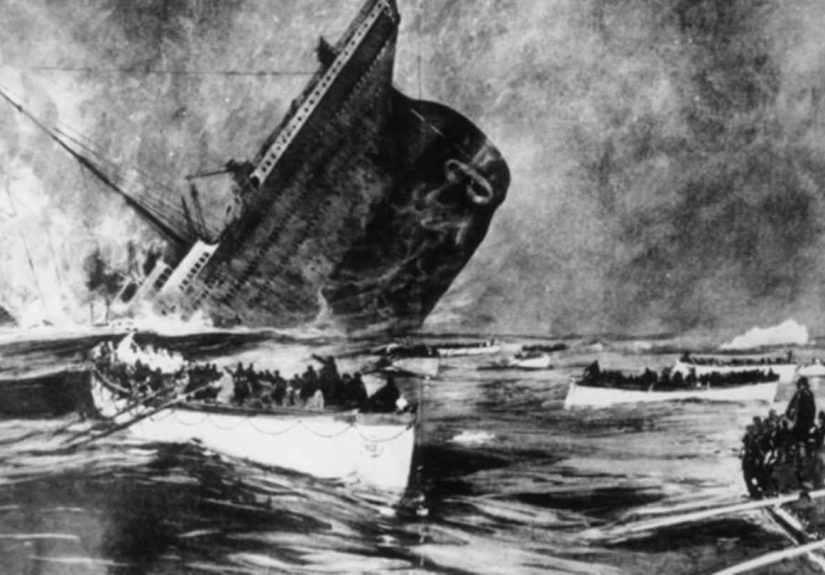
In the last stretch, the Titanic was no longer merely damaged. It was visibly losing the fight. The bow dropped lower, the deck angle increased, and movement around the ship became more difficult. Survivors later described a growing sense that the great liner was changing shape in the dark, becoming less like a proud ocean palace and more like a machine surrendering piece by piece.
The last lifeboats were launched around 2:05 a.m. Wireless messages continued nearly to the end. Reports from survivors helped establish the broad sequence that historians still rely on today: a final steepening of the deck, a breakup during the last stage of the sinking, and then the disappearance of the stern beneath the water at about 2:20 a.m. That is the endpoint most modern research supports, including later wreck analysis.
The important thing is not to imagine those last minutes as one neat, universally witnessed scene. They were fragmented. People saw different things from different locations, in darkness, under immense stress. That is why the last moments of the Titanic remain part documented fact and part carefully reconstructed history. The outline is clear. Some details remain debated. History, inconveniently, does not always hand us a perfect camera angle.
Why the Titanic’s Last Moments Turned So Deadly
Too Few Lifeboats, Too Much Confidence
The most obvious problem was lifeboat capacity. There were not enough seats for everyone aboard. Even worse, the boats that did exist were not loaded efficiently at the beginning. This was not because no one cared. It was because crew training, passenger hesitation, and the gap between theory and emergency reality all collided at once. A ship can look brilliantly organized until the first true test arrives.
Warnings, Communication, and Missed Urgency
Ice warnings had been received earlier in the voyage. The ship was not blindly wandering through the Atlantic like a tourist ignoring every road sign. The danger was known in a general sense. What proved fatal was the combination of speed, nighttime conditions, the difficulty of spotting ice in calm seas, and the belief that the ship could handle what the ocean might throw at it.
Communication during the disaster also revealed the limits of the era. Wireless technology was advanced for 1912, but not foolproof. Distress calls were sent, nearby responses were inconsistent, and precious time vanished in uncertainty. The sinking helped expose the need for continuous radio watch and stronger maritime emergency protocols, which later became central to sea safety reforms.
The Myth of “Unsinkable” Meets Engineering Reality
The “unsinkable” image did not sink the ship by itself, but it shaped public expectations and probably influenced how people thought about risk. The Titanic was an extraordinary vessel, yet its watertight compartments were not magical force fields. Once too many compartments filled, water spilled from one section to the next, and the ship’s fate became a matter of time rather than optimism. Engineering is wonderfully impressive right up until nature asks for a demonstration.
What Happened After the Titanic Went Down
After the ship disappeared, the story did not end. It changed form. Lifeboats drifted in the dark until the Carpathia rescue reached survivors at dawn. News of the disaster stunned the public on both sides of the Atlantic. The scale of the loss, the status of many passengers, and the shocking gap between the ship’s reputation and its fate made the event an international obsession almost immediately.
The U.S. Senate inquiry and the British investigation examined what had gone wrong. Those investigations mattered because they helped shift the Titanic from legend into policy. Maritime safety rules were strengthened. Lifeboat requirements changed. Radio procedures improved. International cooperation around ice monitoring eventually developed into the International Ice Patrol. In other words, the Titanic left behind not only grief and headlines, but a practical legacy written into the future of sea travel.
Why the Last Moments of the Titanic Still Matter Today
People are not still reading about the Titanic merely because it was large, luxurious, or famously doomed. They return to it because the disaster feels uncomfortably familiar. It is a story about overconfidence, delayed response, unequal access to safety, and the thin line between routine and emergency. Swap the Edwardian outfits for modern uniforms, and the lesson still lands.
The Titanic last moments also endure because they were witnessed in fragments by survivors and later studied through the wreck itself. Each generation reexamines the evidence, asks new questions, and finds new relevance. That is why the ship remains more than a historical artifact. It is a case study in human behavior under pressure, and one with enough drama to keep history books, documentaries, and dinner conversations fully employed.
Experiences Related to “The Last Moments of the Titanic”
One reason this topic keeps such a strong grip on readers is that the story does not stay locked inside a textbook. It becomes an experience. Visit a Titanic museum, listen to survivor testimony, read old newspaper coverage, or study a deck plan, and the event stops feeling like a distant paragraph from 1912. It starts to feel immediate. Not because you are pretending to be there, but because the details are so human. A watch stopped at a certain time. A deck chair sat where someone left it. A wireless message was tapped out by hand. Suddenly, history is not abstract anymore. It is personal.
For many people, the first experience of the Titanic comes through popular culture. Maybe it is a documentary, maybe a classroom lesson, maybe a film scene so famous it practically has its own ZIP code. That first encounter usually begins with spectacle: the massive ship, the iceberg, the sinking. But deeper engagement changes the feeling. The story becomes less about the “big ship that sank” and more about decisions made minute by minute. That shift matters. It turns curiosity into reflection.
Museum experiences often deepen that reaction. Exhibits built around passengers, crew members, and recovered objects create a strange but meaningful closeness to the past. A menu, a postcard, a pair of glasses, a section of ship fittings: none of these things shouts. Yet together they can make the final hours of the Titanic feel startlingly real. Visitors often leave with the same thought: this was not just a famous disaster, but a world of ordinary routines interrupted. That recognition is powerful because it collapses the distance between “them” and “us.”
Reading survivor accounts creates a different kind of experience. These testimonies are not all identical. They do not line up neatly like scripted dialogue. Some emphasize calm, others confusion, others the eerie quiet of the sea after the ship was gone. That inconsistency is not a flaw. It is part of what makes the story human. Real people notice different things. They remember differently. They interpret events through fear, duty, shock, or disbelief. When readers encounter those varying voices, they begin to understand that the last moments of the Titanic were not lived as a single grand scene. They were lived one person, one choice, one fragment at a time.
There is also an emotional experience that comes from realizing how modern the disaster still feels. The technology was different, the clothing was fancier, and the social customs were far more formal, but the core issues are familiar: trust in systems, uneven preparedness, delayed response, and the hope that help will arrive quickly enough. That is why the Titanic continues to feel relevant rather than dusty. It reflects habits and assumptions people still struggle with today.
In the end, engaging with this topic often leaves readers with a mix of awe, sadness, and respect. Awe at the scale of the ship and the event. Sadness at the lives interrupted. Respect for those who acted with composure and courage in impossible circumstances. The experience is memorable not because the story is sensational, but because it is deeply human. And that, more than anything, explains why the Titanic still refuses to quietly drift out of public memory.
Conclusion
The last moments of the Titanic were not defined by one single failure or one single heroic image. They were shaped by speed, design limits, lifeboat shortages, communication gaps, and a dangerous faith in modern certainty. The ship struck the iceberg at 11:40 p.m., fought a losing battle through the early morning, and disappeared beneath the Atlantic at about 2:20 a.m. In between those times lies one of the most studied maritime disasters in history.
What keeps the story alive is not merely tragedy. It is the clarity of the lesson. The Titanic sinking timeline reminds us that confidence without preparation is fragile, that warnings matter, and that systems must work in reality, not just in brochures. More than a century later, the ship’s final hours still speak with surprising force. History does that sometimes. It whispers for decades, then suddenly sounds like it is talking about today.