Table of Contents >> Show >> Hide
- The Phrase That Ruins Movie Scripts: “And Then”
- What “But” and “Therefore” Really Do
- Why Parker and Stone’s Advice Matters
- A Simple Example: The Boring Version vs. the Story Version
- Why “And Then” Feels So Tempting
- How the Rule Helps Movie Characters Feel Alive
- The Rule Works Because It Builds Causality
- Does This Mean Every Script Must Be Formulaic?
- How to Use the “And Then” Test on Your Own Script
- Examples of the Rule in Popular Storytelling
- Why This Advice Still Spreads
- The Bigger Lesson: Story Is Pressure
- Experience Notes: What This Rule Feels Like in Practice
- Conclusion
There are many terrifying phrases in Hollywood. “We’ll fix it in post.” “The studio has notes.” “What if the dog talks?” But according to South Park creators Trey Parker and Matt Stone, one tiny phrase can quietly sabotage a movie script before the audience even buys popcorn: “and then.”
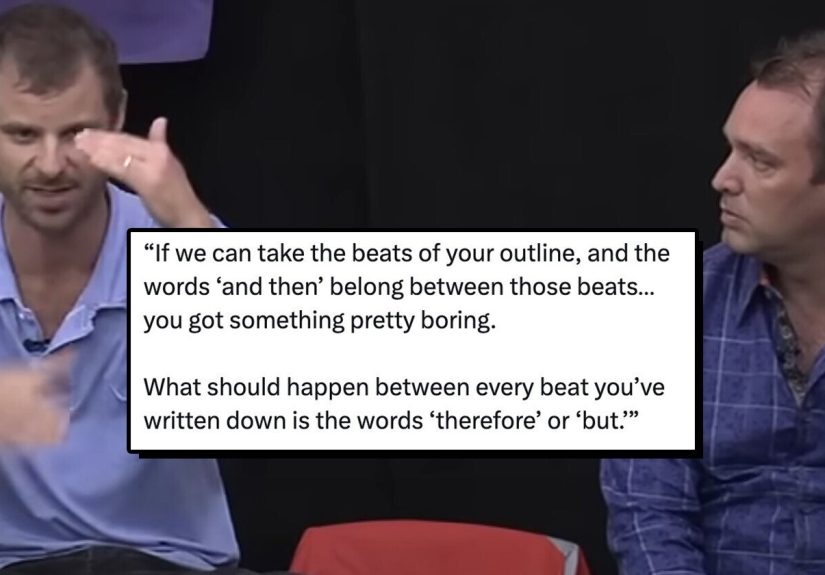
Yes, the phrase looks harmless. It sounds like something a kindergarten teacher might use while explaining snack time. But in screenwriting, “and then” can reveal a deadly problem: scenes are merely stacked in a row instead of pushing, colliding, escalating, or exploding into one another. Parker and Stone’s famous storytelling advice is simple: if the beats of your outline can be connected with “and then,” your story probably feels flat. If they can be connected with “but” or “therefore,” now you have causality, conflict, consequence, and momentum.
That may sound like a small grammar lesson, but it is actually one of the clearest story structure rules ever smuggled into pop culture by two men who made an empire out of foul-mouthed fourth graders, musical satire, and the occasional Canadian fart joke. Under the chaos of South Park is a surprisingly disciplined engine. Parker and Stone may look like they are winging it, but their scripts are built on pressure, reversal, escalation, and cause-and-effect storytelling.
The Phrase That Ruins Movie Scripts: “And Then”
The problem with “and then” is not that writers literally type it too often. The issue is structural. “And then” means one event follows another without a strong reason. A character goes to work, and then she meets a friend, and then they drive to another place, and then a villain appears, and then something else happens. Congratulations: you have invented traffic with dialogue.
Audiences do not just want events. They want events that change the situation. They want choices that create consequences. They want complications that force characters to react. They want the story to behave like a row of dominoes, not like a grocery list someone dropped on the floor.
Parker and Stone’s rule replaces passive sequence with active momentum. Instead of saying, “This happens, and then this happens,” the writer asks, “This happens, therefore what must happen next?” Or, “This happens, but what obstacle interrupts it?” Suddenly, the story has a pulse.
What “But” and “Therefore” Really Do
Think of “therefore” as the engine of consequence. It tells the audience that the next scene exists because of the previous one. A character lies to protect a friend; therefore, the police believe the wrong person. A hero misses the train; therefore, she must steal a motorcycle. A kid cheats on a test; therefore, he is forced into a bigger lie. “Therefore” makes the story feel inevitable, even when it surprises us.
“But,” on the other hand, is the engine of conflict. It introduces resistance, reversal, or a new problem. The hero finally gets the evidence, but the hard drive is encrypted. The couple reconciles, but one of them has already accepted a job overseas. The detective identifies the killer, but the killer is standing behind him. “But” is the little gremlin that kicks over the furniture just when the room starts looking tidy.
Together, “but” and “therefore” create rhythm. A character wants something, but a problem blocks the path; therefore, the character makes a choice; but that choice creates a worse problem; therefore, the character must adapt. That pattern is not just useful for comedy. It is the heartbeat of thrillers, romances, horror films, action movies, family dramas, animated adventures, and even prestige films where everyone whispers in expensive kitchens.
Why Parker and Stone’s Advice Matters
Trey Parker and Matt Stone are not famous because they follow polite creative rules. They are famous because they make sharp, fast, aggressive comedy that still somehow holds together as story. South Park became a cultural phenomenon because its episodes often feel like they are reacting to the world in real time, yet the best ones still have a clear chain of escalation. The jokes are outrageous, but the structure underneath is rarely random.
That is the hidden lesson. Absurdity works best when the plot is not absurdly loose. A talking towel, a corrupt celebrity, a cultish fad, or a ridiculous moral panic can all belong in the same universe if each beat causes the next. The more insane the surface becomes, the more important the structure becomes. Chaos needs architecture. Otherwise, it is just noise wearing sunglasses.
This is why the “and then” test is so valuable for movie scripts. It is quick. It is brutal. It does not care how clever your dialogue is, how beautiful your mood board looks, or how many adjectives you used in the logline. If your outline reads like a list of unrelated events, the rule catches it immediately.
A Simple Example: The Boring Version vs. the Story Version
The “And Then” Version
Imagine a movie about a young chef named Mia. Mia wants to open a restaurant. She quits her job, and then she rents a building, and then she hires a staff, and then she meets a food critic, and then she opens the restaurant, and then people like it.
That is not a movie. That is a LinkedIn update with garnish.
The “But/Therefore” Version
Now try the same story with Parker and Stone’s rule. Mia quits her safe job to open her dream restaurant, but the building she can afford has a terrible reputation. Therefore, she launches a risky pop-up event to prove the place can work. But her former boss steals her signature dish. Therefore, Mia must create a new menu overnight. But the food critic arrives early. Therefore, Mia serves the imperfect dish that reveals who she really is as a chef.
Now there is pressure. There is character. There is a reason to keep watching. The audience is no longer waiting for the next event; they are anticipating the next consequence.
Why “And Then” Feels So Tempting
Writers fall into “and then” storytelling because it feels productive. When you are outlining, adding another scene can feel like progress. The document gets longer. The plot appears busier. Characters move from one location to another, which tricks the brain into thinking the story has momentum. But motion is not the same as movement.
A character walking into five different rooms is not dramatic unless each room changes the stakes. A car chase is not exciting merely because cars are moving fast. A romantic misunderstanding is not automatically compelling because two attractive people are upset near good lighting. What matters is whether each beat forces a meaningful shift.
In weak scripts, scenes often exist because the writer needs to deliver information. In stronger scripts, scenes exist because characters pursue goals and run into consequences. Information can still arrive, but it rides on conflict. That is why exposition lands better when someone is hiding, arguing, seducing, bargaining, escaping, or trying not to cry in a grocery store.
How the Rule Helps Movie Characters Feel Alive
The “but/therefore” rule does more than improve plot mechanics. It also reveals character. Every “but” forces a character to respond. Every “therefore” shows the cost of that response. Over time, the audience learns who the character is by watching what they do under pressure.
For example, a superhero who loses a fight can respond with humility, denial, revenge, fear, or strategy. The event is the same, but the reaction defines the person. Therefore, a good story beat does not simply move the plot forward; it exposes personality. The best scripts make plot and character feel inseparable.
This is why many forgettable movies feel oddly empty even when they contain expensive explosions. Things happen, but the characters do not truly cause them, resist them, or transform because of them. The audience may understand the plot, but they do not feel the story.
The Rule Works Because It Builds Causality
Causality is the invisible glue of storytelling. It tells viewers that the world of the film responds to action. Someone makes a promise, breaks it, hides it, fights for it, or pays for it. That chain gives scenes weight. Without causality, the story becomes episodic in the worst sense: a collection of incidents that could be shuffled like cards without changing much.
Strong causality does not mean a movie must be predictable. In fact, it often makes surprises more satisfying. A great twist does not come out of nowhere; it comes from somewhere the audience did not fully notice. When a surprise grows from planted choices, hidden motives, or earlier mistakes, viewers feel shocked and satisfied at the same time. That is the sweet spot. Randomness gives us confusion. Causality gives us “I should have seen that coming!”
Does This Mean Every Script Must Be Formulaic?
No, and this is important. Parker and Stone’s rule is not a demand that every movie become a mechanical plot machine. It is a diagnostic tool, not a prison sentence. Some films are quiet. Some are atmospheric. Some are meditative. Some intentionally drift. But even subtle stories usually need emotional causality. A glance causes doubt. A silence causes distance. A small kindness causes hope. The “therefore” may be psychological rather than physical, but it still matters.
There is also room for “and then” in summaries, transitions, and ordinary language. The phrase itself is not cursed. It will not crawl out of your screenplay at midnight and delete your Final Draft file. The danger appears when “and then” describes the relationship between major story beats. If the key scenes only sit next to each other instead of affecting each other, the script loses energy.
How to Use the “And Then” Test on Your Own Script
Start with your outline. Write each major scene or story beat in one sentence. Then place a connecting word between each beat. If you keep needing “and then,” do not panic. That is not failure; that is diagnosis. The script is politely showing you where the engine needs work.
Next, revise the connection. Ask what obstacle could turn “and then” into “but.” Ask what consequence could turn “and then” into “therefore.” If a scene cannot be connected by conflict or consequence, ask whether it belongs in the script at all. Some scenes are charming, witty, or emotionally sincere but still function like decorative pillows. Nice to look at, but nobody needs twelve of them.
Finally, check whether the character is driving the chain. A plot can be causal but still feel weak if the protagonist is merely dragged around by events. The strongest stories make characters choose, and then make those choices matter. A decision creates a problem. The problem forces a new decision. That decision reveals character. The character changes the plot. The plot changes the character. That is story oxygen.
Examples of the Rule in Popular Storytelling
In many adventure films, the hero receives a call to action, but accepting it creates danger. Therefore, the hero must leave ordinary life. But the new world is harder than expected. Therefore, the hero must learn, sacrifice, or fail. This rhythm appears in everything from fantasy quests to sports dramas.
In mystery stories, a detective finds a clue, but the clue contradicts the obvious suspect. Therefore, the investigation shifts. But the shift exposes a personal risk. Therefore, the detective must choose between safety and truth. That is more engaging than “the detective finds a clue, and then finds another clue, and then finds another clue,” which sounds less like a thriller and more like someone cleaning out a junk drawer.
In romantic comedy, two people meet, but their goals clash. Therefore, they compete. But the competition creates intimacy. Therefore, they start caring. But the original lie or obstacle returns. Therefore, someone must risk honesty. This is why rom-coms need more than cute banter. Banter is seasoning. Consequence is the meal.
Why This Advice Still Spreads
The “and then” rule continues to circulate among writers because it is memorable, practical, and a little rude in the most useful way. It turns an abstract conceptnarrative causalityinto a test anyone can apply. You do not need a graduate degree, a studio deal, or a corkboard full of color-coded index cards. You just need to ask whether your scenes are connected by sequence, conflict, or consequence.
That is also why the advice fits Parker and Stone’s public image. Their comedy often feels like a prank, but the craft is serious. South Park, South Park: Bigger, Longer & Uncut, Team America: World Police, and The Book of Mormon all depend on escalation. Jokes do not just appear; they build. A premise gets pushed, contradicted, worsened, and paid off. The audience laughs partly because the absurdity keeps becoming more inevitable.
The Bigger Lesson: Story Is Pressure
The deepest lesson behind Parker and Stone’s phrase is this: story is not stuff happening. Story is pressure changing people. A script becomes alive when every scene increases pressure, redirects pressure, or releases pressure in a way that creates new pressure. That is why “but” and “therefore” are so powerful. They force the writer to treat every beat as part of a living chain.
When a movie script fails, viewers may complain that it was “slow,” “random,” “boring,” or “all over the place.” Often, the real problem is “and then.” The scenes may be expensive. The cast may be talented. The cinematography may glow like a luxury candle. But if the story does not build through cause and effect, the audience starts mentally checking email.
Experience Notes: What This Rule Feels Like in Practice
Anyone who has tried to write a story has probably experienced the “and then” trap. At first, it feels wonderful. You are outlining quickly. Ideas are arriving. A character goes here, discovers that, meets someone, escapes something, learns a secret, gets betrayed, finds a map, loses the map, eats a sandwich, stares meaningfully at rain. The page fills up. You feel like a genius with caffeine privileges.
Then you read it back.
Suddenly, the whole thing feels strangely dead. Nothing is technically wrong, but nothing is pulling you forward. The scenes sit there like guests at a party where nobody knows who invited them. That is when Parker and Stone’s rule becomes painfully useful. You look at the outline and realize the problem is not the premise. It is the connection between moments.
A personal way to use the rule is to read the outline aloud. If you hear yourself saying “and then” again and again, stop and ask what the previous scene caused. Did the character’s decision create the next problem? Did the villain’s move force a new tactic? Did the emotional wound shape the next mistake? If not, the beat may need a sharper turn.
This exercise can be humbling, but it is also energizing. Once “and then” becomes “but,” the story starts fighting back. Once “and then” becomes “therefore,” the plot starts walking on its own. The writer is no longer carrying every scene like furniture up three flights of stairs. The scenes begin generating each other.
For bloggers, novelists, YouTubers, marketers, and screenwriters, the same lesson applies. A great article does not simply list facts; it builds curiosity. A strong video essay does not merely stack observations; it creates a trail of discovery. A compelling brand story does not say, “We made a product, and then people bought it.” It says, “People had a problem, but the old solution failed; therefore, we built something different.” That is story. That is movement.
The funny part is that the rule is almost insultingly simple. You can explain it in under a minute. But applying it can transform an entire draft. It turns passive plotting into active storytelling. It forces scenes to earn their place. It reminds writers that audiences are not bored because nothing is happening. They are bored because nothing is causing anything else to happen.
So the next time a script feels mushy, do not immediately add a car crash, a secret twin, or a dragon unless the dragon has excellent legal motivation. First, check the connective tissue. Look for the “and then” moments. Replace them with pressure. Add conflict. Add consequence. Make the story argue with itself. That is where momentum lives.
Conclusion
The phrase Trey Parker and Matt Stone warn against is “and then” because it often signals a script without causality. Their preferred story logic“but” and “therefore”turns a chain of events into a chain of consequences. It creates conflict, momentum, character choice, and emotional payoff. The rule is especially useful because it is not complicated. It does not ask writers to memorize a giant theory. It asks one sharp question: does this scene happen merely after the previous scene, or because of it?
That question can save a movie script, a TV episode, a novel chapter, a comedy sketch, or even a blog post from becoming a fancy list of things that occur. And in a world full of content, “things that occur” are not enough. The audience wants a story that grabs the wheel, misses the exit, hits a pothole, blames the GPS, and somehow arrives somewhere unforgettable.