Table of Contents >> Show >> Hide
Some backpacks show up with big promises, fancy buzzwords, and enough straps to qualify as performance art. Then there’s the REI Co-op Flash 22. It is not flashy in the peacock-feather sense. It is flashy in the “I quietly keep doing my job better than expected” sense. And honestly, that kind of competence is much more attractive when you’re halfway up a trail, slightly sweaty, mildly hungry, and wondering why you packed three snack bars but forgot a hat.
The REI Co-op Flash 22 has become one of those rare daypacks that keeps earning attention year after year because it solves the right problems. It is light without feeling disposable, simple without feeling stripped down, and affordable without feeling like a compromise purchase you’ll regret by mile three. Whether you need a bag for day hikes, travel days, summit pushes, city wandering, or the classic “I might hike, I might buy coffee, I contain multitudes” weekend, this pack keeps making a very strong case for itself.
In this REI Co-op Flash 22 review, we’re breaking down what makes this lightweight daypack so enduring, where it shines, where it clearly does not, and why it still feels like one of the smartest buys in the daypack category.
What the REI Co-op Flash 22 Actually Is
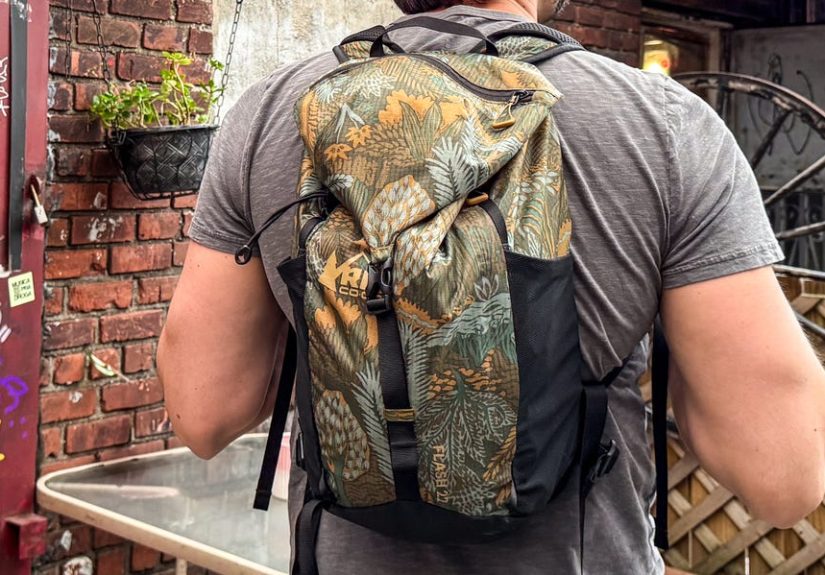
The Flash 22 is a frameless 22-liter hiking daypack that weighs about 14 ounces. That spec alone explains a lot of its appeal. It lives in the sweet spot between an ultralight summit bag and a fully featured day-hiking pack. In practical terms, that means you get enough space for water, snacks, layers, sunscreen, a first-aid kit, and a few extras, but not so much bag that you start making suspicious decisions like packing a paperback, two backup shirts, and a cast-iron skillet “just in case.”
Its design is intentionally lean. The pack uses recycled ripstop nylon, has a hydration-compatible sleeve, a removable foam back pad that doubles as a sit pad, a lightly padded breathable back panel, stash-friendly side pockets, a zippered side-entry pocket, a top lid pocket, and interior organization sleeves. There’s also a tuck-away mesh hip belt, a detachable sternum strap, and exterior attachment points for gear. In other words, it does not look overbuilt, but it is more thoughtfully equipped than many minimal daypacks in its price range.
That combination is the whole point. The Flash 22 is not trying to be a giant technical hauler. It is trying to be the pack you reach for over and over because it’s easy, light, capable, and doesn’t make everyday adventures feel like an expedition documentary.
Why the Flash 22 Still Works So Well
The 22-liter size is the Goldilocks zone
Twenty-two liters is an excellent capacity for most day hikes and everyday carry needs. It is large enough to handle a real trail loadout but small enough to stay nimble. This matters more than people think. Tiny packs can feel liberating until you’re trying to wedge in a rain shell and lunch. Bigger packs can feel versatile until you realize you’re carrying a fabric apartment complex for a three-hour outing.
The Flash 22 hits the middle beautifully. It can handle water, food, an insulating layer, keys, wallet, sunglasses, and trail extras without bulging into some sad barrel shape too quickly. It is also useful for travel, where 22 liters is enough for a personal-item-style loadout on flights, train days, road trips, or all-day sightseeing.
The organization is simple, which is another way of saying sane
Minimalist backpacks often make a strange promise: fewer pockets equals freedom. Sometimes that is true. Other times it just means your lip balm is now roommates with your rain jacket and granola dust. The Flash 22 avoids that chaos. It gives you enough organization to separate essentials without turning the pack into a filing cabinet.
The top lid pocket is ideal for the stuff you reach for often, like sunscreen, snacks, sunglasses, or a map. The side-entry zip pocket is handy for valuables or frequently accessed items. The side pockets are deep enough for water bottles and trail grab-and-go gear. Inside, the hydration sleeve and slip pockets help keep smaller items from drifting to the bottom of the bag like emotional baggage on vacation.
This is a major reason the Flash 22 keeps winning people over. It feels practical. Not overthought. Not undercooked. Just practical.
It is lightweight, but not in an annoying way
There are some ultralight packs that seem designed by people who regard comfort as moral weakness. The Flash 22 is not that pack. Yes, it is light. Yes, it is frameless. But it still offers enough structure and padding to stay pleasant for light to moderate loads.
The shoulder straps are breathable and softly padded. The back panel has enough cushion to avoid the “why does this feel like I’m wearing a sack of trail mix and regret?” problem. The hip belt is minimalist, but it helps stabilize the load and reduce shoulder fatigue on longer days. For a pack this light and this affordable, that balance is impressive.
That’s the real story here. The Flash 22 is not the lightest daypack on earth, but it makes smarter compromises than many lighter competitors. It chooses usability over gram-count theater, and that is one reason it remains relevant.
It moves easily between trail, travel, and daily life
Versatility is where the Flash 22 quietly flexes. This is not just a hiking pack. It is also a very competent travel daypack, commuter bag, summit push bag, and weekend errand sidekick. You can use it for a local trail in the morning and then toss it in the car for a grocery stop or a casual city walk in the afternoon without looking like you’re preparing for a Himalayan traverse.
That trail-to-town versatility matters because most people do not own a different backpack for every micro-scenario of modern existence. The Flash 22 respects that reality. It can carry layers and water on a hike, then function as a personal item or sightseeing pack on a trip, then go back to casual everyday use without complaint.
Where the REI Co-op Flash 22 Falls Short
Heavy loads expose its limits quickly
Let’s be fair: the Flash 22 is a daypack, not a sherpa. If you overload it with too much water, camera gear, dense food, or bulky extras, it will remind you that frameless packs have boundaries. This is where some of the glowing praise needs a footnote.
The pack carries light and moderate loads well. Once you start pushing it into heavier territory, the minimal structure becomes more obvious. Hard or awkward items can press into your back, the pack can feel less stable, and comfort drops. That does not make it a bad pack. It just means the Flash 22 rewards disciplined packing more than brute-force stuffing.
A few design details are clever but not always convenient
The removable sit pad sounds great on paper. In theory, it is a neat two-for-one feature: back padding when hiking, a seat when resting. In practice, some users love it and others mostly leave it in place forever, where it lives out its days as the world’s most overqualified rectangle of foam. Accessing and reinserting it is not always elegant.
The lid closure can also feel a little fussier than it needs to be. And while the pocket layout is generally strong, some users find the vertical side-entry pocket less intuitive than expected. None of these issues are catastrophic. They are the kind of quirks that become mildly annoying only if you are already in a nitpicky mood, which, to be fair, many gear people are.
Durability is good for the category, not magical
The Flash 22 uses lightweight materials, and lightweight materials always involve trade-offs. The recycled ripstop nylon is respectable and holds up well for normal use, but this is not a bombproof haul bag. If you drag it across sandstone, slam it on rough surfaces every weekend, or treat it like a chew toy for your outdoor ambitions, wear will show up eventually.
That said, it performs well for what it is. The key is matching expectations to purpose. For regular day hikes, travel, commuting, and general outdoor use, the durability is more than solid. For abuse-heavy users who want maximum structure and thick fabrics, something burlier may be the better fit.
Who Should Buy the Flash 22
The REI Co-op Flash 22 is a great fit for hikers who pack light, travelers who want one bag for trail days and transit days, budget-conscious buyers who still care about design, and anyone who wants a backpack that does a lot of jobs without feeling complicated.
It is especially appealing if your ideal day looks something like this: a few hours on the trail, a snack break with a view, maybe some scrambling, maybe a coffee after, maybe a last-minute stop somewhere that requires a real bag but not a giant one. The Flash 22 thrives in that exact zone.
Who Should Probably Skip It
If you routinely carry heavy loads, want a suspended frame, prefer lots of structured compartments, or need maximum long-haul support, this may not be your best daypack. If you are the sort of person who packs for a five-mile hike like you may be chosen to lead a small civilization afterward, you will likely want a bigger and more supportive model.
You may also want something else if you strongly dislike frameless packs or want a more premium, highly adjustable fit system. The Flash 22 wins on simplicity and value. It does not try to out-tech the whole category.
Final Verdict: Is the REI Co-op Flash 22 Still Worth It?
Absolutely. The REI Co-op Flash 22 remains one of the best lightweight daypacks for people who care about function, comfort, and value more than gear snobbery. It is not perfect, and that is part of what makes its success so interesting. It wins because the flaws are manageable, while the strengths show up every single time you use it.
The size is right. The weight is low. The pocket layout is smart. The comfort is good enough for real miles. The price is refreshingly reasonable. And perhaps most important, it feels like a bag designed by people who understand how daypacks are actually used in real life, not just how they look in a product photo next to a dramatic ridgeline.
If you want one backpack that can handle day hikes, travel, daily errands, and general outdoor wandering without draining your bank account, the Flash 22 is still an easy recommendation. Four years later, five years later, maybe even six snack bars later, it continues to make the same persuasive argument: you do not need more backpack. You need the right backpack.
Extended Experience: What Living With the Flash 22 Really Feels Like
The best way to understand the Flash 22 is not by staring at specs. It is by imagining the kinds of days when a bag earns permanent-door-hook status. On a warm morning hike, the Flash 22 feels pleasantly invisible. You notice that it is there, of course, but in the good way. The shoulder straps sit lightly, the back panel breathes better than many stripped-down daypacks, and the bag moves with you instead of sloshing around like an unhappy laundry sack. That matters on winding trails, rocky scrambles, and those slightly chaotic moments when you bend down for a photo and discover gravity has opinions.
It also shines during the ordinary parts of adventure that never make it into glamorous gear marketing. You park, grab the bag, throw in two bottles, a shell, a sandwich, a power bank, and a tiny first-aid kit, and you are done. No puzzle-solving. No weird zipper choreography. No “where did they expect me to put my sunglasses?” existential crisis. The Flash 22 makes packing feel fast, and fast is underrated.
On travel days, the same qualities become even more obvious. The pack is compact enough to work as a casual carry-on companion, yet roomy enough for the mess of modern movement: headphones, snacks, extra layer, wallet, charger, paperback, water bottle, boarding pass, and the one random item you forgot you brought until TSA forces a public reunion. The bag does not scream “airport specialist,” but it behaves like one. Then, once you arrive, it is ready for a museum day, coastal walk, city stair-climb, or impromptu trail detour.
Over time, you also start noticing the little things that separate a good daypack from a truly habitual one. Deep side pockets mean bottles stay put. The lid pocket is actually useful, not decorative. The side-entry pocket gives valuables a home. The hip belt is basic, but on longer days it helps more than you expect. Even the sit pad, while not everybody’s favorite feature, contributes just enough structure to keep the pack from collapsing into pure noodle mode.
Of course, the relationship is not flawless. Overpack it and the Flash 22 gets grumpy. Shove in too much dense gear and you will feel the frameless design reminding you that this is a nimble daypack, not a backcountry beast. When nearly empty, it can feel a bit floppy. And if you are the kind of person who judges a backpack by how gracefully it handles absurd overloading, this one will politely fail your test.
But that is the thing: most people do not need a daypack that excels in absurd scenarios. They need one that keeps proving useful in normal, frequent, wonderfully repeatable ones. Morning hikes. Afternoon walks. Weekend travel. Quick summit pushes. Everyday errands with outdoor energy. That is where the Flash 22 keeps winning. It becomes the bag you grab without thinking, and in the backpack world, that is basically a standing ovation.