Table of Contents >> Show >> Hide
- What Scientists Mean When They Say Fish Can Count
- The Experiments That Made Scientists Do a Double Take
- So Why Would Fish Need This Ability?
- Maybe Fish Are Not “Doing Math” the Way We Imagine
- What Fish Are Teaching Scientists About Brains
- The Real Mystery Is Not Whether Fish Can Count
- Related Experiences: What It Feels Like to Watch Fish Outsmart Expectations
- Conclusion
- SEO Tags
Fish have spent centuries being the punchline in human intelligence jokes. “Memory of a goldfish,” people say, usually right before forgetting where they put their keys. But science has been steadily ruining our smug little land-animal superiority complex. Fish can recognize patterns, remember routes, learn from experience, and in some cases, do something even more eyebrow-raising: they can tell quantities apart, solve simple number tasks, and appear to keep track of “one more” or “one less.”
That does not mean your aquarium is secretly balancing a checkbook. It does mean the story of fish counting ability is far more interesting than most people expect. Researchers studying fish number sense have found that several species can distinguish between groups, prefer larger shoals, and in controlled experiments even make choices that look an awful lot like basic arithmetic. The weirdest part is not that fish can do it. The weirdest part is that scientists still do not fully know why some of these abilities exist in the form they do.
What Scientists Mean When They Say Fish Can Count
First, a reality check. When researchers say fish can “count,” they are usually not claiming fish understand numbers the way humans do. Fish are not staring at bubbles and thinking, “Ah yes, seven.” Instead, most studies focus on quantity discrimination, which is the ability to tell that one group has more items than another.
This kind of numerical cognition matters in the wild. A fish choosing between a group of two companions and a group of five may prefer the bigger shoal because there is safety in numbers. A predator deciding whether prey is abundant or scarce benefits from quickly sizing up a scene. Even social interactions can depend on quantity, whether that means counting nearby rivals, tracking offspring, or judging the size of a threat.
Researchers often describe two broad systems at work in animals, including humans:
1. A fast system for small numbers
For tiny sets, animals may identify quantity almost instantly. This is sometimes compared to how people can look at three apples on a table and know it is three without deliberately counting.
2. A rough system for larger amounts
For bigger groups, accuracy usually drops and the ratio between quantities starts to matter. Telling 8 from 16 is easier than telling 8 from 10. In other words, animals often estimate rather than calculate exactly.
That distinction matters because it helps explain why zebrafish numerical cognition and other fish studies are so intriguing. In some tasks, fish are not merely choosing “more versus less.” They appear to be following a rule.
The Experiments That Made Scientists Do a Double Take
Cichlids and stingrays learned a “plus one” or “minus one” rule
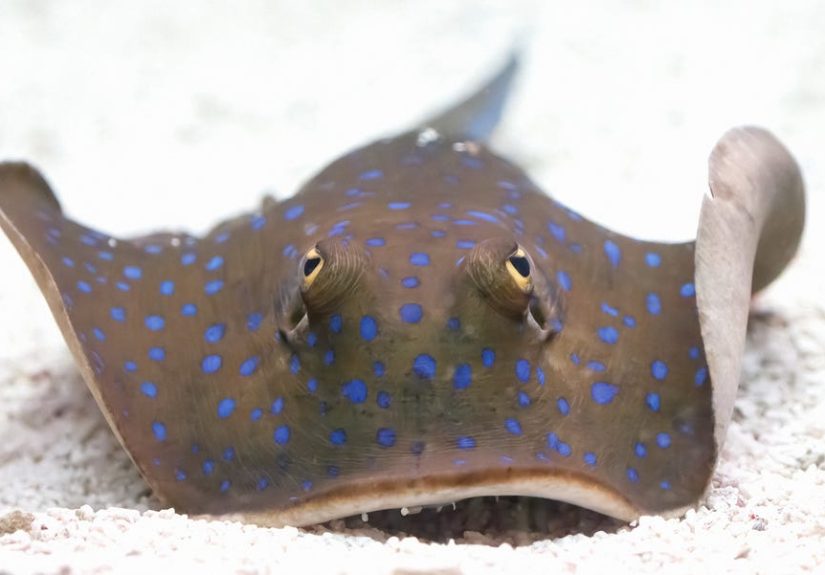
One of the most attention-grabbing studies involved cichlids and freshwater stingrays. Researchers trained the animals to associate one color with “add one” and another color with “subtract one.” The fish first saw a small set of shapes. Then they had to choose between two new groups. If the cue color meant “plus one,” they were expected to pick the set that had one more object. If the cue meant “minus one,” they had to pick the set with one fewer object.
And yes, they often got it right.
That result landed like a soggy science grenade. It suggested these animals were not just noticing “bigger” or “smaller,” but learning a directional rule tied to quantity. Even better, researchers tested cases designed to rule out the lazy explanation that the fish simply preferred whichever image looked more crowded. The animals still tended to choose the correct answer.
That is why the phrase fish arithmetic keeps showing up in headlines. The task was limited, and nobody is claiming stingrays are preparing for calculus. Still, it was a remarkable demonstration of flexible numerical behavior in animals without the kind of cortex humans rely on for many higher-order tasks.
Zebrafish are tiny, popular, and unexpectedly good at number tasks
Zebrafish have become stars of this research area, partly because they are already famous in biology labs. Scientists use them to study development, genes, brain function, and behavior. That makes them especially useful for linking behavior to neural mechanisms.
Behavioral studies have shown that zebrafish can discriminate between quantities that differ by one item across several ranges. In some experiments, they handled comparisons like 2 versus 3, 3 versus 4, and even 4 versus 5. They are not perfect, but they are far from clueless. Some studies also suggest their performance compares surprisingly well with that of various warm-blooded vertebrates on similar nonverbal tasks.
Even juvenile zebrafish show signs of quantity discrimination early in life. That is important because it hints that some aspects of number processing are not the result of long training or elaborate cultural learning. They may emerge from basic biological machinery that helps animals navigate the world from a young age.
Mosquitofish made humans look less special
One of the older headline-friendly findings came from research showing mosquitofish could distinguish not just between small sets, but between much larger quantities too. In one widely discussed comparison, their performance on a lab task looked surprisingly similar to that of human college students. That does not mean a mosquito fish belongs in your statistics class. It does mean that a sense of amount can be powerful even in a small brain.
Clownfish may count stripes, which is both useful and hilariously on-brand
If you thought clownfish were all cute movie energy, biology would like a word. Common clownfish are fiercely territorial. Research suggests they may use the number of white stripes on another fish to help decide whether it is a serious rival. That is not counting in the “one, two, three, attack!” classroom sense, but it may reflect a meaningful ability to track a discrete number feature in a social context.
And honestly, if a fish can look at another fish and think, “Three stripes? Absolutely not, this is my neighborhood,” that is still pretty impressive.
So Why Would Fish Need This Ability?
Here is where the story gets deliciously frustrating. Scientists have several good ideas about why animal intelligence in fish includes quantity processing in general, but they do not have a clean answer for why certain fish can solve the more rule-based lab tasks.
There are a few likely ecological explanations for basic number sense:
- Choosing bigger shoals: More companions can mean lower risk of being eaten.
- Foraging decisions: More prey or more food items can improve survival.
- Predator assessment: Estimating threat size matters when hesitation can become lunch.
- Social competition: Counting rivals, mates, or brood members may have practical value.
Those explanations fit the broader evidence quite well. But they do not fully explain why a fish in a laboratory can learn a symbolic-looking “add one” or “subtract one” rule linked to color cues. Scientists have openly noted that the specific ecological role of that skill remains unclear.
In other words, the broad ability to judge quantity makes evolutionary sense. The narrower ability to perform what looks like proto-arithmetic in an experimental setup is the part that still makes researchers scratch their heads.
Maybe Fish Are Not “Doing Math” the Way We Imagine
Part of the mystery comes from language. Once people hear “fish can count,” they picture a tiny underwater accountant wearing reading glasses. Real science is subtler.
Fish may not be manipulating abstract numbers. Instead, they may be using perceptual systems that evolved to track discrete items, compare magnitudes, and update choices quickly. A plus-one task might be solved through a learned transformation rule without anything like human symbolic arithmetic.
That does not make the behavior less important. Quite the opposite. It suggests that the roots of numerical thinking could be older, broader, and more biologically basic than once assumed. If fish can perform these tasks with very different brains from ours, then some building blocks of math-like cognition may have evolved long before humans started inventing multiplication tables and complaining about them.
Researchers also work hard to separate true numerical processing from “continuous cues” such as total area, density, brightness, or movement. If one group of objects simply takes up more space, an animal might choose it without paying attention to number itself. The best studies try to control for those cues, and many fish experiments still find evidence that numerical information matters.
What Fish Are Teaching Scientists About Brains
This is where the topic becomes genuinely exciting for neuroscience. Reviews of the field point to specific brain regions in fish that may contribute to processing discrete quantity and continuous magnitude. In zebrafish, researchers have linked different aspects of magnitude handling to parts of the visual system and forebrain-related structures. More recent work in larval zebrafish has reported number-selective neurons, meaning some neurons appear to respond preferentially to particular numerosities.
That is a big deal.
When scientists find neural signatures of number processing in species as evolutionarily distant from humans as fish, it supports a powerful idea: number sense may not be some rare, fancy trick invented late in animal evolution. It may be a deeply rooted solution to everyday survival problems.
Fish are especially useful here because zebrafish, in particular, are laboratory superstars. Their brains are accessible to imaging, their development is well studied, and researchers can combine behavior with genetics. That means the humble little fish may help explain not just how animals judge quantity, but how vertebrate brains build the foundations of cognition itself.
The Real Mystery Is Not Whether Fish Can Count
At this point, the evidence that some fish can distinguish quantity is strong. The more interesting question is what exactly the ability is for, how flexible it is, and how it is implemented in the brain.
Scientists still want better answers to several questions:
Are fish using true numerical information or a cluster of visual shortcuts?
Many studies control for non-numerical cues, but the debate is not entirely closed. Animal cognition rarely hands over simple answers with a bow on top.
How widespread is this ability across species?
Some fish species are better studied than others. Zebrafish, guppies, mosquitofish, cichlids, and stingrays have all played roles, but the fish world is vast and full of cognitive surprises.
What is the ecological payoff?
Quantity discrimination clearly helps in social and survival contexts. But the exact evolutionary benefit of the more arithmetic-like lab results is still uncertain.
How similar is fish number sense to human number sense?
There may be shared principles without shared experience. Fish are not mini-humans with gills, but they may reveal ancient cognitive machinery that vertebrates still rely on.
So yes, these fish can count. Or estimate. Or discriminate. Or update quantity rules in ways that make scientists reach for words like “proto-arithmetic.” Whatever label you prefer, the core point stands: a creature that many people dismiss as simple is doing something surprisingly sophisticated. And the reason it can do that is still not fully understood.
Which is a good reminder that nature does not care about our intellectual hierarchies. Sometimes the universe hides one of its most interesting cognition stories inside a glass tank, behind a fish that looks like it should only be worried about flakes and bubbles.
Related Experiences: What It Feels Like to Watch Fish Outsmart Expectations
One reason this topic grabs people so quickly is that it collides with everyday experience. Anyone who has spent time near aquariums, marine labs, pet tanks, or public exhibits knows fish do not move through the world randomly. They hesitate, inspect, follow routines, react to changes, and often seem to size things up before acting. You do not need to be a neuroscientist to notice that a school of fish can behave with eerie coordination, splitting and re-forming like a living thought.
That is part of what makes the research on fish counting ability feel so satisfying. It gives scientific language to observations many people already half-suspected. Aquarists often report that schooling fish appear calmer in larger groups and become visibly stressed when isolated. Divers describe territorial species acting differently toward one intruder versus several. Anyone who has watched feeding time in a tank has seen fish make quick decisions that look less like chaos and more like assessment.
In public aquariums, this topic also changes the way visitors look at exhibits. A tank full of zebrafish or cichlids can seem decorative at first glance, almost like animated wallpaper. But once you know these animals may be tracking quantity, comparing groups, and responding to number-related cues, the experience changes. The tank stops being background and starts feeling like a stage for constant decision-making.
There is also something humbling about the emotional side of this science. People tend to sort animals into lazy mental categories: cute, dangerous, useful, dumb, smart. Fish usually get dumped into the “pretty but not exactly brainy” folder. Then a study comes along showing that stingrays can learn a plus-one rule or clownfish may distinguish rivals by stripe number, and suddenly that folder catches fire.
Teachers, science communicators, and parents often use findings like these because they instantly hook attention. A child may not care about “comparative cognition in teleosts,” but say “some fish can do simple math” and you have their full focus. From there, the conversation expands into evolution, brain diversity, perception, and how intelligence can look very different across species.
That may be the most meaningful experience tied to this whole topic: it changes human perspective. Instead of seeing intelligence as a ladder with humans at the top and everyone else somewhere below, the fish research suggests a messier and more interesting picture. Different animals solve different problems with different brains. Some do it with feathers, some with fur, and some while silently gliding through water and making us reconsider every joke we have ever told about goldfish memory.
And that is why the story sticks. It is not only about whether fish can count. It is about how often the natural world exceeds our assumptions, and how much wonder is hiding in creatures we thought we had already figured out.
Conclusion
The science is clear on one point: several fish species can discriminate quantities, and some can even solve simple rule-based number tasks in laboratory settings. The science is much less clear on the bigger “why.” Basic quantity judgments make sense for survival, but the full evolutionary purpose of fish proto-arithmetic remains unsettled. That tension is exactly what makes the topic so compelling. Fish are not just swimming evidence that brains come in many forms. They are a reminder that intelligence did not begin with humans, and it definitely does not end where our imagination gets lazy.