Table of Contents >> Show >> Hide
- Why This DIY Hack Works So Well
- The Best Places to Use This DIY
- What You Need for the Project
- How to Make It Look Custom, Not Like You Gave Up Halfway
- Design Tips for Blending It Into Your Home
- Mistakes to Avoid
- When a Soft Cover Is Better Than a Hard Door
- Specific Examples That Prove the Point
- The Big Reason This Hack Feels So Satisfying
- Experiences From Real-Life Use: What This DIY Actually Feels Like at Home
- Conclusion
Every home has that spot. You know the one. The awkward gap under the sink where cleaning bottles glow like a sad little rainbow. The laundry corner that looks less “functional” and more “appliance witness protection program.” The open shelf stuffed with paper towels, pet gear, extension cords, and whatever else you shoved there five minutes before guests arrived.
The good news is that you do not need custom cabinetry, a contractor, or a lottery win to make those eyesores disappear. The ultimate DIY hack for hiding ugly spaces is surprisingly simple: create a soft cover using fabric, a curtain panel, or a skirted treatment. In plain English, that means adding a tailored curtain, café-style panel, or sink skirt to conceal the mess while still keeping everything easy to reach.
It works because it solves two problems at once. First, it hides visual clutter fast. Second, it softens a room that may already be full of hard surfaces like tile, drywall, wood, and metal. Translation: your home looks more intentional, more charming, and far less like it lost a fight with a storage bin aisle.
If you want a budget-friendly DIY decor idea with real impact, this is it. Whether you live in a small apartment, a busy family home, or a rental where power tools are basically a legal gray area, this trick can make an awkward zone look polished in a single afternoon.
Why This DIY Hack Works So Well
The brilliance of a fabric cover is that it gives you the visual effect of built-in storage without the cost or commitment. Cabinet doors are great, sure, but they also require measurements, hardware, installation, and sometimes a relationship-ending trip to the home improvement store. A DIY curtain or skirt skips that drama.
This solution also works in spaces where traditional cabinetry would feel too bulky. In small bathrooms, for example, a sink skirt can hide plumbing and storage while keeping the room light and airy. In laundry rooms, a patterned panel can mask supplies and utility clutter without making the space feel boxed in. In kitchens, it can turn open lower shelving or an exposed island base into something that looks cozy instead of chaotic.
And there is a style advantage here too. Fabric introduces color, pattern, and texture. Instead of merely hiding an ugly area, you get to turn it into a design feature. That sad open nook becomes a cottage-inspired detail. That boring pedestal sink suddenly looks charming. That clunky under-counter storage area? Now it has personality and boundaries. Which, frankly, is more than can be said for most junk drawers.
The Best Places to Use This DIY
Under a Sink
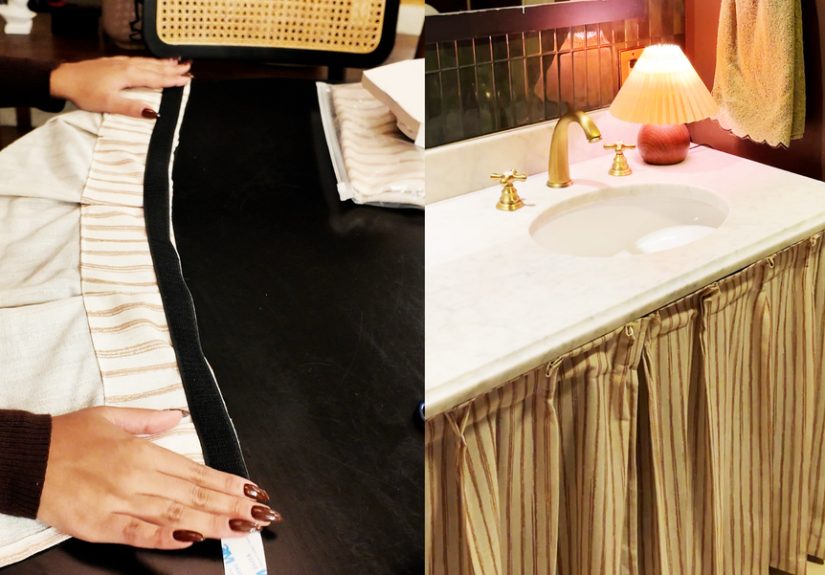
This is the classic example and still one of the best. A sink skirt hides exposed plumbing, cleaning products, spare toilet paper, or random backup soap bottles you bought in a moment of optimistic organization. It is especially useful in bathrooms with pedestal sinks or open vanities where storage is limited.
Laundry Areas
If your washer and dryer are visible from another room, a curtain can help them blend into the background. It can also hide detergent, baskets, stain removers, and all the other glamorous objects that make laundry feel like a lifestyle brand nobody asked for.
Open Shelving
Open shelves look great online and stressful in real life. If yours have become a shrine to visual clutter, add a fabric panel below or in front of the messiest section. You still get the storage, but without having to stare at every single paper towel roll you own.
Under-Stair Nooks and Awkward Corners
Not every weird space needs a dramatic makeover. Sometimes it just needs a little disguise. A curtain can make an under-stair storage area, utility nook, or pet zone feel integrated instead of accidental.
Kitchen Islands, Carts, and Console Tables
If you use the lower shelf of an island or cart for storage, a skirt can hide bins, cookware, or pantry overflow. The result feels warm and custom rather than temporary and overstuffed.
What You Need for the Project
The beauty of this DIY home hack is that the supply list is short and forgiving. You usually need just a few basics:
- Fabric, a ready-made curtain panel, or a café curtain
- A tension rod, small curtain rod, or hook-and-loop fastener
- Scissors
- Measuring tape
- Iron or steamer
- Hem tape or a sewing machine if you want a cleaner finish
For fabric, medium-weight cotton, canvas, or linen-style material tends to work best because it holds shape without feeling stiff. If the area is prone to splashes or dust, choose something washable. If the space is high traffic, go for a print or darker color that is more forgiving. White looks lovely until life happens.
How to Make It Look Custom, Not Like You Gave Up Halfway
Measure First, Panic Never
Measure the width of the opening, then add extra fabric for fullness. A flat panel can work, but a little gathering makes the finished look softer and more intentional. For height, let the fabric skim the floor or hover slightly above it. Too short looks accidental. Too long looks like your curtain is quietly collecting dust bunnies for sport.
Pick the Right Mounting Method
A tension rod is great for open spaces with side walls, like under a sink or between two shelves. For a cleaner, more hidden look, hook-and-loop fastener can attach fabric directly beneath a countertop edge or shelf lip. A traditional rod works well when you want a more decorative finish.
Hem the Fabric
You do not have to be a sewing wizard. Hem tape can do the job if you want a neat edge without breaking out a machine. Press your fabric before installing it so it hangs properly. Wrinkled fabric says, “I tried,” but not in the inspiring way.
Add a Simple Detail
Pleats, trim, contrast edging, or a patterned fabric can make this hack look far more expensive than it is. Even a basic stripe or small gingham print gives the project a finished, designed feel.
Design Tips for Blending It Into Your Home
If your room already has a lot going on, choose a solid fabric in a color that repeats something nearby, like the wall color, rug, or towels. If the room feels plain, this is your chance to bring in pattern. Florals, stripes, checks, and block prints all work beautifully, especially in kitchens, bathrooms, and laundry rooms.
Texture matters too. A crisp cotton reads fresh and casual. Linen looks relaxed and slightly elevated. A heavier canvas can feel more tailored and practical. The right fabric can shift the mood of the whole corner from “storage problem” to “design moment.”
Also think about what the cover is hiding. If the space behind it is used daily, choose a setup that opens easily. If it is mostly long-term storage, you can prioritize a cleaner, more decorative front. In other words, do not build yourself a beautiful obstacle course just to reach the dish soap.
Mistakes to Avoid
Using Fabric That Is Too Flimsy
Super-thin fabric can look limp and see-through, which defeats the whole mission. If your hidden mess can still be spotted through the curtain like a bad plot twist, you need something sturdier or lined.
Ignoring the Stuff Behind the Curtain
This hack hides clutter, but it does not magically organize it. Before you install anything, take ten minutes to toss trash, group like items, and place things in baskets if needed. A curtain should conceal chaos, not enable a full-blown storage uprising.
Choosing the Wrong Length
Length changes everything. A curtain that stops awkwardly mid-leg can make the space look unfinished. Measure carefully and test the drop before finalizing.
Blocking Something That Needs Access
This hack is ideal for visual clutter, but it is not the answer for every mechanical or structural problem. Do not cover anything that needs regular ventilation, emergency access, or frequent service clearance. The goal is stylish concealment, not decorative denial.
When a Soft Cover Is Better Than a Hard Door
One reason this DIY decor project is so beloved is that it is flexible. Hard doors can swing into walkways, crowd tight rooms, and feel visually heavy. Fabric moves, folds back, and adapts to odd openings. That makes it especially smart for small spaces, rental homes, older houses, and quirky floor plans where nothing is standard except the inconvenience.
It is also easier to update. If your style changes, swap the fabric. If the room needs a seasonal refresh, change the pattern. If your first choice looked better in your head than in real life, congratulations: you can recover without replacing cabinetry.
Specific Examples That Prove the Point
Imagine a narrow powder room with a pedestal sink. The pipes are visible, there is nowhere to stash extra hand towels, and every guest now knows exactly how many cleaning products you own. Add a tailored sink skirt in a subtle stripe, and suddenly the whole room feels softer, tidier, and more finished.
Or picture a laundry nook off the hallway. Without a door, the machines and supplies are permanently on display like they are auditioning for a home improvement documentary. Hang a curtain panel across the opening, and the area reads as calm and organized instead of loud and utilitarian.
Even a basic rolling cart in the kitchen can benefit. Add a simple gathered skirt around the lower shelf, and those mismatched bins, snack overflow, and emergency bulk pasta stop visually shouting at everyone who walks by.
The Big Reason This Hack Feels So Satisfying
Not every DIY has to be dramatic to be effective. Sometimes the best home projects are the ones that quietly make daily life feel better. This hack works because it gives you immediate payoff. You spend a little, do a little, and the room instantly looks calmer. That is a wildly good return on effort.
It also helps you stop waiting for some imaginary perfect renovation. You do not need a full remodel to improve a room. You do not need matching cabinetry, custom millwork, or a TV crew. You just need a smart, affordable way to hide the ugly bits and make the space feel like it belongs to you.
Experiences From Real-Life Use: What This DIY Actually Feels Like at Home
What makes this project so appealing is not just how it photographs, but how it behaves once real life starts crashing into it. In many homes, the first reaction after installing a skirt or curtain over an awkward storage zone is simple relief. The room immediately looks calmer. Nothing about the square footage changes, but the mental noise drops. That is the sneaky power of visual clutter: you do not always notice how much it is bothering you until it is gone.
In small bathrooms, this hack often feels like a minor miracle. A pedestal sink can look elegant, but it usually offers all the storage capacity of a dinner plate. Once a skirt is added, people suddenly have room for toilet paper, hand soap refills, extra washcloths, and a small cleaning caddy. The bathroom starts functioning like a real room instead of a showroom display that forgot humans need places to put stuff.
In kitchens, the experience is a little different but equally satisfying. Open lower shelves and carts tend to begin with noble intentions and end with a pile of practical clutter. A fabric cover changes the rhythm of the room. It lets a hardworking storage spot stay hardworking without forcing it to be pretty every second of the day. That matters, especially in busy homes where perfection is not the goal and survival before coffee is a more realistic standard.
Laundry rooms may be where this trick earns its superhero cape. These spaces are rarely designed to be charming. They are designed to contain machines, noise, baskets, and the faint emotional weight of unmatched socks. Adding a curtain across an exposed laundry nook or a skirt under a utility sink makes the area feel less industrial and more integrated with the rest of the home. Even better, it can create a sense of separation in open-plan layouts where laundry appliances otherwise sit in full view like rude party guests.
Renters tend to love this DIY because it feels reversible and non-dramatic. There is no need to commit to built-ins you cannot take with you. The project can be adapted to awkward old apartments, narrow closets, vintage sinks, and improvised storage furniture. When it is time to move, the fabric comes down, the rod comes out, and your deposit remains uninjured.
Another common experience is that this project nudges people into better habits. Not perfect habits. Let us not get carried away. But better ones. Once the cover is installed, there is often a quick cleanup instinct before things go behind it. Baskets get used. Duplicates get tossed. That one nearly empty spray bottle finally stops living rent-free under the sink. The curtain becomes less of a hiding place and more of a boundary that encourages a little order.
And perhaps the most charming part is how personal the result can feel. One home might use a crisp stripe for a coastal look. Another might go floral and vintage. Another might keep it plain and minimal so the room feels quiet and modern. Same trick, different personality. That is why this hack lasts. It is practical, yes, but it is also adaptable. It can look sweet, tailored, relaxed, classic, playful, or polished depending on the fabric you choose.
In the end, the experience of using this DIY is less about hiding shameful household clutter and more about creating visual peace. You are not pretending your home never stores detergent, paper towels, pet food, or extra shampoo. You are simply giving those things a better backstage area. And honestly, every hardworking home deserves a little curtain call.
Conclusion
If you are tired of staring at exposed plumbing, messy storage, or random utility chaos, this DIY is one of the smartest low-cost upgrades you can make. A simple skirt, curtain, or fabric panel can hide ugly spaces, soften harsh lines, and make a room feel more considered without requiring a full renovation. It is fast, flexible, renter-friendly, and surprisingly stylish. In other words, it is the home decor equivalent of putting on a great jacket over pajamas and somehow getting away with it.