Table of Contents >> Show >> Hide
- Why Nixie Tubes Still Feel Like Science Fiction
- The Soviet Aesthetic: When Industrial Was a Love Language
- Homemade Nixie Tubes: The Part That Separates the Brave From the Merely Curious
- Glowing Logic: When the “CPU” Is Literally Lit Up
- Under the Hood: What It Takes to Drive Nixies Safely
- Building One Yourself: A Practical Roadmap
- Why This Clock Is More Than a Timekeeper
- Conclusion
- Hands-On Experiences With a Soviet-Style Nixie Clock (The Stuff You Don’t See in Glamour Shots)
Most clocks are polite. They sit quietly, do their little ticking thing, and never once demand applause.
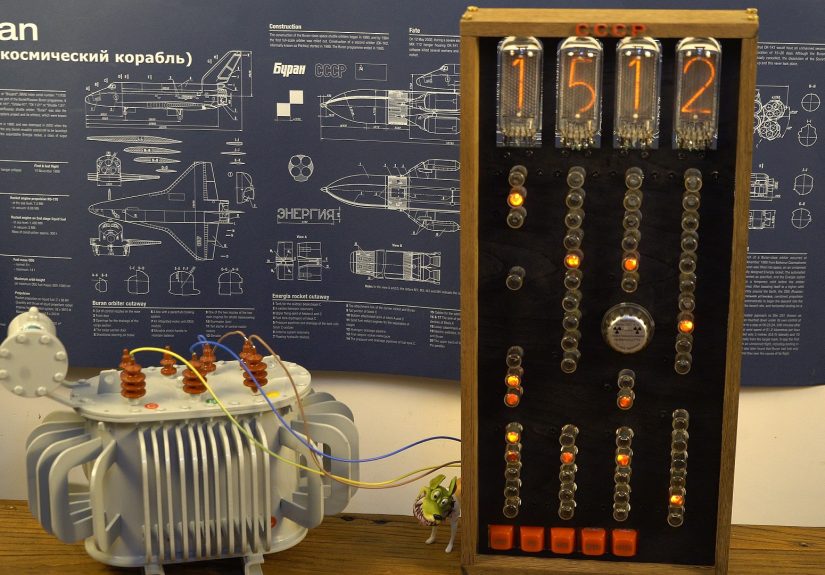
This one? This one glows like a tiny nuclear-era control panel, looks like it escaped from a Cold War lab,
and counts time with logic you can literally see with your eyeballs. It’s a Soviet-style Nixie tube clock
that pairs hand-built numeric displays with “glowing logic”the kind of circuitry that doesn’t just compute,
it performs.
If you’ve ever wanted a timepiece that feels equal parts museum exhibit and sci-fi propwhile still being an
honest-to-goodness clockwelcome home. Let’s break down what makes a Soviet-era-inspired Nixie clock so
hypnotic, why homemade Nixie tubes are a flex of the highest order, and how luminous logic (yes, logic that
lights up) turns timekeeping into a light show.
Why Nixie Tubes Still Feel Like Science Fiction
A Nixie tube is basically a glow discharge display: a glass envelope filled with gas (often neon), with one
shared anode and multiple cathodes shaped like numerals stacked front-to-back. Apply high voltage, pull one
cathode “on,” and the selected digit glows in that unmistakable warm orange. It’s not an LED pretending to be
vintage. It’s the real dealplasma making numbers on demand.
And here’s the part newcomers always underestimate: Nixies are high-voltage divas. They typically need a
higher “strike” voltage to start the glow, then a lower sustaining voltage to keep it lit. The current is small,
but the voltage is not. That’s why Nixie clocks have a particular charm: they’re not hard because they’re
complicated; they’re hard because they refuse to live in the safe, cozy 3.3V universe like everything else you
own.
The appeal is not just the glowit’s the vibe
Nixies come with a built-in time machine effect. They’re tied to mid-20th-century instrumentation, early digital
readouts, and the era when “electronics” meant glass, metal, and a healthy respect for physics. A Nixie clock
doesn’t just tell time; it tells a storyusually one that begins with “So I found these tubes…” and ends with
“Anyway, now my living room looks like a submarine.”
The Soviet Aesthetic: When Industrial Was a Love Language
“Soviet-style” isn’t just a paint job. It’s a design language: practical, bold, a little overbuilt, and oddly
elegant in a utilitarian way. Think exposed fasteners, chunky transformers, Cyrillic-inspired labeling, and an
“if it breaks, we’ll make it heavier” attitude toward construction.
In the Nixie world, Soviet-era parts are famousespecially the tubes that were manufactured in the USSR and
Eastern Europe long after Western production slowed down. That legacy created today’s collector ecosystem,
where you’ll see tube types like IN-14, IN-12, IN-18, IN-1, and others referenced the way car people talk about
engines. (Yes, people do get emotionally attached to a specific digit style. No, they are not okay.)
Why builders lean into the “lab equipment” look
A Nixie clock is already an object with character. Going Soviet-style doubles down on that character: the clock
becomes a display stand for the electronics rather than a box that hides them. If modern gadgets are all sleek
secrecy, this is the opposite: “Look at my circuitry. Admire it. Fear it slightly.”
Homemade Nixie Tubes: The Part That Separates the Brave From the Merely Curious
Plenty of makers build Nixie clocks using vintage tubes or modern reproductions. That’s already impressive.
But building (or commissioning) homemade Nixie tubes adds an entirely different level of difficultybecause now
you’re not “just” designing electronics. You’re doing micro-manufacturing.
A functional Nixie tube requires careful electrode fabrication, internal spacing and alignment, a properly sealed
glass envelope, evacuation, gas filling, and aging/conditioning so the discharge behaves predictably. Any one of
those steps can ruin your day. Or your week. Or your sanity.
What “homemade” typically implies
- Digit cathodes that are cut or etched (and then assembled into a stable stack)
- Insulating spacers (often mica or ceramic-like materials) to keep geometry consistent
- A glass envelope shaped and sealed with serious glassworking skill
- Vacuum + gas fill using equipment most people don’t keep next to their toaster
- Testing and “aging” so the glow is even, stable, and repeatable
If this sounds like “a small factory,” that’s because it kind of is. The payoff is huge, though: you get a truly
bespoke looknew-made tubes with crisp numerals and consistent brightness, without gambling on decades-old stock.
Glowing Logic: When the “CPU” Is Literally Lit Up
Here’s where the project stops being “a Nixie clock” and becomes “a piece of kinetic-ish electronic art.” Instead
of using invisible silicon logic, this clock uses luminous, tube-based logic elementscomponents that switch states
in a way you can watch.
Meet the cold-cathode thyratron
A cold-cathode thyratron is a gas-filled tube that can act like a switch. When it fires, it conducts and glows.
Some have a trigger electrode used to start conduction intentionally. In certain “glowing logic” circuits, the
tube’s behavior is used to build counters and dividersessentially turning gas discharge physics into a visible
digital system.
In the Soviet-style clock concept, you’ll often see tube logic arranged so each stage “hands off” to the next,
creating a chain of illumination that corresponds to counting. It’s like watching a row of dominoes fallexcept
the dominoes are neon tubes and the falling is math.
Ring counters: counting with discharge, not transistors
A classic approach is a loop (ring) counter. In plain English: only one stage is “on” at a time, and the “on”
state steps around the loop. Do that fast enough and you get a divider; do that carefully and you get seconds,
minutes, and hours.
The clever bit is using the tube’s switching characteristicsplus resistors, capacitors, and biasingto guarantee
a clean handoff. The result is mesmerizing: a visible progression of glowing states that feels half like a clock
mechanism and half like a light sculpture.
Using mains frequency as a time base
Many classic electric clocks keep time by counting cycles of AC mains power (50Hz or 60Hz). Conceptually it’s
simple: if you can divide 50 cycles per second down to 1 pulse per second, you’ve got a time reference. Build a
chain of counters and you have minutes and hours.
It’s wonderfully old-school, and it fits the Soviet-era vibe perfectly. It also comes with a reality check:
mains frequency can drift in the short term, but in many grids it’s managed so the long-term average stays very
close to nominal. Builders who want ultra-precision may still prefer a crystal oscillator, a temperature-compensated
RTC, GPS, or NTP syncingbut for a “glowing logic” build, counting mains cycles is both historically accurate and
aesthetically on-brand.
Under the Hood: What It Takes to Drive Nixies Safely
The display looks magical. The engineering behind it is practicaland if you’re building one, you’ll spend a lot of
time making sure “magical” doesn’t become “electrically exciting in a way your insurance company won’t enjoy.”
High voltage 101 (the non-scary version)
Most Nixie tubes want something on the order of ~170V for ignition (strike), then a lower sustaining range once lit.
Current is limited with a resistor so each digit runs at a few milliamps. That combinationhigh voltage, low current
is exactly why Nixies are both relatively efficient and still worthy of respect.
A typical Nixie clock power architecture looks like this:
- Low-voltage input (USB 5V, 9–12V adapter, etc.)
- High-voltage boost or converter generating the Nixie supply
- Current limiting per tube (or per digit, depending on design)
- Digit switching/driver stage to select cathodes safely
Digit drivers: from classic ICs to modern discrete switching
Historically, popular driver solutions included dedicated Nixie driver ICs (like the classic 74141 family) that
contain high-voltage transistor arrays. Today, builders often use discrete high-voltage transistors (common choices
include parts like MPSA42-class devices), shift registers designed for higher-voltage clamping, or modern driver boards
built around readily available components.
Your choice affects more than wiring. It changes the entire “feel” of the clock:
- Non-multiplexed driving can look steadier and simpler to debug, but uses more hardware.
- Multiplexing reduces parts count, but introduces timing, ghosting, and brightness-balancing challenges.
- Tube logic + Nixie display is the “I came here to glow” optionbigger, bolder, and more theatrical.
Anti-poisoning tricks (because digits can get cranky)
Nixie cathodes can “poison” if some digits rarely light, causing uneven brightness over time. A common mitigation is
digit cycling: briefly displaying all digits periodically so no cathode gets neglected. It’s the equivalent of telling
your clock, “Yes, I appreciate the number 7 too. Please don’t sulk.”
Building One Yourself: A Practical Roadmap
If you want to build a Soviet-style Nixie clock with glowing logic, you’re combining three projects in one:
a high-voltage display system, a time base, and a counter/logic architecture. Here’s a sane way to approach it.
1) Decide what “Soviet-style” means for your build
- Visual language: exposed hardware, industrial case, bold labeling, visible wiring looms
- Component choices: period-appropriate tubes, chunky transformer styling, metalwork
- Interaction: tactile switches/knobs over touch menus
2) Pick your display strategy
You can go with vintage tubes (the classic route), modern reproduction tubes (more consistent), or true homemade/new-made
tubes if you’re chasing a specific look and reliability. “Homemade” is a rabbit hole; be honest about whether you want a
clock or a second full-time job.
3) Choose the brain: invisible silicon or visible glow
A microcontroller-based clock is efficient, accurate, and compact. A glowing-logic clock is larger, slower, and more
complexbut it’s also the point. If you want the logic to be part of the art, tube-based counters or neon/thyratron
stages are the star of the show.
4) Engineer the power system like you’re protecting future-you
- Use proper insulation distances and thoughtful layout for high-voltage sections.
- Separate the HV supply physically when possible.
- Add fusing/overcurrent protection on the low-voltage side.
- Plan for heat: regulators and converters can get spicy.
5) Make it serviceable
The most lovable DIY clocks aren’t the ones that never fail; they’re the ones you can fix without performing a full
exorcism. Modular boards, labeled connectors, and a layout that lets you probe signals without gymnastics will save you
hours (and several new gray hairs).
Why This Clock Is More Than a Timekeeper
The world does not need another way to know it’s 7:42. Your phone has that covered, plus it can tell you the UV index,
your step count, and the name of the song playing in a coffee shop you didn’t even like.
What the world does needoccasionallyis an object that makes technology feel tangible again. A Soviet-style Nixie clock
with glowing logic does that. It turns “timekeeping” into something you can watch happening. The display isn’t a black box.
The logic isn’t hidden. The clock isn’t pretending to be minimal. It’s joyfully maximal.
It’s also a great reminder that electronics didn’t start with microcontrollers. Before “firmware update” was a phrase,
engineers were building systems where voltage thresholds, ionization, and component physics were the software.
And honestly? That’s kind of beautiful.
Conclusion
A Soviet-style clock that uses homemade Nixie tubes and glowing logic is equal parts craftsmanship, electronics, and theater.
The Nixie display delivers the signature neon-orange numerals. The tube-based logic turns counting into choreography. And the
Soviet-inspired industrial design wraps it all into an object that feels like it belongs in a lab… or a movie… or both.
If you’re building one, approach it with respect for high voltage, patience for debugging, and a willingness to learn the
“old rules” of electronicsbecause that’s where the magic lives. When it all comes together, you don’t just get a clock.
You get a glowing, humming, hypnotic reminder that engineering can be art.
Hands-On Experiences With a Soviet-Style Nixie Clock (The Stuff You Don’t See in Glamour Shots)
The first real experience most builders have isn’t the glowit’s the shopping list. You start out thinking, “I need tubes,
a power supply, and a way to count.” Then you discover you also need sockets (often unobtainable in the exact shape you want),
spacers, mounting hardware, insulation standoffs, and a case that won’t turn your high-voltage section into an accidental
touch exhibit. You’ll learn quickly that the aesthetic choicesopen-frame, exposed components, industrial chassishave a
practical cost: everything must be mounted cleanly, spaced properly, and routed so it looks intentional instead of like a
stressed-out spider made it at 2 a.m.
Next comes the power moment. Generating Nixie voltage feels like stepping into a different era of electronics. If you’re used
to 5V logic, watching a boost converter climb into triple digits is both thrilling and humbling. You’ll probably do the same
ritual everyone does: measure the high-voltage rail three times, adjust it a hair, measure again, and then stare at your
multimeter like it might suddenly say, “Just kidding.” The funny part is that the current is usually low enough that the
clock won’t be a power hog, but the voltage changes how you build: clearances, insulation, and careful grounding stop being
optional details and become the whole personality of your layout.
The display phase is where the emotional payoff begins. The first time a digit strikes cleanly and sits there glowing like a
tiny ember, it’s hard not to grin. Then you notice the unevenness: one digit brighter than another, or a faint ghost of a
nearby numeral if your wiring is too long or your switching isn’t clean. You’ll tweak resistors, reconsider multiplex timing,
or add a more stable driver arrangement. And somewhere in that process, you’ll stop thinking of the tubes as “parts” and
start thinking of them as “personalities.” Some digits ignite instantly; others need persuasion. It’s electronics, but it feels
weirdly like training a small, luminous pet.
If you go the “glowing logic” route, debugging becomes a spectator sport. With silicon logic, you probe a node and interpret a
waveform. With tube logic, the state is often visible: the circuit tells you what it thinks is happening by lighting up. That’s
incredibly satisfying, and it also makes flaws obvious. A stage that should advance but doesn’t? You’ll see the hang-up. A loop
counter that stutters? The glow pattern will rat you out in real time. It’s like having your debugging LEDs built into the
fundamental architectureexcept the “LEDs” are the logic.
Living with the finished clock is its own experience. In daylight it looks like industrial sculpture. At night it becomes
ambient lighting with opinions. Visitors will ask what it is, then ask if it’s safe, then ask if it’s from a movie, then ask
why you didn’t “just buy a normal clock,” at which point you will realize they have missed the entire point of being alive.
You’ll also learn practical habits: placing it where the glow isn’t blasting your face at midnight, occasionally cycling digits
to keep the display healthy, and dusting it more than you expected because dust has an unfair talent for making exposed hardware
look messy.
The most memorable part, though, is that the clock makes time feel physical. Seconds aren’t just numbers; they’re a chain of
eventsvoltage thresholds, ionization, switching, and illumination. When the logic is visible, you can almost feel the clock
thinking. And that’s the real reward: not just telling time, but watching time be made.