Table of Contents >> Show >> Hide
- What Exactly Is the Forest Tower in Denmark?
- Why This Spiraling Treetop Walkway Feels So Different
- The Best Part Is How the Experience Unfolds
- Why It Deserves the Hype
- Is the Forest Tower Worth a Day Trip From Copenhagen?
- Tips for Enjoying the Spiraling Treetop Walkway
- The Experience: Why People Keep Talking About It
- Final Thoughts
- SEO Tags
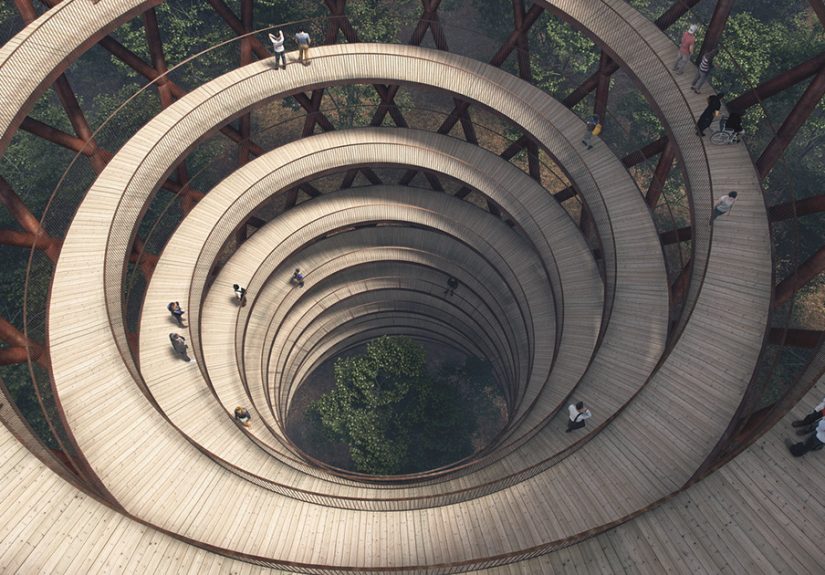
If regular boardwalks are the sensible walking shoes of travel, Denmark’s Forest Tower is the designer boot that somehow also happens to be practical. Tucked into the preserved woodlands of South Zealand, this spiraling treetop walkway has become one of those rare attractions that lives up to the photos instead of pulling the usual tourist trick of looking majestic online and mildly damp in person. Officially known as Skovtårnet, or the Forest Tower, it sits inside Camp Adventure near Rønnede, about an hour south of Copenhagen. And yes, it really does look like someone dropped a giant, elegant hourglass into a beech forest and then invited the public to stroll up it.
The headline may sound a little dramatic. “Puts every other tree walkway to shame” is the kind of statement usually made by overcaffeinated travel writers and sports fans after one good weekend. But in this case, the swagger is understandable. The Forest Tower is not just another elevated path with a nice view at the end. It is a carefully designed nature experience that turns the walk itself into the main event. Instead of rushing you toward a lookout deck like a theme park queue with better scenery, it slowly changes your perspective, your pace, and your relationship to the forest.
That is the secret sauce. This place is not trying to beat nature with architecture. It is using architecture to make the forest feel bigger, quieter, and somehow more theatrical. The result is a modern landmark that feels surprisingly humble, even while it rises 45 meters above the trees. Not bad for a tower that basically says, “Come for the view, stay because your inner child refuses to leave.”
What Exactly Is the Forest Tower in Denmark?
The Forest Tower is part of Camp Adventure, an outdoor destination in the Gisselfeld Klosters Skove forest on Zealand. Designed by Danish firm EFFEKT and opened in 2019, the attraction pairs a long elevated boardwalk with a spiraling observation tower. Visitors move from the forest floor into the canopy and then above it, ending at a panoramic viewing platform with sweeping vistas over South Zealand.
On paper, the specs are impressive enough to make architecture lovers sit up straighter. The tower itself is about 148 feet tall, or 45 meters. The approach includes a raised boardwalk through the woods, and the inner spiral ramp inside the tower stretches for hundreds of meters, climbing in a gentle, continuous loop. There are 12 circles on the way up, so the ascent feels more like a gradual reveal than a workout punishment disguised as tourism.
But numbers only tell part of the story. The real appeal is the sequence of the experience. You do not simply arrive, take an elevator, snap a picture, and leave. You walk through the forest first. You hear streams, notice the changing light, and see the tower appear between the trunks like a sci-fi treehouse with excellent manners. By the time you start the climb, you are already mentally tuned to the landscape. It is less “attraction” and more “slow-motion wow.”
Why This Spiraling Treetop Walkway Feels So Different
The climb is gentle, not punishing
A lot of lookout towers seem designed by people who believe calf pain builds character. The Forest Tower takes the opposite approach. Its step-free spiral ramp is broad, smooth, and accessible, which means the climb feels inviting instead of intimidating. Families with strollers, visitors with wheelchairs, and people who do not consider “vertical suffering” a hobby can still enjoy the experience. That accessibility matters, because it changes the whole mood of the place. Instead of turning the view into a prize for the most athletic visitor, it opens the forest to more people.
The architecture actually talks to the forest
This is where Denmark quietly shows off. The tower’s hourglass-like form is not just there to look pretty in drone shots, though it is undeniably photogenic. The structure narrows in the middle and widens at the top and base, helping with stability while also creating better contact with the surrounding canopy. As you move upward, the spacing shifts and the views expand. In the tighter middle section, you feel close to the trees; near the top, the landscape begins to fan out in every direction.
The materials help too. Weathering corten steel gives the tower a warm, earthy tone that sits comfortably against the bark and soil, while the oak walkway adds a softer, more tactile feel underfoot. It is contemporary design without the usual cold shoulder. Even when the structure looks futuristic, it still feels rooted in place.
The forest is part of the show
The surrounding landscape is not just “green stuff around the tower.” Gisselfeld Klosters Skove is a glacial woodland with rolling hills, streams, wetlands, lakes, and meadows. That variety gives the walkway real personality. One moment the forest feels tight and intimate; the next it opens up just enough to remind you that Denmark’s countryside has more drama than people give it credit for. The changing terrain also means the tower is not a random object dropped into nature. It feels like the natural climax of a longer walk.
The Best Part Is How the Experience Unfolds
Plenty of travel attractions peak too early. You see the big thing, take the big photo, and mentally start thinking about snacks. The Forest Tower handles things differently. It withholds just enough to keep you curious. First comes the elevated forest walk, where the path winds around trunks and over small waterways. Then comes the sightline moment, when the tower begins to emerge. Then comes the spiral, which is essentially a masterclass in pacing.
As you move through the 12 circles, the view changes a little with every turn. At first, you are still very much in the forest. The trunks feel close, the leaves frame your line of sight, and the experience feels intimate. Then you rise to canopy level, where the treetops stop being a ceiling and start feeling like company. By the upper sections, the horizon breaks open. Fields, forests, and distant settlements spread outward. On especially clear days, visitors may even be able to see toward Copenhagen and Malmö.
That transition is what makes the walkway memorable. It is not simply about reaching a viewpoint. It is about earning a new way of seeing the landscape, step by gentle step, without ever feeling rushed.
Why It Deserves the Hype
Travel headlines love a superlative. The biggest. The coolest. The one secret locals do not want you to know, even though a publicist definitely does. Usually, a little skepticism is wise. But the Forest Tower has a strong case for its reputation because it combines several things that rarely come together this well: design, accessibility, scenery, and atmosphere.
First, it is architecturally striking without being obnoxious. The tower has presence, but it does not bully the setting. Second, it makes a real effort to be inclusive, which is still surprisingly rare in nature-based attractions. Third, it delivers an experience that works in different seasons. In spring and summer, the forest is lush and green. In fall, the changing leaves make the whole structure look like it wandered out of a beautifully overachieving postcard. In winter, the bare branches reveal more of the geometry, making the tower feel even more sculptural.
And then there is the emotional payoff. Some attractions impress you visually but leave no residue. You see them, you nod, you move on. The Forest Tower tends to linger. Maybe it is the slow ascent. Maybe it is the way the forest seems to rise with you. Maybe it is simply that standing above a sea of treetops makes modern life feel briefly less ridiculous. Whatever the reason, the place sticks.
Is the Forest Tower Worth a Day Trip From Copenhagen?
Absolutely. In fact, it makes one of the smartest nature-and-design day trips from Copenhagen because it delivers contrast without requiring a major expedition. The city is stylish, compact, and full of bikes, pastries, and enviable urban planning. The Forest Tower gives you something else: open air, deep quiet, and a reminder that Denmark’s appeal does not end at the capital’s city limits.
Its location also makes it easy to combine with other South Zealand experiences if you want a fuller itinerary. Some travelers pair it with nearby manor house grounds, coastal viewpoints, or other countryside stops. But even on its own, the tower is enough to justify the trip. You can spend a half day there without feeling rushed, especially if you want time to wander the grounds, photograph the structure from different angles, and lean heavily into your temporary fantasy of becoming a woodland philosopher.
There is also a practical reason it works so well for visitors: the attraction feels special without requiring extreme endurance, technical hiking skills, or a complete renunciation of comfort. This is not a journey for people who enjoy being miserable in expensive outdoor gear. It is a beautifully designed, user-friendly encounter with nature. There is a difference, and your knees will appreciate it.
Tips for Enjoying the Spiraling Treetop Walkway
Go when the light is doing something interesting
Morning and late afternoon tend to give the tower extra personality. Soft light filters through the trees, the corten steel glows, and the views become more layered and dramatic. Midday is still lovely, but gentler light gives the whole place a richer mood.
Do not rush the boardwalk
The tower may be the star, but the approach is part of the experience. Slow down on the way in. Notice the shift from forest floor to elevated path. Let the reveal happen naturally. This place rewards people who are willing to stroll instead of stomp.
Dress for a real outdoor visit
This is polished nature, not fake nature. The paths are well designed, but you are still in a forest. Comfortable shoes, sensible layers, and weather awareness will improve your visit dramatically. Denmark has many charms, but pretending the weather is predictable is not one of them.
Bring your camera, but also bring your eyeballs
The Forest Tower is wildly photogenic, and yes, your phone will have a great day. Still, make sure you spend some time simply looking. The best part of the place is not the proof that you were there. It is the sensation of rising through the trees and watching the landscape reorganize itself around you.
The Experience: Why People Keep Talking About It
Imagine arriving on a cool morning when the forest still feels a little sleepy. The air has that clean, damp freshness that makes every city-dweller instantly pretend they have always been an outdoors person. You start along the boardwalk and the noise of everyday life falls away faster than expected. No honking traffic, no endless notifications, no mysterious neighbor drilling into a wall at 8 a.m. Just wood underfoot, birds overhead, and the occasional rustle that makes you briefly wonder whether Denmark secretly has dragons.
At first, the tower appears only in pieces. A curve of steel here. A glimpse of the lattice there. It does not dominate the forest from the start; it reveals itself slowly, which somehow makes it feel bigger when it finally comes into view. Then you reach the base and realize the photographs were telling the truth for once. The structure is large, but not clumsy. Bold, but not loud. It has the confidence of good design that does not need to shout.
Then the climb begins. What makes it special is that it never feels like a single dramatic leap. Instead, the tower lets your body and your brain adjust together. One loop, then another. The trees rise and fall beside you. The horizon begins sneaking into the edges of your vision. You pass from feeling enclosed by the forest to moving alongside it, then above it. It is a subtle transformation, and that subtlety is exactly why it works. The tower does not yank you upward. It persuades you.
There is also something unexpectedly calming about the rhythm. The spiral removes the stop-start awkwardness of stairs and creates a pace that feels almost meditative. You can walk, pause, look, continue, and never feel like you are interrupting the experience. Kids tend to treat it like an adventure. Adults tend to act casual while secretly having a minor emotional breakthrough over the treetops. Both responses are completely valid.
At the top, the payoff is not just the view, though the view is excellent. It is the feeling of seeing the landscape in layers: forest, fields, sky, distance. South Zealand stretches outward in all directions, and on a clear day the visibility can be impressive enough to make you start pointing at the horizon like you personally discovered Scandinavia. The wind is usually a little stronger up there, the light a little cleaner, and the whole moment feels bigger than the tower’s actual footprint.
And then comes the descent, which might be the most underrated part. Going down gives you a second reading of the place. You notice different details. The geometry feels different. The trees that looked decorative from above suddenly feel close and textured again. By the time you step back onto the forest path, the ground seems flatter, the air quieter, and your mood considerably improved. It is the rare attraction that leaves you feeling not only impressed, but reset.
That is why people keep talking about this spiraling treetop walkway in Denmark. It is not just because it looks cool, though it definitely does. It is because the Forest Tower makes people feel something. It creates suspense without gimmicks, beauty without excess, and a sense of wonder without requiring a helicopter, a harness, or a heroic level of fitness. In a crowded world of forgettable tourist stops, that is a serious achievement.
Final Thoughts
The Forest Tower at Camp Adventure is what happens when architecture, accessibility, and landscape all agree to stop competing and start cooperating. It is visually striking, easy to enjoy, and deeply tuned to its setting. Most importantly, it understands that a great travel experience is not just about what you see at the end. It is about how you get there.
So yes, the headline has some cheek. But after looking at what this place offers, it is hard to argue with the spirit of it. Denmark’s spiraling treetop walkway really does make an unusually strong case for itself. Not by being louder or flashier than everything else, but by being smarter, gentler, and more memorable. In other words, it does not merely rise above the forest. It rises above expectations.