Table of Contents >> Show >> Hide
- What “$2,000 Stimulus Checks” Meant in Plain English
- The Backstory: How We Got to $600 in the First Place
- What Trump Actually Did: The Timeline That Made the Headline
- Why $2,000 Was So Powerful (Even Before It Was Possible)
- The Economic Case for Bigger Checks
- The Policy Case Against $2,000 Checks (or at Least, Against Doing It That Way)
- The Politics: Why This Became a Loyalty Test
- The Logistics People Forget: How Stimulus Checks Actually Reached Americans
- So… Did Americans Ever Get $2,000 Checks Because Trump Demanded It?
- Why This Headline Keeps Coming Back
- Real-World Experiences: What the “$2,000 Checks” Moment Felt Like (500+ Words)
- Conclusion: The Real Lesson Behind “Trump Demands $2,000 Stimulus Checks”
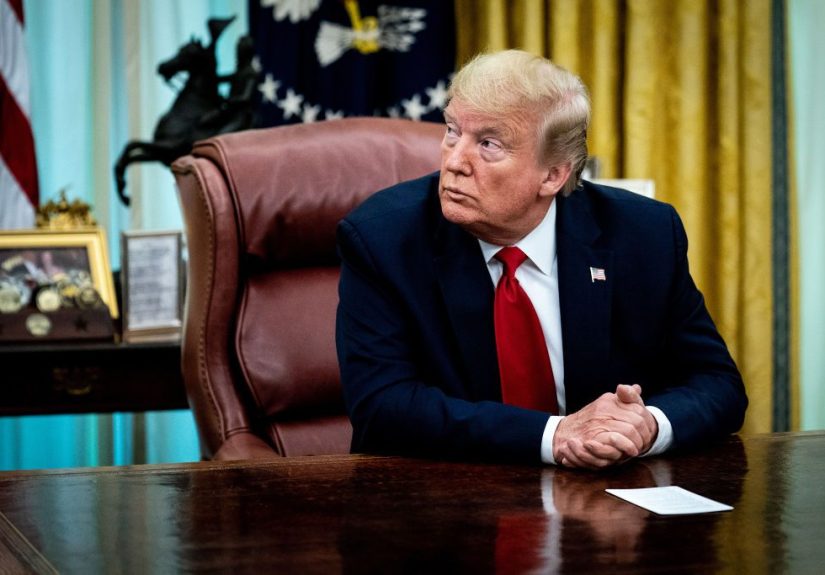
In late December 2020when most Americans were trying to figure out whether the holiday ham was still good and
whether “Zoom Christmas” counted as real pantsWashington served up a plot twist: President Donald Trump publicly
demanded that Congress increase the second round of COVID-19 stimulus checks from $600 to $2,000 per person.
The timing was cinematic. Congress had just passed a massive year-end package that combined government funding with
pandemic relief. Then Trump popped onto screens with a blunt message: $600 was “ridiculously low,” and Americans
deserved $2,000 checks instead. The headline sounded simple, but the reality underneath it was a knot of economics,
logistics, and pure political physicswhere a single number can turn into a national loyalty test.
What “$2,000 Stimulus Checks” Meant in Plain English
When people say “stimulus checks,” they’re usually talking about Economic Impact Paymentsdirect
cash payments the federal government sent to eligible Americans during the pandemic. These payments weren’t loans.
They were essentially a fast, broad form of emergency support aimed at keeping households afloat and (in theory)
keeping the economy from face-planting.
By December 2020, Americans already had a reference point: the first round of checks in spring 2020 had been
up to $1,200 per eligible adult plus an amount for qualifying children. The second round Congress
approved in late December 2020 was up to $600 per eligible adult and $600 per qualifying
childa smaller amount that still mattered a lot to families staring down rent, groceries, utilities, and
medical bills.
Trump’s demand was straightforward: don’t send $600; send $2,000. That’s not a tweak. That’s
turning the dial from “help” to “HELP.”
The Backstory: How We Got to $600 in the First Place
Round 1: The “Up to $1,200” checks
The first stimulus checks went out under the CARES Act in March 2020. The goal was speed: get money
into people’s hands quickly. Eligibility and payment size were based largely on income thresholds, with phaseouts for
higher earners. It was imperfect, but it moved fastand in a crisis, speed is its own policy choice.
Round 2: The “Up to $600” checks
The second round was authorized in late December 2020 as part of a COVID-related tax relief law inside the broader
year-end package. Like the first, it used income-based phaseouts, and the IRS leaned on prior-year tax return data
to determine eligibility and send payments quickly.
So why $600? Because that was the compromise number that could pass a divided Congress at that momentwhere “bigger
checks” competed with other relief priorities and with lawmakers’ concerns about cost and targeting.
Round 3 (context): The later $1,400 checks
In 2021, a third round of payments was enacted at $1,400 per eligible person. Mentioning this isn’t
a history flexit matters because it shows the $2,000 number didn’t disappear. It became the benchmark people
compared everything to, even when the final policy landed somewhere else.
What Trump Actually Did: The Timeline That Made the Headline
Trump’s demand wasn’t a quiet memo. It was a public, high-pressure move at the most dramatic time of year in
Washington: right before deadlines for government funding and unemployment programs, during a raging pandemic, when
millions of Americans were counting the days until help arrived.
-
Dec. 22, 2020: Trump publicly criticized the relief package and called for $2,000
payments instead of $600. -
Dec. 27, 2020: Trump signed the broader relief and government funding package, avoiding a shutdown
and allowing the $600 checks and other programs to proceedwhile still pushing for bigger checks. -
Dec. 28, 2020: The House passed legislation to raise the payments to $2,000, with significant
bipartisan support. - Late Dec. 2020: The push stalled in the Senate amid procedural and political resistance.
The key point: Trump didn’t unilaterally “order” $2,000 checks into existence. Congress controls spending and
legislation. What he did dovery effectivelywas take a relatively technical policy detail (the size of a tax credit
advanced as a payment) and turn it into a public-facing demand that lawmakers had to answer.
Why $2,000 Was So Powerful (Even Before It Was Possible)
The number “$2,000” worked like a political magnet. Big enough to feel meaningful. Easy to understand. Easy to chant.
Easy to screenshot. It also framed the debate in a way that made $600 sound smalleven if $600 is the difference
between keeping the lights on and not.
And importantly: checks are visible. Unlike a tax credit you might notice later, or a program you have to apply for,
a check is the policy you can hold in your hand (or see as a deposit) and immediately connect to the government’s
response.
The Economic Case for Bigger Checks
1) Speed matters in a crisis
Direct payments can move fast relative to programs that require applications, documentation, and long processing
pipelines. When jobs are disappearing and bills are due, “fast” can be the difference between stability and a spiral.
2) Many households spend at least part of the payment quickly
Research on pandemic-era stimulus suggests a meaningful share of recipients spent portions of their payments soon
after receiving themespecially lower-income households and people with less cash on hand. That spending supports
basic needs (food, utilities, rent) and also feeds into broader economic activity.
3) A larger check can reduce “triage stress”
Think of the mental math families do in a crisis: “Do we pay rent or medical bills? Do we buy groceries or fix the
car?” A bigger payment doesn’t solve everything, but it can reduce the number of impossible tradeoffs in a single
monthespecially for multi-person households.
The Policy Case Against $2,000 Checks (or at Least, Against Doing It That Way)
1) Cost is realand massive at scale
When you multiply “$2,000 per person” across a huge eligible population, the price tag jumps fast. Budget analysts
estimated that moving from $600 to $2,000 could add hundreds of billions of dollars in cost, depending on eligibility
rules and design. In Washington terms, that’s not “rounding.” That’s “find the money.”
2) Targeting is tricky
One criticism of broad checks is that some money goes to people who don’t urgently need it, while others with urgent
needs might require more sustained support (like enhanced unemployment benefits, rental assistance, or food aid). A
bigger check can be both helpful and bluntlike using a firehose when some people need a glass of water and others
need a swimming pool.
3) It can crowd out other relief priorities
Congress was negotiating a full relief packagenot just checks. Expanding direct payments could mean less political
or fiscal space for other items: vaccine distribution funding, small-business relief, school support, housing
protections, and unemployment extensions. Even when lawmakers agree “help is needed,” they fight over the shape of
that help.
The Politics: Why This Became a Loyalty Test
Trump’s demand landed in a tense political moment: the aftermath of the 2020 election, intraparty friction among
Republicans, and looming Georgia Senate runoffs that would decide control of the Senate. A high-profile call for
$2,000 checks forced lawmakers into uncomfortable positions:
- Agree and risk being accused of blowing up negotiations or ballooning the deficit.
- Disagree and risk being framed as opposing popular, tangible help.
- Delay and risk public anger as deadlines approached.
Democrats largely favored larger direct payments and quickly embraced the $2,000 figure, while many Republicans were
dividedsome supportive, others resistant, especially given the cost and the broader package already negotiated.
The result was legislative whiplash: momentum in one chamber, resistance in the other.
In other words, “$2,000 checks” became more than a policy detail. It became a symbol of who was fighting for whom,
even when the procedural reality made an immediate change difficult.
The Logistics People Forget: How Stimulus Checks Actually Reached Americans
Even when Congress and the president agree, payments don’t teleport into wallets. The IRS had to determine
eligibility, calculate amounts, and send money through available channelsoften using prior tax returns.
Direct deposit vs. paper checks vs. prepaid debit cards
Some people got money quickly through direct deposit. Others waited for mailed paper checks. And many recipients
received payments via prepaid debit cards (EIP Cards), which confused a lot of households because
the envelope didn’t always scream “THIS IS YOUR STIMULUS, PLEASE DO NOT TOSS IT WITH THE COUPONS.”
That confusion wasn’t rare. Consumer guidance and official announcements had to remind people what the cards looked
like, how to activate them, and how to avoid scams.
The calendar mattered
The second-round payments had a tight statutory schedule. Direct deposits showed up around early January 2021, while
paper checks started mailing at the end of December 2020, with completion expected by mid-January 2021. If someone
didn’t receive the payment in time, they generally had to claim it later through a tax credit mechanism when filing a
return.
And yes, it was messy
Common problems included outdated bank accounts, address changes, family changes (new babies, new dependents),
differences between 2019 and 2020 income, and confusion about eligibility. For many Americans, the “stimulus check”
wasn’t just moneyit was a crash course in how federal payment systems work under pressure.
So… Did Americans Ever Get $2,000 Checks Because Trump Demanded It?
Not in the direct, immediate way the headline implies. The $600 checks went out under the late-December 2020 law
after Trump signed the broader package. The House passed legislation to raise the amount to $2,000, but the push did
not become law in that form at that moment. Later, in 2021, a third round of payments was enacted at $1,400 per
eligible personleaving the “missing $600” as a talking point for months.
Still, Trump’s demand mattered. It shifted public expectations and changed the political conversation. It’s one of
the clearest examples of how a president can influence economic policy debates with a single, high-visibility number
even when the legislative machinery doesn’t move the way a headline does.
Why This Headline Keeps Coming Back
The phrase “$2,000 checks” has become shorthand for direct, universal-ish relief. It resurfaces whenever the economy
feels shaky or when politicians float new “dividend” or rebate-style ideas. That doesn’t mean checks are always
coming; it means the concept is politically sticky because it’s simple, tangible, and emotionally resonant.
A healthy way to read any future “$2,000 checks” headline is to ask:
Is there a bill? Has it passed both chambers? Has it been signed? Who is eligible? When would it pay?
Until those answers exist, “demands” are not the same thing as deposits.
Real-World Experiences: What the “$2,000 Checks” Moment Felt Like (500+ Words)
The policy debate was loud, but the lived experience was often quieter: people refreshing banking apps, checking mail
daily, and doing budget gymnastics that should qualify as an Olympic sport. Below are common experiences Americans
described during that periodpatterns that showed up again and again, regardless of party or ZIP code.
The Direct Deposit Victory Lap
For households with direct deposit already on file, the second payment sometimes arrived with less drama: a pending
deposit, a bank notification, and a moment of genuine relief. People used the money for rent gaps, overdue utilities,
groceries, and “we’re out of diapers again” emergencies. The emotional swing was realrelief mixed with frustration
that the amount was smaller than hoped. The $2,000 demand amplified that feeling: “Wait, we could have had more?”
The Paper Check Waiting Game
Others weren’t so lucky. If the IRS didn’t have bank info, the payment shifted to physical mail. That meant daysor
weeksof waiting, especially during holiday mail volume and pandemic disruptions. People taped notes to their doors
for roommates, asked neighbors to keep an eye out, and monitored USPS informed delivery like it was the season finale
of a prestige drama. Some households were stable enough to wait; others weren’t. When your unemployment benefits are
expiring and rent is due, “in transit” is not a comforting status update.
The “What Is This Random Debit Card?” Confusion
Prepaid debit cards solved a real problemhow to pay people without direct depositbut they also created a new one:
recognition. Some recipients saw unfamiliar mail and assumed it was marketing or a scam. A few people admitted they
nearly tossed it. Others spent an afternoon on the phone trying to confirm it was legitimate before activating it.
Consumer agencies and official communications had to repeatedly emphasize that the card was real, how to activate it,
and how to protect it like cash. It was a reminder that even good policy can stumble on packaging.
The “My Life Changed Since My Last Tax Return” Problem
Stimulus eligibility leaned heavily on prior tax filings. That worked fine for stable situations, but 2020 was not a
year of stability. People had babies, moved states, got divorced, lost jobs, picked up gig work, or saw income swing
wildly. Many discovered that what the IRS knew about them (from 2019) didn’t match their 2020 reality. That led to
confusion about missing child amounts, changed bank accounts, and why a payment went to an old address. For some,
the solution came later through filing a tax return and claiming a rebate credithelpful, but delayed.
The Emotional Whiplash of Political Headlines
The $2,000 demand added a unique layer: hope, then uncertainty, then procedural gridlock. People heard “$2,000 checks”
and mentally allocated the money: rent plus car repair, groceries plus an overdue dental visit, credit card debt plus
a tiny buffer so the next surprise didn’t become a crisis. Then they watched the Senate stall, deadlines loom, and
news cycles move on. The experience taught a hard lesson: in Washington, the loudest number isn’t always the one that
arrivesat least not on your timeline.
If there’s a takeaway from these experiences, it’s that direct payments are more than economics. They’re logistics,
trust, timing, and emotional bandwidth. A stimulus check can be a lifeline, but the process of waiting for it can
also feel like a second jobunpaid, high-stakes, and with terrible customer service.
Conclusion: The Real Lesson Behind “Trump Demands $2,000 Stimulus Checks”
Trump’s $2,000 demand was one of the most memorable late-2020 moments in pandemic policymaking because it combined
three forces: a simple, powerful number; a high-pressure legislative deadline; and a country exhausted by crisis.
Whether you view it as a genuine push for bigger household support, a political maneuver, or a bit of both, the
episode shows how direct payments can become the center of gravity in national debates.
And if you ever see the headline again, remember: the difference between “demanded” and “delivered” is a long hallway
called Congressplus an IRS mailroom trying its best.