Table of Contents >> Show >> Hide
- The Short Answer
- Why Turmeric Gets So Much Attention
- What the Research Really Shows
- Can Turmeric Prevent Prostate Cancer?
- Food Turmeric vs. Curcumin Supplements
- Can Turmeric Help During Prostate Cancer Treatment?
- Side Effects and Safety Concerns
- What to Ask Your Doctor Before Taking It
- What Makes More Sense for Prostate Health Overall?
- So, Does Turmeric Work for Prostate Cancer?
- Experiences People Commonly Have With Turmeric and Prostate Cancer
If you’ve ever typed “natural remedies for prostate cancer” into a search bar at 2 a.m., turmeric has probably strutted onto the screen like it owns the place. It’s bright yellow, wildly popular, and often described as if it can fix everything short of a flat tire. That kind of hype makes for great marketing. It does not always make for great medicine.
So, does turmeric actually work for prostate cancer? The honest answer is: not in the way many supplement labels would like you to believe. Turmeric contains compounds called curcuminoids, especially curcumin, which have shown interesting anti-inflammatory and anticancer effects in lab and animal studies. But when you move from petri dishes to real people, the story gets more complicated fast.
This article takes a clear-eyed look at what turmeric may do, what it probably does not do, and where it fits, if at all, in a smart prostate cancer plan. Spoiler alert: it is not a magic bullet. But it is not completely irrelevant either.
The Short Answer
Turmeric and curcumin are promising but unproven when it comes to prostate cancer. Researchers are interested in them because they may affect inflammation, oxidative stress, cancer cell signaling, and pathways involved in tumor growth. However, current human evidence is still too limited and inconsistent to say turmeric prevents prostate cancer, treats it, or reliably slows it down.
That means turmeric may be fine as a food ingredient in a healthy diet, but curcumin supplements should not replace medical treatment. And they should definitely not be started casually during active cancer treatment without talking to your oncology team first.
Why Turmeric Gets So Much Attention
Turmeric is the golden-yellow spice used in many curry dishes. Curcumin, its best-known active compound, has been studied for years because it appears to influence several biological processes linked to cancer. In laboratory settings, curcumin has been associated with effects on inflammation, cell growth, programmed cell death, and androgen-related signaling. Since prostate cancer is influenced by hormone signaling and inflammatory processes, curcumin has naturally attracted scientific curiosity.
That curiosity is reasonable. The overpromising is not.
One reason turmeric became a favorite in wellness circles is that it sits at the crossroads of “natural,” “ancient,” and “scientific-sounding.” That is a powerful trio. Add a few phrases like “fights inflammation” and “supports cellular health,” and suddenly a kitchen spice gets promoted like it is auditioning for the role of oncologist.
But biology is messy. A compound can look terrific in a lab and still flop in humans. Cancer research is full of ingredients that seemed spectacular under a microscope and less impressive inside an actual person with an actual metabolism, an actual tumor, and an actual medication list.
What the Research Really Shows
Lab and Animal Studies: Interesting, Not Definitive
Preclinical research is where turmeric shines brightest. In prostate cancer models, curcumin has been studied for its potential to influence pathways tied to tumor growth, inflammation, angiogenesis, and cell survival. Some studies suggest it may affect prostate-specific antigen, or PSA, production in prostate cells and may interact with pathways involved in androgen activity.
That sounds exciting, and it should be studied. But preclinical evidence is not the same thing as proof in patients. Mice are not men, cell lines are not bodies, and “may help in theory” is not a synonym for “works in the clinic.”
Human Studies: A Few Signals, Lots of Limits
Human studies on curcumin and prostate cancer do exist, but most are small, early-phase, or use different doses and formulations. That makes it hard to compare results and even harder to draw strong conclusions.
Some trials have hinted at possible benefits. For example, small studies have suggested curcumin may influence PSA trends in certain settings. A few studies in men receiving prostate cancer treatment have explored whether curcumin could help reduce treatment-related side effects, especially some urinary symptoms during radiation therapy. That is interesting and worth following.
But here is the catch: interesting does not equal established. The broader clinical evidence is still considered inadequate to recommend curcumin as a treatment for cancer or as a standard add-on to cancer therapy. In plain English, the science is still in the “promising, maybe, keep studying it” stage, not the “everyone call your uncle and buy a bottle” stage.
One Big Problem: Bioavailability
Curcumin has a stubborn little habit of being difficult for the body to absorb. This is one of the biggest reasons why laboratory excitement has not translated neatly into clinical success. Different products try to solve that problem by adding piperine from black pepper or using special delivery systems such as nanoparticles, liposomes, or other enhanced formulations.
Sounds clever, right? It is. But it also creates a new problem: products vary wildly. One supplement is not automatically equivalent to the next. Different formulations may behave differently in the body, which means results from one study cannot always be generalized to everything sitting on a supplement shelf.
Can Turmeric Prevent Prostate Cancer?
At this point, there is no solid proof that turmeric prevents prostate cancer in humans.
Could a diet rich in plant foods, spices, fiber, and anti-inflammatory ingredients support better overall health? Absolutely. Could turmeric be one healthy ingredient in that kind of diet? Sure. But that is a very different claim from saying turmeric itself prevents prostate cancer.
Prevention headlines tend to get ahead of the science because they sound fantastic. Real prevention research is more boring and more useful. It looks at patterns: healthy body weight, physical activity, cardiometabolic health, diet quality, smoking status, and appropriate screening. It does not usually come down to one glamorous spice wearing a superhero cape.
Food Turmeric vs. Curcumin Supplements
This distinction matters more than people think.
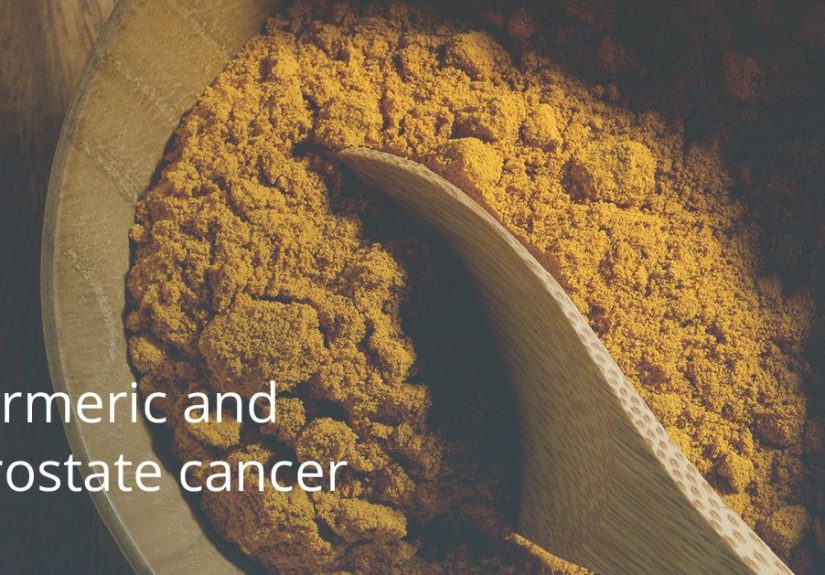
Turmeric in food is generally used in modest amounts. It adds flavor and color, and for most people it is a normal culinary ingredient. Using turmeric in soups, curries, lentils, roasted vegetables, or rice is not the same as swallowing concentrated capsules every day.
Curcumin supplements are a different beast. They often provide much higher doses than food ever would. Some are designed to increase absorption dramatically. That may sound like a selling point, but greater absorption can also mean greater chances of side effects, drug interactions, or liver-related concerns in some people.
That is why many clinicians are more comfortable with turmeric in cooking than with high-dose curcumin supplements, especially during active cancer treatment. Food usually behaves like food. Supplements sometimes behave more like pharmacology wearing a yoga bracelet.
Can Turmeric Help During Prostate Cancer Treatment?
Maybe in limited, specific ways. But this is the area where caution matters most.
Some research suggests curcumin could play a supportive role in reducing certain treatment-related side effects, and that possibility is worth continued study. However, there is still not enough evidence to recommend it broadly as a routine companion to radiation, hormone therapy, chemotherapy, or other standard prostate cancer treatments.
Why the caution? Because supplements can interact with treatment. Curcumin has been linked to medication interactions and may affect how certain drugs work. Some cancer centers also warn that turmeric or curcumin products may interfere with specific chemotherapy agents. So even if the internet says it is “natural,” your oncology pharmacist may say, “Please do not freestyle this.” Listen to the pharmacist.
Side Effects and Safety Concerns
Turmeric has a health-halo reputation, but that does not make it risk-free.
Possible side effects of oral turmeric or curcumin products can include nausea, vomiting, acid reflux, stomach upset, diarrhea, constipation, and bloating. Some people tolerate them fine. Others do not. A supplement that looks gentle on a label can still make your digestive system behave like it is staging a protest.
There are also more serious concerns. Some highly bioavailable curcumin formulations have been associated with liver injury in certain users. Turmeric supplements may also increase bleeding risk in people taking blood thinners. They may be a bad idea for some people with a history of kidney stones. And because supplement products vary, quality and purity are not always as reassuring as the label suggests.
This is another reason food and supplements should not be lumped together. A sprinkle on roasted cauliflower is not the same thing as a concentrated capsule engineered to hit your bloodstream harder.
What to Ask Your Doctor Before Taking It
If you have prostate cancer and are thinking about turmeric or curcumin supplements, bring it up directly with your doctor. Not casually. Not as you are halfway out the door. Directly.
Useful questions include:
- Could this interfere with my current treatment plan?
- Am I taking any medicines that increase bleeding risk or interact with supplements?
- Would food-based turmeric be safer than a supplement for me?
- Do I have any liver, kidney, or gastrointestinal issues that make supplements riskier?
- If I do try a supplement, what symptoms should make me stop immediately?
That conversation is not overkill. It is smart. Cancer care already involves enough variables. You do not need your spice cabinet improvising a subplot.
What Makes More Sense for Prostate Health Overall?
If your goal is to support prostate health or improve outcomes after a prostate cancer diagnosis, the strongest strategy is not to obsess over one ingredient. It is to build a pattern.
That usually means emphasizing vegetables, fruit, legumes, whole grains, healthy fats, and less heavily processed food. It means paying attention to body weight, activity, sleep, and cardiometabolic health. It means following your screening and treatment plan. And it means treating supplements as tools that need scrutiny, not as harmless little wellness confetti.
Turmeric can fit into that pattern just fine as a cooking ingredient. Add it to beans, soups, grain bowls, eggs, or marinades if you enjoy it. Pairing it with black pepper and fat may improve absorption, but that still does not transform dinner into a substitute for evidence-based cancer care.
So, Does Turmeric Work for Prostate Cancer?
Not as a proven treatment, and not as a proven preventive.
Here is the fairest conclusion: turmeric and curcumin are scientifically interesting, biologically active, and worthy of ongoing research. They may eventually earn a clearer role in supportive care or in carefully defined treatment settings. But right now, the evidence does not support using curcumin as a standalone answer to prostate cancer, and it certainly does not justify replacing standard treatment.
If you like turmeric, enjoy it in food. If you are considering a supplement, treat it like something that can have real effects, real downsides, and real interactions. Because it can.
In cancer care, “natural” is not the same as “nothing to worry about.” And “promising” is not the same as “proven.” Those two distinctions can save people a lot of money, a lot of confusion, and potentially a lot of trouble.
Experiences People Commonly Have With Turmeric and Prostate Cancer
One of the most common experiences around turmeric and prostate cancer starts with hope. A man gets diagnosed, or maybe his PSA starts creeping up, and suddenly the internet becomes his second opinion, third opinion, and unsolicited life coach. He reads that turmeric “kills cancer cells,” sees a few dramatic headlines, and thinks, “Well, this seems easier than surgery, radiation, or another difficult conversation with my doctor.” That emotional response is understandable. Cancer makes people want control, and supplements often look like control in capsule form.
Another common experience is confusion. One article says turmeric is powerful. Another says the evidence is weak. One supplement brand claims “maximum absorption,” while another warns that ordinary curcumin is poorly absorbed. Then someone in an online forum says black pepper makes all the difference, while someone else says only a special formulation matters. Before long, a simple spice has become a chemistry problem with marketing attached.
Many people also go through a “food versus supplement” phase. They start by adding turmeric to soups, eggs, rice, or smoothies and feel good about doing something proactive. For some, that becomes a sustainable habit because it is part of a broader healthy diet. For others, the urge to do more leads to high-dose supplements. That is often the turning point where a good idea can get messy. Some people notice no change at all. Some get stomach upset or reflux. Some bring the bottle to a doctor’s visit and hear the sentence nobody loves: “Please stop taking this until we review your medications.”
There is also the emotional experience of wanting a clear answer and not getting one. People want “yes, it works” or “no, forget it.” What they usually get is “maybe, in theory, in certain contexts, but not enough to recommend it.” That answer is medically honest, but emotionally annoying. It feels unsatisfying because it does not give cancer the tidy storyline people crave.
Families often experience this topic differently too. One relative may be all-in on natural remedies. Another may be deeply skeptical of anything that comes from a supplement aisle. The patient ends up in the middle, trying to balance optimism with realism. In many cases, the best outcomes come when turmeric is reframed not as a miracle treatment, but as one small dietary choice within a much bigger care plan.
And that may be the most realistic experience of all: people eventually realize that prostate cancer management is rarely about one hero ingredient. It is about decisions made over time, with doctors, data, patience, and a willingness to separate comforting stories from reliable evidence. Turmeric may still have a seat at the table. It just should not be sitting at the head of it.