Table of Contents >> Show >> Hide
- Quick Plot Refresher: What Is Valerian Actually About?
- How Valerian Ranks by the Numbers
- Ranking What Valerian Does Spectacularly Right
- Where Valerian Stumbles in the Rankings
- Comparing Valerian to Other Space Operas
- Reappraisal Era: From Flop to Streaming Favorite
- Final Verdict: Who Will Love Valerian?
- Extended Experiences and Opinions: Living with Valerian Over Time
When Valerian and the City of a Thousand Planets landed in theaters in 2017, it arrived like a glitter-bombed spacecraft: huge, shiny, loud, and impossible to ignore.
Luc Besson’s passion project promised a wild, visually rich space opera based on the beloved French comic Valérian and Laureline, with a budget big enough to make a Star Destroyer blush.
The result? A movie that critics ranked all over the map, audiences either adored or shrugged at, and the box office declared a beautiful, expensive disaster.
Today, especially with its recent streaming resurgence, fans are revisiting Valerian and asking two key questions:
How does it really rank among modern sci-fi epics, and is it secretly underrated?
Let’s break down the numbers, the visuals, the performances, and the fan reactions to see where this City of a Thousand Planets actually lives in the galaxy of science fiction cinema.
Quick Plot Refresher: What Is Valerian Actually About?
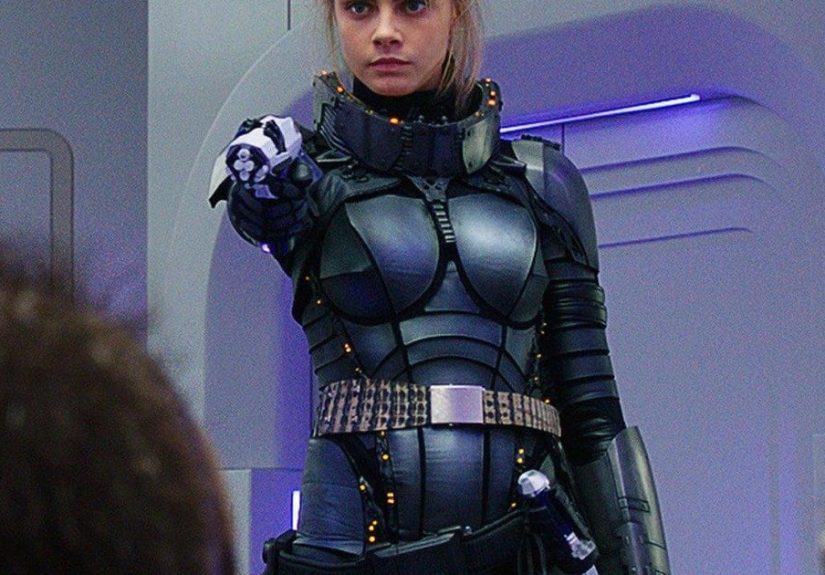
Set in the 28th century, the film follows Major Valerian (Dane DeHaan) and Sergeant Laureline (Cara Delevingne), agents of the United Human Federation tasked with maintaining order in human territories.
Their latest mission brings them to Alpha, a sprawling space station that has evolved into a shared metropolis for thousands of species from across the universe.
Think: United Nations meets mega-mall meets coral reef, floating in space.
A mysterious threat is destabilizing Alpha’s core, and Valerian and Laureline must uncover a cover-up involving a destroyed paradise world, a “converter” creature that can replicate energy, and political decisions that look more than a little morally rotten.
In between, the movie throws in dimensional markets, shape-shifting entertainers (hi, Rihanna), and more alien designs than some franchises manage across multiple sequels.
How Valerian Ranks by the Numbers
Critical and Audience Scores
In pure stats terms, Valerian and the City of a Thousand Planets sits in the “beautiful but flawed” zone:
- Rotten Tomatoes critics score: around 47–48% (“rotten”), based on nearly 300 reviews.
- Rotten Tomatoes audience score: about 53%, reflecting a split but slightly more forgiving general public.
- Metacritic score: 51/100, indicating “mixed or average reviews.”
- CinemaScore: B−, meaning audiences leaving the theater were lukewarm but not hostile.
In ranking terms, that puts Valerian squarely in the middle tier of modern big-budget sci-fi.
It’s not in the same league as critical darlings like Arrival or Mad Max: Fury Road, but it avoids the truly infamous flop tier.
The consensus: stunning to look at, cool ideas, but inconsistent storytelling and uneven character work.
Box Office and Budget: The “Most Expensive Indie” Problem
Here’s where the movie really stumbled in the rankings: the financials.
With a production budget reported around $177–180 million (and even higher once marketing is factored in), Valerian needed an estimated $400 million+ worldwide to break even or justify sequels.
- Worldwide gross: about $226 million.
- Domestic (U.S./Canada): roughly $40–41 million.
- International: about $185 million, including a strong turnout in France.
On a spreadsheet, that’s a box office bomb.
As some outlets noted, it became one of the most expensive independently financed films ever madeand a cautionary tale about betting huge on unfamiliar IP in the U.S. market.
Ranking What Valerian Does Spectacularly Right
If you rank Valerian by visual ambition instead of box office, it suddenly shoots way up the chart.
1. World-Building and Visual Design
The film’s strongest ranking category is, without question, its world-building:
- Alpha (the City of a Thousand Planets) feels like a living, breathing ecosystem of species, cultures, and tech.
- The Big Market sequencea multi-dimensional bazaar where you shop in another reality while standing in a desertmight be one of the most inventive sci-fi set pieces of the last decade.
- The pearl-like alien civilization of Mül, with its shimmering beaches and energy pearls, has an almost meditative beauty.
Critics who didn’t love the story still described the visuals as “dazzling,” “electrically gorgeous,” and “astonishingly brilliant.”
On a pure visual and design ranking, Valerian comfortably sits in the top tier of 21st-century space operas.
2. Creature and Costume Design
Besson and his team clearly raided the imagination vault:
- The Doghan Daguis, three information-broker aliens who finish each other’s sentences, are the perfect blend of creepy and funny.
- The converter creature, a small, adorable animal that can replicate anything it eats, is pure sci-fi mascot energy.
- The mix of armor, uniforms, and civilian outfits on Alpha sells the idea of countless civilizations colliding.
If you ranked sci-fi films based solely on how many times you pause to say, “What the heck is that cool thing?”, Valerian would be near the top.
3. Set Pieces and Action
While the plot structure gets messy, many individual sequences are inventive:
- The dimensional heist at Big Market is like watching three movies layered on top of each other.
- The escape through Alpha’s various sectors turns the station into an obstacle course of weird biomes.
- Bubble’s shapeshifting performance (Rihanna’s character) is a mini music-video-within-a-movie that doubles as character commentary on identity and performance.
Are these scenes always tightly connected? Not really.
But as standalone sci-fi moments, they rank high for creativity and fun.
Where Valerian Stumbles in the Rankings
1. Character Chemistry
Many critics and viewers agreed on one main complaint: the central duo doesn’t fully work.
Dane DeHaan’s Valerian is meant to be a roguish, charming, slightly cocky agent in the Han-Solo-meets-space-cop mold.
Instead, his laid-back, slightly moody performance clashes with the swagger the script assigns him.
Cara Delevingne’s Laureline has more spark and sarcasm, but their romantic chemistry often feels forced.
In a ranking of sci-fi partners, Valerian and Laureline fall into the mid-to-lower tiernot disastrously bad, but nowhere near the effortless dynamic of, say, Han and Leia, Mulder and Scully, or even Star-Lord and Gamora.
This matters because so much of the film’s emotional core depends on you buying into their banter and their supposed deep bond.
2. Story and Pacing
Another recurring criticism: the narrative feels both convoluted and thin at the same time.
The central mysterythe destruction of Mül and the conspiracy behind itis compelling in theory, but the film keeps digressing into side quests that feel like they exist mainly to show off another cool corner of Alpha.
The pacing swings between hyperactive action and exposition-heavy scenes.
Some viewers loved the “guided tour through Luc Besson’s imagination”; others felt like they were being dragged through a never-ending artbook with a plot stapled on at the last minute.
3. Dialogue and Tone
The dialogue oscillates between earnest, cheesy, and awkward, sometimes within the same scene.
Jokes don’t always land, and some romantic lines feel like they escaped from a different, less polished draft.
The tone aims for playful, adventurous space opera but occasionally dips into unintentional camp.
Depending on your mood, that can be part of its charmor one more reason you roll your eyes.
Comparing Valerian to Other Space Operas
To really rank Valerian and the City of a Thousand Planets, it helps to place it alongside other sci-fi heavy hitters:
-
Against Marvel-style blockbusters like Guardians of the Galaxy, Valerian is weirder, more European, and far less focused on quippy ensemble character work.
It wins on visual originality, loses on emotional connection. - Compared to Star Wars, it feels like the artsy cousin who shows up in a wild outfit: stylish, imaginative, but not as structurally solid or universally crowd-pleasing.
- Relative to Besson’s own The Fifth Element, which has become a cult classic, Valerian is more visually dense but less anchored by an iconic central performance (there’s no Bruce Willis or Milla Jovovich equivalent here).
So where does that leave its ranking?
A fair placement: a high-ranking visual and conceptual spectacle, but a mid-tier movie overall when story and characters are factored in.
Reappraisal Era: From Flop to Streaming Favorite
Interestingly, time has been kind to Valerian.
On streaming platforms, especially when it surfaced prominently on Max, the film found new life with viewers who were more willing to treat it as a wild sci-fi playground rather than a make-or-break tentpole.
Without box-office expectations and marketing hype, audiences could simply say, “Okay, blow my mind with weird aliens,” and on that front, the movie delivers.
Many fans now rank it as a “comfort watch” sci-fi film: not perfect, but uniquely stylish, rewatchable for specific sequences, and ideal background viewing when you want cosmic eye candy with just enough plot to follow along.
Final Verdict: Who Will Love Valerian?
If your personal ranking system for sci-fi movies heavily weights:
- Original world-building
- Inventive alien design
- Creative action set pieces
- Colorful, maximalist visuals
…then Valerian and the City of a Thousand Planets might be a must-watch that lands near the top of your list.
If, however, you prize:
- Tight plotting
- Sharp, consistent character writing
- Iconic performances and chemistry
- Elegant, restrained storytelling
…then you may file Valerian under “beautiful, ambitious, but flawed”a mid-tier space opera with top-tier visuals.
In the grand ranking of sci-fi cinema, Valerian is that kid in class who absolutely aces the art project, turns in a messy essay, and still somehow leaves a lasting impression.
It may not be universally loved, but for a certain slice of audience, it’s a treasured oddball that deserves more respect than its initial reception suggests.
Extended Experiences and Opinions: Living with Valerian Over Time
Part of what makes Valerian and the City of a Thousand Planets so interesting to talk about is how people’s experiences with the film evolve.
It’s not a one-and-done blockbuster where you walk out saying, “That was fine,” and never think about it again.
For many viewers, it becomes a movie they don’t fully love but also can’t quite let go of.
One common experience is the “second-watch upgrade.”
The first time through, you may be busy trying to track the plot, understand the various factions on Alpha, and wrap your head around the dimensional rules of Big Market.
On a rewatch, the pressure to follow every detail drops, and the film becomes more like a visual theme park rideyou start noticing background aliens, tiny bits of production design, and small character beats that got lost in the initial sensory overload.
Another recurring reaction is the “selective rewatcher” phenomenon.
Plenty of fans admit they don’t sit through the entire 2+ hours every time.
Instead, they jump straight to favorite sequences:
- The opening montage of the International Space Station slowly becoming Alpha, set to David Bowie’s “Space Oddity.”
- The first reveal of Mül and its serene, pearl-harvesting civilization.
- The chaotic, clever Big Market chase.
- Rihanna’s Bubble performance and tragic, surprisingly emotional exit.
Watched this way, Valerian functions almost like a sci-fi playlist.
You rank and replay the “tracks” (scenes) you love most, and you’re less bothered by the connective tissue in between.
There’s also a strong element of “right mood, right movie.”
On a night when you want a serious, cerebral sci-fi story, you’ll probably reach for Blade Runner 2049 or Arrival.
On a night when you’re tired, want something colorful, and don’t mind if the characters occasionally sound like they’ve never met a natural conversation, Valerian suddenly climbs higher in your personal rankings.
It’s the kind of movie that pairs well with snacks, friends, and running commentary.
For fans of Luc Besson, the film often registers as “pure, unfiltered Besson”all of his strengths and weaknesses concentrated into one project.
The romantic idealism, the love of oddball side characters, the obsession with strong visual concepts, the occasional clunky line… it’s all here, just turned up to eleven.
Some viewers find that messy authenticity charming; others wish someone had told him “no” a few more times in the editing room.
There’s also a generational angle to how the movie is received.
Younger viewers who discover Valerian on streaming, with zero memory of its “flop” headlines, often approach it without baggage.
For them, it’s just a wild, visually rich sci-fi movie that looks great on a modern TV.
They may rank it more kindly than audiences who saw it in 2017 expecting the “next big franchise” and instead got a quirky one-off.
Finally, many sci-fi fans keep Valerian in their mental library as a conversation piece.
It’s the movie you recommend with caveats: “You have to see thisjust don’t expect the story to completely hold together.”
It’s also a useful reference point when talking about visual ambition versus narrative discipline.
When a future film gets praised for being “visually stunning but narratively weak,” Valerian is one of the titles people bring up as a benchmark.
In other words, while its formal rankings (scores, box office, critic lists) might put Valerian and the City of a Thousand Planets in the middle of the pack, its lived experience with audiences is more complicatedand more interesting.
It’s a film that frustrates and delights, often at the same time, and that very tension is what keeps people watching, rewatching, and arguing about where it truly belongs in the galaxy of sci-fi cinema.