Table of Contents >> Show >> Hide
- Why the comparison works
- The public-good mechanics: community immunity and representative government
- Trust is the hidden ingredient in both
- Access and equity: the ramp matters more than the lecture
- What gets decided when we do (or don’t) show up
- A practical playbook: protect your community in under an hour
- So… are they really the same coin?
- Experiences That Bring the Metaphor to Life (Extra )
- Conclusion
If you’ve ever walked out of a clinic with a Band-Aid on your arm and walked out of a polling place with an “I Voted” sticker,
you’ve already held this “coin” in your hands.
One side says, “I protect myself.”
The other says, “I protect us.”
Voting and vaccination can look like totally different activitiesone involves ballots, the other involves boosters.
But zoom out, and they’re both small, practical actions that keep communities functional.
They’re also both targets for confusion, misinformation, and “hot takes” from people who confuse volume with expertise.
(Pro tip: if someone’s medical credentials are “I watched three videos,” maybe don’t let them rewrite your immune system.)
This article unpacks why voting and vaccination really are two sides of the same civic coinand how that coin buys something priceless:
a healthier, safer, more resilient community.
Why the comparison works
Both are personal choices with public consequences
Vaccination is a personal health decision, but it doesn’t stop at your skin. When enough people are immunized, diseases have fewer “easy routes”
through schools, workplaces, and households. That reduces outbreaks and helps protect people who are more vulnerablelike infants too young for certain vaccines,
older adults, or people with immune system conditions.
Voting works similarly: it’s one person, one ballot, and it can feel tiny. But elections determine who writes and funds the rules of community lifehealth budgets,
school policies, emergency preparedness, clean water investments, transportation safety, and whether public health agencies have the resources to respond quickly when the next crisis hits.
Both depend on infrastructure you don’t see until it breaks
A smooth vaccine experience takes scheduling systems, trained staff, cold-chain storage, reliable supply, clear guidelines, and trusted communication.
A smooth election takes accurate voter rolls, accessible polling places, trained poll workers, secure equipment, clear rules, and trusted communication.
When these systems run well, most people barely notice. When they fail, everyone noticesusually at the worst possible moment.
Both vaccination and voting are “everyday civic maintenance.” You don’t think about the plumbing until it backs up.
The public-good mechanics: community immunity and representative government
Vaccination: your immune system joins a neighborhood watch
Vaccines train your immune system to recognize and fight specific diseaseswithout you having to suffer the full infection first.
That’s the individual benefit.
The community benefit is what public health agencies often call “community immunity”: when many people are protected, spread slows,
and outbreaks struggle to gain traction.
Think of it like firebreaks in a forest. One cleared patch helps, but a connected network of firebreaks can stop a wildfire from racing across the map.
Your shot matters most when it’s part of something bigger.
Voting: representation is a “herd effect,” too
In a democracy, policy is shaped by who participates. When turnout is broad, leaders are more likely to respond to the needs of the full community.
When turnout is narrow, decisions can reflect the preferences of a smaller slice of the populationoften the people with fewer barriers to participation.
That’s not a partisan statement; it’s a math statement.
Voting is one way communities signal priorities: fund local clinics, support school nurses, invest in mental health services, strengthen disaster response,
and maintain vaccination programs that keep measles, whooping cough, and other preventable diseases from roaring back.
Trust is the hidden ingredient in both
If trust drops, participation drops
Vaccination depends on trust: trust in the science, trust in the safety systems, trust in the institutions that monitor side effects,
and trust in the clinician who answers your questions without rolling their eyes.
Voting depends on trust, too: trust that the process is accessible, secure, and fairand that your voice isn’t a theatrical prop.
When people feel the system is confusing, hostile, or rigged, they disengage. That disengagement becomes a self-fulfilling problem,
because fewer participants can mean less accountability.
Misinformation is a shared threat
Modern misinformation doesn’t just spread; it mutates.
It shows up as “just asking questions,” screenshot rumors, out-of-context clips, and “my cousin’s friend said…” storytelling.
Health researchers and polling groups have documented how vaccine beliefs and confidence can shift alongside political identity and media ecosystems,
and how false claims can grow even when strong scientific consensus exists.
Election misinformation has similar patterns: emotional narratives, cherry-picked anecdotes, and claims that are hard to disprove quickly in a group chat.
In both cases, the goal isn’t always to convince you of one specific lie; it’s often to exhaust you into saying, “Whatever, I’m done.”
When people are worn down, they stop showing upat the clinic and at the polls.
Build an “information immune system”
The healthiest habit isn’t knowing every fact. It’s knowing where to check.
For vaccines, that usually means mainstream medical guidance and public health agencies that publish schedules, explain how vaccines work,
and update recommendations as evidence changes.
For voting, that means official election resources that tell you deadlines, ID rules, and options like absentee or mail voting (which vary by state).
A simple rule: if a claim tries to make you furious in five seconds, it’s probably trying to hijack your attentionnot improve your decision-making.
Take a breath. Verify. Then act.
Access and equity: the ramp matters more than the lecture
Barriers are rarely about “not caring”
People skip vaccines and skip elections for many of the same reasons: time, transportation, confusing requirements, lack of paid leave,
childcare, language barriers, disability access issues, and “I meant to… but life.”
This is why public health groups talk about civic participation as a factor linked to community health.
When communities make participation easierwhether that’s offering vaccination appointments at convenient times or making voting more accessible
more people can realistically show up.
Convenience is not laziness; it’s a public health strategy
Mobile vaccine clinics, pharmacy vaccination, school-based vaccination programs, and clear scheduling tools reduce friction.
Voting accessibility measures (like easier registration and multiple ways to cast a ballot) reduce friction.
Friction isn’t a moral test; it’s a participation killer.
If you want healthier outcomes, remove obstacles. A community that’s serious about “personal responsibility” should also be serious about building systems
that make responsible choices possible.
What gets decided when we do (or don’t) show up
Public health isn’t only hospitalsit’s budgets and boring meetings
A lot of what shapes health is not a dramatic TV moment. It’s whether local health departments have enough staff.
It’s whether schools can afford nurses.
It’s whether counties can run immunization clinics, track outbreaks, and communicate clearly during emergencies.
It’s whether communities invest in clean water, safe housing, and reliable transportation.
These are policy choices. Policy choices come from elected leadership and public priorities.
Voting is how communities steer those choices.
Vaccination programs are community protection programs
Routine vaccination reduces the risk of vaccine-preventable diseases returning in force.
When confidence and coverage drop, outbreaks can reboundespecially in pockets where immunization rates are low.
That’s why many national health strategies focus not only on access, but also on addressing hesitancy and rebuilding trust.
In plain English: skipping vaccines doesn’t “only affect the person who skipped.”
It changes the risk landscape for everyone around them, especially the most vulnerable.
A practical playbook: protect your community in under an hour
1) Do the “two-sticker” challenge
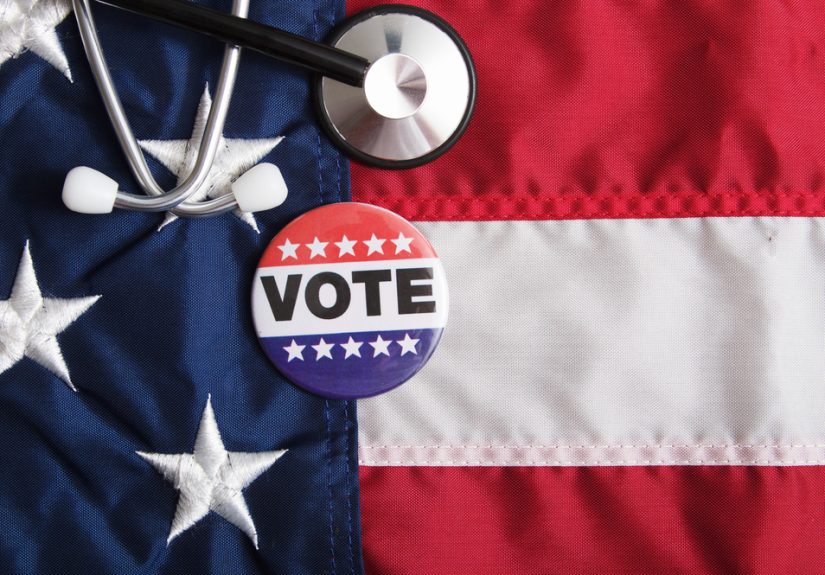
Set a simple goal: earn both stickers this yearthe “I Voted” sticker and the “I got my recommended vaccines” sticker (or at least a receipt and a Band-Aid).
Neither action requires you to become a policy expert or a medical researcher.
2) Use official starting points
-
For voting: Start with the official U.S. voter registration resource (Vote.gov) to find your state’s rules, deadlines, and registration steps.
If you’re helping family members, remember deadlines vary by state. -
For vaccination: Start with CDC immunization schedules to understand what’s generally recommended by age and risk,
then confirm what’s right for you with a clinician. For many vaccines (including seasonal vaccines), you can also locate nearby options through Vaccines.gov.
3) Treat questions as normal, not rebellious
Asking vaccine questions doesn’t make you “anti” anything. It makes you human.
The goal is to ask the right people: your doctor, pharmacist, or reputable public health sourcesrather than a stranger with a microphone and a merch store.
Similarly, asking voting questions doesn’t make you “political.” It makes you practical.
Verify your registration, learn your options, and know what identification or accommodations apply in your state.
4) Help one other person show up
The most underrated civic superpower is being the friend who texts:
“Heydo you want me to remind you about the registration deadline?” or “I’m going to get my flu shot Saturdaywant to come with?”
Participation is contagious (in the good way).
So… are they really the same coin?
They’re not identical. Voting is about collective decisions; vaccination is about disease prevention.
But the resemblance is strong where it counts:
- Both protect individuals and communities.
- Both require trust, access, and clear information.
- Both are weakened by misinformation and strengthened by good systems.
- Both work best when participation is broad, not just “whoever had time.”
If democracy is a living system, voting is how it breathes. If public health is a shield, vaccination is how it holds.
Same coin. Same idea: show up for yourselfand for the people you’ll never even meet.
Experiences That Bring the Metaphor to Life (Extra )
To make this feel less like a clever analogy and more like real life, here are a few common, real-to-life scenarios people describemoments where
“voting and vaccination” stop being abstract concepts and start looking like community care in action.
The clinic waiting room conversation
A parent sits in a pediatric clinic, holding a toddler who’s trying to lick the chair arm like it’s a gourmet appetizer.
The parent looks tired, not clueless. They’ve read contradictory posts, heard scary stories, and now they’re overwhelmed.
A nurse doesn’t shame them. She explains what the vaccine is for, what side effects are common, what signs would mean “call us,” and why community protection matters.
The parent nods and says something like, “I just want to do the right thing.”
That phrasedo the right thingshows up in voting too. People often don’t skip elections because they hate democracy.
They skip because they don’t know the rules, they’re working double shifts, or they’re afraid they’ll get something wrong and look stupid.
What changes behavior isn’t a lecture; it’s a clear path: “Here’s where you check your registration. Here’s what you bring. Here’s how to vote early if Election Day is chaos.”
The “I didn’t think it mattered” moment
Another common experience: someone catches an illness that could have been prevented or made less severe with vaccination.
They recover, but the disruption is brutalmissed work, a worried family, unexpected medical costs.
Afterward, they say, “I didn’t think it would happen to me.”
That’s not stupidity; it’s normal human optimism bias.
Voting has the same trap. People assume their single ballot can’t matteruntil a local issue hits home:
the school district changes health policies, the county cuts public health funding, the community loses a clinic,
or a preventable outbreak spreads faster because the system is understaffed.
Then the “tiny” civic decisions feel very large, very quickly.
The community organizer who treats logistics like love
In many towns, you’ll find someone who quietly makes participation easier. They coordinate rides to the polls.
They translate voter information for neighbors. They share reminders about deadlines without pushing a party line.
They do the same for health: they organize a group trip to the pharmacy, help elders schedule appointments,
or bring reliable vaccine information to community centers.
If you ask what motivates them, the answer is rarely dramatic. It’s usually practical compassion:
“I don’t want people to fall through the cracks.”
That’s the coin in motionless about ideology, more about preventing avoidable harm.
The “two-sticker” feeling
Finally, there’s the simple, underrated experience of walking away after you’ve done the thing:
you voted, you got vaccinated (or got up to date), and you didn’t have to become a superhero to do it.
You just showed up.
The best part is that these actions scale. One person makes a difference; many people make resilience.
That’s why the metaphor sticks: voting and vaccination are two sides of the same coinsmall individual actions that purchase big collective protection.
Conclusion
If you remember only one idea, make it this: both voting and vaccination are about protecting your future self and your community at the same time.
They’re not perfect systems. They’re human systems. But they get stronger when more of us participatethoughtfully, calmly, and consistently.
So go earn your stickers. Your community is worth the effort.