Table of Contents >> Show >> Hide
- What is the glycemic index?
- What counts as a high glycemic index food?
- How high GI foods affect your health
- Glycemic index vs glycemic load: portion size matters
- How to avoid high glycemic index foods (without hating your life)
- Do you need to avoid all high GI foods?
- Real-life experience: what cutting back on high GI foods really feels like
- Conclusion
If you’ve ever eaten a giant bowl of white pasta, felt amazing for 20 minutes, and then wanted to nap under your desk with a cookie in each hand, you’ve already met the glycemic index in real life.
The glycemic index (GI) is basically a speedometer for carbs. It tells you how quickly a food that contains carbohydrates raises your blood sugar. Some foods are slow and steady; others floor the gas pedal and send your blood sugar into a roller coaster. Understanding which foods are “high glycemic index” and how to avoid them (or at least tame them) can help with energy, weight management, and blood sugar control, especially if you’re living with diabetes or prediabetes.
Let’s break down what high GI foods are, why they matter, and how to build an everyday eating pattern that keeps your blood sugarand your moodon a more even keel.
What is the glycemic index?
The glycemic index ranks carbohydrate-containing foods on a scale from 0 to 100 based on how quickly they raise blood sugar after you eat them. The higher the number, the faster and higher your blood sugar climbs.
- Low GI: 55 or less
- Medium GI: 56–69
- High GI: 70 or higher
To figure this out, researchers give people portions of food that contain a set amount of carbs (usually 50 grams), measure their blood sugar over a couple of hours, and compare the curve to a reference food like pure glucose or white bread, which is set at 100.
Only foods with carbohydrates get a GI score. That means meat, fish, oils, and pure fats don’t have a GIthough they can still influence your blood sugar indirectly when they’re part of a meal.
What counts as a high glycemic index food?
High GI foods are usually those that are quickly digested and absorbed, causing a rapid spike in blood sugar. They’re often made with refined grains or lots of added sugar and have little fiber or protein to slow things down.
Common examples of high glycemic index foods (GI ≥ 70) include:
- Refined breads and baked goods
- White bread and many sandwich rolls
- Bagels, croissants, and many store-bought muffins and pastries
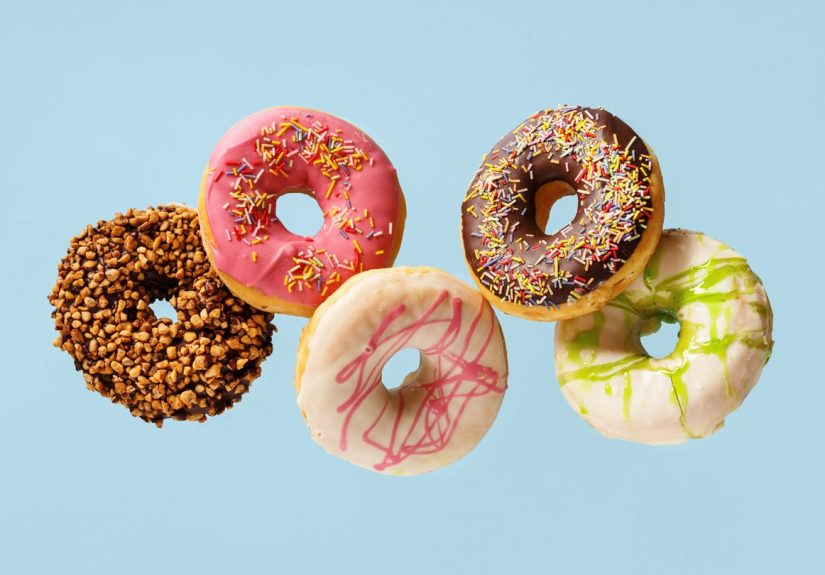
- Cakes, donuts, cookies made with white flour and sugar
- Refined grains and cereals
- Most sugary breakfast cereals (corn flakes, puffed rice, frosted cereals)
- White rice and instant rice
- Rice cakes and many crackers made from refined flour
- Sugary drinks and sweets
- Soda and other sugar-sweetened beverages
- Sweetened energy drinks, sports drinks, sweet tea, sugary coffee drinks
- Candy, especially those made mainly from sugar or corn syrup
- Starchy sides and snacks
- French fries and many fried potato products
- Mashed potatoes made from white potatoes
- Chips and some snack foods made from refined starches
Some fruits and starchy foods can also land in the higher GI zonethink ripe bananas, watermelon, dates, raisins, and very ripe plantainsespecially when eaten in large portions.
Why do high GI foods spike blood sugar so fast?
High GI foods tend to share a few traits:
- They’re low in fiber, so there’s nothing to slow down digestion.
- They’re often finely milled or processed, which gives your digestive enzymes easier access to the starch.
- They may be low in protein or fat, which also means faster digestion.
The result? Glucose shows up in your bloodstream in a hurry, your pancreas releases a surge of insulin, and blood sugar can crash back down just as fastcue the “I need a snack right now” feeling.
How high GI foods affect your health
One high GI meal isn’t going to break your health. The issue is when your overall eating pattern leans heavily on high GI foods day after day.
Research suggests that regularly eating high glycemic index and high glycemic load diets is associated with:
- More blood sugar swings, which can make diabetes and prediabetes harder to manage.
- Increased hunger and cravings a few hours after eating, which can make it easier to overeat.
- Higher risk of type 2 diabetes when high GI diets are combined with other risk factors.
- Potential links with heart disease and metabolic issues, likely because of repeated spikes in blood sugar and insulin over time.
On the flip side, diets that emphasize lower GI foodslike minimally processed whole grains, legumes, nuts, fruits, vegetables, and yogurtare associated with better blood sugar control and may support heart health.
Glycemic index vs glycemic load: portion size matters
Here’s where it gets interesting: the glycemic index looks at the quality of the carbohydrate, but not the quantity. That’s where glycemic load (GL) comes in.
Glycemic load considers both:
- The glycemic index of the food, and
- How many grams of carbohydrate are in a typical serving.
That means a food like watermelon can have a high GI but a relatively low GL because a normal serving doesn’t contain a huge amount of carbs. Dates, on the other hand, have both a high GI and a very high GL, so they hit much harder.
In practice, experts often recommend paying attention to your overall eating pattern and portion sizes rather than obsessing over every GI number.
How to avoid high glycemic index foods (without hating your life)
Good news: avoiding (or at least taming) high GI foods does not mean swearing off joy, birthday cake, or all white rice forever. It’s more about upgrading your everyday habits and making smart swaps most of the time.
1. Swap refined carbs for fiber-rich options
Think “less processed, more intact.” When you keep the grain, bean, or plant closer to how it grew, you’re usually lowering the GI and raising the fiber.
- Bread: Trade white bread for 100% whole grain or sprouted grain bread.
- Rice: Swap white rice for brown rice, wild rice, quinoa, or barley.
- Pasta: Choose whole-wheat pasta or legume-based pasta (like lentil or chickpea pasta).
- Cereal: Choose steel-cut or old-fashioned oats over sugary boxed cereals.
- Snacks: Replace crackers and chips with nuts, seeds, popcorn (air-popped), or hummus with veggies.
2. Be picky about sugary drinks
Liquid sugar is one of the fastest ways to spike blood sugar because there’s no fiber and almost no chewingjust a quick sugar delivery system. Regular soda, sweetened teas, “fruit drinks,” energy drinks, and many coffee beverages loaded with syrups all fall into the “high GI, high GL” zone.
Instead, try:
- Water (plain, sparkling, or infused with fruit slices)
- Unsweetened tea or coffee
- Flavored seltzer with a splash of 100% fruit juice (just a splash!)
3. Pair carbs with protein, fiber, and healthy fats
If you’re going to eat a higher GI food, you can blunt its impact by pairing it with slower-digesting foods.
- Add protein (eggs, Greek yogurt, tofu, chicken, fish, beans).
- Include healthy fats (nuts, seeds, avocado, olive oil).
- Load up on fiber (vegetables, beans, lentils, whole fruits).
For example, if you love white rice, have a smaller portion alongside salmon, a big serving of stir-fried veggies, and maybe some edamame. The overall meal will have a lower glycemic impact than a giant bowl of rice on its own.
4. Watch your portions (even of “healthy” carbs)
Whole grain bread, brown rice, and potatoes with skin are more nutrient-dense than their refined counterparts, but they can still raise blood sugar if portion sizes are huge. Glycemic load reminds us that how much we eat matters as much as what we eat.
Simple guidelines:
- A fist-sized portion of cooked starch (rice, pasta, potato) is often plenty for a meal.
- Fill at least half your plate with non-starchy vegetables.
- Use fruit as a servingnot as a bottomless bowl.
5. Build low GI-friendly meals
Here are some simple low- to moderate-GI meal ideas:
- Breakfast: Old-fashioned oats topped with berries, chia seeds, and a spoonful of peanut butter.
- Lunch: Lentil soup with a mixed green salad and a slice of whole-grain bread.
- Dinner: Grilled chicken or tofu, roasted vegetables, and a small serving of quinoa or sweet potato.
- Snacks: Apple slices with almond butter, carrots with hummus, Greek yogurt with walnuts.
Do you need to avoid all high GI foods?
Not necessarily. The goal is not perfectionit’s patterns.
For people with diabetes or prediabetes, minimizing frequent high GI, high GL choices can make blood sugar easier to manage and improve long-term health. But that doesn’t mean you never eat birthday cake again; it just means you’re thoughtful about how often, how much, and what else you eat with it.
There are also situationslike intense athletic trainingwhere quick-digesting carbs may be strategically used before, during, or after workouts. In those cases, it’s best to work with a healthcare provider or dietitian who understands your goals and health status.
For most people, the sweet spot is this:
- Base your everyday meals on low- and moderate-GI foods.
- Limit high GI foods, especially sugary drinks and highly processed snacks.
- Enjoy higher GI favorites occasionally and in smaller portions, paired with protein, fiber, and healthy fats.
Real-life experience: what cutting back on high GI foods really feels like
On paper, talking about “glycemic index” sounds a little technical. In real life, it looks more like this:
You wake up, grab a giant sugary coffee and a couple of white-flour pastries, and fly out the door. By 10:30 a.m., you’re starving, a little cranky, and ready to eat anything that isn’t nailed down. Lunch is white rice and fried chicken, plus a soda because you “need something sweet.” An hour later, your eyes are heavy, your brain feels like it’s buffering, and you’re wondering why you’re so tired when you slept fine.
That’s high GI living.
Now imagine you make a few small tweaksnot a total life overhaul, just consistent shifts.
Morning experiments
Instead of pastry and sugary coffee, you try a bowl of old-fashioned oats cooked with milk, topped with berries and a spoonful of peanut butter. You still have your coffee, but you skip the flavored syrup and add just a little sugar or use cinnamon for flavor.
The first day or two, you might miss the sugar rush. But you notice something weird: at 10:30 a.m., you’re not ravenous. You could eat, but you’re not desperate. Your energy feels steadier. You can actually get through a meeting without fantasizing about vending machines.
Lunch upgrades
At lunch, instead of a big bowl of white rice and fried chicken, you try a plate with:
- Half the plate non-starchy vegetables (salad, steamed broccoli, roasted carrots)
- A palm-sized portion of grilled chicken, tofu, or fish
- A fist-sized portion of brown rice, quinoa, or roasted sweet potato
You still feel full, but not heavy. That afternoon slump? It’s less intense. You’re surprised at how much less you’re thinking about snacks.
Snack strategy
Afternoon snacks used to be a candy bar or a sugary drink. Now you experiment with:
- Greek yogurt with a handful of nuts
- An apple and a tablespoon of peanut butter
- Carrots, cucumber, and hummus
These snacks take the edge off hunger without giving you a sugar spike-and-crash cycle. If you’re checking your blood sugar (say, with a meter or continuous glucose monitor), you might see the difference on the graphfewer dramatic peaks, more gentle hills.
Dinner and social life (aka real-life land mines)
Dinner is where life happens: family meals, takeout, celebrations. Instead of trying to be “perfect,” you adapt.
- Pizza night? You load your plate with a big salad first, then have one or two slices, not four.
- Rice-based meals? You serve a little less rice and more vegetables and protein.
- Dessert? You share a portion or enjoy a small serving slowly, after a balanced meal instead of on an empty stomach.
You may notice changes over a few weeks: more consistent energy, fewer “hangry” meltdowns, maybe some gradual weight loss if that was a goal. If you were monitoring blood sugar, you might see improved fasting numbers or post-meal readings. The win isn’t that you never touch high GI foodsit’s that they stop being the foundation of your diet.
Mindset shifts that make it stick
People who successfully cut back on high GI foods usually share a few mindset tweaks:
- Curiosity over perfection: They treat it like an experiment, not a test they can fail.
- Preparation over willpower: They keep better choices on handwashed fruit, precut veggies, nuts, yogurtso they’re not relying on sheer discipline when hungry.
- Progress over all-or-nothing: They celebrate swapping soda for sparkling water most days, even if they still enjoy a slice of cake at a party.
The takeaway? Avoiding high glycemic index foods isn’t about strict rules; it’s about learning which foods make you feel steady and satisfied and which ones send you on a blood sugar roller coasterand then shaping your everyday habits around that knowledge.
Conclusion
High glycemic index foods are the fast-burning fuels of the carb world. In small amounts and in the right context, they can fit into a balanced life. But when they dominate your plate and your glass, they can contribute to blood sugar swings, constant cravings, and long-term health risks.
Focusing on lower GI choiceswhole grains, beans, vegetables, fruits, nuts, yogurtand moderating portions of refined, sugary foods can help keep blood sugar steadier and energy more predictable. You don’t have to know the GI number of every food; you just need a handful of simple strategies and the willingness to experiment with what works in your real life.
sapo: High glycemic index foods can send your blood sugar on a roller coasterspikes, crashes, cravings, repeat. In this in-depth guide, you’ll learn exactly what “high GI” means, which everyday foods hit hardest, and why glycemic load and portion size matter just as much as the numbers. You’ll also get practical, real-world strategies for swapping refined carbs for slow-burning options, pairing carbs with protein and fiber, and enjoying your favorite treats without blowing up your blood sugar. If you’re aiming for steadier energy, easier weight control, or better diabetes management, this is your playbook.