Table of Contents >> Show >> Hide
- What Is Gua Sha?
- Where Gua Sha Comes From (and Why It Shows Up Everywhere)
- Gua Sha Tools: Jade, Stainless Steel, Quartz… and the Truth About Materials
- Facial Gua Sha vs. Body Gua Sha: Same Name, Very Different Intensity
- What Gua Sha Is “Supposed” to Do (Traditional View vs. Modern View)
- Potential Benefits: What People Use Gua Sha For
- What the Science Actually Says (Without the Hype)
- Safety First: Risks, Side Effects, and Who Should Avoid It
- How to Try Facial Gua Sha at Home (A Gentle, Beginner-Friendly Approach)
- Choosing a Practitioner: What to Look For
- Common Myths (Let’s Retire These Gently)
- FAQ: Quick Answers People Want Immediately
- Conclusion: A Realistic Way to Think About Gua Sha
- Real-World Experiences: What Gua Sha Feels Like and What People Commonly Notice (About )
If you’ve ever watched a skincare video and thought, “Why is that person rubbing a fancy stone on their face like they’re buffing a car hood,”
congratulationsyou’ve met gua sha. It’s an old-school Traditional Chinese Medicine (TCM) technique that’s now living its best life in
modern wellness and beauty routines.
But gua sha isn’t just a trending tool with good lighting. Done properly, it’s a form of therapeutic scraping or stroking that may support comfort,
circulation, and relaxation. Done improperly, it can leave you looking like you lost an argument with your own skincare routine.
This guide breaks down what gua sha is, how it’s traditionally used, what modern research suggests, the realistic benefits (and the not-so-realistic marketing),
plus how to approach it safelyespecially if you’re trying it at home.
What Is Gua Sha?
Gua sha (pronounced “gwah-shah”) is a TCM practice where a smooth-edged tool is used to glide along the skin with gentle-to-firm pressure,
typically over a lubricant like oil or balm. Traditionally, it’s used on the body (back, shoulders, neck, arms, legs). In modern skincare culture, it’s also
used on the face and jawline with much lighter pressure.
The name itself is often explained as: “gua” meaning “to scrape,” and “sha” referring to the temporary red or purple skin
markings that can appear when pressure increases microcirculation near the surface. Those markings can look dramatic, but they typically fade over time.
Think of gua sha as sitting in the neighborhood between massage, myofascial work, and traditional healing. It’s not “one weird trick” that replaces medical care.
It’s a techniqueone that can be soothing and useful for some goals, and overhyped for others.
Where Gua Sha Comes From (and Why It Shows Up Everywhere)
Gua sha has deep roots across East and Southeast Asian traditions and has long been used as a household remedy in many families.
In TCM frameworks, it’s often discussed in terms of supporting the movement of qi (vital energy) and addressing patterns like “stagnation.”
Western medicine doesn’t use those concepts, but it does recognize that rubbing, warming, and mechanically stimulating tissue can influence comfort, tension,
and local blood flow.
So why the current boom? A few reasons:
- It’s visually compelling. A gua sha tool gliding along the face looks “science-y” and calming at the same time.
- It fits modern self-care. Five minutes of slow, mindful routine is basically the opposite of doomscrolling (a public service).
- It offers quick-feel benefits. Relaxation and “de-puffing” can feel noticeableeven if the effect is temporary.
Gua Sha Tools: Jade, Stainless Steel, Quartz… and the Truth About Materials
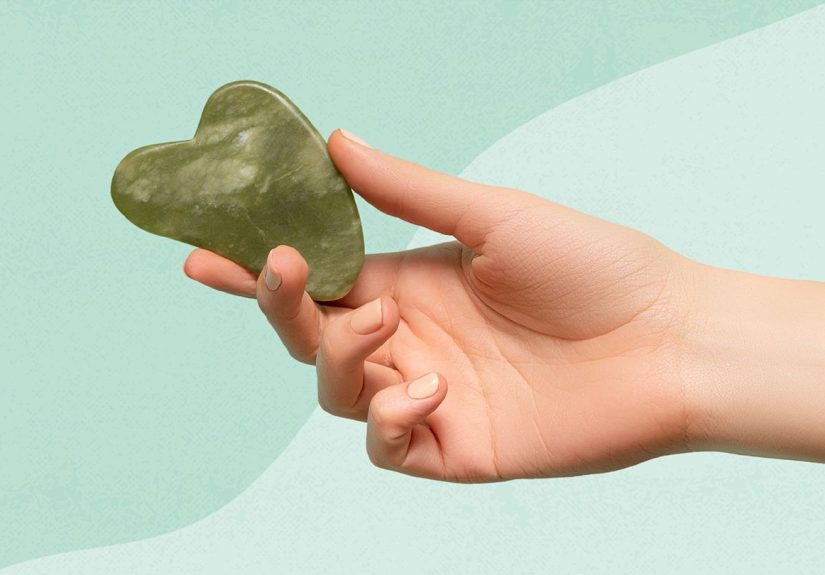
Gua sha tools come in different materials and shapes. You’ll see jade, rose quartz, stainless steel, horn, ceramic, or other polished stones.
Here’s the practical breakdown:
Material matters less than… smoothness and hygiene
The biggest “performance feature” is a smooth, non-porous edge that won’t snag the skin. Stainless steel is easy to clean and durable.
Stone tools can feel naturally cool and soothing. What matters most is that the tool is well-made, comfortable to hold, and cleaned properly.
Shape matters for comfort and control
Many tools have curves, notches, and a heart-like shape. This isn’t just for aestheticsit helps the tool hug facial contours (jawline, cheekbone, brow)
or larger areas (neck, shoulder).
Facial Gua Sha vs. Body Gua Sha: Same Name, Very Different Intensity
Body gua sha
Traditional body gua sha often involves firmer pressure and longer strokes over musclesespecially areas like the upper back and neck. This is the version
most associated with visible “sha” marks. It’s usually performed by trained practitioners, and it’s not meant to be a DIY contest of who can scrape hardest.
Facial gua sha
Facial gua sha is generally lighter, slower, and more like massage. People use it for temporary puffiness, tension relief (jaw/temples),
and a refreshed look. If you’re getting obvious bruising on your face, that’s not “proof it worked”that’s a sign to back off.
What Gua Sha Is “Supposed” to Do (Traditional View vs. Modern View)
Traditional (TCM) lens
In TCM, gua sha is often described as helping move qi and blood, release “stagnation,” and support balance. It may be used in broader wellness plans that
include acupuncture, herbal formulas, movement practices, and dietary guidance.
Modern physiology lens
From a modern standpoint, the most plausible mechanisms include:
- Increased local circulation: Mechanical stimulation may temporarily increase blood flow in the treated area.
- Neuromodulation: Sensory input (pressure, stroking) may alter pain signaling and muscle guarding.
- Soft-tissue effects: Similar to massage, it may help people feel looser or less tight in certain areas.
- Relaxation response: Slow, rhythmic routines can downshift stresssometimes the biggest benefit is your nervous system exhaling.
Notice what’s missing: “melts fat,” “changes bone structure,” or “snatches your jaw permanently.” Those claims belong in the same category as
“detox tea makes you a new person.”
Potential Benefits: What People Use Gua Sha For
People use gua sha for different goals depending on whether they’re doing body work or facial massage. Here are the most common usesplus what’s realistic.
1) Muscle tension and soreness
This is where gua sha has the strongest tradition and some supportive research interest. People often target the neck, shoulders, and backespecially if they
feel stiff from desk posture, workouts, or stress. Some studies suggest it may help with pain and mobility in certain musculoskeletal complaints, though the
research base is still limited and not definitive.
2) Headache or jaw tension support
Some people use gentle facial/neck work to relax areas that contribute to tension headacheslike the upper neck, jaw, and temples. This is best thought of as
comfort support, not a cure. If headaches are frequent or severe, a clinician should be involved.
3) Temporary de-puffing and “fresh face” effect
Facial gua sha can create a short-term “less puffy” look for some people, likely due to gentle massage effects and fluid movement. The key word is
temporary. You’re influencing soft tissue and fluidnot remodeling your face like a construction crew.
4) Stress reduction and relaxation
A slow gua sha routine can feel meditative. Many people build it into a wind-down ritual: warm shower, clean face, a little oil, quiet music, and five minutes
of not answering anyone’s texts. Honestly, the nervous system loves that.
5) Skin glow (indirectly)
When done gently, massage can temporarily make skin look brighter because circulation increases and the face looks more “awake.” This is not the same as
treating acne, rosacea, or pigmentation. For those, you want evidence-based skincare and professional guidance.
What the Science Actually Says (Without the Hype)
Research on gua sha is growing, but it’s still not massive or perfectly consistent. Here’s the fair, non-influencer summary:
-
There’s some evidence for pain relief and improved function in specific situations (like neck discomfort), but studies vary in quality,
and more robust trials are needed. - Microcirculation changes have been observed in research settings after gua sha, which supports the idea that it influences local blood flow.
-
Dermatology-focused reviews tend to be cautious: facial massage tools may help with puffiness and appearance temporarily, but claims about
long-term contouring or disease treatment are not strongly supported. -
Expectations matter. Like many hands-on therapies, the combination of touch, relaxation, and belief can influence how people feel. That
doesn’t make it “fake.” It makes it human.
Bottom line: gua sha can be a helpful adjunct for comfort and relaxation for some people. It should not replace medical evaluation for ongoing pain,
neurological symptoms, unexplained swelling, or skin conditions.
Safety First: Risks, Side Effects, and Who Should Avoid It
When people say gua sha is “safe,” they usually mean when it’s done correctly and appropriately. Like any technique that involves pressure on skin,
there are situations where it’s a bad idea or needs professional oversight.
Common side effects
- Redness or warmth in the treated area
- Temporary discoloration (especially with body gua sha)
- Soreness similar to deep massage
Use extra caution (or skip) if you have:
- Bleeding disorders or you bruise very easily
- Use of blood thinners or medications that increase bleeding risk
- Active skin infection, open wounds, sunburn, or inflamed rashes
- Recent cosmetic procedures (ask your provider first)
- Any medical condition where bruising or skin trauma is risky
Important note about kids and “coining” traditions
In some communities, gua sha-like practices are used as home remedies for colds or discomfort. However, doing intense scraping on children is risky and can be
misinterpreted as injury. If a family is using any traditional practice, it’s worth discussing with a trusted healthcare professional so safety and cultural
context are both respected.
How to Try Facial Gua Sha at Home (A Gentle, Beginner-Friendly Approach)
If you’re doing gua sha on your face, the goal is glide, not grind. You want controlled, gentle strokes with plenty of slip.
Step 1: Start clean
Wash your face and hands. This isn’t just skincare etiquetteit reduces the chance of dragging bacteria across the skin.
Step 2: Add slip
Apply a facial oil, serum, or moisturizer that gives enough glide. If your tool “skips,” you’re using too little product or too much pressure.
Step 3: Keep pressure light
For facial use, think “gentle massage,” not “paint scraper.” If you’re leaving marks that look like bruising, you’re going too hard.
Step 4: Use a simple pattern
- Neck: gentle upward strokes toward the jawline
- Jawline: slow strokes from chin toward the ear (very light pressure)
- Cheeks: glide from the center outward toward the ear
- Forehead: upward strokes toward the hairline
You don’t need 37 steps. Consistency and gentleness beat complicated choreography.
Step 5: Clean your tool
Wash with mild soap and warm water, then dry. Clean tools matter, especially if you have acne-prone skin.
How often?
Many people do facial gua sha a few times per week. Some do shorter daily routines. Your skin tolerance matters more than internet schedules.
If irritation shows up, reduce frequency or stop.
Choosing a Practitioner: What to Look For
If you’re considering body gua sha or using it for persistent pain, working with a trained professional can be a safer route.
Look for someone who:
- Has formal training in acupuncture/TCM or licensed bodywork (depending on your state)
- Explains what to expect (including temporary discoloration) before starting
- Uses clean tools and hygienic practices
- Asks about medications, bruising tendency, and medical history
- Never pushes you into pain as a “proof” of effectiveness
Common Myths (Let’s Retire These Gently)
Myth: “Gua sha detoxes your body.”
Your liver and kidneys already have full-time jobs. Massage may help you feel better and reduce temporary puffiness, but “detox” is often a marketing shortcut
that means “this felt satisfying.”
Myth: “If it doesn’t bruise, it didn’t work.”
Bruising is not a success metric. Especially on the face, bruising is a sign you’re going too hard.
Myth: “It permanently sculpts your face.”
Facial gua sha can create a temporary lifted or less puffy look for some people. Permanent structural changes require medical procedures (and a lot of
biology you can’t out-scrape).
Myth: “The tool material has magical powers.”
Cool stone can feel calming. Stainless steel stays cold longer and cleans easily. The real magic is technique, consistency, and not treating your face like
a cutting board.
FAQ: Quick Answers People Want Immediately
Does gua sha hurt?
Facial gua sha should not hurt. Body gua sha may feel intense, like deep massage, but it should not feel sharp or unbearable.
Can I do gua sha if I have acne?
If acne is inflamed, painful, or cystic, scraping over it can irritate the skin and spread bacteria. A dermatologist-guided routine is safer.
If you do it at all, avoid active breakouts and keep tools very clean.
Is gua sha the same as a jade roller?
They’re cousins, not twins. Rollers provide gentle massage and cooling; gua sha tools allow more targeted contour work and muscle releaseif used properly.
How long until I see results?
Many people notice relaxation or less puffiness quickly. Longer-term goals (like tension patterns) depend on consistency and your underlying causes.
Conclusion: A Realistic Way to Think About Gua Sha
Gua sha is a traditional practice with modern popularity for a reason: it’s simple, tactile, and can feel genuinely good. The best approach is to keep your
expectations grounded. Use it as part of a broader wellness routinesleep, hydration, movement, stress management, and evidence-based skincarerather than as
a miracle replacement for healthcare.
If you want a tool that helps you slow down, release tension, and look a little less like you answered emails in your sleep, gua sha can be a solid addition.
Just remember: gentle technique, clean tools, and no “scrape harder for results” nonsense.
Real-World Experiences: What Gua Sha Feels Like and What People Commonly Notice (About )
Most first-time gua sha experiences fall into one of two categories: (1) “Oh wow, that’s relaxing,” or (2) “Why do I look like I tried to iron my face?”
The difference is almost always pressure, slip, and patience.
For facial gua sha, people often describe the sensation as a mix of cooling, gentle stretching, and “tension melting” around the jaw and cheeksespecially if
they clench their teeth or carry stress in their face (which, in modern life, is basically everyone). A common beginner moment is realizing how much tension
lives in the jawline and temples. After a few slow strokes, many people notice they’re breathing deeper without even trying. That’s not a cosmetic trick;
that’s your nervous system responding to a calm, repetitive ritual.
Another frequently reported experience is temporary de-puffing. People who wake up with a puffy face (salty dinner? poor sleep? holiday snacks?
all of the above?) sometimes notice their features look a bit more “defined” after a short routine. The important part is the word temporary. This
effect is often most noticeable under the eyes and along the jawlineareas where fluid shifts can make a visible difference. Many users learn quickly that
gua sha isn’t “changing” their face; it’s more like it’s helping their face look like it got eight hours of sleep, even if it did not.
On the body side, experiences can be more intense. People trying gua sha for neck and shoulder tightness often say it feels like deep massage with a very
specific “release” sensation along overworked muscles. Athletes and desk-workers alike sometimes describe feeling looser afterward, especially in the upper
trapezius area (the classic “my shoulders are earrings” zone). But this is also where overdoing it becomes tempting. Some people assume intensity equals
effectiveness and end up sore, bruised, or irritated. Experienced practitioners tend to emphasize that the goal is to work with tissuenot punish it.
There’s also a learning curve around tool control. Beginners may hold the tool too upright, creating drag. Once they adjust the angle so the
tool lies flatter against the skin, the glide becomes smoother and the experience turns from “scraping” to “massage.” People often find that a little more oil
plus a lighter hand improves results more than extra pressure ever could.
One of the most underrated real-life outcomes is consistency. People who treat gua sha like a quick fix often feel underwhelmed. Those who treat it like a
five-minute ritualespecially at nighttend to report the biggest payoff: relaxation, reduced tension, and a more mindful relationship with their body.
It becomes less about chasing a sculpted jawline and more about regularly checking in with yourself. In that sense, the “before and after” isn’t just the face.
It’s your mood.
Finally, many people learn an important boundary: gua sha can support comfort, but it’s not meant to push through sharp pain, unexplained swelling, or skin
inflammation. The best experiences happen when users pair gua sha with basic common sensegentle technique, clean tools, and asking a professional when something
doesn’t feel right.