Table of Contents >> Show >> Hide
- Why This Story Hit Such a Nerve
- What Cultural Appropriation Actually Means in This Context
- Why Black Hair Is Never “Just Hair”
- The Real Salon Problem Nobody Should Ignore
- So, Was the Woman Wrong?
- How To Visit a Black Hair Salon Respectfully
- What This Debate Gets Right And Wrong
- Experiences That Explain Why This Topic Keeps Coming Back
- Conclusion
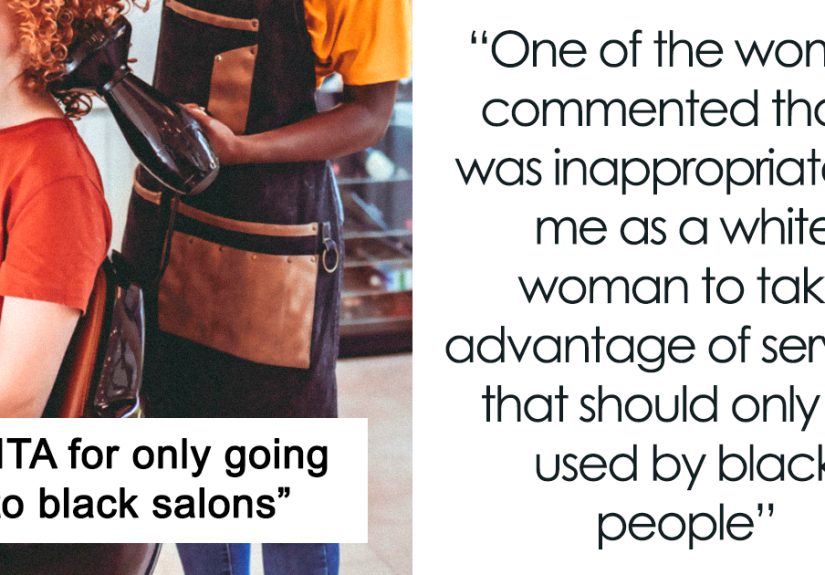
Some internet debates arrive with all the subtlety of a dropped flat iron. This was one of them. A viral argument over whether a white woman was guilty of cultural appropriation for visiting a salon that specializes in Black hair sparked the kind of online pile-on that social media practically keeps on a shelf, right next to outrage and badly cropped screenshots.
At first glance, the issue sounds simple: a white client went to a salon known for working with textured hair, and some people said she had crossed a cultural line. But hair, especially Black hair in America, is never just hair. It carries history, identity, economics, survival, style, stigma, creativity, and enough social baggage to need its own overhead bin.
That is exactly why this story struck a nerve. It touched two real conversations at once. One is about cultural appropriation: when members of a dominant culture borrow from a marginalized culture in ways that are exploitative, shallow, disrespectful, or profitable without context. The other is about access and expertise: many people with thick, curly, coily, or highly textured hair struggle to find stylists who actually know what they are doing. When those two conversations collide, sparks fly, nuance leaves the room, and everyone suddenly becomes a self-appointed professor of Hair Studies.
The smarter question is not whether a salon chair has a racial border checkpoint. The smarter question is this: when does appreciation, participation, or practical hair care turn into appropriation? And in this case, was the outrage aimed at the right target?
Why This Story Hit Such a Nerve
The reason this controversy spread so quickly is that it sat at the intersection of pain and optics. Black hair has long been policed in American workplaces, schools, media, and beauty standards. For generations, Black people have been told that natural textures and protective styles look “unprofessional,” “messy,” “distracting,” or somehow less acceptable than straight hair shaped around Eurocentric expectations. That history makes people understandably protective when Black culture is treated like a trend on Monday and a problem on Tuesday.
So when some people saw a white woman entering a salon associated with Black hair care, they did not see a simple appointment. They saw a larger pattern: dominant-culture consumers stepping into spaces built out of Black expertise, Black need, and Black exclusion, while not always carrying the same social burden attached to Black hair itself. That reaction did not come out of nowhere.
At the same time, the details matter. Going to a salon because your hair texture requires specialized knowledge is not the same thing as treating a cultural practice like a costume. Getting your curls handled by someone competent is hair care. Showing up to wear culturally loaded styles for novelty, clout, or a photo dump captioned “tribal vibes” is a different conversation entirely. Those are not interchangeable situations, even if the internet loves pretending they are.
What Cultural Appropriation Actually Means in This Context
The phrase cultural appropriation gets used so often online that it sometimes loses its shape. In a serious sense, it is not just borrowing across cultures. Human beings borrow constantly. Food, language, music, fashion, and beauty all travel. Appropriation usually involves a power imbalance and a lack of respect. It happens when people take something from a marginalized group, strip it of context, rebrand it, profit from it, or enjoy praise for it while members of the originating group are still punished for the same thing.
Borrowing a service is not the same as borrowing an identity
That distinction matters here. A white woman seeking a stylist who understands dense, textured, frizzy, or tightly curled hair is not automatically performing Blackness. She is not claiming the history of Black hair. She is not becoming a spokesperson for a culture because she booked a silk press or deep-conditioning appointment. She is, in the most practical sense, trying not to leave a salon looking like she argued with a ceiling fan and lost.
Where the line gets more complicated is with styles that are deeply associated with Black cultural expression and Black survival. Protective styles such as braids, locs, twists, and knots carry historical and social meaning. In those cases, public criticism often focuses not on the salon visit itself but on whether the style is being worn without context, without credit, or without awareness of the discrimination Black people still face for the same look.
So if the debate is strictly about using a salon that specializes in Black hair, the appropriation claim looks weak. Salons are businesses, service spaces, and centers of expertise. A specialist working with the hair type sitting in their chair is called doing their job well. That should not require a cultural emergency alert.
Why Black Hair Is Never “Just Hair”
To understand why people react so strongly, you have to understand the emotional and political weight of Black hair in the United States. Black hair has been treated as a site of control for centuries. Natural textures were often devalued, straightened, hidden, criticized, or regulated to fit mainstream standards. In many communities, hair care became far more than grooming. It became ritual, artistry, memory, and resistance.
Black salons and barber shops also grew into more than service businesses. They became social spaces, neighborhood institutions, informal support systems, and places where Black people could be understood without having to translate themselves. You do not just get your hair done there. You get conversation, honesty, jokes, gossip, advice, and sometimes an emotional tune-up that is suspiciously close to therapy.
That history is why some people feel uneasy when Black aesthetics become fashionable for outsiders while Black people themselves remain marginalized. It is also why many Black stylists and clients are sensitive to the difference between genuine respect and casual tourism. Nobody wants their culture reduced to a mood board.
But respecting that history should lead to sharper thinking, not sloppier accusations. A salon that specializes in textured hair is providing knowledge that the wider beauty industry has often failed to teach. If anything, the real scandal is not that some non-Black clients go there. The real scandal is that so many mainstream salons still cannot competently handle textured hair at all.
The Real Salon Problem Nobody Should Ignore
Here is the part that deserves much more attention than the viral outrage: the beauty industry has a longstanding training gap. Many cosmetology programs have historically centered straight or loosely wavy hair, leaving students underprepared to work with coily, kinky, or tightly textured hair. That gap has real consequences. Black clients are refused service, charged more, given damaging treatments, or forced to spend extra time and money searching for someone who actually knows how to care for their hair.
That is why specialized salons exist and why they remain essential. They are not some mysterious club with a hidden password and a comb-shaped key. They are often a direct response to exclusion. When the broader salon market fails a huge part of the population, specialists fill the gap.
And the gap has been large enough that lawmakers have taken notice. Over the last several years, the CROWN Act movement has pushed states to ban race-based hair discrimination, and multiple states have also moved to require textured-hair education in cosmetology training. That shift is important because it recognizes something obvious that the beauty industry took far too long to admit: all hair textures deserve competent care, and no one should have to hunt for dignity with their trim.
Seen through that lens, a white client going to a salon that understands her texture is not the headline. The headline is that the salon industry has been so uneven that people are forced to cross neighborhoods, price brackets, and cultural assumptions just to get a decent wash-and-style.
So, Was the Woman Wrong?
In the scenario suggested by the title, the answer is probably no. Not if she went because the salon had the skill set her hair needed. Not if she respected the space, paid for the service, followed salon rules, and did not treat the experience like an anthropological field trip titled Today I Visit The Exotic Curl People. Skill-based service is not theft.
What would make the situation more questionable? Mockery. Exoticizing the salon. Using Black cultural language and style as a prop. Acting entitled to education, extra emotional labor, or cultural validation. Treating a Black-owned or Black-centered salon as trendy content rather than a professional business. In other words, the problem is not the appointment. The problem is the attitude.
That is a useful rule far beyond hair. Culture is not fragile china that must never be touched. But it is also not a free costume rack where history disappears the second something looks cute on Instagram.
How To Visit a Black Hair Salon Respectfully
1. Go for the right reason
If the salon has the best expertise for your texture, your goals, or the health of your hair, that is a reasonable reason to book. Go because you need excellent service, not because you want to collect a “cool” experience.
2. Respect specialization
Ask whether the salon works with your specific hair type and desired service. Black hair salons are not monolithic. Some focus on silk presses, some on braiding, some on natural hair, some on extensions, and some on multiple textures. A little humility goes a long way.
3. Do not make the staff explain racism to you while holding a blow dryer
Stylists are professionals, not unpaid cultural consultants. You can be curious without turning the appointment into a classroom and the receptionist into your personal graduate seminar on race in America.
4. Avoid exoticizing the experience
There is a big difference between appreciating a salon’s expertise and talking about it as though you just returned from a hair safari. Respect the environment like you would any other business. Better yet, maybe more.
5. Give credit where it belongs
If a stylist does excellent work, say so. Recommend them. Pay well. Respect pricing and time. Support the business as a business, not just as a one-off curiosity. Appreciation looks a lot like professionalism.
What This Debate Gets Right And Wrong
The people raising alarms about appropriation are not inventing the larger problem. Black hair has absolutely been copied, commodified, and celebrated on outsiders while still being stigmatized on Black people. That contradiction is real. It is frustrating. It deserves scrutiny.
But not every interaction with Black beauty culture is appropriation. Sometimes a salon visit is simply a salon visit. Sometimes the most respectful thing a person can do is seek out someone with actual expertise instead of expecting an undertrained mainstream stylist to freestyle their way through textured hair like it is a craft project.
The challenge is resisting lazy categories. Calling everything appropriation can flatten important differences. It can also accidentally hide the deeper issue: the unequal beauty system that made these specialized spaces necessary in the first place. If people want to be angry, there is plenty to work with. Be angry at discrimination. Be angry at bad training. Be angry at school and workplace rules that punish Black hair. Be angry at the double standard that turns one person’s heritage into another person’s trend report.
But maybe do not be angry at someone for wanting a stylist who knows how to handle her curls without causing structural damage and emotional ruin before lunch.
Experiences That Explain Why This Topic Keeps Coming Back
One reason this story keeps resonating is that it reflects real experiences that many people have had, even if the internet packages them as entertainment. Black women have long described walking into mainstream salons and being told, directly or indirectly, that their hair is too thick, too curly, too time-consuming, too difficult, or simply not welcome. Some have been turned away. Others have paid high prices for services that damaged their hair because the stylist did not understand shrinkage, curl pattern, porosity, tension, heat sensitivity, or even basic detangling etiquette. Imagine paying premium prices to leave looking like your blowout was completed during an electrical storm. That is not just bad service. It is a reminder that many beauty spaces were never built with everyone in mind.
There is also the experience of mixed families and curly-haired clients who do not fit neat beauty-industry categories. A white mother of Black or biracial children may discover very quickly that “family salon” can be code for “we can do everyone except your kid.” A white woman with dense curls may learn that the stylist who gives flawless beach waves on straight hair turns into a part-time archaeologist the minute a coil enters the room. In those situations, salons that specialize in textured hair are not being used as cultural accessories. They are being sought out because they offer competence, safety, and results.
Then there is the experience from the other side of the chair: Black stylists who are expected to know how to work with every texture, every density, every condition, every length, every extension method, and every emergency correction, while many white stylists have historically not been expected to master textured hair at all. That double standard says a lot. It tells Black professionals that their expertise must be universal, but other professionals can still treat Black hair like an elective course they never got around to taking. No wonder specialized salons become magnets for a wider range of clients. In many cases, they simply have more complete training and more realistic experience.
Finally, there is the emotional experience tied to Black salon culture itself. For many Black clients, the salon is not just a place to get laid edges and a sharp trim. It is a place where they do not have to explain why wash day matters, why certain ingredients are a problem, why protective styles are protective, or why “Can we just thin it out?” is a sentence that can ruin an afternoon. That sense of ease is hard-earned. It comes from generations of shared knowledge and trust. So when outsiders enter that space without sensitivity, people notice. But when they enter with respect, pay for professional care, and understand that they are guests in a meaningful tradition, the exchange can feel much less like appropriation and much more like what it actually is: expertise meeting need.
That is why this topic stays alive. It is not only about one woman, one salon, or one viral accusation. It is about who gets judged for their hair, who gets served, who gets excluded, who gets copied, and who gets understood. And until those questions are answered more fairly, the debate will keep coming back for another appointment.
Conclusion
The controversy over whether a white woman committed cultural appropriation by going to a salon that specializes in Black hair reveals how tangled beauty politics can be. It also reveals a useful truth: not every cross-cultural interaction is theft, and not every criticism is misplaced. Context matters. History matters. Power matters. Intent matters. So does behavior.
Black hair carries a long history of innovation, identity, discrimination, and community. That history deserves respect. But respecting it does not mean pretending salon expertise should be racially quarantined. If a stylist knows how to care for a client’s hair, and the client enters the space respectfully, that is not cultural theft. That is professional service doing what professional service is supposed to do.
If there is a lesson here, it is this: spend less time policing who is allowed to sit in which salon chair, and more time demanding a beauty industry that can serve all textures without bias, ignorance, or double standards. Because the real bad hair day is not cultural exchange. It is discrimination dressed up as normal.