Table of Contents >> Show >> Hide
- Why ESA Chose Rosalind Franklin for Its Next Mars Rover
- Who Was Rosalind Franklin?
- The DNA Work That Changed Biology
- More Than Photo 51: Franklin’s Scientific Legacy Beyond DNA
- Why Her Story Still Resonates
- Why a Mars Rover Named Rosalind Franklin Feels So Right
- Experiences That Make Rosalind Franklin’s Story Feel Strikingly Modern
- Conclusion
- SEO Tags
If you had to pick one scientist to name a Mars rover after, you could do a lot worse than Rosalind Franklin. In fact, you would struggle to do better. Mars missions are about reading clues hidden in stubborn material, extracting meaning from tiny patterns, and refusing to guess before the evidence is in. That is basically the Rosalind Franklin playbook.
So when the European Space Agency gave its next Mars rover her name, it was more than a classy tribute. It was a perfect match. Franklin was the kind of scientist who trusted data over drama, precision over ego, and patient observation over flashy shortcuts. She helped reveal the structure of DNA, made major contributions to the study of carbon and coal, and later advanced virus research in ways that still matter. In other words, she was not a one-discovery wonder. She was a scientific powerhouse with a lab notebook and a spine of steel.
This article looks at who Rosalind Franklin really was, what she contributed to science, why her role in the DNA story has been debated for decades, and why ESA’s rover could hardly have a better namesake. Spoiler alert: the woman behind the name was every bit as impressive as the robot heading for Mars.
Why ESA Chose Rosalind Franklin for Its Next Mars Rover
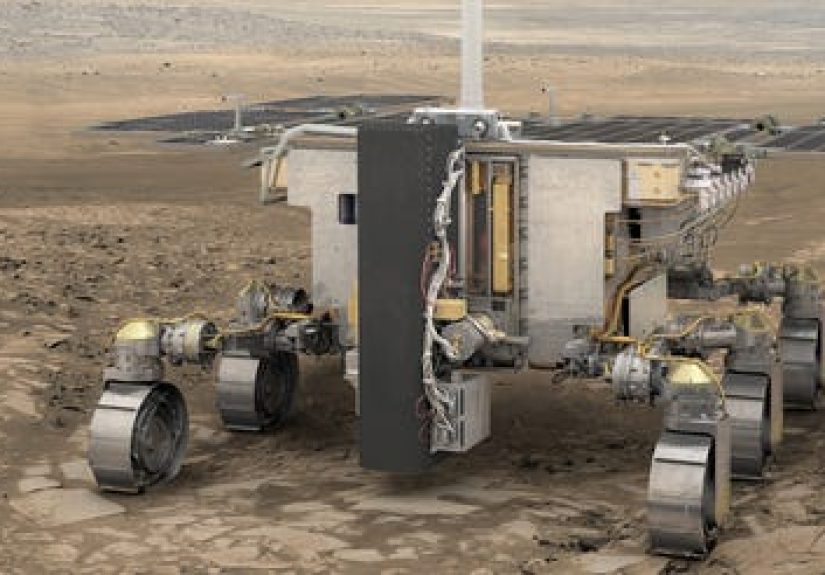
ESA’s Rosalind Franklin rover is part of the ExoMars program, an ambitious mission built to search for evidence of past life on the Red Planet. Unlike rovers that mostly study the surface, this one is designed to drill down as deep as two meters and analyze protected subsurface samples. That matters because the Martian surface gets blasted by radiation, which is not exactly ideal for preserving delicate signs of ancient biology. If Mars once hosted life, the best clues may be buried underground like the universe’s most dramatic cold case file.
That mission objective makes Franklin’s name especially fitting. She was famous for drawing big conclusions from careful structural evidence. She did not just look at matter; she decoded it. Whether she was studying carbon, DNA, or viruses, she excelled at figuring out how physical structure reveals hidden truth. A rover that studies Mars by drilling deep and reading molecular clues is carrying more than her name. It is carrying her scientific style.
There is also a symbolic layer here that is hard to miss. Franklin’s work helped humanity understand one of life’s deepest mysteries: how biological information is physically organized. The ExoMars rover is trying to answer another giant question: has life ever existed beyond Earth? Naming a life-hunting rover after a scientist who helped explain life at the molecular level is the kind of poetic symmetry science rarely gets for free.
Who Was Rosalind Franklin?
Early Life and Education
Rosalind Elsie Franklin was born in London in 1920. From an early age, she showed the sort of intelligence that makes adults say things like, “That child is going to ask difficult questions at dinner.” She attended St. Paul’s Girls’ School, one of the few schools of its time that offered girls a strong education in physics and chemistry, and then studied physical chemistry at Newnham College, Cambridge.
Her early training mattered. Franklin was not a scientist who wandered into discovery by accident. She built her career on rigorous chemistry, hard measurement, and strong mathematical reasoning. Those habits would define everything she did. If science had personality types, Franklin was not Team Vibes. She was Team Show Me the Data.
Before DNA: Coal, Carbon, and Graphite
Many people know Franklin only because of DNA, but that leaves out an enormous part of her career. During World War II and afterward, she worked on the physical chemistry of coal and carbon. That may not sound glamorous if you were hoping for genes, planets, and Nobel-level intrigue, but this research was important and highly respected. Her studies helped explain the microstructure of coal and carbon materials and had practical value for industry, especially in relation to graphite and carbon behavior under heat.
Franklin then worked in Paris, where she refined her expertise in X-ray diffraction. This period was crucial. It sharpened the technical skills that would later make her DNA work so extraordinary. Paris also seems to have been a happier and more collaborative chapter in her life, and it gave her the research freedom to become an even stronger experimental scientist.
The DNA Work That Changed Biology
At King’s College London
In 1951, Franklin joined King’s College London and began applying X-ray diffraction methods to DNA. At the time, scientists already suspected DNA was important to heredity, but its three-dimensional structure was still a mystery. Franklin approached the problem with characteristic discipline. She improved sample preparation, produced clearer X-ray diffraction images, and studied how DNA behaved under different humidity conditions. Those details were not side quests. They were the key to the whole puzzle.
One of the most famous outcomes of that work was Photo 51, an exceptionally clear X-ray diffraction image of B-form DNA produced by Franklin and her student Raymond Gosling. The image became iconic because it provided strong evidence that DNA had a helical structure. It was not a magic postcard from the truth fairy, but it was a major clue, and Franklin’s associated calculations and interpretations were just as important as the image itself.
What Franklin Actually Contributed
For years, the popular version of the DNA story was painfully simple: Watson and Crick discovered the double helix, and Franklin was the forgotten woman in the background. That version was closer to reality than the old hero narrative, but modern historical scholarship shows the truth is more interesting. Franklin was not merely standing near the action while the men did the thinking. She was generating crucial evidence, identifying distinct DNA forms, measuring structural dimensions, and moving toward the correct interpretation herself.
Her work established that DNA existed in more than one form, helped clarify the position of the phosphate backbone, and provided key measurements that fed directly into the model-building effort. Watson and Crick’s famous 1953 paper did not appear in isolation. It was published alongside papers by Wilkins and colleagues, and by Franklin and Gosling. That trio matters. The discovery was not a solo act in matching lab coats.
At the same time, the ethics and credit issues remain real. Franklin’s data were shared in ways that have fueled decades of debate, and she did not receive recognition during her lifetime equal to the value of her contribution. She died in 1958, just four years before Watson, Crick, and Wilkins received the 1962 Nobel Prize. Since Nobel Prizes are not awarded posthumously, she could not be honored later. That does not settle the historical question of credit, but it does explain why her name was absent from that award.
The bigger point is this: Franklin was central, not incidental. Her work did not merely decorate the DNA story. It helped make the story possible.
More Than Photo 51: Franklin’s Scientific Legacy Beyond DNA
One of the laziest ways to talk about Rosalind Franklin is to freeze her forever in the DNA chapter. That is like saying a brilliant filmmaker made one great trailer and then vanished. After leaving King’s College, Franklin moved to Birkbeck College and turned to virus research, where she did some of the finest work of her career.
She studied tobacco mosaic virus and other viruses with the same structural precision that had defined her earlier work. Her research helped reveal how viral components are organized, and it contributed to the foundations of structural virology. Scientists and historians increasingly emphasize this part of her career because it shows her range. She was not simply a victim of the DNA controversy. She was an independent, high-level scientist who kept producing important results.
That broader legacy also matters because it changes how we think about her. Franklin was not great because history later decided to rescue her reputation. She was great because the science was great. The recovery of her public image is really the delayed recognition of what was already true in the lab.
Why Her Story Still Resonates
Rosalind Franklin’s story keeps resurfacing because it sits at the intersection of science, gender, ambition, and historical memory. People return to it not just to ask who discovered DNA, but to ask how discovery works in the first place. Who gets remembered? Who gets left in the footnotes? How much credit belongs to data-makers versus model-builders? And how often do tidy legends erase the messy teamwork that real science requires?
Franklin’s case also exposes how scientific myths can flatten real people. For years she was reduced either to a tragic outsider or to an almost saintly symbol of unfairness. Neither version fully captures her. By many accounts she was exacting, brilliant, independent, and intensely committed to evidence. That is a richer and more interesting portrait than either caricature. She was not just someone wronged by history. She was someone history has had to catch up with.
Why a Mars Rover Named Rosalind Franklin Feels So Right
Mars exploration is full of big cinematic language. We talk about searching for life, exploring alien worlds, and answering cosmic questions. All of that is true. But underneath the headlines, the real work is slower and more Franklin-like. It involves instruments, materials, structures, and the patient interpretation of faint signals. A rover does not discover life by having a dramatic monologue. It does it by collecting evidence, analyzing chemistry, and refusing to jump to conclusions.
That is why Franklin is such a perfect namesake. Her career was built on extracting hidden meaning from hard physical evidence. She understood that structure matters, that molecules leave patterns, and that careful interpretation can unlock enormous truths. If ExoMars finds hints of ancient Martian biology, it will do so by following a method Franklin would have respected: trust the sample, trust the measurements, and let the evidence speak before the ego does.
There is also a quiet corrective in the naming. Space missions are public memory machines. They tell the world whose names deserve to travel. By sending “Rosalind Franklin” toward Mars, ESA is not only honoring a scientist. It is helping rewrite the cultural shortlist of who counts as a scientific icon. That is good for history, good for science, and frankly overdue.
Experiences That Make Rosalind Franklin’s Story Feel Strikingly Modern
One reason Rosalind Franklin still feels so relevant is that her story does not stay trapped in a 1950s laboratory. It echoes in modern experiences that almost everyone recognizes. Think about the student who does the deep research for a group project, only to watch someone else deliver the polished summary and soak up the praise. Think about the employee who builds the spreadsheet, tests the assumptions, finds the flaw, and then sits through a meeting where the loudest person in the room acts like the conclusion arrived by spontaneous genius. Franklin’s story hits home because many people have lived some smaller version of it.
There is also the experience of being underestimated because your style is less flashy. Franklin was not remembered as a great scientific marketer of herself. She was remembered, increasingly, as a scientist who cared about being right. In a world that often rewards confidence before competence, that can feel painfully familiar. Plenty of talented people know what it is like to be the one doing the careful work while somebody else gets rewarded for the grand reveal. Franklin’s life reminds us that substance and visibility do not always travel together.
Her story also connects with the experience of insisting on evidence when everyone around you wants speed. That is true in science, but it is also true in daily life. Sometimes families jump to conclusions, workplaces reward fast takes, and online culture practically throws confetti for hot opinions formed in under six seconds. Franklin’s instinct was the opposite. Slow down. Look again. Check the pattern. Ask what the data actually says. That attitude is not just scientifically admirable; it is emotionally grounding in an age that runs on overreaction.
Then there is the experience of being known for only one part of yourself. Many people understand what it means to have a whole life reduced to one moment, one role, or one label. Franklin becomes “the DNA woman,” when in fact she also made major contributions to carbon science and virology. The flattening is familiar. People do it to artists, teachers, parents, athletes, and coworkers all the time. One chapter gets famous and the rest of the person disappears. Revisiting Franklin’s full career feels like a reminder to resist that habit in our own lives too.
Most of all, her story resonates because it offers a version of success that is not built entirely on applause. Franklin’s legacy survived because the work held up. The measurements mattered. The images mattered. The science mattered. That is encouraging in a deep way. It suggests that while recognition can be delayed, distorted, or uneven, reality has a stubborn memory. Good work leaves traces. Sometimes those traces sit quietly for years before the world catches on. And sometimes, wonderfully, they end up emblazoned on the side of a rover heading to Mars.
Conclusion
Rosalind Franklin was a brilliant chemist and X-ray crystallographer whose work helped unlock the structure of DNA and advanced the study of carbon materials and viruses. She was not simply a tragic footnote in somebody else’s triumph. She was one of the key scientific minds of her generation, and current historical scholarship continues to reveal just how central her role really was.
That is why ESA’s next Mars rover bears her name. The mission is about searching beneath the surface for evidence hidden in structure and chemistry. Franklin spent her career doing exactly that. She followed patterns, trusted data, and helped humanity understand life at its most fundamental level. A rover named after her is more than a tribute. It is a scientific mission wearing the name of a scientist who understood, long before the rest of the world caught up, that the smallest patterns can tell the biggest stories.