Table of Contents >> Show >> Hide
- What Does “MVP” Mean In Avatar: The Last Airbender?
- The Case For Aang: The Franchise Player
- The Case For Katara: The Heart And Healer
- The Case For Toph: The Game-Changer
- The Case For Zuko: The Redemption MVP
- Why Sokka Is The Real MVP
- Sokka’s Finale Performance Seals The Award
- Honorable Mentions: Iroh, Appa, Suki, And The Cabbage Merchant
- Final Verdict: Sokka Wins The MVP Title
- Experiences Related To The Topic: Why This MVP Debate Still Feels So Fun
- Conclusion
Avatar: The Last Airbender is one of those rare shows where asking “Who was the MVP?” feels almost unfair. Aang saves the world. Katara keeps the group emotionally functional. Toph invents a whole new bending style like she is casually updating the laws of physics. Zuko completes one of television’s most satisfying redemption arcs. Iroh serves tea, wisdom, and occasional devastation with perfect timing. Appa is basically the team’s transportation department, emotional support animal, and emergency rescue helicopter rolled into one fluffy sky bison.
So, yes, the competition is brutal. But if we define MVP the way sports fans dothe person whose absence would most damage the team’s chances, whose contribution shows up in every phase of the mission, and whose value is bigger than raw powerthe answer becomes surprisingly clear.
The MVP of Avatar: The Last Airbender is Sokka.
Not the Avatar. Not the most powerful bender. Not the scarred prince with the dramatic hair journey. Sokka, the boomerang guy. The meat-and-sarcasm enthusiast. The nonbender who somehow became Team Avatar’s strategist, planner, engineer, comic relief, moral challenger, battlefield coordinator, and emergency adult in a group where the actual adults were often busy being mysterious, missing, captured, or emotionally unavailable.
What Does “MVP” Mean In Avatar: The Last Airbender?
Before the cabbages start flying, let’s set the rules. MVP does not simply mean “strongest character.” If that were the case, Aang wins by default because he is the Avatar, master of all four elements, bridge between worlds, and the only kid who can enter a glowing super-state and make tyrants suddenly reconsider their career choices.
MVP also does not mean “best character arc.” That crown may belong to Zuko, whose transformation from angry exiled prince to humble firebending teacher remains one of the best redemption stories in animated television. MVP means overall value to the mission. Who helps the team survive, adapt, grow, and ultimately win?
By that definition, Sokka’s value is everywhere. He is the planner when the team needs direction, the skeptic when everyone else gets swept up in magic, the inventor when brute force will not work, and the emotional glue when the group starts cracking under pressure. He is not the flashiest member of Team Avatar, but that is exactly the point. Sokka proves that in a world of elemental superpowers, intelligence is its own bending art.
The Case For Aang: The Franchise Player
Let’s be honest: Aang has the strongest basic argument. The show is literally built around his mission. He is the last Airbender, the current Avatar, and the only person capable of restoring balance after a hundred-year war. Without Aang, there is no quest, no final confrontation with Fire Lord Ozai, and no peaceful resolution to the conflict.
Aang’s greatest strength is not only power. It is mercy. In the finale, he refuses to solve the world’s biggest problem by abandoning his values. Instead of killing Ozai, Aang finds another path through energybending. That choice matters because Avatar: The Last Airbender is not just about winning a war. It is about building a better world afterward. Aang’s compassion gives the victory moral weight.
Still, Aang is also the character who needs the most support. He runs away from responsibility before the series begins. He struggles with grief, guilt, fear, and indecision. He requires teachers, protectors, strategists, and friends. Aang is the team’s destiny, but he is not always its engine. He is the reason the mission exists; Sokka is often the reason the mission keeps moving.
The Case For Katara: The Heart And Healer
Katara’s MVP case is powerful because she is the emotional center of Team Avatar. She discovers Aang in the iceberg with Sokka, becomes one of his earliest protectors, and grows from a self-taught waterbender into a master capable of standing against some of the most dangerous fighters in the world.
Katara is also the team’s healer, and that role cannot be overstated. In a series filled with injuries, battles, escapes, and disasters, healing is not a side skillit is survival infrastructure. She saves lives, keeps people going, and often gives the group the emotional push it needs when hope gets thin.
Her biggest MVP moment comes during the finale, when she defeats Azula after Zuko is injured. That victory is not just a fight scene. It is the payoff to Katara’s growth: discipline, creativity, courage, and compassion under extreme pressure. She is fierce enough to win and gentle enough to heal Zuko afterward.
But Katara’s role, while essential, is often tied to emotional and bending support. She is a pillar. Sokka, meanwhile, is the team’s Swiss Army knifewith jokes, maps, schedules, battle plans, and the occasional deeply questionable disguise.
The Case For Toph: The Game-Changer
Toph Beifong enters the series and immediately changes the power balance. Before Toph, Aang needs an earthbending teacher. After Toph, he has the best one alive, a blind prodigy who turns perceived weakness into unmatched strength. She does not just teach earthbending; she changes how the audience understands it.
Toph’s seismic sense is one of the smartest abilities in the series. Her blindness is never treated as a simple limitation. Instead, it becomes part of her unique mastery. Then she invents metalbending, casually doing what generations of earthbenders believed was impossible. That is not a character upgrade. That is a software patch for the entire Avatar universe.
Toph’s MVP argument rests on efficiency. When the team needs raw defensive power, she delivers. When they need a prison broken open, she delivers. When they need someone to say the rude but accurate thing everyone else is avoiding, she also delivers, usually with the energy of a tiny earthquake wearing a smirk.
However, Toph joins in Book Two. Her impact is massive, but Sokka’s contributions stretch from the first episode to the finale. Toph is a game-changer. Sokka is the constant.
The Case For Zuko: The Redemption MVP
Zuko may be the show’s most emotionally satisfying character. His journey begins with obsession. He believes capturing the Avatar will restore his honor, earn his father’s approval, and repair the wound of exile. Over time, he learns that honor is not something Ozai can give him. It is something he must define for himself.
When Zuko joins Team Avatar, his value becomes practical as well as emotional. He teaches Aang firebending, helps the group understand the Fire Nation from the inside, and fights beside Katara against Azula. His transformation also gives the ending political credibility. The Fire Nation does not merely lose a war; it gains a new leader who understands the damage his nation caused.
Zuko’s arc is probably the show’s best character arc. But MVP is not the same as “most improved player.” For much of the series, Zuko is an obstacle. A brilliant obstacle, yes. A sad, ponytailed obstacle with daddy issues and terrible decision-making skills, absolutely. But still an obstacle. His late-game value is enormous, yet Sokka’s value is steady from start to finish.
Why Sokka Is The Real MVP
Sokka begins as the only nonbender in the original trio, which could have made him feel secondary. Instead, the series turns that limitation into his defining strength. He knows he cannot throw waves, launch rocks, or blast fire, so he learns to think. He studies people. He improvises. He plans. He adapts. He fails loudly, gets humbled, and then gets better.
Sokka Is The Strategist Team Avatar Needs
Team Avatar has power, but power without planning is just property damage with a soundtrack. Sokka brings structure to chaos. He creates schedules, reads maps, organizes missions, and thinks through logistics. His planning is especially important during the Day of Black Sun invasion, where his leadership helps coordinate a large-scale attack during the solar eclipse.
Even when plans fail, Sokka’s strategic mind matters. He learns from mistakes. He adjusts. He does not have the luxury of solving every problem with bending, so he becomes the person most likely to ask, “What is the actual objective here?” In a group of emotionally intense teenagers on a world-saving road trip, that question is priceless.
He Turns Weakness Into Utility
Sokka is insecure about being a nonbender, but the show does not leave him there. His training with Master Piandao in “Sokka’s Master” is one of his most important episodes because it reframes his identity. He is not useless because he lacks bending. He is valuable because his creativity, observation, and unconventional thinking make him dangerous in a different way.
His weapons reflect his personality. The boomerang is funny until it saves the day. The space sword is dramatic until he loses it in battle. His inventions and tactical ideas may look ridiculous at first, but they frequently work. Sokka survives because he refuses to accept that the world only rewards magical talent. He creates value from whatever is in front of him, even if what is in front of him is a melon, a bad map, or a Fire Nation uniform that definitely does not fit.
He Is The Group’s Comic Relief Without Being A Joke
Comedy is one of Sokka’s superpowers. He keeps the show light enough to breathe, especially when the story deals with war, genocide, trauma, propaganda, and grief. His jokes are not filler. They are pressure valves. They make the team feel human.
But the brilliance of Sokka is that he is funny without being disposable. The series lets him be silly and serious, often in the same episode. He can make a terrible pun, then lead a dangerous mission. He can obsess over food, then make a tactical call that saves lives. This balance makes him feel real. Many shows treat comic relief characters like furniture that talks. Avatar treats Sokka like a full person whose humor is part of his resilience.
Sokka Grows Where It Counts
Sokka’s early flaws are obvious. He begins with sexist assumptions about gender roles, especially around warriors and leadership. The Kyoshi Warriors humble him fast, and Suki’s influence helps him grow. What matters is that Sokka actually changes. He does not become perfect overnight, but he becomes teachable.
That growth is central to his MVP case. Sokka learns from women repeatedly: Suki, Katara, Toph, and others challenge his assumptions. Instead of doubling down forever, he evolves into a better teammate and leader. His arc is quieter than Zuko’s, but it is deeply important. Sokka becomes strong not by gaining bending, but by losing arrogance.
Sokka’s Finale Performance Seals The Award
The finale of Avatar: The Last Airbender is built like a championship game with multiple courts. Aang faces Ozai. Katara and Zuko confront Azula. The Order of the White Lotus liberates Ba Sing Se. Meanwhile, Sokka, Toph, and Suki deal with the Fire Nation airship fleet.
That last mission is easy to underrate because it does not involve the Avatar State or lightning redirection. But strategically, it is enormous. Ozai’s plan depends on overwhelming destruction from the air. If the fleet succeeds, the Earth Kingdom suffers catastrophic damage even if Aang eventually wins his duel. Sokka understands the assignment: stop the machines, disrupt the campaign, protect people on the ground.
During that mission, Sokka keeps fighting even after injury. He protects Toph, uses his weapons under pressure, and contributes to the destruction of the airships. It is not glamorous in the mystical sense, but it is heroic in the practical sense. Sokka’s finale performance is the perfect summary of his value: no bending, no prophecy, no glowing eyesjust courage, timing, and a brain that refuses to quit.
Honorable Mentions: Iroh, Appa, Suki, And The Cabbage Merchant
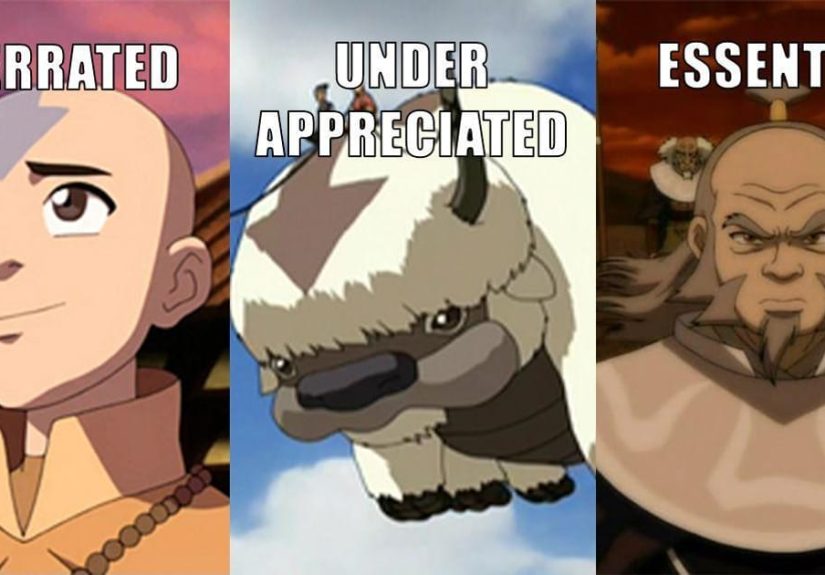
No MVP discussion is complete without Uncle Iroh. He is the moral compass of the series, especially for Zuko. His wisdom, patience, and grief give the show emotional depth. He helps Zuko become the person who can help rebuild the Fire Nation. If the award were “Most Valuable Mentor,” Iroh wins while pouring tea and pretending not to notice.
Appa also deserves respect. Without Appa, Team Avatar’s travel schedule collapses instantly. The group crosses continents because Appa exists. He is transport, friend, protector, and living proof that fantasy stories are better when someone says, “What if the emotional center had six legs and flew?”
Suki’s contribution is also huge. She influences Sokka’s growth, leads the Kyoshi Warriors, survives captivity, and returns for the finale with perfect timing. She is competent in every scene and deserved even more screen time.
And the Cabbage Merchant? Emotionally, spiritually, commerciallyan icon. Was he the MVP? No. Was he the most consistent victim of collateral damage in the Four Nations? Absolutely.
Final Verdict: Sokka Wins The MVP Title
Sokka is the MVP of Avatar: The Last Airbender because he represents the show’s most underrated message: you do not need supernatural power to matter. In a world where bending often determines status, Sokka proves that leadership, humor, planning, humility, and courage can be just as important as elemental mastery.
Aang saves the world, but Sokka helps make sure Aang gets to the finish line. Katara heals the team, Toph strengthens it, Zuko redirects its future, and Iroh guides its soul. But Sokka keeps the mission functional. He turns chaos into strategy, fear into jokes, and insecurity into skill. He is the guy you want in the room when the plan falls apart, which, in Team Avatar’s case, is roughly every twelve minutes.
So who was the MVP of Avatar: The Last Airbender? The answer is Sokka. Boomerang came back. So did his character development.
Experiences Related To The Topic: Why This MVP Debate Still Feels So Fun
One of the best experiences of watching Avatar: The Last Airbender is realizing that your answer to the MVP question can change depending on when you watch the show. As a kid, Aang often feels like the obvious choice. He is the hero, the Avatar, the kid with the glowing tattoos and the impossible responsibility. His battles are big, his emotions are clear, and his mission gives the series its shape. When you are younger, the person with the most visible power naturally looks like the most valuable player.
Rewatch the show later, though, and Sokka starts sneaking up on you. Suddenly the jokes you laughed at are still funny, but now the planning matters more. You notice how often he is paying attention while everyone else is reacting emotionally. You see him trying to make sense of maps, supplies, timing, weapons, and group morale. You notice that he is often afraid and still acts anyway. That is a different kind of bravery, and it gets better with age.
Katara also becomes more impressive on rewatch. Her anger, grief, and protectiveness are not “too much.” They are the fire under her waterbending. She carries memories of loss while still choosing compassion. Many viewers grow into appreciating her more because adulthood makes her responsibilities feel heavier. She is not just “the mom friend.” She is a teenager forced to become a caretaker in a world that keeps asking too much from children.
Zuko’s experience hits differently too. The first time through, his redemption arc is exciting because he switches sides. Later, it becomes moving because you understand how difficult it is to reject a harmful definition of success. Zuko has to give up the approval he wanted most in order to become someone worthy of respect. That is a painful, powerful lesson, and it is one reason fans continue to talk about him years after the finale.
The MVP debate stays alive because Avatar is built like a true ensemble story. Every character contributes something the others cannot. Aang brings destiny and mercy. Katara brings healing and conviction. Toph brings strength and invention. Zuko brings transformation. Iroh brings wisdom. Suki brings discipline and grounded heroism. Appa brings flight, loyalty, and a strong case for sky bison workplace benefits.
But Sokka’s value feels especially satisfying because it is so human. Most viewers cannot bend water or redirect lightning. Very few of us are secretly the reincarnated bridge between the physical and spirit worlds. But we can learn. We can plan. We can apologize. We can use humor to survive hard days. We can contribute even when we feel underqualified. That is why Sokka’s MVP case resonates. He is the reminder that being useful, loyal, and clever is its own kind of heroism.
That may be the real magic of Avatar: The Last Airbender. It makes every kind of strength feel meaningful. The strongest person is not always the one who can move mountains. Sometimes it is the one who figures out where the mountain needs to go, draws a terrible diagram, makes everyone groan with a joke, and somehow gets the team there alive.
Conclusion
The MVP of Avatar: The Last Airbender is Sokka because he provides the one thing Team Avatar constantly needs: practical intelligence under pressure. Aang may be the chosen one, Katara may be the heart, Toph may be the powerhouse, and Zuko may have the best redemption arc, but Sokka is the team’s strategist, inventor, morale booster, and proof that a nonbender can be indispensable in a world full of elemental legends.
His journey is funny, flawed, and deeply satisfying. He begins as an insecure teenager trying to act tougher than he feels and grows into a capable leader whose ideas help save the world. That is MVP material. No glowing tattoos required.
Note: This article is written as an original, web-ready analysis based on real Avatar: The Last Airbender story events, character arcs, and widely discussed interpretations of the series.