Table of Contents >> Show >> Hide
- What Trays Actually Do for a Room
- The Best Places to Use Trays at Home
- How to Style a Tray Without Making It Look Overdone
- Choosing the Right Tray for Your Decor Style
- Common Tray Styling Mistakes to Avoid
- Why Trays Work So Well in Real Homes
- Experience: What Happens When You Start Using Trays in Your Decor
- Conclusion
If your home has ever looked like it was one unopened mail pile away from total emotional collapse, trays may be the design rescue squad you did not know you needed. They are one of those rare decor pieces that can look polished, feel practical, and quietly fix a room without demanding applause. A tray is not just a flat object with edges. In home decor, it is a visual organizer, a styling shortcut, a clutter tamer, and, on especially chaotic weekdays, a small miracle with handles.
The best part is that trays work in almost every style. Modern homes love them because they create clean lines. Traditional homes love them because they make surfaces look collected rather than crowded. Farmhouse rooms pair well with wood or woven trays, while glam spaces can lean into lacquer, brass, marble, or mirrored finishes. In other words, trays are the interior-design equivalent of that friend who somehow looks good in every group photo.
When used well, trays do more than hold stuff. They create order, define purpose, add texture, and make everyday items look intentional. That candle, remote, matchbox, and little decorative bead garland? Random when scattered. Chic when gathered on a tray. It is not magic. It is just smart decorating with a side of common sense.
What Trays Actually Do for a Room
They create visual boundaries
One of the hardest parts of decorating flat surfaces is that everything can start to blur together. A coffee table, console, vanity, or kitchen counter can quickly become a stage where unrelated objects wander around like confused party guests. A tray gives those items a home base. It visually says, “These things belong together.” That simple boundary makes a room feel more organized even before you put anything away.
They make clutter look intentional
Let us be honest: not everything in your home is display-worthy. But plenty of everyday essentials still need to live somewhere convenient. Keys, hand soap, lotion, coasters, reading glasses, olive oil, salt, napkins, perfume, candles, and remotes are all useful, but they can also make a surface feel messy fast. A tray turns those practical items into a curated moment. Suddenly, your functional stuff looks like it arrived with a styling budget.
They add shape, texture, and contrast
Decorating is not only about what you place in a room. It is also about the shapes and materials you repeat. A round tray can soften a room full of straight lines. A woven tray can warm up glass and metal furniture. A marble tray can add polish to a rustic dresser. Even when the objects on top are simple, the tray itself can introduce depth and personality.
They make surfaces easier to clean and restyle
Here is a deeply underrated reason to use trays: they make cleanup ridiculously easy. Instead of lifting six separate objects every time you wipe a coffee table, you move one tray. Instead of rethinking your kitchen counter from scratch, you slide one grouped arrangement into a better spot. Trays are decorating tools, yes, but they are also tiny project managers for your house.
The Best Places to Use Trays at Home
Coffee tables
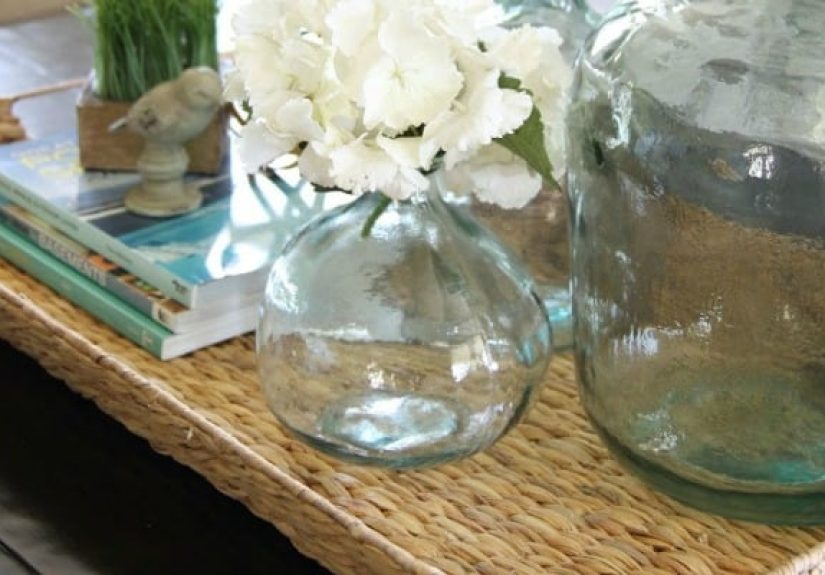
This is the classic tray location for a reason. Coffee tables are magnets for loose items, from remotes and candles to books and the occasional mystery hair tie. A tray helps you group a few pieces into one clean vignette. Try a stack of books, a candle, a small bowl, and something living like greenery or flowers. The result feels layered without looking busy.
If your coffee table is upholstered or an ottoman, trays become even more useful. They create a stable surface for drinks, snacks, or decor while helping the softer piece feel more structured. It is form meeting function and deciding to become roommates.
Entryway tables and consoles
The entryway is where life explodes first. Keys get tossed, sunglasses disappear, wallets vanish into parallel dimensions, and the mail begins its dramatic career as a countertop mountain range. A tray near the front door gives all of those grab-and-go items a designated drop zone. It also makes your home feel more welcoming because the first thing you see is organized, not chaotic.
For a small entry, a compact tray with a candle, key dish, and mini vase works beautifully. For a larger console, you can pair a tray with a lamp, mirror, and basket below to create a complete and useful landing spot.
Kitchen counters and islands
Kitchens are busy spaces, which is exactly why trays shine there. A tray can gather your dish soap, hand soap, sponge, and scrub brush near the sink so they look tidy instead of randomly stationed like tiny cleaning soldiers. On a counter or island, trays can hold olive oil, salt, pepper, napkins, mugs, or a small coffee setup.
The trick is not to overdo it. A kitchen tray should streamline the space, not steal precious prep room. Think compact, practical, and easy to move when it is time to cook something ambitious like a weeknight pasta that somehow uses every pan you own.
Bathroom vanities
Bathrooms benefit from trays because they instantly make toiletries look more elevated. Perfume bottles, lotion, a candle, cotton swabs in a pretty jar, and even a small plant can look spa-like when arranged on a tray. Without one, the same items can read as plain countertop clutter.
Water-resistant materials work best here, including stone, acrylic, lacquer, sealed wood, or metal. If your bathroom is small, a narrow tray can still create order without eating up all your sink space.
Nightstands and dressers
A tray next to the bed is one of those little upgrades that makes daily life smoother. It can hold a lamp, hand cream, book, glasses, and a charging cord without making the nightstand look overworked. On a dresser, a tray can organize jewelry, perfume, watches, and keepsakes into a tidy display that still feels personal.
Dining tables and bar carts
Trays make excellent centerpieces because they anchor candles, florals, and seasonal decor in one movable arrangement. On a bar cart, they help group bottles, glasses, napkins, and tools so the whole setup feels intentional. Bonus points if the tray can actually be lifted and used for serving when company shows up. Decor that earns its keep is always a smart move.
How to Style a Tray Without Making It Look Overdone
Start with function first
Before you style a tray, ask what it needs to do. Is it meant to hold daily essentials? Is it decorative only? Is it for entertaining? Knowing the purpose helps you choose the right size, shape, and contents. A pretty tray that cannot hold what you need is just a very committed piece of disappointment.
Vary height and scale
The most appealing tray arrangements usually combine a few different heights. You might pair a low candle, a medium bowl, and a taller vase or branch. This creates movement and makes the arrangement feel more dynamic. When everything is the same height, it can look flat and unfinished.
Mix practical and decorative items
The best tray styling often balances beauty with usefulness. On a coffee table, that might mean coasters, a candle, and a decorative object. In a bathroom, it could be hand lotion, a small bud vase, and a neatly folded washcloth. In the kitchen, try olive oil, salt, and a little potted herb. Real life belongs in good decor.
Use the tray as an anchor, not a junk drawer
A tray should simplify a space, not become a cute excuse for overcrowding it. Leave a bit of breathing room. Negative space matters. If every inch is packed, the arrangement will feel heavy. A tray is supposed to make things look edited, not like they lost a storage war.
Switch it up seasonally
One of the easiest ways to refresh a room without redecorating the whole house is to swap out tray styling by season. In spring, think greenery and light ceramics. In summer, maybe woven textures and citrus colors. In fall, candles, brass, and natural wood feel cozy. In winter, deeper tones and a bit of sparkle can make the room feel festive. Because trays are portable, seasonal updates take minutes, not a full identity crisis.
Choosing the Right Tray for Your Decor Style
Round trays
Round trays are great for breaking up rooms filled with square furniture and straight edges. They are especially effective on round tables, ottomans, and kitchen islands where you want a softer look.
Rectangular trays
These are versatile workhorses. They fit well on consoles, dressers, and long coffee tables, and they often provide more usable room for grouped objects. If you want a tray that can double as a serving piece, rectangular styles are often a safe bet.
Wood and woven trays
These add warmth and texture. They suit farmhouse, coastal, rustic, and relaxed traditional spaces beautifully. Wood trays are especially handy when a room feels too cold or sleek and needs something natural to balance it out.
Marble, metal, lacquer, and acrylic trays
These materials feel more polished and tailored. Marble looks elegant in bathrooms and on dressers. Brass or metal trays can add a touch of glam. Lacquer trays read crisp and classic. Acrylic trays are excellent when you want organization without visual heaviness, especially in smaller spaces.
Size matters more than people think
A tray that is too small can look accidental. A tray that is too large can swallow the surface and create a bulky feeling. As a general rule, choose a tray that leaves enough room around it so the table or counter still feels visible. You want the tray to frame the area, not dominate it like it is running for office.
Common Tray Styling Mistakes to Avoid
Using a tray that is all style and no purpose: If it wobbles, stains instantly, or cannot hold your everyday items, it may not be the right fit for that spot.
Cramming too much onto it: A tray is not a storage unit. Edit ruthlessly.
Ignoring the room’s scale: A giant tray on a tiny side table will look awkward, and a tiny tray on a huge ottoman may disappear.
Making it too fragile for real life: Homes need to function. If kids, pets, or daily routines will constantly knock things over, simplify the arrangement.
Forgetting contrast: If the tray blends too much into the surface, it may not do much visually. A little contrast in material, color, or shape helps it stand out.
Why Trays Work So Well in Real Homes
Design advice sounds great in theory, but trays are especially lovable because they work in normal, lived-in homes. Not just magazine homes where no one seems to own phone chargers. Trays meet you where you are. They make everyday messes feel more manageable. They make decorating less intimidating because they create a small, contained area to style. And they give you permission to display useful things without making your house look unfinished.
That is really the secret: trays help rooms feel intentional. They tell your eye where to land. They help surfaces look complete. They encourage good habits because when something has a place, you are more likely to put it back there. Are trays going to change your life? Possibly not in the dramatic-movie-monologue sense. But they may absolutely improve your mornings, your tabletops, and your overall tolerance for visual chaos.
Experience: What Happens When You Start Using Trays in Your Decor
Once you start decorating with trays, you notice something funny: rooms begin to behave better. Not perfectly, of course. This is decor, not wizardry. But surfaces that used to collect random clutter now feel like they have boundaries. A coffee table that once held remotes, mail, a mug, and one lonely coaster suddenly looks pulled together because the tray turns scattered objects into one tidy composition. That small shift changes how the whole room feels. It looks calmer, more polished, and somehow more expensive, even if the tray itself was a budget find.
Many people also discover that trays make decorating less stressful. Styling a whole room can feel overwhelming, but styling one tray is manageable. You only need a few pieces: maybe a candle, a small plant, a stack of books, or a bowl for keys. Because the tray creates clear edges, you are not guessing where the arrangement should begin or end. It becomes a contained little design project with a high success rate. That is a confidence boost, especially for anyone who loves the idea of decorating but does not want to spend a weekend rearranging the entire house.
There is also a practical satisfaction that comes with trays. In real life, they make routines smoother. In the entryway, a tray becomes the landing pad for the stuff you always need before leaving the house. In the bathroom, it keeps daily products from spreading out like they are claiming territory. In the bedroom, it gathers the little things that usually float around a nightstand and somehow vanish when you need them most. A tray does not eliminate possessions, but it does make them easier to live with.
Another experience people often mention is how easy trays make seasonal decorating. Instead of reworking every shelf and surface, you swap out a few tray accents and the room instantly feels refreshed. A woven tray with greenery and a ceramic vase can feel fresh in spring. Add warm candles and wood tones in fall, and the mood shifts without much effort. It is one of the simplest ways to make a home feel updated while keeping your overall decor consistent.
Perhaps the biggest long-term benefit is that trays teach visual discipline. They encourage you to edit, group, and choose with intention. Over time, that mindset spreads beyond the tray itself. You start asking better decorating questions: Does this item belong here? Does this surface need more texture? Am I displaying too much? Good trays do not just hold objects. They quietly train you to create a home that feels thoughtful, functional, and easy to enjoy. That is a pretty impressive job description for something that mostly just sits there looking stylish.
Conclusion
If you want a decor upgrade that is affordable, flexible, stylish, and genuinely useful, trays deserve a spot near the top of your list. They organize without looking overly utilitarian, decorate without feeling fussy, and adapt to almost every room in the house. Whether you use one on a coffee table, kitchen counter, entry console, vanity, dresser, or dining table, a tray helps transform “a bunch of things” into “a deliberate design choice.”
And that is why trays are so effective in home decor. They do not scream for attention. They quietly improve how a room looks and how it works. In the world of decorating, that is a rare and beautiful thing.