Table of Contents >> Show >> Hide
- 1. Shrink the Lawn and Expand Planting Beds
- 2. Use Native Plants That Actually Like Living There
- 3. Choose a Simple Plant Palette and Repeat It
- 4. Replace Bare Soil With Mulch
- 5. Add Gravel, Stone, or Pavers in the Right Places
- 6. Plant Ground Covers Instead of Fighting Thin Grass
- 7. Let Ornamental Grasses Do the Heavy Lifting
- 8. Group Plants by Water and Sun Needs
- 9. Install Drip Irrigation or Soaker Lines
- 10. Build a Rain Garden for a Tough Wet Spot
- 11. Keep the Design Tidy With Edging, Structure, and “Cues of Care”
- How to Make These Ideas Work Together
- Conclusion
- Experience: What Homeowners Usually Learn After Trying These Ideas
- SEO Tags
Your front yard is the handshake of your house. It says hello before anyone reaches the porch, and ideally it says it without demanding your entire Saturday, your back, and your patience. That is why low maintenance front yard landscaping ideas are so popular: people want curb appeal, but they do not want a full-time relationship with a rake.
The good news is that an easy-care yard does not have to look sparse, boring, or suspiciously like a parking lot. A smart front yard can feel welcoming, polished, and full of character while still being practical. The trick is to make better design decisions up front so you spend less time mowing, watering, edging, deadheading, and muttering at weeds later.
If you want a yard that looks good in all four seasons and does not act like a needy houseplant, start with these 11 ideas. Each one is designed to cut maintenance, save effort, and keep your front yard looking intentional instead of accidental.
1. Shrink the Lawn and Expand Planting Beds
One of the easiest ways to create a low maintenance front yard is to stop giving so much real estate to grass. A large lawn means more mowing, more edging, more watering, and more opportunities for one random dandelion to form a union.
Instead, reduce the turf area and enlarge planting beds along the walkway, foundation, mailbox, or front corners of the yard. Curved beds often feel softer and more natural, while straight lines create a cleaner, more modern look. Either can work beautifully if the shape fits your house style.
Smaller lawns also make the rest of the landscape feel more curated. The yard becomes easier to manage because you are maintaining fewer repetitive square feet and giving more space to shrubs, grasses, and perennials that can largely take care of themselves once established.
2. Use Native Plants That Actually Like Living There
If a plant is perfectly adapted to your region, it is already halfway to being a low-maintenance superstar. Native plants are often the backbone of smart front yard landscaping because they are better suited to local rainfall, soil, temperature swings, and seasonal rhythms.
That means less pampering, less supplemental watering, and fewer drama-queen moments during heat waves. Native species also support pollinators and birds, which is a nice bonus when you want a yard that looks alive in the best possible sense.
You do not need to turn your entire front yard into a wild prairie to use this idea well. A cleaner, more residential design can still use native shrubs, ornamental grasses, and flowering perennials in tidy masses. The key is to choose species that suit your exact conditions, whether that means full sun, dry soil, clay, slope, or part shade.
3. Choose a Simple Plant Palette and Repeat It
Many high-maintenance landscapes suffer from a common problem: too many different plants doing too many different things. The result is visual clutter and a care routine that feels like managing a tiny botanical circus.
A better approach is to keep your plant palette simple. Pick a limited number of reliable shrubs, grasses, and perennials, then repeat them throughout the yard. Repetition creates a cohesive design, makes the yard look larger, and keeps maintenance more predictable because plants with similar needs can be watered and trimmed on the same schedule.
For example, you might combine one evergreen shrub, one ornamental grass, one flowering perennial, and one spreading ground cover. Repeat that mix in different parts of the yard, and suddenly the whole space looks intentional, polished, and much easier to maintain than a collection of random impulse buys from the nursery.
4. Replace Bare Soil With Mulch
Mulch may not be flashy, but it is one of the hardest-working materials in a low maintenance landscape. It helps suppress weeds, holds moisture in the soil, softens temperature swings, and gives planting beds a finished look. In other words, mulch is the quiet professional in the room.
Organic mulches such as shredded bark, pine bark, or pine straw are especially useful in front yard beds. They blend well with shrubs and perennials, and they gradually improve soil as they break down. A fresh layer can instantly make older plantings look cleaner and more cared for.
Just do not overdo it. Mulch volcanoes around trees are not a design trend; they are a horticultural cry for help. Keep mulch away from trunks and stems, and use a practical depth that covers the soil without smothering it.
5. Add Gravel, Stone, or Pavers in the Right Places
Not every inch of a front yard needs to be planted. Hardscape is what gives a yard structure, and in a low maintenance design, it can be your secret weapon. Gravel paths, stone borders, stepping stones, paver pads, and small seating nooks reduce the area that needs watering or pruning while adding texture and style.
A gravel strip beside a driveway can solve a problem zone that never grows grass well. A stone path can guide guests to the porch while giving the landscape a stronger layout. A small paver space for a bench or planter can make the yard feel more finished without adding extra plant maintenance.
The best hardscape choices are the ones that look purposeful. Use them to define beds, connect spaces, or break up large planting zones. Done well, hardscape makes a front yard easier to maintain and more attractive at the same time.
6. Plant Ground Covers Instead of Fighting Thin Grass
Some areas of the front yard are simply bad lawn candidates. Maybe they are too shady, too dry, too sloped, or too awkward to mow without inventing new vocabulary. Those spots are perfect for ground covers.
Low-growing plants can fill space, reduce erosion, crowd out weeds, and soften the look of the yard. Depending on your region, options might include creeping thyme, sedges, low-growing geraniums, native violets, or other climate-appropriate spreaders. The right ground cover can turn a problem area into one of the best-looking parts of the yard.
That said, this is not a magic carpet on day one. Ground covers need time to establish, and some need occasional trimming or edging. But once they fill in, they usually require far less effort than patchy grass that never wanted to be there in the first place.
7. Let Ornamental Grasses Do the Heavy Lifting
Ornamental grasses are a favorite in low maintenance front yard landscaping ideas for a reason. They bring movement, texture, and structure without acting fussy. Many tolerate heat, drought, and poor soil better than traditional bedding plants, and they often look good long after summer flowers have called it a season.
Use grasses to anchor corners, line a walkway, soften a foundation bed, or create a modern mass planting. Upright grasses look crisp and architectural, while mounding grasses feel looser and more relaxed. Either way, they make a front yard look dynamic even when nothing is blooming.
In many climates, the main maintenance task is a seasonal cutback. That is a small price to pay for a plant that delivers interest in spring, summer, fall, and even winter. If you want drama without diva behavior, ornamental grasses are your plant.
8. Group Plants by Water and Sun Needs
A landscape becomes harder to maintain when thirsty plants are mixed with drought-tolerant ones, or shade lovers are stuck roasting in afternoon sun. Grouping plants with similar needs makes watering easier, reduces stress, and helps the whole design perform better with less intervention.
This idea sounds simple, but it changes everything. A dry, sunny bed near the sidewalk might be the right place for drought-tolerant shrubs, gravel mulch, and resilient perennials. A shadier spot near the porch may be better for ferns, coral bells, or woodland-style ground covers. When each area gets the right kind of plant, the yard stops fighting you.
Think of it as matching personalities at a dinner party. The right group gets along beautifully. The wrong group leaves you cleaning up a mess.
9. Install Drip Irrigation or Soaker Lines
If you are going to irrigate, do it efficiently. Drip irrigation and soaker hoses put water where it is needed: at the roots. That means less waste, fewer wet leaves, and fewer weeds sprouting in empty spaces between plants.
This is especially useful in front yard beds where hand watering gets old fast and overhead sprinklers tend to water everything except the actual target. A basic drip system can be connected to a timer so plants get consistent moisture during establishment and dry spells without turning you into the unpaid grounds crew.
It is not the most glamorous landscaping purchase, but neither is dragging a hose around in July. In a smart landscape, invisible convenience is still a design feature.
10. Build a Rain Garden for a Tough Wet Spot
If your front yard collects runoff or stays soggy after storms, stop treating that as a flaw and start treating it as a design opportunity. A rain garden is a planted depression that captures and absorbs runoff from roofs, driveways, or walkways. It can help reduce standing water while adding color, texture, and ecological value.
Rain gardens are especially effective in low spots where turf struggles. They work best when planted with species adapted to periodic wet conditions and dry periods in between. Once established, they can be surprisingly low maintenance, especially compared with trying to keep a muddy patch looking respectable.
Best of all, a rain garden makes your front yard feel thoughtful. It is practical, attractive, and quietly clever, which is honestly the ideal personality for any landscape.
11. Keep the Design Tidy With Edging, Structure, and “Cues of Care”
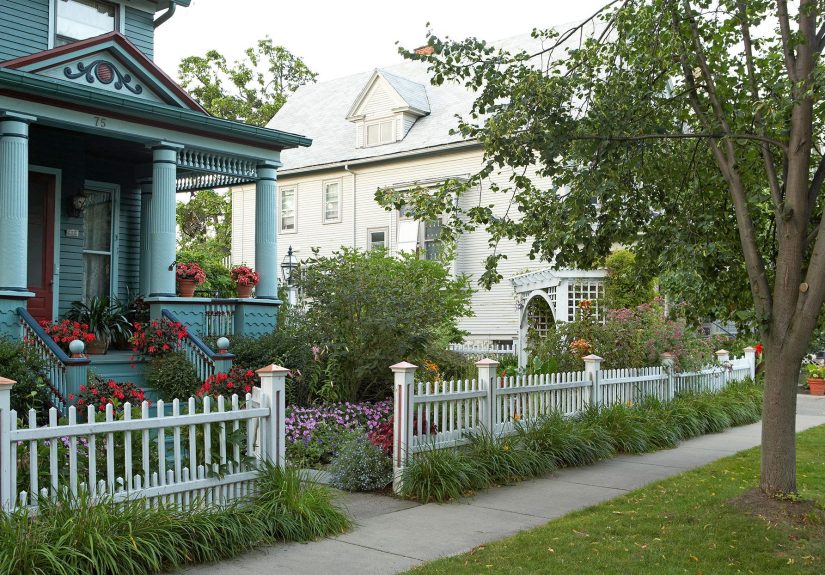
One reason low maintenance landscapes sometimes get unfairly labeled as messy is that they lack visible structure. The fix is easy: add cues that signal intention. Clean edging, a defined walkway, grouped plants, a short fence, a boulder, a container by the front door, or a neatly mulched bed all tell people that the yard is designed, not abandoned.
This matters especially if you are using native plants, grasses, or lawn alternatives that have a more natural look. A tidy border can make even a loose planting feel organized. Structure also helps your own maintenance routine because it sets visual boundaries and makes it easier to see what needs attention.
In other words, you do not need a stiff formal garden. You just need enough order to keep the yard looking intentional. A little structure goes a long way.
How to Make These Ideas Work Together
The best front yards are not built from one clever trick. They succeed because the parts support one another. Shrink the lawn, then fill new beds with regionally adapted plants. Use mulch to reduce weeds. Add a gravel path to create structure. Choose a few grasses or shrubs to repeat. Install drip irrigation if needed. Suddenly, the yard is easier to care for because the design is doing more of the work.
If you are starting from scratch, resist the urge to do everything at once. Begin with the biggest maintenance problem. Maybe that is too much grass. Maybe it is a soggy corner. Maybe it is an overcomplicated flower bed that looks like it was designed by a committee with no chairperson. Fix the biggest issue first, then build from there.
Conclusion
Low maintenance front yard landscaping is not about giving up on beauty. It is about choosing beauty that lasts without constantly asking for your labor. When you rely on smart plant selection, simpler layouts, sturdy materials, and regionally appropriate solutions, your front yard becomes easier to manage and more enjoyable to live with.
The sweetest part is that a well-designed easy-care yard often looks better over time. Plants fill in, hardscape settles into place, and the whole landscape starts to feel grounded. You spend less time fixing problems and more time enjoying the view from the porch, the window, or the driver’s seat when you pull into the driveway and think, “Well, look at that. We did not even have to fight the yard this week.”
Experience: What Homeowners Usually Learn After Trying These Ideas
In real life, the experience of creating a low maintenance front yard is usually less about one dramatic makeover and more about a series of small, smart changes that add up. Many homeowners start with a simple goal: they are tired of mowing too much grass, tired of watering plants that never look happy, or tired of spending money on annuals that vanish at the first hint of weather moodiness. They want the front yard to look polished, but they also want their weekends back.
One of the first lessons people learn is that less lawn often feels like more freedom. At first, removing grass can feel risky because turf is familiar. But once a front yard gains a few wider planting beds, a defined walkway, and some mulch or stone, it often looks more designed than it did before. Homeowners usually notice that the yard begins to feel calmer. Instead of one giant patch of mowing, it becomes a collection of spaces that each make sense.
Another common experience is discovering that the right plant in the right place solves half the maintenance battle. People who once struggled with thirsty hydrangeas in baking sun or patchy lawn under a tree often feel almost shocked when regionally appropriate shrubs, ground covers, or ornamental grasses settle in and simply do their job. The yard stops feeling like a negotiation. That shift is huge. It changes landscaping from a constant correction process into something closer to light stewardship.
Homeowners also learn that repetition is their friend. A yard with three or four dependable plants repeated throughout the front space usually looks cleaner and more expensive than a yard packed with twenty different species. It is easier to mulch around, easier to prune, and easier to understand visually. There is less guesswork, which means fewer mistakes and less impulse buying at the garden center. That alone can save time, money, and a surprising amount of mental clutter.
Mulch, edging, and hardscape tend to become unexpected heroes too. People often think the “exciting” part of landscaping is all about plants, but in practice, the tidy stone border or the gravel path may end up doing just as much work. These elements make the yard feel finished, reduce the amount of exposed soil where weeds can move in, and help every planting bed read as intentional. Even neighbors who are not especially interested in gardening usually notice the difference. The yard starts looking cared for in a steady, quiet way.
There is also a practical emotional payoff. A low maintenance front yard can reduce a low-key background stress that many homeowners barely realize they are carrying. Instead of glancing outside and seeing chores, they see a landscape that mostly behaves itself. Yes, there is still some cleanup, seasonal trimming, and occasional watering during establishment. But the workload becomes reasonable. The yard no longer dictates the schedule.
Perhaps the biggest lesson is that easy care does not have to mean lifeless. A thoughtful front yard with native flowers, grasses, shrubs, gravel, mulch, and a bit of structure can feel rich, layered, and welcoming. Birds visit. Pollinators show up. The house looks better framed. And the people who live there often feel a little more connected to the place because the landscape finally fits the rhythm of their actual lives instead of some fantasy version of endless free time.