Table of Contents >> Show >> Hide
- Meet Ana White: From “I Guess I’ll Build It” to DIY Icon
- What Episode #16 Is Really About (Hint: It’s Not Just Tools)
- Why DIY Feels So Scary (And Why That’s Weirdly Good)
- 7 Practical Ways to Squash Your DIY Fears (Ana-Style)
- 1. Start Ridiculously Small
- 2. Break Big Projects into “Tiny Wins”
- 3. Treat Tutorials Like a Safety Net
- 4. Respect the Tools (But Don’t Worship Them)
- 5. Use “Hire It Out” as a Strategic Option, Not a Failure
- 6. Budget for Mistakes on Purpose
- 7. Document Your Progress (So You See How Far You’ve Come)
- Real-Life DIY Confidence Boosters Inspired by the Episode
- Turning DIY Fear Into a Superpower
- Bonus: Lived-In Lessons From Squashing DIY Fears
If you’ve ever stared at a power tool like it might bite, or worried that
hanging a shelf will somehow make your entire house collapse, episode #16 of
Young House Love Has A Podcast is basically your new comfort listen.
In “Squashing DIY Fears With Ana White,” John and Sherry Petersik chat with
furniture designer and self-taught builder Ana White about what it really
takes to get over DIY anxiety and start building the home you wantbeds,
bookcases, tiny houses, teachers’ lounges, and all.
This article dives into the big ideas behind that conversation: why DIY
feels scary, how Ana learned to push through fear, what Young House Love has
learned from years of trial-and-error projects, and how you can use their
mindset to finally tackle the projects you’ve been avoiding. Consider this
your friendly, slightly sawdust-covered pep talk.
Meet Ana White: From “I Guess I’ll Build It” to DIY Icon
Long before she was known for thousands of free furniture plans and a wildly
popular DIY site, Ana White was simply a homeowner in Alaska who couldn’t
find stylish, affordable furniture that would survive real life. So she did
the thing most of us only daydream about: she decided to build it herself.
Over time, she started sharing simple, beginner-friendly plans online.
Those plans emphasized straightforward cuts, common lumber sizes, and
realistic budgetsnothing that required a pro-level workshop. As her site
grew, readers sent in their own build photos, proving that “ordinary” people
with regular jobs, kids, and limited free time could still create solid,
beautiful furniture.
On the podcast, John and Sherry introduce Ana as a “tool ninja,” but her
real superpower is making building feel normal and doable. She doesn’t
present herself as a fancy designer who never makes mistakes. Instead, she
talks about learning as she goes, making adjustments, and treating every
build as practice. That mindset is crucial for anyone trying to silence
their inner DIY critic.
What Episode #16 Is Really About (Hint: It’s Not Just Tools)
The episode technically covers a lot of groundfurniture building, a
teachers’ lounge makeover, even a celebrity house listing. But at its core,
it’s about confidence. Here are some of the key themes that come through.
1. Courage Comes From Doing, Not From Thinking
Ana didn’t wait until she “felt ready” to build a bed or design a tiny
house. She started with small projects, figured things out as she went,
and let her skills catch up with her ambition. That’s something Young House
Love echoes constantly: your confidence grows after you do the
project, not before.
If you’re waiting for the day you magically stop being afraid of messing
up, you’ll be waiting forever. A more realistic goal is: “I’m willing to be
a beginner for a while.” Once you’ve survived a few crooked cuts and
mismatched paint swatches, fear starts to lose its grip.
2. The Teachers’ Lounge Makeover: A Real-World Case Study
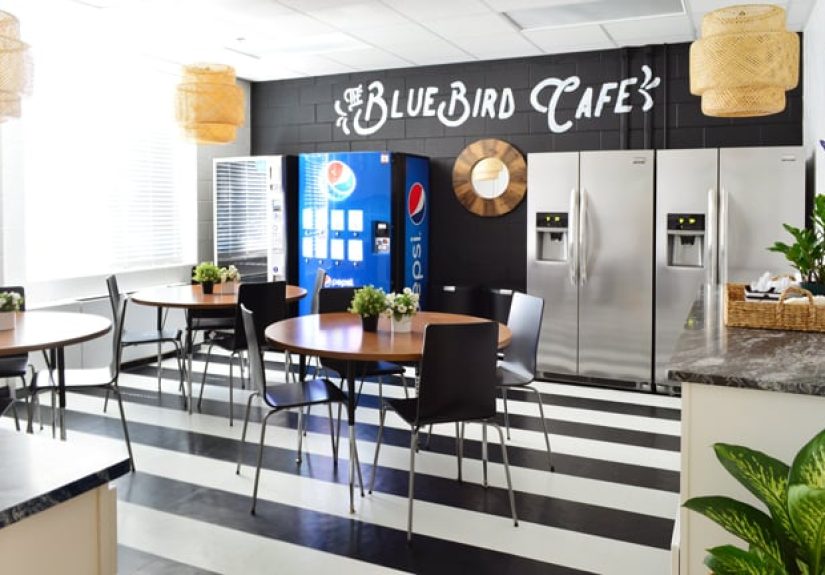
One highlight mentioned in the episode is a teachers’ lounge makeover that
John and Sherry tackled. It involved all the usual suspectstight budgets,
weird existing features, and at least one item that threw them a serious
curveball. Instead of treating those surprises as proof they were out of
their depth, they treated them like puzzles to be solved.
That’s a big mental shift. When you expect some things to go
sideways and you plan for tweaks, you’re a lot less likely to panic when
something doesn’t go perfectly. The project still ends in a dramatic “after”
shotbut the messy middle is normal, not a sign of failure.
3. Design Debates Are Part of the Fun
The episode also touches on Gwyneth Paltrow’s then-listed home and a
bathroom trend John and Sherry are on the fence about. Why mention that in
an episode about DIY fears? Because it reminds you that design is
subjective. Even professionals disagree, change their minds, and second-guess
finishes.
When you accept that there’s no single “correct” way to design a room,
you free yourself up to experiment. Your bathroom tile doesn’t have to win
a universal popularity contest. It just has to make you happy when you walk
in half-asleep in the morning.
Why DIY Feels So Scary (And Why That’s Weirdly Good)
If DIY terrifies you, you’re not alone. Surveys of homeowners show that a
huge portion of DIYers experience what’s basically “mid-project regret
syndrome”that moment when you’re surrounded by dust and half-removed trim
and think, “What have I done?” Many people worry about three big things:
- Breaking the house. The fear that one wrong move will
cause serious damage. - Hurting yourself. Power tools lookand soundintense,
especially if you’ve never touched one. - Wasting money. Nobody wants to pay for materials,
then hate the result.
The good news? Most small- to medium-sized DIY projects are surprisingly
forgiving. Walls can be patched, paint can be redone, shelves can be moved,
and even tile can be reworked if needed. Professional contractors make
mistakes too; the difference is that they fix them and move on.
Fear, in that sense, is actually useful data. It tells you which projects
deserve more research, where safety gear is non-negotiable, and when to
bring in a pro (for example, structural work, certain electrical and gas
tasks). Learning to listen to fear without letting it stop you is the sweet
spot Ana and Young House Love are always nudging listeners toward.
7 Practical Ways to Squash Your DIY Fears (Ana-Style)
Ready to go from “I can’t” to “I built that”? Here are practical strategies
inspired by Ana White’s building philosophy and the DIY mindset John and
Sherry share on the show.
1. Start Ridiculously Small
Your first project doesn’t need to be a full kitchen remodel. Think simple:
a basic bench, a wall shelf, a planter box, or a painted accent wall. Ana’s
site and similar resources are full of projects designed for beginners with
just a few tools and boards.
Small projects still teach you the fundamentalsmeasuring, cutting, sanding,
fastening, finishingbut the stakes are low. If something goes wrong, it’s
just a $20 mistake, not a whole-house disaster.
2. Break Big Projects into “Tiny Wins”
One of Young House Love’s favorite tricks is tackling projects in bite-sized
chunks. Instead of “redo the entire living room,” you might:
- Patch nail holes and touch up the trim.
- Update one light fixture.
- Style the bookcase.
- Add art above the sofa.
Each finished step gives you a mini dopamine hit and proof that yes, you
can actually make progress. Over time those small wins stack into a full
transformation.
3. Treat Tutorials Like a Safety Net
We’re living in the golden age of DIY how-tos. You can find step-by-step
photos, build diagrams, and entire video series that walk you through
everything from installing a faucet to building an outdoor sofa.
Ana’s plans are especially friendly to nervous beginners because they
usually list:
- A clear lumber and cut list.
- Simple diagrams that explain how pieces fit together.
- Real-life reader photos that show variations and tweaks.
When you combine that with the “we’ve tried it, and here’s what went wrong”
honesty of blogs like Young House Love, you’re no longer walking into a
project blind. You’re following a trail other people have already tested.
4. Respect the Tools (But Don’t Worship Them)
A lot of DIY fear centers on tools, especially saws and drills. Here’s the
mindset shift: tools are neutral. They’re neither magic nor monsters.
Respect means:
- Wearing safety glasses and hearing protection.
- Reading manuals and following the manufacturer’s instructions.
- Practicing cuts or holes on scrap wood first.
- Working slowly instead of rushing.
You don’t need a warehouse of pro-grade tools to get started, either.
Many of Ana’s and Young House Love’s projects rely on a short list:
a drill/driver, a saw (miter or circular), a sander, and basic hand tools.
5. Use “Hire It Out” as a Strategic Option, Not a Failure
Another big theme in Young House Love’s world is knowing when DIY is
empoweringand when it’s smarter to call in help. They’ve been open in other
episodes about hiring out complex electrical, plumbing, or structural work,
while tackling painting, trim, and furniture builds themselves.
Think of your projects as a spectrum:
- DIY Zone: painting, basic carpentry, cosmetic updates,
simple tiling, light fixture swaps (within code and comfort level). - Hybrid Zone: you demo or prep, then bring in pros for
specialized tasks. - Pro Zone: anything that impacts safety or structure
beyond your skill level.
Knowing you’re allowed to hire out pieces of a project makes it much easier
to start. You’re not signing up for a solo mission; you’re designing a
custom mix of DIY and professional help.
6. Budget for Mistakes on Purpose
Nothing turns minor fear into full-on panic faster than realizing you’ve
spent your entire budget and something went wrong. The fix? Build a mistake
buffer right into your plan10 to 20 percent of your materials budget set
aside for do-overs, extra caulk, replacement boards, or a second can of
paint.
When you expect a few hiccups, they don’t feel like proof that you “should
never DIY again.” They’re just part of the price of learning.
7. Document Your Progress (So You See How Far You’ve Come)
One thing long-time DIYers like Ana and the Petersiks have in common? A
huge archive of before-and-after photos. That’s not just for the internet;
it’s for their own sanity.
Take progress shots, even during the ugly middle. On days when you feel like
nothing is working, those photos prove that you’ve already done hard things:
ripped up old flooring, built your first set of shelves, or installed trim
you used to be too afraid to touch.
Real-Life DIY Confidence Boosters Inspired by the Episode
To make all of this more concrete, here are a few example projects that fit
perfectly with the “squash your fear, start small” philosophy behind the
Ana White episode.
Project Idea 1: A Simple Entry Bench
An entry bench is the ideal confidence builder: it’s useful, forgiving, and
made mostly from straight cuts. You’ll learn how to:
- Measure and mark boards accurately.
- Use a drill to pre-drill and drive screws without splitting wood.
- Sand and finish a surface that gets daily use.
If your first bench has a tiny wobble or a less-than-perfect miter, that’s
okay. You’ve still created a functional piece of furniture with your own
hands. That’s a massive mental win.
Project Idea 2: Floating Shelves for a “Teacher’s Lounge” Vibe at Home
Inspired by the teachers’ lounge makeover, try adding a set of simple
floating shelves in your kitchen, office, or laundry room. The process
teaches measuring, finding studs, using a level, and spacing brackets or
supports evenly.
Choose affordable pine boards and a stain or paint color you love. Worst
case? You patch a few screw holes and move the shelves. Best case? You get
a Pinterest-worthy wall that reminds you every day that you’re capable of
more than you thought.
Project Idea 3: A Low-Risk “Test Wall”
If you’re terrified of painting or bold design choices, designate one small
wall as your “test wall.” Try that dark blue, stencil pattern, or removable
wallpaper you’ve been eyeing. You’ll refine your technique on a small scale,
and if you decide it’s not for you, repainting a single wall is no big
deal.
This is essentially what experienced DIYers do all the time. They test
finishes, sample colors, and experiment in low-visibility areas before
committing. You’re not indecisiveyou’re running smart, low-risk
experiments.
Turning DIY Fear Into a Superpower
The real message behind “Squashing DIY Fears With Ana White” isn’t that
you’ll eventually reach a point where you’re never nervous again. Even pros
feel a twinge when they start something big and new. The difference is that
they’ve done enough projects to know that fear doesn’t have the final say.
Ana built her reputationand her own Alaska dream homeby taking one
manageable risk after another. John and Sherry transformed multiple houses,
a duplex, and even a teachers’ lounge by repeating the same process:
research, plan, start small, adjust, and keep going.
You don’t have to become a full-time DIY blogger to benefit from that
mindset. Maybe your version is finally replacing those dated bathroom light
fixtures, building a simple outdoor chair, or refreshing a tired room with
paint and new hardware. Every project you finish sends one clear message to
your brain: “I can handle this.”
And the next time a podcast episode mentions building a bed, a tiny house,
or a lounge makeover, you won’t think “I could never do that.” You’ll think,
“Okay, that’s a few levels up from where I ambut I know how to take the
first step.”
Bonus: Lived-In Lessons From Squashing DIY Fears
To really bring the episode’s ideas home, it helps to look at the emotional
side of DIYwhat it actually feels like to move from fear to confidence.
Here are some common “inner monologue” moments that almost every DIYer
experiences, and what they learn from them.
“I bought the supplies. Now I’m afraid to touch them.”
This is classic. The lumber is leaning in the garage, the paint is sitting
on the counter, and the project is technically “ready”except your brain is
busy spinning out worst-case scenarios. Many DIYers find that the cure is
committing to a tiny first step with a clear time limit: “Tonight, I’m just
going to cut two boards,” or “I’m only going to tape off the room.”
Once you begin, momentum kicks in. You stop thinking of the project as a
scary unknown and start thinking of it as a series of small, doable tasks.
That’s exactly the mental shift people describe after tackling their first
real build inspired by Ana White or Young House Lovethey realize starting
was the hardest part.
“Something went wrong. I should have never tried this.”
At some point, a cut will be off, a board will bow, or a paint color will
look wildly different on the wall than it did on the tiny swatch. The
reflexive thought is often, “This proves I’m bad at DIY.”
Seasoned builders handle that moment differently. They ask, “What exactly
went wrong, and what are my options?” Maybe you recut a board, add wood
filler, sand again, or swap the paint finish. Every fix becomes part of your
skill set. The next time you face a similar problem, it’s not a crisis;
it’s something you already know how to solve.
“The house has been a mess for weeks. Was this worth it?”
Living through a project is its own emotional roller coaster. You’re
stepping over drop cloths, moving furniture around, and wiping dust off your
coffee cup. In those moments, it’s easy to romanticize the idea of hiring
everything out and coming back to a finished space.
But ask almost anyone who has powered through a DIY-heavy season, and
they’ll tell you the same thing Ana and the Petersiks often emphasize:
once the dust settles, the sense of ownership is huge. You don’t just like
how the room looksyou feel connected to it. Every board, nail hole, and
paint stroke is a reminder that you’re capable of learning something new.
“I can’t believe I did that.”
At the end of a project, there’s usually a moment when the tools are put
away, the room is clean, and you see the space with fresh eyes. Maybe it’s
a mudroom bench that finally handles backpacks and shoes, a set of floating
shelves over the TV, or a tiny reading nook you framed in yourself.
That “I can’t believe I did that” moment is powerful. It rewires how you see
yourself. Suddenly, future projects don’t feel as impossible. You start
looking around your home and thinking, “What else could I fix, build, or
improve?” That curiosity is exactly what keeps long-time DIYers building for
yearsand it’s what “Squashing DIY Fears With Ana White” invites you to tap
into.
So next time you hear that episode title, don’t just imagine other people
bravely tackling projects. Picture your own future “before and after,”
your own teachers’-lounge-level makeover, your own version of a dream home
built one weekend at a time. Fear can come along for the ridebut it doesn’t
get to drive.