Table of Contents >> Show >> Hide
- How to pick the right white (so your kitchen doesn’t feel like a dentist’s office)
- 18 cabinet ideas that brighten the room and add personality
- 1) Choose a warm white for a glow-up (not a glare-up)
- 2) Go crisp white for a modern, sunlit look
- 3) Add glass-front uppers to multiply light
- 4) Mix in open shelving (just a little!)
- 5) Try a two-tone layout: white uppers, deeper lowers
- 6) Make the island the “pop of color” moment
- 7) Use a statement backsplash to energize white cabinets
- 8) Pick contrasting grout for instant definition
- 9) Choose reflective surfaces: glossy tile, polished stone, or satin paint
- 10) Pair white cabinets with dark countertops for a classic contrast
- 11) Warm it up with butcher block or wood accents
- 12) Upgrade hardware: brass, matte black, or brushed nickel
- 13) Size your pulls like you mean it
- 14) Add under-cabinet lighting (the ultimate brightness cheat code)
- 15) Use statement pendants to create sparkle and focus
- 16) Add a range hood that acts like architecture
- 17) Use texture to keep “all white” from feeling flat
- 18) Style with color you can change in a weekend
- Wrap-up: the bright-kitchen formula
- Real-world experience: what people learn after going white (500-word add-on)
White kitchen cabinets are basically the kitchen equivalent of a crisp button-down shirt: timeless, flattering, and somehow always appropriateeven if you
spilled coffee on it five minutes ago. Done right, white cabinetry bounces light around, makes tight layouts feel bigger, and gives you a “fresh start”
backdrop for everything from brass pulls to bold tile to that neon toaster you swear is “vintage.”
But here’s the plot twist: “white” isn’t one color. It’s a whole extended familywarm whites, cool whites, creamy off-whites, and the kind of bright white
that can make your countertops look like they need a nap. The good news? With a little strategy, white cabinets can make your kitchen brighter, warmer,
and way more interesting than people who call all-white kitchens “boring” assume.
How to pick the right white (so your kitchen doesn’t feel like a dentist’s office)
1) Match undertones to your lighting
The secret handshake of white paint is undertone. Warm whites lean yellow/red, while cool whites lean blue/green/violet. If your kitchen gets northern
light (cooler, flatter), a warmer white can keep things cozy. If you have tons of warm light or wood tones, a cleaner white can look crisp instead of creamy.
Always test large swatches in morning, afternoon, and nighttime lightingyour cabinets live there 24/7, not just at 2 p.m. on a Saturday.
2) Decide what “bright” means for you
Bright can mean “high-contrast and modern” (think white cabinets + black accents) or “soft and airy” (warm white cabinets + natural textures). Both work.
The trick is choosing a lane so your finishes don’t argue with each other in the middle of dinner prep.
18 cabinet ideas that brighten the room and add personality
1) Choose a warm white for a glow-up (not a glare-up)
If your kitchen feels chilly, pick a white with a gentle warmth. Warm whites soften shadows and look inviting under pendant lights. They also play nicely
with natural wood floors and warmer metals, so your kitchen feels bright without feeling sterile.
2) Go crisp white for a modern, sunlit look
Want that clean, gallery-like vibe? A cleaner white can make edges look sharper and reflect maximum lightespecially in modern kitchens with flat-panel doors.
Pair it with simple silhouettes so the room reads “intentional,” not “unfinished.”
3) Add glass-front uppers to multiply light
Glass-front cabinet doors (especially on upper cabinets) keep the room visually open. Bonus: you’ll finally have a reason to organize your mugs. Use interior
cabinet lighting for extra sparkle at nightlike jewelry for your dishes.
4) Mix in open shelving (just a little!)
Open shelves break up a wall of cabinetry, which helps the space feel lighter. Keep it balanced: one shelf run near a window or coffee zone can brighten the
look without turning your kitchen into a full-time dusting hobby.
5) Try a two-tone layout: white uppers, deeper lowers
White uppers lift the eye and keep the top half of the room airy, while darker lowers add grounding. This combo can make small kitchens feel taller and more
layeredlike your space went to design school and came back with a portfolio.
6) Make the island the “pop of color” moment
Keep perimeter cabinets white, then paint or clad the island in a color or wood tone. It’s a high-impact change without committing every cabinet door to the
same statement. Blues, greens, and warm wood islands are especially popular because they add warmth without stealing the show.
7) Use a statement backsplash to energize white cabinets
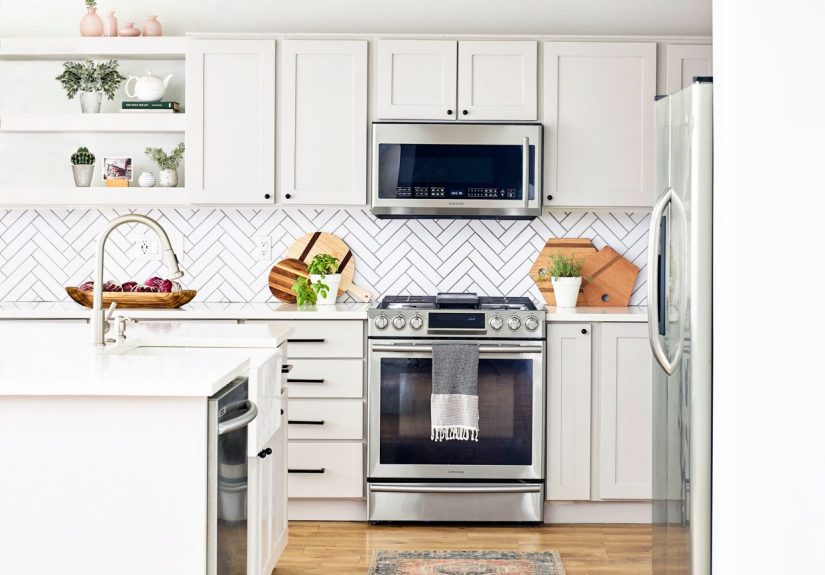
White cabinets love a good backsplash: zellige tile for handmade texture, patterned cement tile for personality, marble for timeless movement, or vertical
shiplap for cozy farmhouse charm. The backsplash is where you can “talk louder” while the cabinets stay cool and collected.
8) Pick contrasting grout for instant definition
White tile with darker grout adds structure and graphic punchgreat if you want a brighter kitchen with visible lines and rhythm. Prefer soft and seamless?
Match grout to tile so everything reads calm and continuous.
9) Choose reflective surfaces: glossy tile, polished stone, or satin paint
Shine reflects light. A glossy backsplash, polished quartz, or even a subtle satin finish on cabinets can help bounce illumination around the room. If you
prefer matte, add brightness through layered lighting (more on that in a second).
10) Pair white cabinets with dark countertops for a classic contrast
White cabinets + black or charcoal counters is a forever combo. It reads crisp, intentional, and “put together.” To soften the contrast, choose counters with
veining or texture (like soapstone-like looks or marbled patterns) so the transition isn’t harsh.
11) Warm it up with butcher block or wood accents
White cabinets look brighter when there’s warmth nearby. Wood countertops (even if only on an island), floating shelves, or a wood hood surround add color and
texture without making the room darker.
12) Upgrade hardware: brass, matte black, or brushed nickel
Hardware is the easiest “jewelry swap” for white cabinets. Brass adds warmth, matte black adds bold contrast, and brushed nickel keeps things classic and calm.
Choose a finish that matches your lighting (warm metals for warm lights, cooler metals for cooler palettes) for a cohesive look.
13) Size your pulls like you mean it
Small hardware on big drawers can look timid. Longer pulls feel modern and add a tailored look that helps cabinets read “custom.” If you’re unsure, buy a few
sizes and tape them onyes, your cabinets will survive the audition process.
14) Add under-cabinet lighting (the ultimate brightness cheat code)
Under-cabinet lights eliminate countertop shadows and make white cabinets look even cleaner. It’s one of the most practical “design upgrades” because it
improves function while making the whole room glowespecially at night.
15) Use statement pendants to create sparkle and focus
White cabinets can handle bold lighting. Try sculptural pendants over the island or a row of smaller pendants for rhythm. The right lighting adds personality
without changing a single cabinet door.
16) Add a range hood that acts like architecture
A plaster hood, wood-trimmed hood, or even a sleek stainless hood becomes a focal point that breaks up white cabinetry. It also adds vertical interestgreat
for making kitchens feel taller and brighter.
17) Use texture to keep “all white” from feeling flat
Combine Shaker-style doors, a lightly veined countertop, and a tactile backsplash (like handmade tile). White-on-white works best when materials do the talking:
smooth + rough, matte + glossy, straight lines + soft variation.
18) Style with color you can change in a weekend
If you’re nervous about committing to bold finishes, keep cabinets white and add color with rugs, towels, bar stools, countertop decor, and plants. You can
refresh the mood seasonallywithout repainting a single thing or entering a long-term relationship with a paint roller.
Wrap-up: the bright-kitchen formula
White cabinets brighten best when you pair them with (1) the right undertone for your lighting, (2) contrast or texture so the room doesn’t feel flat, and
(3) layered lightingespecially under-cabinet lights. From there, it’s all about choosing your “supporting cast”: hardware, backsplash, counters, and a few
warm accents to keep the space inviting.
Real-world experience: what people learn after going white (500-word add-on)
In real kitchen remodels, the biggest surprise is how much “white cabinet success” depends on everything around the cabinets. People often think the cabinet
color is the main character. In practice, it’s more like the lead actor in an ensemble cast: it looks brilliant when the supporting roles are cast welland
slightly awkward when they aren’t.
One common lesson: lighting changes white more than you expect. Homeowners test a perfect white sample at noon, then panic at night when it looks creamier,
grayer, or brighter than planned. The fix usually isn’t “pick a different white” so much as “layer your lighting.” Under-cabinet lighting and warmer bulbs in
pendants can make the same cabinet color feel intentional and flattering. It’s the difference between “bright” and “blinding.”
Another real-world takeaway is that white cabinets love texture. People who worry an all-white kitchen will feel plain usually fall in love with it once they
add a backsplash that has dimension (handmade-look tile, subtle patterning, or a slab with movement) and a countertop with gentle veining. Suddenly, the room
feels designed, not empty. White cabinets don’t need a lot of “stuff”; they need a few strong material choices that add depth.
Hardware is where many kitchens either level up or accidentally downshift. In photos, tiny knobs can look charming. In real lifeespecially on wide drawers
undersized hardware can feel a little “builder basic.” People who swap to slightly longer pulls often say the whole kitchen looks more custom overnight. It’s a
relatively small spend compared to counters or appliances, but it reads as a big upgrade because your eyes land on hardware constantly.
Families also discover that white cabinets don’t necessarily mean high-maintenanceif you choose the right finish and accept normal life. A durable cabinet
finish and a wipeable paint sheen help. Most day-to-day marks come from hardware areas and trash pull-outs, which is why good pulls and a sensible layout
matter. And if you have kids, pets, or a household that treats the kitchen like mission control, the best strategy is simple: keep a microfiber cloth handy,
pick materials that forgive fingerprints, and don’t chase perfection. A white kitchen is supposed to feel fresh and welcoming, not like a museum exhibit
guarded by security lasers.
Finally, the happiest white-cabinet kitchens tend to include at least one warm elementwood shelves, a warmer metal finish, a woven rug, or even just a few
earthy accessories. That warmth keeps the space from feeling clinical, especially in open-concept homes where the kitchen needs to blend with living areas.
The overall vibe becomes “bright and lived-in,” which is the sweet spot: beautiful enough for photos, practical enough for Tuesday night spaghetti.