Table of Contents >> Show >> Hide
- Why Egg-Cracking Technique Actually Matters
- Method 1: Crack the Egg on a Flat Surface
- Method 2: Crack Each Egg Into a Separate Bowl First
- Method 3: Crack an Egg With One Hand
- Which Egg-Cracking Method Is Best?
- Common Egg-Cracking Mistakes to Avoid
- How to Handle the Egg After You Break It
- Final Thoughts: The Best Way to Break an Egg Is the One You Can Repeat
- Extra Kitchen Experience: What “3 Ways to Break an Egg” Looks Like in Real Life
- SEO Tags
Breaking an egg should be easy. In theory, it is. In practice, it sometimes feels like a tiny kitchen exam you did not study for. One tap, and you are a breakfast genius. One bad hit, and suddenly there is shell in the bowl, yolk on your sleeve, and a deep personal grudge against poultry.
The good news is that there is more than one right way to crack an egg. The better news is that you do not need chef-school reflexes or a dramatic soundtrack to get it right. Whether you are making scrambled eggs before school, baking a birthday cake, or trying to look suspiciously competent while making brunch, the technique matters more than people think.
This guide breaks down three practical ways to break an egg: the classic flat-surface crack, the separate-bowl method, and the flashy one-handed crack. Each has its moment. Each has its strengths. And yes, one of them does make you look cooler than necessary.
Why Egg-Cracking Technique Actually Matters
Before we get into the three methods, let’s give the humble egg the respect it deserves. Cracking an egg is not just about getting from shell to skillet. The way you do it affects whether shell fragments end up in your batter, whether the yolk stays intact, and whether your kitchen stays reasonably civilized.
A clean crack gives you more control. That matters when you want a perfect fried egg, a glossy yolk for carbonara, or cloud-like whipped egg whites for meringue. It also matters for food safety. Raw eggs should be handled carefully, with clean hands, clean tools, and clean work surfaces. If you are making a dish that uses raw or lightly cooked eggs, pasteurized eggs are the safer move.
In other words, learning how to crack an egg properly is not fussy. It is useful. It is the culinary version of knowing how to parallel park: a small skill that saves you from bigger embarrassment.
Method 1: Crack the Egg on a Flat Surface
Best for: everyday cooking, fried eggs, omelets, scrambled eggs, and sanity
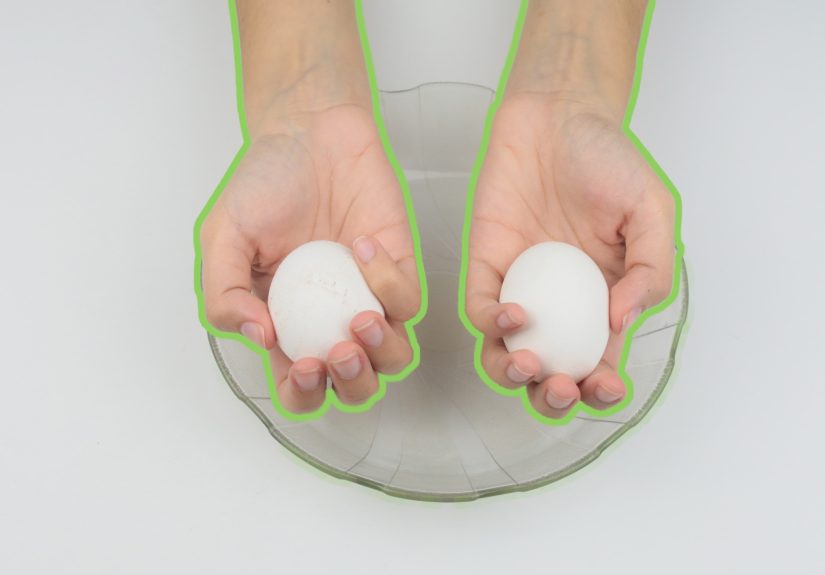
If you only learn one method, make it this one. Cracking an egg on a flat surface, like a countertop or cutting board, is widely considered the cleanest and most reliable technique. It tends to create a more even fracture, which means fewer jagged shell bits and less chance of punching shards into the egg itself.
Here is how to do it:
Hold the egg firmly but gently. Give it one confident tap on a flat, clean surface. Not a timid love tap. Not a dramatic hammer blow. Just one firm strike. Once you see the crack, place your thumbs on either side of the fracture and pull the shell open over your bowl, pan, or prep cup.
Why does this work so well? Because the flat surface dents the shell instead of driving sharp points inward. That makes it easier to open the egg neatly and helps keep the yolk intact. If you have ever cracked an egg on the rim of a bowl and ended up fishing out shell like you were bobbing for tiny fossils, this method will feel like a personal upgrade.
This is the method most home cooks should use for regular meals. It is simple, repeatable, and forgiving. It also gives you a better shot at that picture-perfect sunny-side-up egg where the yolk sits there looking proud of itself.
Pro tip: Open the egg over a small bowl if you are nervous. It is easier to recover from one bad crack than from an entire pan of regret.
Method 2: Crack Each Egg Into a Separate Bowl First
Best for: baking, batch cooking, separating yolks and whites, and avoiding disaster
This method is not glamorous, but it is the smartest one in the room. Instead of cracking the egg directly into your mixing bowl or hot pan, crack it into a small bowl or ramekin first. Then transfer it to the larger bowl or skillet once you know everything looks good.
Here is how it works:
Use the flat-surface crack described above. Open the egg over a small bowl. Check for shell fragments, inspect the yolk, and make sure the egg smells fresh and looks normal. Then pour it into your batter, your pan, or your big bowl with the other eggs.
This method is especially useful when a recipe uses several eggs. Imagine you are making cheesecake, brioche, or a giant weekend frittata. If egg number six turns out to be weird, you do not want it cannonballing into the rest of the ingredients. Cracking into a separate bowl gives you quality control. It also makes it easier to remove shell bits before they disappear into a lake of batter.
It is also the gold-standard move when separating yolks from whites. If one yolk breaks, it can ruin a whole bowl of whites that you planned to whip. Working one egg at a time in a small bowl is less exciting than kitchen acrobatics, but it is how you avoid the kind of baking setback that leads to dramatic sighing.
Extra smart move: If you are separating eggs, have three bowls ready: one for cracking each egg, one for whites, and one for yolks. That way a single broken yolk does not sabotage the entire project.
Method 3: Crack an Egg With One Hand
Best for: speed, confidence, brunch theatrics, and feeling like a line cook in a movie montage
Now we arrive at the show-off method. The one-handed egg crack is not essential, but it is satisfying. It is the kitchen equivalent of twirling a pen or opening a soda can with a little extra attitude. When done well, it is efficient. When done badly, it is performance art.
To do it, hold the egg so one side is exposed. Strike that side against your cracking surface. Then use your thumb and fingers to pull the shell apart while holding the egg over the bowl. The motion takes coordination, and everyone develops a slightly different grip. The key is controlled pressure, not brute force.
This method shines when you are cracking several eggs for scrambled eggs, quiche, or a big batch of pancake batter. Once you get the rhythm, it is fast. You can keep one hand moving while the other grabs the next egg, which is efficient and mildly impressive.
There is a catch, of course. One-handed cracking is harder to master, and it can increase the odds of shell fragments or broken yolks if your timing is off. So no, this should not be your first move when making a delicate poached egg for someone you are trying to impress. Learn it for speed, not because your kitchen needs more stunts.
Practice advice: Start over a bowl, not over a hot pan. Your ego will recover faster than a fried egg with a busted yolk.
Which Egg-Cracking Method Is Best?
If we are giving out medals, the flat-surface crack wins gold for everyday use. It is clean, easy, and reliable. The separate-bowl method wins silver for being the most practical, especially in baking. The one-handed crack wins the crowd favorite award because it is fast, fun, and just a little bit ridiculous.
So the best method depends on what you are making.
- Use the flat-surface crack when you want control and fewer shell fragments.
- Use the separate-bowl method when the recipe matters and mistakes are expensive.
- Use the one-handed crack when you want speed and already know what you are doing.
The truth is that excellent home cooks often use all three. Cooking is not a loyalty program. You do not have to pick one method and marry it.
Common Egg-Cracking Mistakes to Avoid
1. Cracking on the rim of the bowl
This old habit is popular, but it often creates messy, uneven breaks. The rim can push shell fragments inward and make the yolk more likely to break. It feels efficient right up until you are chasing shell around raw egg white with the patience of a sleep-deprived raccoon.
2. Cracking directly into the main mixing bowl
This is how one bad egg can ruin the whole party. Crack into a small bowl first when the recipe is important, when you are using lots of eggs, or when you need to separate yolks from whites carefully.
3. Using the shell to separate eggs over and over
Some cooks like passing the yolk back and forth between shell halves. It works, but it can also introduce shell fragments and more contact with the shell than necessary. Clean hands or a proper separator are often easier and cleaner.
4. Ignoring food safety basics
Wash your hands and clean the counter, utensils, and bowls that come into contact with raw egg. If a recipe serves the egg raw or undercooked, use pasteurized eggs or pasteurized egg products. This is especially important for dressings, homemade ice cream, mousse, and other recipes where the egg does not get fully cooked.
5. Trying to rescue shell with your finger
Yes, technically you can. But a clean utensil is a better option. If you need a quick trick, one shell half can scoop out a shell fragment pretty well. Still, the real flex is avoiding the fragment in the first place.
How to Handle the Egg After You Break It
Once the egg is out of the shell, the job is not over. If you are frying it, slide it into a preheated pan gently so the yolk stays intact. If you are baking, add it to the batter only after checking for shell. If you are separating eggs, remember that even a little yolk can keep whites from whipping to full volume.
Temperature matters, too. Cold eggs are often easier to separate because the yolks stay firmer. Room-temperature eggs, on the other hand, can blend more smoothly into cake batters and some other baked goods. So yes, the egg has moods. Respect them.
And one more thing: do not reuse empty eggshells as measuring cups or mini serving bowls for raw egg mixtures. The shell is not a tiny ceramic dish. It is a shell. Let it retire with dignity.
Final Thoughts: The Best Way to Break an Egg Is the One You Can Repeat
For something so small, an egg has a surprising ability to expose your kitchen habits. It can reveal whether you cook with patience, panic, precision, or pure caffeine. But once you know the main methods, breaking an egg stops feeling like guesswork and starts feeling automatic.
If you want the safest everyday choice, crack on a flat surface. If you want the least risk in baking, use a separate bowl. If you want to look like you have your life together at brunch, learn the one-handed crack and deploy it responsibly.
Either way, the goal is not perfection. The goal is breakfast, cake, pasta, cookies, and all the other foods that get dramatically better the moment an egg enters the chat.
Extra Kitchen Experience: What “3 Ways to Break an Egg” Looks Like in Real Life
The funny thing about egg-cracking advice is that it sounds very neat on paper and very chaotic at 7:12 a.m. on a Tuesday. In real life, most people learn how to crack eggs the same way they learn how to fold a fitted sheet: through a blend of confidence, denial, and repeated failure. I still remember the first time I tried to crack an egg one-handed because I had seen a cook do it like it was nothing. In my head, I looked fast and capable. In reality, I looked like I was negotiating with a walnut.
That is why the flat-surface method earns so much respect. It is not flashy, but it works when you are half awake and trying to make breakfast before the toast burns. Once you use it consistently, you notice the difference right away. The crack is cleaner. The yolk stays intact more often. You are not picking out shell pieces like you are panning for gold. For everyday cooking, that reliability matters more than style. Nobody at the table is going to stand up and applaud the way you cracked the egg, but they will appreciate not crunching into shell during breakfast.
The separate-bowl method is the one I ignored for years because it felt like an unnecessary extra dish. Then I started baking more often, and suddenly it made perfect sense. There is no heartbreak quite like cracking your final egg straight into a beautiful bowl of batter and realizing it brought shell fragments or a broken yolk with it. A tiny prep bowl can save an entire recipe, especially when you are making something delicate. It also slows you down just enough to notice what you are doing, which is often the real secret behind good cooking. A lot of kitchen mistakes happen because people are trying to save five seconds and end up losing fifteen minutes.
Then there is the one-handed crack, which is the culinary equivalent of learning to whistle loudly with your fingers. Is it necessary? Absolutely not. Is it satisfying once you finally get it? Extremely. The first few attempts are usually terrible. You grip too hard, or not hard enough, or you forget where your thumb is supposed to go, and the egg opens in a way that feels personally insulting. But after enough practice, the motion becomes smooth. And once it does, cracking several eggs quickly for scrambled eggs or pancake batter becomes oddly fun. It adds a little rhythm to cooking.
What experience teaches more than anything is that the “best” way to break an egg depends on the moment. On a lazy weekend, you might use the separate-bowl method because you have time and want to be careful. On a rushed weekday, the flat-surface crack is your dependable best friend. And when you are feeling bold, the one-handed move comes out for a little harmless kitchen swagger. That is the beauty of this topic. It is simple, practical, and slightly ridiculous in the best possible way. An egg is small, but the confidence that comes from handling it well has a sneaky way of making the whole kitchen feel easier.