Table of Contents >> Show >> Hide
- Why turtles are especially easy to lose (even when they look “fine”)
- What “endangered” means in this article
- The list: 41 endangered turtle species you may not know exist
- 1) Sea turtles (the ocean commuters with terrible luck around fishing gear)
- 2) River terrapins and big freshwater turtles (the “why is every river project a boss fight?” group)
- 3) Softshells and flapshells (built like pancakes, endangered like clockwork)
- 4) Small freshwater turtles with big problems (the “please stop draining my home” squad)
- 5) Asian box and pond turtles (pretty, personable, and tragically “collectible”)
- 6) Tortoises (land turtles that can’t outrun anything, including people)
- What’s driving the declines (the greatest hitsunfortunately)
- How you can help (without needing a wildlife biology degree)
- Experiences that make endangered turtles feel real (about )
- Conclusion
Turtles have been cruising around Earth for an absurdly long time, wearing built-in armor like it’s the most casual fashion choice in the animal kingdom. So it’s tempting to assume they’ll always be herequietly blinking, slowly judging us, and occasionally photobombing snorkeling trips.
But here’s the shell-shocking reality: many turtles and tortoises are now among the most threatened vertebrates on the planet. They’re running into a perfect storm of habitat loss, illegal wildlife trade, fishing gear, pollution, and climate changewhile also having a life strategy that’s basically “grow up slowly and hope nobody ruins your neighborhood.” (Spoiler: somebody keeps ruining the neighborhood.)
Why turtles are especially easy to lose (even when they look “fine”)
A turtle population can look stable right up until it doesn’t. Many species take yearssometimes decadesto reach breeding age. Adults can live a long time, so you might still see them in the wild even as the next generation quietly disappears. If nesting beaches are lit up, eggs are collected, wetlands are drained, or adults are harvested for meat/pets/traditional markets, recovery can be painfully slow.
The good news: turtle conservation can work. When threats are reducednest protection, safer fishing practices, habitat restoration, and stopping illegal tradesome populations rebound. The bad news: you don’t get many “do-overs” with species that reproduce slowly.
What “endangered” means in this article
Conservation status can vary depending on the authority (for example, U.S. listings vs. global assessments), and some species have subpopulations that are doing much worse than others. For this list, “endangered” is used in the common-sense conservation way: these are turtles and tortoises that are widely recognized as threatened with extinction, including species highlighted in major conservation reports and/or protected under strong legal frameworks.
The list: 41 endangered turtle species you may not know exist
You’ll see sea turtles, freshwater turtles, and a few tortoises (tortoises are turtles toojust the land-based, tank-like branch of the family tree). Each entry includes a quick “why it’s in trouble” snapshot, so you get more than just a roll call of names.
1) Sea turtles (the ocean commuters with terrible luck around fishing gear)
- Hawksbill Sea Turtle (Eretmochelys imbricata) Famous for its beautiful shell pattern, which made it a target for the tortoiseshell trade. Reef loss, egg harvest, and bycatch keep this species on the edge.
- Kemp’s Ridley Sea Turtle (Lepidochelys kempii) The smallest sea turtle, and historically one of the rarest. Nesting beach threats and accidental capture in fisheries remain major hurdles, even with long-term protection.
- Leatherback Sea Turtle (Dermochelys coriacea) The heavyweight champ that eats jellyfish and crosses entire oceans. Long migrations mean lots of chances for entanglement, hook injuries, and vessel strikes.
- Green Sea Turtle (Chelonia mydas) A key grazer of seagrass and algae ecosystems. Coastal development, boat strikes, pollution, and bycatch can turn “common sightings” into “quiet collapse.”
- Loggerhead Sea Turtle (Caretta caretta) Big head, powerful jaws, and a talent for getting snagged in the wrong place at the wrong time. Bycatch and degraded nesting habitat are persistent threats.
- Olive Ridley Sea Turtle (Lepidochelys olivacea) Known for mass nestings called arribadas (nature’s version of a coordinated flash mob). Egg harvest, coastal development, and fishing gear impacts remain serious.
- Flatback Sea Turtle (Natator depressus) Mostly found around Australia, with a relatively limited range. Coastal industry impacts and habitat changes can hit hard when a species doesn’t have a lot of “backup locations.”
2) River terrapins and big freshwater turtles (the “why is every river project a boss fight?” group)
- Southern River Terrapin (Batagur affinis) A river turtle with a nesting season that puts it in direct conflict with human activity. Egg collection, shoreline disturbance, and habitat loss have hammered populations.
- Painted Terrapin (Batagur borneoensis) Lives in mangrove and coastal river systems. Nesting sites are vulnerable to development, harvesting, and erosion, and small remaining populations are fragile.
- Northern River Terrapin (Batagur baska) Once widespread across parts of South Asia’s coastal river habitats. Heavy exploitation and habitat decline have pushed it toward the brink.
- Red-crowned Roofed Turtle (Batagur kachuga) A river specialist that depends on safe nesting banks. Dam projects, sand mining, and egg harvest can wipe out reproduction in a single season.
- Burmese Roofed Turtle (Batagur trivittata) A conservation “comeback story in progress.” Intensive protection, headstarting, and releases have helped, but the species still depends on ongoing river and nest safeguards.
- Central American River Turtle / Hicatee (Dermatemys mawii) A big, ancient freshwater turtle that has been heavily harvested for meat. When adults are removed faster than they can be replaced, populations crash fast.
- Magdalena River Turtle (Podocnemis lewyana) A South American river turtle threatened by egg harvest, habitat alteration, and pollution. Protecting nesting beaches is often the difference between “still here” and “gone.”
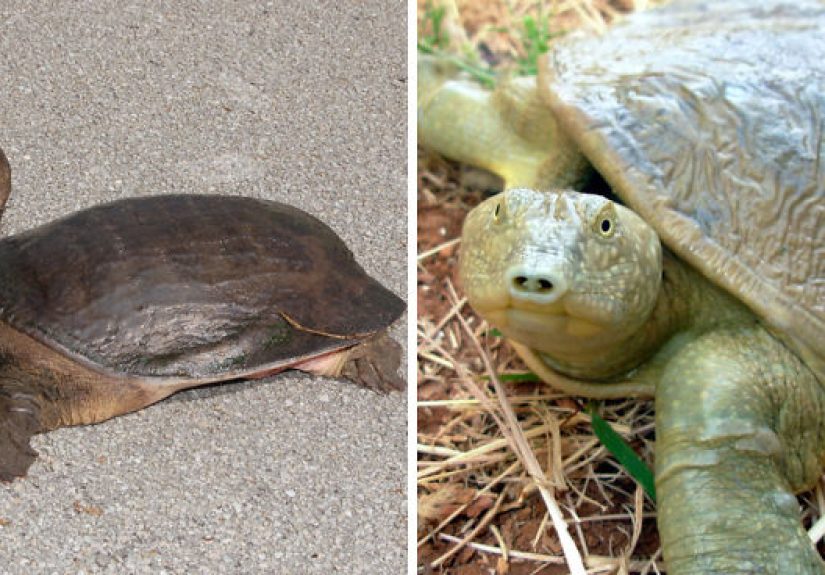
3) Softshells and flapshells (built like pancakes, endangered like clockwork)
- Black Softshell Turtle (Nilssonia nigricans) A species with complicated survival stories tied to specific sites. Habitat pressure and collection continue to endanger remaining groups.
- Asian Narrow-headed Softshell Turtle (Chitra chitra) A large, river-dwelling softshell that needs big, healthy waterways. River disturbance, harvest, and bycatch in nets can devastate rare populations.
- Burmese Narrow-headed Softshell Turtle (Chitra vandijki) Endemic to Myanmar and extremely rare. Nest loss and illegal trade pressure are especially dangerous when only a few sites remain.
- Asian Giant Softshell Turtle (Pelochelys cantorii) One of those animals that sounds like a myth until you realize it’s real. River alteration, fishing pressure, and habitat fragmentation threaten remaining nesting areas.
- Red River Giant Softshell Turtle (Rafetus swinhoei) Often described as one of the rarest turtles on Earth. With only a handful of individuals known, every loss is catastrophic and recovery is extraordinarily difficult.
- Nubian Flapshell Turtle (Cyclanorbis elegans) A species once feared lost, with only tiny populations known. Nesting areas and local harvesting pressures can erase fragile recoveries.
4) Small freshwater turtles with big problems (the “please stop draining my home” squad)
- Bog Turtle (Glyptemys muhlenbergii) North America’s tiny wetland specialist. It depends on specific spring-fed habitats that are easily developed, altered, or degradedand illegal collecting doesn’t help.
- Flattened Musk Turtle (Sternotherus depressus) Endemic to Alabama, adapted to clean streams. Water quality issues, habitat change, and limited range make it vulnerable to almost any bad news upstream.
- Vallarta Mud Turtle (Kinosternon vogti) A micro-range species (meaning: it doesn’t have many places to go). Habitat loss and waterway modification can threaten the entire species at once.
- Mary River Turtle (Elusor macrurus) A single-river endemic from Australia with a famously algae-“haired” look. River changes and nest disturbance are especially serious when the whole species lives in one system.
- Rote Island Snake-necked Turtle (Chelodina mccordi) A striking long-necked turtle from a small Indonesian island. Collection for the pet trade and habitat stress have pushed it to extreme rarity.
- Arakan Forest Turtle (Heosemys depressa) A forest-dwelling turtle that suffers when forests are fragmented and animals are collected. When a species is already rare, even “small” harvesting becomes huge.
- Sulawesi Forest Turtle (Leucocephalon yuwonoi) Endemic to Indonesia’s Sulawesi region. Habitat loss plus collecting pressure is a one-two punch that’s hard to survive without strong protection.
- Asian Big-headed Turtle (Platysternon megacephalum) Built like a tiny armored bulldog, living in clear streams. Highly valued in wildlife trade, which is catastrophic for slow-reproducing stream specialists.
5) Asian box and pond turtles (pretty, personable, and tragically “collectible”)
- Golden-headed Box Turtle (Cuora aurocapitata) A rare box turtle that has become extremely difficult to find in the wild. Trade pressure and habitat loss are a brutal combination.
- Vietnamese Three-striped Box Turtle (Cuora cyclornata) Uncommon, sought-after, and therefore repeatedly targeted. Small remaining populations face collection, habitat fragmentation, and genetic challenges when numbers get too low.
- McCord’s Box Turtle (Cuora mccordi) A species with very few confirmed wild records in recent years. When demand is high and supply is low, the math gets ugly fast.
- Pan’s Box Turtle (Cuora pani) Rare enough that even finding it can be news. Ongoing collection and habitat disruption threaten any chance of a stable wild population.
- Chinese Three-striped Box Turtle (Cuora trifasciata) A top target in wildlife trade. Extreme demand can empty habitats quickly, and recovery is slow because box turtles don’t “bounce back” overnight.
- Zhou’s Box Turtle (Cuora zhoui) One of those turtles that conservationists worry may already be gone from the wild. When the last confirmed reports are old, time becomes the enemy.
- Vietnamese Pond Turtle (Mauremys annamensis) A freshwater turtle with a history of severe over-collection. Protecting remaining habitat and stopping illegal trade are both essential for survival.
6) Tortoises (land turtles that can’t outrun anything, including people)
- Ploughshare Tortoise (Astrochelys yniphora) Often called one of the world’s most endangered tortoises. Illegal trade has been devastating, and every individual matters.
- Spider Tortoise (Pyxis arachnoides) Small, patterned, and intensely threatened in Madagascar. Habitat loss and collection pressure can erase local populations quickly.
- Flat-tailed Tortoise (Pyxis planicauda) Another Madagascar tortoise with a limited distribution. Wildfire, habitat change, and illegal collecting are especially dangerous for small-range species.
- Egyptian Tortoise (Testudo kleinmanni) Tiny, adorable, and unfortunately popular in illegal pet markets. Coastal development and collecting threaten remaining wild pockets.
- Pancake Tortoise (Malacochersus tornieri) Flattened shell, rock crevice lifestyle, and a fan club it didn’t ask for. Collection plus habitat disturbance threatens wild groups.
- Burmese Star Tortoise (Geochelone platynota) A species that has been pushed extremely close to extinction in the wild. Captive breeding and carefully managed releases are key tools for recovery.
What’s driving the declines (the greatest hitsunfortunately)
- Bycatch and entanglement: Many turtles drown or are injured after getting caught in fishing gear. Even when they survive, injuries can reduce breeding success.
- Habitat loss: Wetlands drained, rivers dammed, beaches developed, forests fragmentedturtles lose nesting sites, food, and safe movement corridors.
- Illegal wildlife trade and overharvest: Eggs, meat, and live turtles are harvested for consumption, pets, and marketsespecially damaging to slow-reproducing species.
- Pollution and plastics: Turtles ingest debris or become entangled. Water contamination can also degrade their food web.
- Climate change: Hotter sands can skew hatchling sex ratios for some species, storms can erase nesting beaches, and changing rainfall patterns can alter rivers and wetlands.
How you can help (without needing a wildlife biology degree)
You don’t have to relocate a tortoise (please don’t) or wrestle a fishing net (also please don’t) to matter. Here are practical, high-impact actions:
- Choose sustainable seafood and support fisheries that reduce bycatch.
- Keep beaches and waterways cleantrash you prevent today is entanglement you prevent tomorrow.
- Turn off or shield beachfront lights where nesting occurs, and follow local guidance during nesting season.
- Never buy wild-caught turtles (or “mystery origin” pets). Demand fuels poaching.
- Support credible conservation groups that protect habitat, patrol nests, and fight trafficking.
Experiences that make endangered turtles feel real (about )
Reading a list of endangered turtle species can feel oddly abstractlike flipping through trading cards you’re not allowed to collect (and shouldn’t). The moment it stops being abstract is usually the moment you see one up close in a context that isn’t a gift shop tank. For many people, that first jolt comes at a coastal nesting program or a sea turtle rehabilitation center, where a living animal carries the evidence of how hard survival has become.
One common experience on nesting beaches is the weird mix of joy and anxiety: joy because hatchlings are impossibly tiny and determined, anxiety because the world they crawl into is packed with hazards. Volunteers and local staff often spend nights scanning sand for tracks, protecting nests from poaching and predators, and making sure artificial lights don’t lure hatchlings inland. When the hatchlings finally emerge, it’s a reminder that “success” sometimes means simply giving nature a fair shot at doing what it already knows how to do.
River turtle conservation can feel even more like detective work. People doing nest patrols on riverbanks wake up before sunrise to find tracks, mark nests, and sometimes relocate eggs to safer hatcheries when flooding or harvesting is likely. It can be surprisingly emotional to watch a clutch of eggs get carefully measured and protected, because you realize how much pressure is concentrated on a single shoreline. If that nesting stretch is mined for sand, bulldozed, or raided, an entire season’s reproduction can vanish in one afternoon.
Rehabilitation centers offer a different kind of perspective: the “close enough to count the scars” perspective. A turtle recovering from entanglement might be missing part of a flipper; one treated after swallowing a hook might need months of care before release is even possible. Visitors often walk in expecting a cute animal moment and walk out understanding bycatch, plastic pollution, and boating impacts in a way that statistics never quite accomplish. There’s also a strange hope in seeing a turtle improveeat again, swim stronger, heal. It’s a living demonstration that conservation isn’t just about rules; it’s about outcomes.
Then there’s the experience of realizing how “collectible” some turtles have become. At educational talks, keepers sometimes explain that certain box turtles or tortoises are pushed toward extinction because they’re rareand they’re rare because they’ve been collected because they’re rare. It’s a vicious loop that makes ordinary consumer choices suddenly feel important. Hearing that realitywhile looking at an animal that can’t simply “breed faster”tends to change the way people think about exotic pets and online wildlife marketplaces.
The most powerful takeaway from these experiences is that turtle conservation is not a fantasy genre. It’s practical: protect habitat, reduce accidental capture, stop illegal trade, and give long-lived species the time they need. If turtles have taught us anything over 200+ million years, it’s that persistence works. Our job now is to make sure persistence is still enough.
Conclusion
These 41 endangered turtle species aren’t just trivia answersthey’re living proof that “ancient” doesn’t mean “invincible.” The threats are serious, but so is the track record of well-designed conservation. When people protect nests, restore habitats, and reduce bycatch and trafficking, turtles respondslowly, yes, but steadily. And honestly? If any animal deserves a comeback story, it’s the one that invented its own shield.