Table of Contents >> Show >> Hide
Galley kitchens get blamed for a lot. Too narrow. Too dark. Too much like a hallway that accidentally found a stove. But that reputation is overdue for a remodel. A well-designed galley kitchen can be one of the most efficient rooms in the house, with everything close at hand, less wasted motion, and a layout that quietly rewards people who actually cook instead of just taking moody photos near a cutting board.
The trick is knowing when to lean into the strengths of a galley layout and when to soften its tighter edges. You want storage without visual overload, style without clutter, and enough personality that the room feels curated rather than compressed. Whether your kitchen is tucked into an apartment, lined up in a cottage, or part of a larger renovation, these galley kitchen ideas can help you make it feel polished, hardworking, and a little bit smug about how smart it is.
Space-Planning Ideas That Make a Galley Kitchen Work Harder
Layout and Flow
- Keep the aisle clear on purpose. A galley kitchen works best when the center path feels like a runway, not a storage unit. Skip bulky stools, deep trash cans, and random baskets that turn dinner prep into an obstacle course.
- Split the major appliances between both sides. If the sink, refrigerator, and range all crowd one wall, prep space disappears fast. Spreading the heavy hitters out creates a smoother, more comfortable workflow.
- Give each wall a job. One side can be for cooking, the other for prep and cleanup. When zones are clear, the kitchen feels more organized even before you alphabetize the spices and start acting like a person who enjoys labels.
- Add a slim peninsula at one end. If you do not have room for a full island, a peninsula can provide extra counter space, storage, and a perch for coffee without swallowing the entire floor plan.
- Use a rolling cart instead of forcing an island. A compact movable cart gives you flexible prep space when you need it and can disappear when traffic gets tight.
- Cap the end with a breakfast nook. A small bench, tulip table, or two stools at the far window can make the kitchen feel intentional instead of abruptly cut off.
- Open one side to the next room. Removing or partially opening a wall can make a galley kitchen feel dramatically larger. Even a wide pass-through can improve sightlines and reduce the tunnel effect.
- Replace a swing door with a pocket or sliding door. Traditional door swings waste valuable inches. A smarter door choice can free up wall space for storage or art.
- Stretch cabinetry to the ceiling. Upper cabinets that stop short can make the room look chopped up. Full-height storage feels custom and gives you a place for less-used items.
- Turn one end into a visual destination. A window, a banquette, a patterned tile wall, or a dramatic light fixture keeps the eye moving forward and makes the room feel longer in a good way.
- Borrow inches from adjacent spaces. Sometimes the best galley-kitchen upgrade is not flashy at all. Stealing a little room from a mudroom, hallway, or dining edge can improve storage and circulation more than any trendy finish ever will.
Ideas That Make a Narrow Kitchen Feel Bigger and Brighter
Light, Color, and Visual Tricks
- Choose a light, quiet palette. Whites, creams, soft grays, warm taupes, and pale wood tones help the walls recede and keep a narrow room from feeling boxed in.
- Use contrast low and light up high. Try darker base cabinets with lighter uppers or open shelving. It grounds the room without making the top half feel heavy.
- Install under-cabinet lighting. This is one of the least dramatic upgrades with the most dramatic payoff. It brightens work surfaces, highlights the backsplash, and makes the kitchen feel more expensive than it has any right to.
- Let the end window do the heavy lifting. If your galley has a window at the far end, treat it like a VIP. Keep window coverings minimal so natural light can travel the full length of the room.
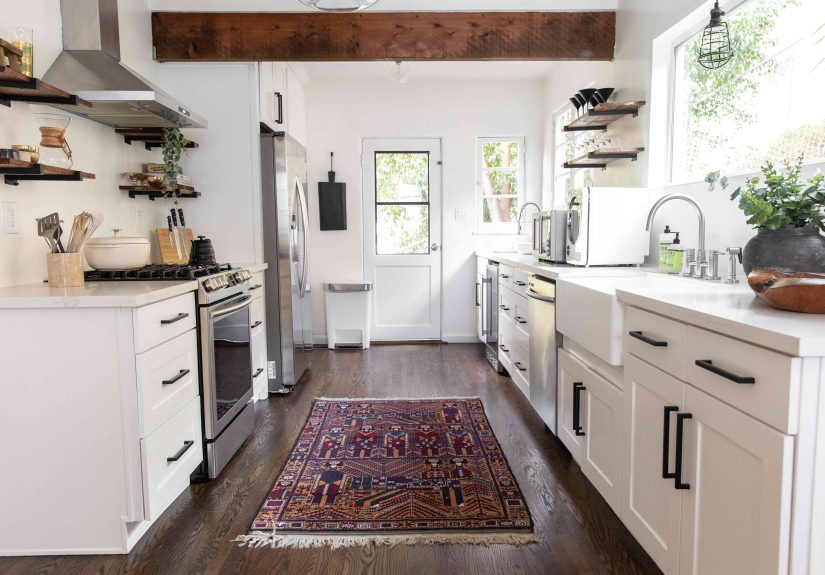
- Swap a few uppers for open shelving. Too many upper cabinets can make a galley feel top-heavy. One run of open shelves can lighten the look and give the eye a place to breathe.
- Use glass-front cabinets selectively. Glass breaks up a wall of solid doors and adds depth, especially when paired with tidy, color-coordinated storage inside.
- Choose reflective materials. Glossy tile, polished hardware, glass pendants, and subtle sheen on paint or stone help bounce light around a narrow room.
- Run backsplash tile higher than expected. Taking tile to the ceiling or at least to the bottom of upper shelving makes the room feel taller and more finished.
- Lay tile horizontally to emphasize width. In a tight galley, horizontal lines can visually stretch the room and encourage the eye to move sideways rather than fixate on the narrowness.
- Use a runner to soften the corridor effect. A long runner adds warmth, color, and rhythm. It also says, “Yes, this is a hardworking kitchen, but it still has manners.”
- Go monochrome if you want calm. Matching wall color, cabinetry, and backsplash in close tones creates a seamless look that reduces visual chopping.
- Try moody color only if the finishes reflect light. Deep green, charcoal, navy, or off-black can look incredible in a galley kitchen, but balance them with glass, metal, marble, or warm wood so the room still feels alive.
Storage Ideas That Save Sanity
Organization Without the Cluttered Look
- Use drawers instead of lower cabinets where possible. Deep drawers are easier to organize and easier to access. No one misses kneeling on the floor to reach the mystery pan lid in the back.
- Add pull-out pantry storage. Narrow pull-outs are ideal for galley kitchens because they make use of slim spaces that would otherwise become dead zones.
- Build vertical tray storage near the oven. Cookie sheets, cutting boards, and platters deserve a proper home. Vertical dividers keep them easy to grab and easier to put back.
- Use drawer inserts everywhere. A galley kitchen has limited room for chaos. Dividers for cutlery, utensils, spices, and wraps keep surfaces cleaner and routines faster.
- Hide the trash and recycling. Integrated bins remove visual clutter and keep the floor path more open.
- Mount rails or slim racks on empty walls. A magnetic knife strip, utensil rail, or hanging shelf can turn a blank wall into useful storage without crowding the counters.
- Take storage upward, not outward. When the footprint is tight, think vertically: stacked shelves, hanging pot racks, tall pantry units, and upper cubbies earn their keep.
- Use under-cabinet accessories. Hanging paper towel holders, mug hooks, stemware racks, and mini shelves free up precious counter real estate.
- Choose a workstation sink. A sink with built-in accessories like cutting boards, drying racks, or colanders can turn one compact area into a multitasking prep zone.
- Keep countertop styling minimal. In a galley kitchen, “decor” should earn its rent. A pretty olive oil bottle, a fruit bowl, and maybe one plant are lovely. Nine canisters and a rooster statue are a negotiation.
- Create a compact coffee station. Giving the coffee maker, mugs, and beans one designated area prevents morning traffic jams and keeps the rest of the counter free.
Chic Design Ideas That Add Personality
Materials, Texture, and Style
- Hide appliance fronts behind cabinet panels. Paneled refrigerators and dishwashers make the room feel calmer and more furniture-like, which is especially helpful in compact layouts.
- Choose warm wood to soften the geometry. Flat-front oak, walnut accents, butcher block, or even wood stools can keep a galley kitchen from feeling too clinical.
- Use Shaker cabinets for timeless appeal. They work in traditional, transitional, coastal, and modern spaces, which makes them a safe bet when you want staying power.
- Try slab-front cabinetry for a sleek look. If your style leans modern, simple flat fronts keep lines clean and reduce visual fuss.
- Make the floor the star. Patterned tile, checkerboard, herringbone brick, or a bold geometric floor can inject character without cluttering the work surfaces.
- Wallpaper the end wall. A galley kitchen does not have much room for excess, but one dramatic wall can add charm without interfering with function.
- Use art where upper cabinets are not needed. A framed print or two can make the kitchen feel collected and personal rather than purely utilitarian.
- Mix metals carefully. Brass pulls with stainless appliances or matte black sconces with polished nickel faucets can add depth when the palette is otherwise restrained.
- Add a statement range hood. In a galley layout, one sculptural feature can anchor the whole room. A plaster hood, metal surround, or chimney-style design gives the eye something memorable.
- Layer in natural texture. Linen shades, woven stools, a jute runner, ceramic bowls, or wood cutting boards help balance hard surfaces and make the room feel lived in.
- Bring in a little black. A touch of black in lighting, cabinet hardware, or a faucet sharpens the room and gives pale finishes better definition.
- Choose one “wow” moment. In a small galley, restraint is your friend. Pick one standout element, like zellige tile, a richly veined stone, or bold cabinet color, and let everything else support it.
- Use seating that tucks away neatly. Backless stools or slim chairs keep the kitchen flexible and prevent visual bulk.
- Keep hardware simple. Oversized ornate pulls can overwhelm a tight kitchen. Streamlined hardware feels cleaner and lets the cabinetry shape do the talking.
- Match style to the home, not the algorithm. A galley kitchen in a bungalow should not pretend it lives in a glossy penthouse. Respecting the architecture nearly always looks more expensive.
How to Pull the Whole Look Together
The best galley kitchens are not trying to do everything at once. They are edited. They know when to brighten, when to store, and when to stop adding one more decorative object “for personality.” If you want a practical and chic result, start with function: clear aisle, smart zoning, efficient storage, and layered light. Then bring in the beauty through texture, color, tile, and one or two well-chosen focal points.
In other words, think like a good stylist and a slightly obsessive line cook at the same time. The stylist keeps the room gorgeous. The cook keeps it from becoming a very expensive hallway with candles.
Experiences and Lessons From Real-Life Galley Kitchen Living
One of the most common experiences people have with a galley kitchen is that it feels awkward for about five minutes and then strangely brilliant after a month of daily use. At first, the room can seem narrow compared with open-concept layouts that dominate magazines and real estate listings. But once homeowners settle in, many realize the layout cuts down on steps, keeps tools close, and makes weeknight cooking less chaotic. The refrigerator is not across the room, the sink is not stranded on an island, and the stove is not positioned like a theatrical centerpiece. Everything is compact, and compact can be glorious when you are hungry and tired at 6:40 p.m.
Another real-world lesson is that clutter becomes visible faster in a galley kitchen than in a larger space. In a big kitchen, a few extra appliances can disappear into the scenery. In a galley kitchen, a blender, toaster, air fryer, bread box, knife block, mail pile, and decorative ceramic hen can turn the counters into a visual traffic jam before breakfast. People who love their galley kitchens usually learn to edit ruthlessly. They keep only the daily essentials out, assign a home to everything else, and treat vertical storage like free money.
Lighting also changes the lived experience more than many homeowners expect. A dim galley kitchen can feel like a tunnel. Add under-cabinet lighting, brighter ceiling fixtures, and a little reflective backsplash, and suddenly the room feels twice as welcoming. It is one of those upgrades that seems small on paper but huge at 7 a.m. when someone is trying to make coffee, toast, and reasonable life decisions.
People renovating older homes often discover that galley kitchens are surprisingly flexible. Some keep the enclosed layout because they enjoy having a separate cooking space that hides mess from the rest of the house. Others remove one wall or add a pass-through so the kitchen feels more connected while still preserving the efficient footprint. In both cases, the happiest outcomes usually come from working with the layout instead of fighting it. A galley kitchen does not need to impersonate a giant entertaining kitchen to be successful. It just needs to do its own job beautifully.
There is also an emotional side to the layout that rarely gets enough attention. Galley kitchens often feel cozy, focused, and a little nostalgic. They can remind people of grandparents’ homes, city apartments with character, or compact cottages where every inch mattered. When designed well, they do not feel lesser. They feel intentional. That is a big difference.
So if you are planning your own galley kitchen, the best advice may be this: do not apologize for the size. Sharpen the layout, brighten the surfaces, add storage that actually supports daily life, and pick a few details that make you smile every time you walk in. A practical kitchen that also looks chic is not a compromise. It is the whole point.