Table of Contents >> Show >> Hide
- Why everyone suddenly started asking, “What happened?”
- The Barry Manilow comparison, explained
- Did Bradley Cooper actually get plastic surgery?
- Why the reaction got so intense so fast
- The timing mattered: movie promotion, grooming, and the HD microscope
- The bigger Hollywood story hiding inside this one
- So, what actually happened?
- Extended perspective: the experience behind celebrity transformation stories
- Final thoughts
Bradley Cooper has spent years being one of those movie stars people describe with the kind of sigh usually reserved for vintage leather jackets, perfect espresso, and the first five minutes of a really good Scorsese movie. So when he turned up during the Is This Thing On? press cycle in October 2025 looking noticeably different, the internet did what the internet does best: it zoomed in, overreacted, and immediately declared itself a board-certified specialist in celebrity cheekbones.
Within hours, social media was full of double takes. Some viewers said they barely recognized him. Others argued it was just different grooming, sharper styling, or the strange alchemy of lighting, age, and high-definition cameras. Then came the comparison that really lit the match: a wave of fans claimed Cooper now looked like Barry Manilow. That is not a sentence anyone had on their 2025 celebrity-news bingo card, but here we are.
What followed was a familiar modern spectacle: screenshots, side-by-sides, amateur diagnosis, professional speculation from doctors who had never treated him, and endless debate over whether the star of A Star Is Born, Maestro, and Silver Linings Playbook had simply changed his grooming or had done something much more dramatic. By January 2026, Cooper finally addressed the rumors himself, denying that he had undergone plastic surgery. But by then, the conversation had already ballooned into something bigger than one actor’s face. It had become a story about celebrity, aging, masculinity, and why the internet now treats every public appearance like a forensic event.
Why everyone suddenly started asking, “What happened?”
The immediate trigger was Cooper’s appearance during the rollout for Is This Thing On?, the drama-comedy he directed, co-wrote, and co-starred in with Will Arnett and Laura Dern. The film premiered as the Closing Night selection at the New York Film Festival on October 10, 2025, which meant cameras were pointed at Cooper from every possible angle. That is usually excellent news for a filmmaker. This time, it also launched a mini internet cyclone.
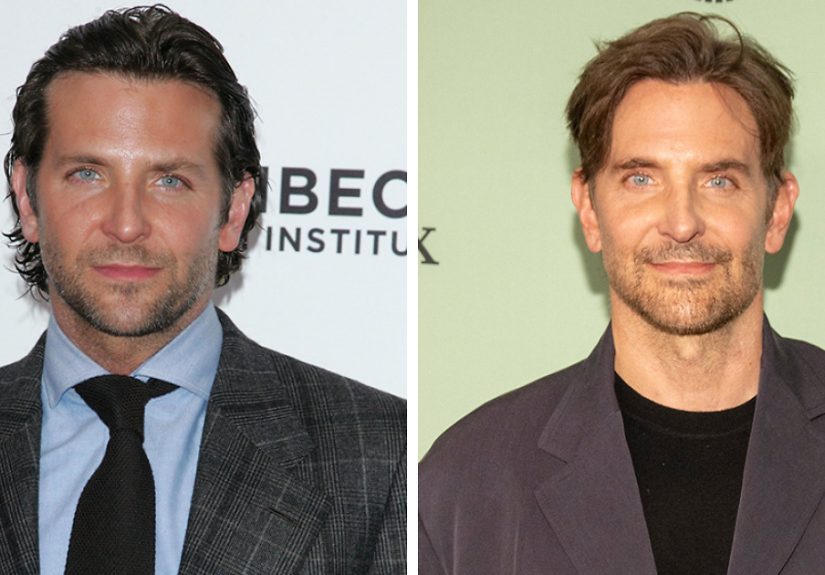
Viewers zeroed in on several details at once: a more sculpted-looking face, a different hairstyle, a heavier beard, a somewhat tighter eye area, and a smoother overall finish that made some people think he looked less rugged than usual. The Bradley Cooper many fans had filed away in their brains was the scruffy, expressive, slightly dangerous charmer from The Hangover and A Star Is Born. The version appearing in late 2025 looked more polished, more refined, and, to some people, almost too polished.
That gap between expectation and reality is often enough to spark online chaos. A celebrity doesn’t even need to look bad; they only need to look different. And different, in today’s internet language, is often treated like a full-blown emergency.
The Barry Manilow comparison, explained
Of all the reactions, the Barry Manilow comparison was the one that stuck because it was oddly specific, instantly meme-able, and just absurd enough to spread. Some fans thought Cooper’s more lifted look, neater skin texture, and altered facial balance gave him the softened, stage-polished vibe they associated with the music legend. Others thought the comparison was unfair, exaggerated, or just one more example of social media tossing around celebrity names like darts in a bar.
Still, once that kind of comparison takes hold, it becomes internet Velcro. It is visual shorthand. People may not be able to explain what feels different, but they can say, “He looks like so-and-so now,” and suddenly the comment section has a theme.
That doesn’t mean the comparison was accurate. It means it was catchy. Online discourse is not always built on precision; very often it runs on recognition, repetition, and the thrill of saying the rudest possible thing in the funniest possible way. In that sense, the Barry Manilow line was less a formal assessment and more a piece of social-media theater.
Did Bradley Cooper actually get plastic surgery?
Here is the important part: there is no confirmed evidence that Bradley Cooper had plastic surgery, and Cooper himself denied it when he finally addressed the chatter in early January 2026 during an episode of SmartLess. In the conversation, Will Arnett directly pushed back on the rumors, and Cooper acknowledged that people had been coming up to him lately to comment on how good he looked. The vibe was basically: yes, he had heard the speculation, and no, he was not endorsing it.
That denial matters because much of the online frenzy had started taking on the tone of certainty. Commentators were no longer asking whether he looked different. They were treating a theory as a verdict. And that leap is where celebrity discourse goes off the rails. A face changes slightly, and suddenly the internet behaves like it has subpoena power.
At the same time, part of the fuel for the story came from cosmetic experts publicly speculating about what might explain his appearance. Some suggested possibilities like blepharoplasty, skin resurfacing, Botox, or a facelift. But again, those were speculative observations from people who had not treated him. That distinction is not a technical footnote. It is the whole ballgame.
So, did Bradley Cooper get work done? Publicly, he says no. Beyond that, the rest is interpretation, gossip, and the internet turning facial geometry into a blood sport.
Why the reaction got so intense so fast
Part of the answer is simple: celebrity face discourse is one of social media’s favorite hobbies. Another part is that Cooper occupies a very specific place in Hollywood. He is not just famous; he is a movie-star movie star. He is associated with a certain kind of handsome that has always felt expressive rather than robotic. Fans are attached not just to his looks, but to the personality those looks seem to communicate.
When people said his face had lost “character,” what they were really mourning was familiarity. They were saying, in effect, that the version of Bradley Cooper they recognized felt replaced by a glossier one. Whether fair or unfair, that feeling is what drives a lot of backlash around visible celebrity transformations.
There is also a gender angle. For years, Hollywood has granted men more freedom to age on screen without intense scrutiny. Women have long been trapped in a no-win game: look older and you are criticized; change your face and you are criticized differently. Men historically got more grace. But that cushion is shrinking. The same internet that dissected actresses is increasingly turning its attention to famous men, too.
And when a male star known for rugged masculinity suddenly appears more “done,” that becomes a separate kind of cultural flashpoint. The reaction is not only about attractiveness. It is about what kind of aging the public finds acceptable in men, and how much visible effort a male celebrity is “allowed” to put into maintaining his image before people decide it looks vain, artificial, or unmanly.
The timing mattered: movie promotion, grooming, and the HD microscope
Another reason the discourse exploded is that Cooper was in heavy public view while promoting Is This Thing On?. Movie promotion means red carpets, interviews, close-up video clips, bright lighting, tailored clothes, and a thousand images frozen at inconvenient micro-expressions. It is the least forgiving environment on earth, other than maybe a middle-school yearbook photo.
Changes in grooming alone can make a face look radically different. A beard can sharpen or soften the jaw depending on its shape. Hair color, length, and styling can alter perceived age. Weight fluctuation can hollow out the cheeks or smooth the jawline. Camera angle can lift or flatten features. Add professional makeup and event lighting, and suddenly the same face can seem like a reboot.
That does not mean fans imagined the difference. It means visible difference does not automatically equal surgery. Cooper had also previously transformed himself for roles, most notably with prosthetics in Maestro. So the public already had a history of linking him with major appearance shifts, which may have made people more eager to believe another transformation story.
The bigger Hollywood story hiding inside this one
What makes the Bradley Cooper backlash interesting is not just whether he looked different. It is how quickly the discussion shifted into a referendum on authenticity. People do not merely want celebrities to look good; they want them to look good in the approved way. They want visible effort, but not too much visible effort. They want aging, but only the aesthetically satisfying kind. They want stars to maintain allure without ever seeming to try too hard. In other words, they want magic.
That standard is ridiculous, of course. It is also very profitable. Entertainment media, beauty culture, and social platforms all thrive on turning appearance into narrative. A haircut becomes a reinvention. A leaner face becomes a secret procedure. A tired expression becomes a crisis. The machinery is always hungry.
What the Cooper episode reveals is that male stars are now being pulled deeper into the same appearance economy that has consumed female celebrities for decades. According to the American Society of Plastic Surgeons, demand for cosmetic procedures remains strong, and broader reporting on aesthetics trends shows more men pursuing both surgical and minimally invasive treatments. Whether that shift represents openness, pressure, or a little of both depends on where you’re standing.
Either way, the public conversation is changing. Men are no longer guaranteed a free pass on aging. They are joining the beauty panic, just in a different outfit.
So, what actually happened?
The least dramatic answer is probably the smartest one: Bradley Cooper appeared in public looking different enough to spark speculation, the internet exaggerated the change into a full-blown mystery, and the rumor cycle took on a life of its own. Fans supplied the jokes, experts supplied the theories, and Cooper eventually supplied the denial.
That may feel anticlimactic, but it is also the truth about most celebrity appearance scandals. They are rarely about one clean reveal. They are about projection. People stare at a famous face and see what they expect, what they fear, or what entertains them most. Sometimes that produces a clever meme. Sometimes it produces a weirdly aggressive pile-on. Often it produces both before lunch.
As for the Barry Manilow comparison, it will likely linger because the internet never forgets a line that makes people spit out their coffee. But whether Cooper simply changed his grooming, benefited from styling, leaned into a different look for a new chapter, or just got caught in the merciless machinery of celebrity close-ups, one thing is clear: the real transformation may not be his face. It may be the public’s willingness to turn every celebrity appearance into a referendum on aging, beauty, and control.
Extended perspective: the experience behind celebrity transformation stories
There is also a human experience underneath all of this that gets flattened when these stories become clicky, jokey, and mean. Most people know some version of this feeling, even without red carpets or paparazzi. You run into someone after a haircut, after weight loss, after stress, after illness, after a better skincare routine, after a terrible breakup, after a really good vacation, and the first thing they say is not “How are you?” It is, “Wow, you look different.” Sometimes it lands as a compliment. Sometimes it feels like a tiny accusation.
That is one reason celebrity transformation stories get so much traction. They magnify a very ordinary anxiety. Faces change. Bodies change. Energy changes. Style changes. But people around us often want continuity. They want us to stay legible to them. The moment we look even slightly unfamiliar, they start building theories.
For famous people, that experience is multiplied by ten thousand. An actor can show up with a different beard line, sleep less for a month, lose water weight, or simply be filmed under harsher lighting than usual, and strangers will debate whether his entire identity has been reconstructed. It is not just invasive; it is oddly dehumanizing. The face stops being a face and becomes a public puzzle.
And yet fans are not always acting out of cruelty. Sometimes they are reacting to a genuine sense of disorientation. Bradley Cooper’s face, for many viewers, is tied to a whole catalog of memories: Alias, The Hangover, Silver Linings Playbook, American Sniper, A Star Is Born, Maestro. When that familiar face seems to shift, people feel as if a piece of pop-culture continuity has moved under their feet. That does not justify the pile-on, but it helps explain the intensity.
There is also an experience specific to men in Hollywood right now. The old expectation was that male stars could age into gravitas while women had to age into strategy. That divide is narrowing. Men are increasingly expected to look fit, youthful, camera-ready, and somehow effortless at the same time. So when a male actor appears more polished, the public reads that effort immediately. The response often comes with a sneer: trying too hard, looking fake, losing edge. In other words, men are entering the same trap women have been stuck in forever: do nothing and risk looking old, do something and risk being mocked for it.
That is why the Bradley Cooper conversation resonated beyond celebrity gossip. It was not only about whether he resembled Barry Manilow. It was about how uncomfortable people remain with visible attempts to manage aging, especially when those attempts show up on someone whose appeal once seemed natural, rugged, and unmanufactured. The audience still wants beauty, but it wants beauty that pretends it happened by accident.
In that sense, the experience related to this story is universal. We are all, famous or not, negotiating how much of ourselves to preserve, revise, reveal, and defend as time moves forward. Bradley Cooper just had to do it under flashbulbs while the internet yelled, “What happened?” from the cheap seats.