Table of Contents >> Show >> Hide
- Why Super Mario Bros. Can Be Beaten So Quickly
- 1. Master the Run Button Before You Chase Fancy Tricks
- 2. Use the World 1-2 Warp Zone to Skip to World 4
- 3. Keep World 4-1 Simple and Safe
- 4. Learn the World 4-2 Warp to World 8
- 5. Treat World 8-1 Like a Marathon Sprint
- 6. Use Smart Risk Management in World 8-2
- 7. Survive the Hammer Bros. in World 8-3
- 8. Memorize the Correct World 8-4 Route
- Extra Speed Tips That Make a Big Difference
- Common Mistakes That Slow Players Down
- Best Practice Routine for a Faster Clear
- of Real-World Experience: What Beating Super Mario Bros. Quickly Feels Like
- Conclusion
Beating Super Mario Bros. on the NES quickly is not just about mashing the run button like your thumb owes you money. The fastest players treat the Mushroom Kingdom like a tiny obstacle course with strict rules, hidden shortcuts, and a timer that loves embarrassing beginners. The good news? You do not need to be a world-record speedrunner to finish the game much faster than usual.
The original Super Mario Bros. may look simple, but its movement system is surprisingly deep. Mario has momentum, acceleration, jump height control, enemy patterns, warp zones, and a final castle that behaves like a plumbing-themed escape room. If you want to beat Super Mario Bros. quickly on the NES, the goal is not to fight every Goomba, collect every coin, or investigate every mystery block like a tiny mustached archaeologist. The goal is to move right, stay alive, and skip as much game as possible.
This guide explains eight practical ways to finish the game faster, whether you are playing on original NES hardware, the Nintendo Switch Online version, a Classic Edition console, or another legal re-release. We will focus on reliable speed, not impossible pixel-perfect tricks that require seventeen years of practice and a personal friendship with the frame counter.
Why Super Mario Bros. Can Be Beaten So Quickly
The fastest route through Super Mario Bros. uses warp zones to skip most of the game. Instead of playing all 32 levels, you can complete only eight: World 1-1, World 1-2, World 4-1, World 4-2, World 8-1, World 8-2, World 8-3, and World 8-4. That route cuts out entire worlds and turns the game into a short but demanding sprint.
Still, “short” does not mean “easy.” The later stages are packed with long jumps, Hammer Bros., Bullet Bills, lava, underwater hazards, and Bowser’s final castle maze. A quick run is really a balance between speed and safety. Go too slowly and you lose time. Go too wildly and Mario becomes mushroom-flavored floor decoration.
1. Master the Run Button Before You Chase Fancy Tricks
The most important skill in Super Mario Bros. is holding the B button to run. Running makes Mario jump farther, clear gaps more safely, and move through levels much faster. Many new players treat running like a special move, pressing it only when a gap looks scary. Fast players treat B like a lifestyle choice.
How to Practice Fast Movement
Start in World 1-1 and practice holding B almost the entire time. Learn how Mario accelerates, how long it takes him to reach full speed, and how he slides slightly when you release the D-pad. This momentum is the heart of fast play. Once you understand it, the game feels less like random chaos and more like a dance. A dance with turtles, yes, but still a dance.
Use short jumps for small enemies and full jumps for long gaps. The longer you hold A, the higher Mario jumps. Tap A for low hops. Hold A for bigger arcs. This control matters because jumping too high wastes time and can throw off your landing. In quick runs, clean low jumps often beat dramatic moon leaps.
2. Use the World 1-2 Warp Zone to Skip to World 4
The first major shortcut is in World 1-2, the underground level. Near the end of the stage, instead of entering the obvious pipe, jump onto the moving platforms and get above the ceiling. Run along the top of the level to the right. You will reach a hidden warp zone with pipes leading to later worlds. Take the pipe to World 4.
This shortcut is the first big time save because it skips Worlds 2 and 3 entirely. That means no water level, no extra castles, no long detours, and no unnecessary heroism. Princess Peach will not complain that you skipped sightseeing.
Reliability Tip for 1-2
Do not panic when you reach the moving platforms. The key is to jump from the rising platform at the right time and land cleanly on top of the ceiling bricks. If you miss, you can still finish the level normally, but the quick route is gone. Practice this one movement until it feels automatic. For casual fast clears, this is more important than learning advanced glitches.
3. Keep World 4-1 Simple and Safe
World 4-1 introduces Lakitu, the cloud-riding pest who throws Spinies like he is late for a rent payment. The fastest simple strategy is to keep moving. Do not stop to fight Lakitu unless you are practicing a specific route. The longer you linger, the more Spinies fill the screen and the more the level turns into a cactus convention.
Stay near full speed, jump over enemies when possible, and avoid unnecessary blocks. If you are Super Mario or Fire Mario, great. If you are small Mario, play carefully but do not freeze. Lakitu becomes more dangerous when you slow down because his projectiles have more time to create awkward patterns.
4. Learn the World 4-2 Warp to World 8
World 4-2 is the most important level in the quick route. It contains the shortcut that sends you to World 8, but it is easier to miss than the World 1-2 warp. Early in the level, you need to reveal hidden blocks, climb to a vine, and enter a coin area that leads to the warp zone for Worlds 6, 7, and 8. Choose World 8.
This is the moment when your run becomes serious. By using the World 4-2 warp, you skip Worlds 5, 6, and 7. In other words, the game says, “Are you sure?” and you say, “Yes, please send me directly to the hard part.”
Beginner-Friendly 4-2 Method
Do not worry about advanced wall clips or wrong-warps at first. The reliable method is better for most players: reveal the invisible blocks, hit the vine block, climb the vine, run through the bonus area, and take the pipe to World 8. It is slower than elite speedrun tactics but dramatically faster than playing the whole game.
Practice the block setup until you can do it without hesitating. The hidden blocks act like stairs. If your positioning is off, you may bump your head, lose speed, or miss the vine. Once learned, this route becomes one of the most satisfying shortcuts in NES history.
5. Treat World 8-1 Like a Marathon Sprint
World 8-1 is long, and that makes it dangerous for quick runs. There is more room for tiny mistakes to turn into big time losses. The best approach is controlled aggression. Hold B, keep moving, and avoid unnecessary jumps that disturb your rhythm.
The level includes many gaps and enemies placed to punish sloppy full-speed movement. Instead of reacting late, memorize the rhythm of the jumps. Fast Mario is easier to control when you know what is coming. The more you practice 8-1, the less it feels like a panic attack wearing overalls.
Should You Grab Power-Ups?
For a quick but realistic clear, grabbing a convenient Mushroom or Fire Flower can be worth it if it does not cost much time. Fire Mario gives you a safety net against enemies, especially in Worlds 8-2 and 8-3. However, do not go far out of your way. A power-up that costs too much time defeats the purpose of a fast route.
6. Use Smart Risk Management in World 8-2
World 8-2 is where many good attempts go to the big Game Over screen in the sky. It has tricky jumps, Bullet Bills, Paratroopas, and awkward enemy spacing. The level rewards confidence but punishes arrogance. Yes, there is a difference. Confidence is holding B and making the jump. Arrogance is doing it while thinking about lunch.
Use the Bullet Bills as timing markers. If you memorize when they appear, you can jump cleanly over launchers and avoid hesitation. Keep your eyes slightly ahead of Mario rather than staring at his shoes. This helps you prepare for the next obstacle instead of reacting after it is already chewing on your mustache.
Fast but Safe 8-2 Advice
When in doubt, take the safer jump. Losing half a second is better than losing the entire run. Speedrunning communities often talk about frame-perfect tactics, but for most players, consistency creates better results than reckless attempts at advanced shortcuts.
7. Survive the Hammer Bros. in World 8-3
World 8-3 is famous for Hammer Bros., and they are not here to discuss workplace safety. They jump, throw hammers in ugly arcs, and often stand exactly where you want to be. If you have Fire Mario, this stage becomes much easier because you can shoot them from a safer distance. If you are small Mario, patience and timing matter more.
The quick approach is to keep forward pressure without charging blindly into hammers. Sometimes the fastest move is a brief pause that lets a Hammer Bro jump into a better position. Waiting a fraction of a second can save you from starting the entire game over. That is not cowardice; that is financial planning for your remaining lives.
Fire Mario Strategy
If you enter 8-3 with fireballs, use them. Do not try to prove anything by jumping over every Hammer Bro like a circus plumber. Fireballs can clear the path and preserve your run. The time spent shooting is often less than the time lost from taking damage or dying.
8. Memorize the Correct World 8-4 Route
World 8-4 is the final castle, and it uses a maze-like pipe route. If you take the wrong path, the game loops you backward. This is where many players lose minutes, lives, and possibly faith in architecture. To beat Super Mario Bros. quickly, you must know the correct route before entering.
The general idea is to move through the castle while taking the required pipes in order, then survive the underwater section, avoid the final Fire-Bars, and reach Bowser. At the end, you can either defeat Bowser with fireballs if you have Fire Mario or run under/jump over him to hit the axe. For most quick clears, reaching the axe safely is the priority.
Final Bowser Tip
If you are small Mario, do not rush the final Bowser blindly. Watch his jump and fire pattern, then move when the opening appears. If you are Fire Mario, shoot Bowser repeatedly from a safe distance and finish the game with style. The princess has been waiting through eight worlds of questionable castle design; she can wait three more seconds.
Extra Speed Tips That Make a Big Difference
Once you know the eight main methods, small improvements can make your clear faster and cleaner. First, avoid fireworks at the end of levels when possible. In Super Mario Bros., fireworks can appear when the timer ends in certain digits, and the animation costs time. Casual players may enjoy the celebration. Fast players see fireworks and think, “Lovely, but please stop wasting my evening.”
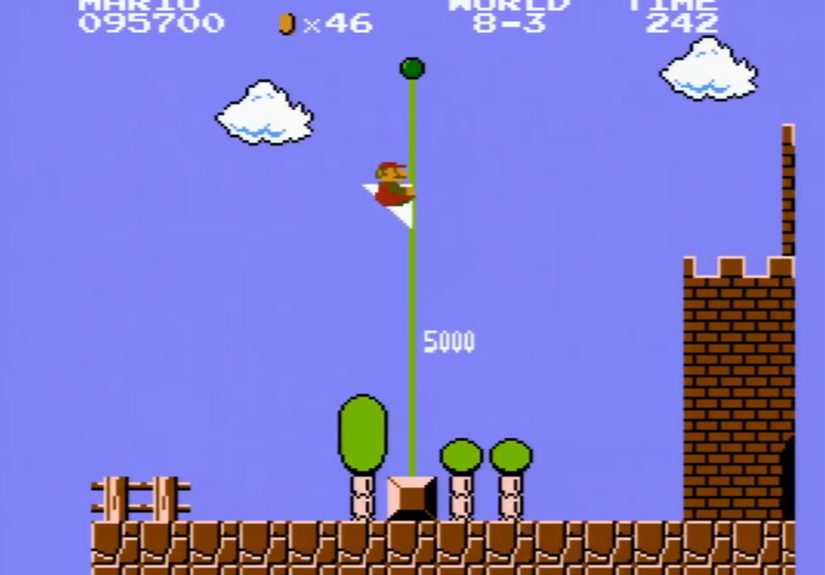
Second, aim for high flagpole grabs when they are easy. Hitting the flagpole high can reduce the time Mario spends completing the level sequence. You do not need to chase every advanced flagpole glitch, but better flagpole habits help your pace.
Third, use deaths as data. If you keep dying in the same spot, stop running full attempts and practice that level alone. A fast clear is built from reliable sections. Nobody becomes good at 8-4 by replaying 1-1 two hundred times and hoping the castle magically becomes friendlier.
Common Mistakes That Slow Players Down
The first common mistake is collecting too many coins. Coins are fun, shiny, and almost completely irrelevant to a quick finish. Unless you need extra lives for practice, skip them. The second mistake is fighting enemies that can be avoided. Every stomp may feel heroic, but the timer does not award style points for Goomba management.
The third mistake is overusing big jumps. High jumps are sometimes necessary, but they often waste time and create awkward landings. Learn to tap the jump button for lower arcs. The fourth mistake is entering World 8 without practicing it. The late game is much harder than the opening stages, so give 8-1 through 8-4 special attention.
Best Practice Routine for a Faster Clear
A strong practice routine is simple. Spend ten minutes on World 1-2 until the warp feels natural. Then spend ten minutes on World 4-2 until you can reach the World 8 warp without confusion. After that, practice each World 8 stage separately. Finally, start doing full runs.
When timing yourself, do not obsess over world-record standards. Your first goal might be beating the game in under 15 minutes. Then under 10. Then under 8. Improvement is motivating when you measure it against your own progress instead of comparing yourself to players who can probably hear individual frames blinking.
of Real-World Experience: What Beating Super Mario Bros. Quickly Feels Like
The first time you try to beat Super Mario Bros. quickly, you may feel like the controller is actively negotiating against you. Mario slides too far, jumps too high, or politely walks into the first Goomba as if introducing himself at a business mixer. That is normal. The game is old-school, which means it is fair most of the time but not especially interested in your feelings.
The biggest experience-based lesson is that speed comes from calm repetition. At first, the warp in World 1-2 feels like a secret handshake. You miss the platform, bonk the ceiling, fall back down, and wonder how anyone discovered this without accidentally becoming a wizard. After a few practice sessions, it becomes routine. You start seeing the level differently. The normal exit looks slow. The ceiling route looks obvious. Congratulations: your brain has been mildly speedrunner-infected.
World 4-2 is the real test of patience. The hidden block setup can be annoying because it asks for positioning, timing, and confidence. Many players lose runs here not because the trick is impossible, but because they rush after one mistake. The best approach is to reset your hands, breathe, and remember that the vine is not going anywhere. It is a plant. Plants are famously patient.
World 8 teaches another lesson: quick does not always mean maximum speed. In 8-1, you can run hard because the level is mostly about rhythm. In 8-2, you must respect the jumps and Bullet Bills. In 8-3, you must respect the Hammer Bros., because they have the energy of angry construction workers with unlimited supplies. In 8-4, you must respect the route. Going fast in the wrong direction is still wrong. It is just wrong with confidence.
Another useful experience is learning when to stay small. Many players panic when they lose a power-up, but small Mario has advantages. He fits through spaces cleanly and does not require ducking. Of course, he also dies from one hit, so the trade-off is spicy. For beginner fast clears, Fire Mario is usually safer. For cleaner speed attempts, small Mario can feel nimble once you know the route.
Finally, the emotional arc of a quick clear is surprisingly satisfying. You begin by surviving. Then you start skipping worlds. Then you stop fearing 8-4. Eventually, you beat Bowser, watch the ending, and realize the whole adventure took less time than deciding what to watch on a streaming service. That is the magic of Super Mario Bros.: it is simple enough to understand in minutes, but deep enough to keep improving for years.
Conclusion
Beating Super Mario Bros. on the NES quickly comes down to movement, memory, and smart shortcuts. Master the run button, use the World 1-2 and World 4-2 warp zones, practice the World 8 stages, and focus on reliable execution before chasing advanced speedrun tricks. You do not need a perfect run to feel fast. You just need a clean route, steady hands, and the courage to ignore most of the Mushroom Kingdom’s distractions.
The best part is that every improvement feels visible. A cleaner jump saves time. A better warp saves minutes. A calmer Bowser fight saves your controller from being judged by gravity. Whether your goal is a casual quick clear or the first step toward speedrunning, these eight methods will help you finish faster and enjoy the game in a whole new way.