Table of Contents >> Show >> Hide
- Why Embroidery Photos Are So Weirdly Hard To Scroll Past
- What You’ll Usually See In The Most Beautiful Embroidery Pics
- Embroidery Has Been Doing Impressive Things For A Very Long Time
- The Beginner Stitches Behind A Lot Of Those “Wow” Photos
- What The Best Embroidery Pics Teach You About Design
- Why Embroidery Feels So Current Right Now
- How To Start Embroidering Without Getting Overwhelmed
- What These 80 Incredible Embroidery Pics Really Offer
- Additional Experiences: What It Feels Like To Fall For Embroidery
- Conclusion
If your camera roll is full of sunsets, dogs wearing suspiciously human expressions, and screenshots you swear you will organize later, allow me to suggest one more obsession: embroidery pics. Not just any embroidery pics, either. I’m talking about the jaw-dropping kind that make you zoom in, squint at the thread, and whisper, “Wait…that’s stitched?”
Across these 80 incredible and beautiful embroidery pics, one thing becomes obvious fast: embroidery is no longer boxed into the dusty stereotype of “grandma’s hobby.” It is art, design, storytelling, texture, therapy, and just a tiny bit of magic performed with floss, fabric, and stubborn determination. One photo shows delicate petals that look softer than actual petals. Another turns a pet portrait into something so expressive you expect it to bark. A third uses bold black lines, metallic thread, or raised stitching to create work that feels more like sculpture than sewing.
That is the real power of embroidery images. They do not just show finished projects. They make handwork look alive. And if you have ever thought, “I am not crafty,” embroidery is one of the rare hobbies that gently replies, “That’s cute. Sit down. We’ll start with one stitch.”
Why Embroidery Photos Are So Weirdly Hard To Scroll Past
Some crafts look nice in person but a little flat in photos. Embroidery does the opposite. Good embroidery pics practically leap off the screen because thread adds texture, shadow, dimension, and movement all at once. Light hits satin stitch differently than French knots. Long-and-short shading can make leaves, feathers, and faces look painterly. Even a simple backstitch outline can give a design that satisfying crispness that makes your brain go, “Yes. More of that.”
Embroidery also photographs beautifully because it rewards close looking. The longer you stare, the more details you notice: tiny seed stitches tucked into a flower center, a clever color shift in a bird’s wing, or a chain stitch vine that curves like real growth. It is the visual equivalent of opening a cookie tin and discovering it actually contains cookies instead of buttons. Delightful. Unexpected. Worth a second look.
Another reason these images hit so hard is contrast. You are seeing softness used with precision. A needle and thread sound humble, but the finished results can be wildly sophisticated. That mix of coziness and skill is catnip for the internet.
What You’ll Usually See In The Most Beautiful Embroidery Pics
Botanicals That Look Ready To Photosynthesize
Flowers, vines, mushrooms, herbs, and wild meadow scenes dominate embroidery inspiration for a reason. Botanical subjects naturally suit thread. Stem stitch gives branches graceful movement, satin stitch makes petals look polished, and long-and-short stitch lets artists blend colors the way painters do. The result is lush, layered, and quietly dramatic.
Pet Portraits And Needle-Painted Realism
If you have ever seen an embroidered cat portrait with glossy eyes and suspicious little whiskers, you know the effect. Realistic embroidery often relies on careful thread direction, color blending, and tiny stitch length changes. It is an ideal example of how “just thread” can create depth, fur texture, shadow, and personality.
Blackwork, Geometry, And Clean Modern Lines
Not all embroidery aims for softness. Some of the most striking images feature strong line work, repeating patterns, and minimal color palettes. Blackwork, counted designs, and geometric motifs prove that embroidery can feel modern, graphic, and architectural. If florals are not your thing, this is where embroidery starts flirting with contemporary design.
3D Embroidery, Raised Work, And Stumpwork
Some pieces look like they forgot they were supposed to stay flat. Raised embroidery adds petals, wings, fruit, insects, and other elements that lift off the fabric surface. These pieces are the overachievers of embroidery photos, and honestly, good for them. When done well, they blur the line between textile art and miniature sculpture.
Visible Mending And Sashiko-Inspired Repair
One of the most satisfying categories of embroidery images shows worn clothing made beautiful again. Decorative repair uses stitches not to hide damage but to celebrate it. Patched denim, reinforced elbows, and repaired linens turn damage into design. It is practical, deeply personal, and much cooler than pretending the hole is “part of the look.”
Lettering, Journals, And Tiny Storytelling Moments
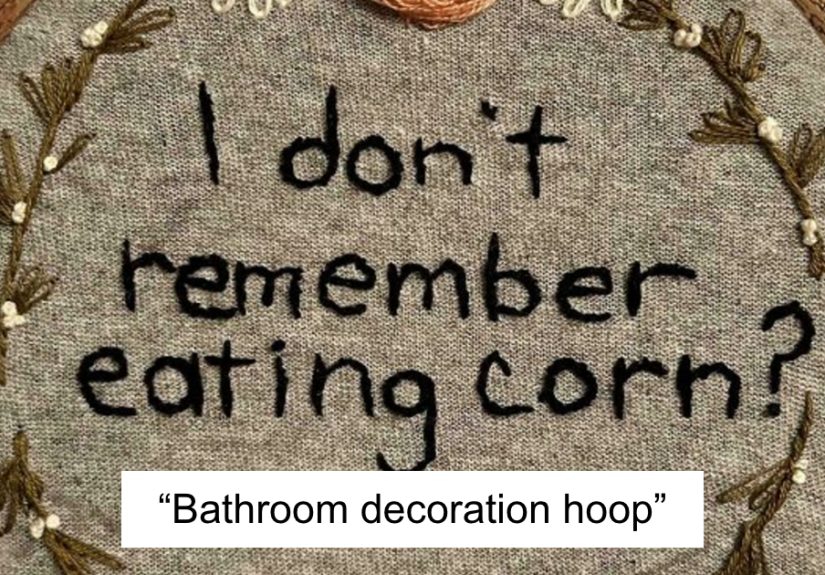
Some embroidery pics are not about technical fireworks at all. They are about memory. Hoops with a favorite quote, stitched calendars, daily embroidery journals, and tiny scene-based pieces feel intimate in a way digital images rarely do. They record time with thread, which is poetic and also a great excuse to buy more floss.
Embroidery Has Been Doing Impressive Things For A Very Long Time
Embroidery may feel trendy right now, but it has serious staying power. Historically, it has been used for decoration, status, education, devotion, storytelling, and practical household making. Traditional samplers helped teach stitch skills, letters, and numbers. Decorative household textiles showed off skill and taste. Professional and amateur embroidery both flourished across different periods and places, and museum collections make it clear that needlework has long been far more than simple decoration.
That long history helps explain why embroidery images feel so rich even today. Every modern hoop sits in conversation with centuries of technique. A minimalist leaf stitched on linen may look current, but it also belongs to a lineage of counted work, crewel traditions, surface embroidery, and sampler culture. In other words, embroidery has receipts.
It is also wildly adaptable. Embroidery can be delicate and formal, rebellious and funny, or bold enough to live on jackets, sneakers, wall art, and home decor. It has appeared in folk traditions, fashion, domestic craft, fine art, and even experimental contemporary work. The medium keeps changing clothes, but it never leaves the party.
The Beginner Stitches Behind A Lot Of Those “Wow” Photos
Here is the secret embroidery photos do not always tell you: many beautiful pieces rely on a handful of foundational stitches used really well. That is encouraging news for beginners, because you do not need 97 mystical techniques or the spirit of a Renaissance textile master.
Start with these basics:
Running Stitch
Simple, rhythmic, and perfect for dashed lines, borders, and texture.
Backstitch
The workhorse for outlines, lettering, and crisp shapes.
Stem Stitch
Ideal for curves, branches, vines, and smooth lines that look polished without being fussy.
Chain Stitch
Great for decorative lines, florals, and areas that need a little softness and thickness.
Satin Stitch
The classic fill stitch for smooth, shiny petals, leaves, and shapes.
Long-And-Short Stitch
The hero of needle painting and shaded realism.
French Knots
Tiny raised dots that are perfect for flower centers, texture, and occasional emotional growth.
That last one is not just a joke. French knots humble nearly everyone at first. But the best part of embroidery is that progress is visible. Your first knot may look like a nervous popcorn kernel. Your fiftieth starts looking intentional.
What The Best Embroidery Pics Teach You About Design
The most inspiring embroidery images are not only technically good. They also make strong design choices. That means they are useful teachers, even when you are just admiring them from the safety of your couch.
First, they show the power of restraint. The prettiest pieces often do not cram every inch with detail. They leave room for fabric to breathe. Negative space gives the stitches more impact, much like leaving one wall blank can make a room look more elegant than hanging seven tiny signs that all say “Gather.”
Second, they show how thread direction matters. In good embroidery, stitch angle is not random. It follows the shape of a petal, curves with hair, or reinforces the contour of a leaf. That is how thread starts behaving like line, light, and movement rather than mere decoration.
Third, they highlight color planning. Great embroidery photos rarely rely on one flat shade. They use neighboring tones to create depth: olive into sage, coral into dusty pink, navy into slate. Even small changes in floss color can make a stitched object feel dimensional and alive.
Finally, they remind you that texture is part of the composition. Smooth satin stitch next to knotty texture or airy line work creates contrast. Your eye loves that contrast. Your hands probably will, too.
Why Embroidery Feels So Current Right Now
Embroidery is having a modern moment because it fits several cultural cravings at once. People want hobbies that pull them away from screens. They want home decor that feels personal rather than mass-produced. They want useful creativity, not just endless consumption. Embroidery checks all three boxes with a neat little stitched border around them.
It also helps that the barrier to entry is refreshingly low. Starter kits, stitch diagrams, printed fabric patterns, hoops, and pre-selected thread palettes make beginning easier than ever. A lot of newcomers do not start with a blank piece of fabric and a dream. They start with a guided kit, a simple floral, or a small lettering piece, and that is exactly how a hobby becomes a habit.
There is also a design-world reason embroidery keeps surfacing. Handmade texture is back. Personalized decor is back. Embroidered table linens, monograms, visible mending, decorative accents, and craft-forward interiors all tap into the same appeal: a home and wardrobe that look lived in, chosen, and loved.
How To Start Embroidering Without Getting Overwhelmed
If these 80 embroidery pics have you itching to try it, keep your first project gloriously simple. You need fabric, embroidery floss, a hoop, needles, small scissors, and a design that does not require you to recreate the ceiling of the Sistine Chapel in thread.
A first project should teach control, not crush your spirit. Try a small leaf study, a monogram, a mushroom, a constellation, or a mini sampler of stitches. Focus on clean starts and finishes, even tension, and stitch placement. That is enough.
Also, give yourself permission to make an ugly first attempt. Every stitcher has made one. Sometimes the thread knots. Sometimes the outline wanders. Sometimes your flower looks less like a rose and more like a shocked sea creature. This is normal. The good news is that embroidery is forgiving, portable, and delightfully repetitive. Improvement sneaks up on you.
And unlike some hobbies that require a dedicated room, a power tool wall, or the financial courage of a yacht owner, embroidery can live in a tote bag.
What These 80 Incredible Embroidery Pics Really Offer
At first glance, they offer beauty. Look closer, and they offer something bigger: proof that patience can become art. These images show that a slow process can still feel exciting, modern, and expressive. They show that a needle and thread can record memory, decorate a room, repair a favorite pair of jeans, or turn a small piece of linen into something worthy of framing.
Most of all, they make embroidery feel possible. Not easy in the lazy sense, but approachable in the best sense. You do not need to be born crafty. You do not need an art degree. You need curiosity, a little time, and enough humility to let one French knot teach you a life lesson.
So yes, these 80 incredible and beautiful embroidery pics might make you want to pick up a needle and thread. Honestly, that may be the best thing they do.
Additional Experiences: What It Feels Like To Fall For Embroidery
There is a very specific moment when embroidery stops being “something pretty other people do” and becomes your problem in the best possible way. It usually starts innocently. You admire a few gorgeous embroidery pics online. You save one with wildflowers, another with a sleepy orange cat, and a third with lettering so crisp it makes your handwriting feel personally attacked. Then, before you know it, you are standing in a craft aisle comparing hoop sizes like a person with a mission.
The first real experience of embroidery is rarely glamorous. You sit down with fresh fabric, bright floss, and the confidence of someone who has watched exactly two tutorials. Then the thread tangles. The knot on the back looks like a tiny panic attack. Your stitches drift. The leaf you planned somehow resembles a cucumber with feelings. But then something changes. Your hands begin to understand the rhythm. Up through the fabric. Down again. Pull, but not too hard. Leave enough slack. Follow the line. Breathe.
That rhythm is part of why embroidery becomes so absorbing. It asks for attention, but not the loud kind. It gives your mind one manageable thing to do next. Make the next stitch. Then the next. Then the next. It is slow, but not boring. Repetitive, but not empty. In a day full of notifications, tabs, noise, and people expecting immediate responses, embroidery offers a tiny square of peace where the only urgent matter is whether that petal needs one more strand of dusty pink.
Another experience that surprises beginners is how emotional embroidery can feel. When you stitch a gift, you are literally spending time in visible form. A hand-embroidered name on a baby blanket, a stitched flower for a friend, a repaired elbow on a favorite denim jacket, a tiny hoop that marks a wedding, a birth, a trip, or even a hard season you survivedthese pieces carry memory differently than store-bought objects ever can. They feel personal because they are personal. Every uneven little stitch is evidence that a human being sat there and made something with care.
And then there is the thrill of improvement. A week ago, French knots were your sworn enemy. Now they are…still dramatic, but manageable. Your satin stitch lies flatter. Your backstitch follows the curve instead of fighting it. You start noticing thread direction in other people’s work. You begin seeing fabric not just as fabric but as possibility. A plain tote bag? Potential. A denim pocket? Potential. A linen napkin? Extremely dangerous potential, because now you want monograms.
That is the sneaky joy of embroidery. It changes how you look at things. It teaches patience, yes, but it also teaches observation. You start seeing how leaves curve, how fur changes direction, how shadows fall, how color shifts from edge to center. Embroidery makes you look closer at the world so you can remake a tiny piece of it in thread. And once that happens, those beautiful embroidery pics are no longer just inspiration. They become invitations.
Conclusion
Embroidery is one of those rare creative hobbies that manages to be humble and spectacular at the same time. It can be meditative, decorative, expressive, useful, sentimental, modern, and rooted in tradition all at once. That is why these embroidery pics are so effective: they do not just show completed work. They reveal what patience, color, texture, and imagination can do together.
If the images leave you tempted to try it for yourself, trust the impulse. Start small, stitch badly, improve gradually, and enjoy the process. The best embroidery is not always the most complicated. Sometimes it is simply the piece that made you slow down long enough to create something beautiful by hand.