Table of Contents >> Show >> Hide
- Why 92 AI Art Creations Say More Than One Viral Image Ever Could
- What Has Actually Improved in AI Art Technology?
- What These 92 Creations Reveal About Creative Possibility
- The Progress Is Real, but So Are the Complications
- Why Human Taste Still Runs the Show
- What This Means for the Future of AI Art
- My Experience Creating 92 AI Art Pieces and Watching the Technology Evolve
- Conclusion
- SEO Tags
Once upon a very online time, AI art was mostly known for three things: cursed hands, haunted eyeballs, and the sort of text that looked like a keyboard had tripped down a staircase. Fast-forward to now, and the conversation has changed dramatically. AI image generation is no longer just a novelty for people who want to see “a corgi dressed like a Renaissance duke riding a scooter through space.” Although, to be fair, that remains a wonderful use of civilization.
What makes a collection of 92 AI art creations interesting is not just the number. It is the evidence. Put enough images together, and you stop seeing isolated “cool pictures” and start seeing the actual arc of technological progress. Better lighting. Better anatomy. Better prompt understanding. Better consistency in style. Better editing. Better collaboration between machine output and human taste. In other words, the leap is not just visual. It is creative, practical, and cultural.
This is why a project like 92 AI art creations matters. It becomes a time capsule of what generative technology can do right now and a reminder of how quickly the field has matured. A few years ago, AI image tools felt like a magic trick. Today, they feel more like a creative instrument. Sometimes a chaotic one, yes. But definitely an instrument.
Why 92 AI Art Creations Say More Than One Viral Image Ever Could
One AI image can go viral because it is funny, beautiful, unsettling, or weird enough to make the internet forget its manners for five minutes. But a larger collection tells a more honest story. It shows range. It shows strengths. More importantly, it shows where the technology still needs adult supervision.
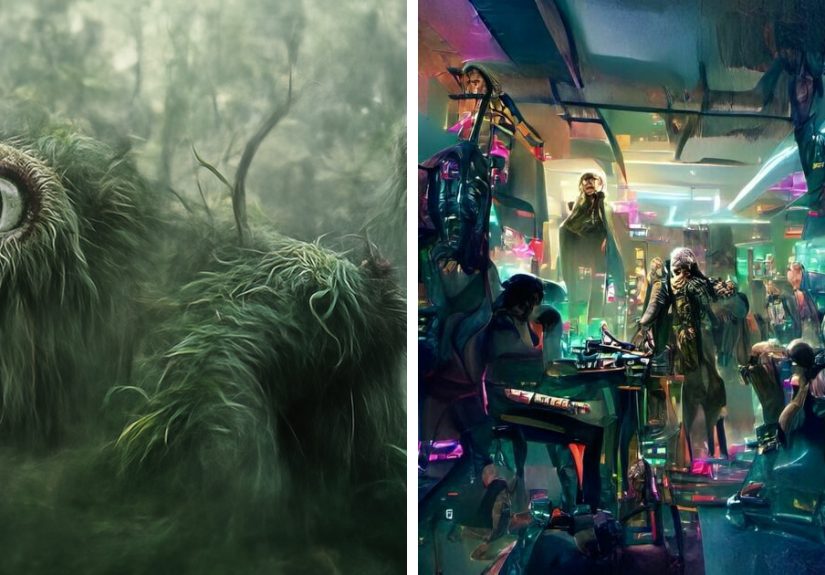
Across a 92-piece collection, patterns emerge. Portraits can now feel more intentional rather than accidentally dreamlike. Environmental scenes can carry mood instead of just visual clutter. Architecture images can balance composition and depth with far more confidence. Fantasy creatures, fashion concepts, editorial illustrations, poster designs, and surreal landscapes can all be generated with a level of polish that would have sounded ridiculous not long ago.
That does not mean the machine suddenly became a misunderstood genius in a black turtleneck. It means the tools became better at translating language into images, better at preserving structure, and better at giving creators more control over the final result. The progress is visible when you compare early “look what AI attempted” images with current “wait, this could go in a pitch deck, mood board, album concept, or ad comp” outputs.
What Has Actually Improved in AI Art Technology?
1. Prompt Understanding Got Smarter
One of the biggest shifts in AI art technology is prompt adherence. Earlier systems often treated prompts like polite suggestions. You asked for “a vintage bookstore in the rain, warm amber light, watercolor style,” and got something closer to “several rectangles having an identity crisis.”
Now, image models are much better at following layered instructions. They can handle mood, medium, composition, camera angle, and design language more reliably than before. That means creators spend less time wrestling the tool and more time refining ideas. The best results still require strong direction, but the gap between intention and output has narrowed in a big way.
2. Images Look More Coherent
Let us all take a respectful moment to remember the old era of six-fingered people and jewelry fused into earlobes like abstract sculpture. Modern generative AI art has improved significantly in anatomical coherence, lighting logic, surface texture, and object relationships. Hair behaves more like hair. Glass behaves more like glass. Shadows usually remember what they are supposed to do.
That does not make the tools perfect. They can still stumble with fine details, dense crowds, unusual poses, and ultra-specific object interactions. But the average output quality has risen so much that the baseline “good enough to impress someone on first glance” threshold is now easy to cross.
3. Style Control Feels More Deliberate
Another major improvement is stylistic consistency. A creator can now push images toward cinematic realism, painterly fantasy, retro sci-fi poster design, minimal editorial illustration, hyper-detailed product photography, or dreamy storybook aesthetics with much more predictable results. That matters because art direction is not just about making one pretty image. It is about making several images that feel like they belong in the same visual universe.
For a set of 92 creations, that is huge. You can build a collection that feels curated rather than random. You can move from one theme to another without losing a recognizable visual voice. That is not “press button, become artist.” It is closer to “use better tools, make sharper creative decisions.”
4. Iteration Became the Real Superpower
The most exciting part of modern AI art is not the first image. It is the fifth, twelfth, or thirty-second version. Iteration is where the magic lives. Today’s tools make it easier to revise composition, swap moods, extend backgrounds, refine details, and nudge a piece toward the exact emotional tone you want.
That changes the workflow entirely. Instead of treating AI as a slot machine, creators can treat it as a collaborative sketch engine. You generate, evaluate, revise, and direct. The machine handles speed. The human handles taste. Ideally. On a good day. Before coffee runs out.
What These 92 Creations Reveal About Creative Possibility
A collection like this can show just how broad AI-generated images have become. Imagine the 92 pieces divided into visual territories:
Portraits That Feel Cinematic
Modern AI portraits can create dramatic faces, expressive lighting, textured clothing, and believable environments that feel less like technical demos and more like frames from a film that does not exist yet. That makes them useful for concept art, story development, character exploration, and visual branding.
Worldbuilding That Scales Fast
Need ten versions of a floating city? A post-apocalyptic subway? A dreamy desert chapel at sunset? AI now lets creators build visual worlds at a speed that would have once required a whole production pipeline. For writers, indie game designers, marketers, and hobbyists, that is a massive shift.
Poster and Editorial Design Concepts
AI art shines when used for idea exploration. A collection of 92 pieces can include magazine-cover concepts, event posters, surreal ad visuals, and album-art experiments that mix typography direction, color palettes, and visual metaphors. Even when the final published piece is redesigned by a human, AI can accelerate the path to the concept.
Creatures, Fashion, and Pure Imagination
This is where the technology really likes to show off. Hybrid animals, impossible couture, dreamlike botanicals, whimsical robots, and environments that ignore the laws of common sense can all look strangely convincing. AI is especially powerful when the brief is not “copy reality” but “invent a version of reality that feels emotionally plausible.”
The Progress Is Real, but So Are the Complications
If this all sounds like a victory parade for machines, let me gently tap the brakes with a paintbrush. The progress in AI image generation is real, but the conversation around it is still complicated. Artists, platforms, lawmakers, and audiences are all trying to figure out where innovation ends and responsibility begins.
Questions around copyright, attribution, training data, and authorship are not side notes. They are central to the future of this medium. If an image is generated from a prompt, who owns it? If human editing transforms an output significantly, how much authorship is enough? If training data includes creative work, what kind of consent, compensation, or transparency should apply? Those questions are still shaping the industry.
There is also the trust problem. As AI images become more polished, people increasingly need ways to understand where an image came from and whether it was generated, edited, or labeled properly. That is why provenance tools, AI labels, and content credentials matter. The more convincing synthetic media becomes, the more valuable transparency becomes too.
Why Human Taste Still Runs the Show
Here is the part that gets lost in the loudest debates: better technology does not eliminate the importance of human judgment. It multiplies it.
A weak concept is still weak, even if rendered in glorious 8K with god rays and suspiciously perfect cheekbones. A cluttered idea does not become profound just because the machine added butterflies and fog. What separates memorable AI art from disposable AI sludge is not merely the software. It is selection, curation, storytelling, restraint, and intent.
That is why a strong 92-image collection matters more than random mass generation. It suggests choices were made. Themes were explored. Aesthetic decisions were repeated and refined. The creator was not just making images. The creator was building a point of view.
What This Means for the Future of AI Art
The future of AI art creations is probably not a world where human creativity gets replaced by a very fast autocomplete for pictures. It is more likely a world where creative work becomes more hybrid. More iterative. More visual at the idea stage. More collaborative between artists, designers, writers, editors, and intelligent tools.
That does not make the future simple. It makes it interesting. Some people will use AI to prototype faster. Some will use it for mood boards. Some will use it for finished commercial visuals in carefully licensed environments. Some will reject it outright. Some will combine it with photography, drawing, 3D, collage, and post-production in ways that make the “AI versus artist” framing feel outdated.
And that may be the most honest takeaway from these 92 creations: the technology has progressed far enough that the conversation is no longer about whether it works. It clearly does. The real conversation now is how we use it, how we label it, how we regulate it, how we critique it, and how we keep creativity from becoming a factory setting.
My Experience Creating 92 AI Art Pieces and Watching the Technology Evolve
Working through a large set of AI-generated art pieces changes the way you think about both creativity and technology. At first, I approached the process with pure curiosity. I wanted spectacle. I wanted weird beauty. I wanted to see what happened when I mixed unusual ideas, strange lighting, and detailed prompts into a machine that had become very good at visual interpretation. Some results were breathtaking. Some were hilarious. A few looked like they had been designed by an exhausted dream after eating too much neon.
But the deeper I got into the collection, the more I realized the real thrill was not the instant result. It was the conversation. Every prompt became a negotiation between intention and surprise. I would start with a simple concept, maybe a futuristic train station inside a cathedral or a melancholy astronaut in a diner at midnight, and the system would return something close enough to be useful and strange enough to be inspiring. That gap between what I imagined and what appeared on screen became the most creative part of the process.
Some images came together quickly. Others demanded revision after revision. I would tighten the language, adjust the framing, simplify the visual hierarchy, or shift the atmosphere from “epic fantasy” to “quiet and eerie.” And that is when the progress of the technology became impossible to ignore. Earlier generations of AI art tools often felt like they were guessing. Newer systems feel like they are listening more carefully. Not perfectly, of course. But with enough accuracy that iteration becomes productive rather than exhausting.
I also noticed how much my own role changed while making the collection. I was not just typing prompts. I was editing ideas, directing mood, rejecting lazy outputs, and choosing what deserved to survive the cut. That process felt less like pressing a button and more like creative supervision. Sometimes the most valuable skill was not writing a longer prompt. It was knowing when an image had potential and when it was just attractive nonsense wearing fancy lighting like a disguise.
Another surprising part of the experience was emotional. Some pieces felt playful and immediate, while others carried a strange amount of atmosphere. A few images looked like fragments from movies that had never been filmed. Others felt like illustrations from books that had never been written. That gave the whole collection a narrative energy I did not expect. The images were not just proofs of concept. They started to feel like visual thought experiments about where art, design, and machine-assisted creativity are heading.
By the time I reached image number 92, the biggest lesson was clear: technology has progressed not because it can imitate aesthetics more convincingly, but because it now supports a more nuanced creative loop. It helps explore, revise, compare, and imagine faster than before. The human part still matters enormously. Taste matters. Judgment matters. Story matters. But the tools have become strong enough that the creative ceiling is no longer defined by whether the software can produce something usable. It is defined by whether the person using it has something worth saying visually.
That is why these 92 AI art creations feel significant to me. They are not just a flex about what a machine can render. They are evidence of a turning point. We have moved from “look what the algorithm accidentally made” to “look what a guided creative workflow can build.” And honestly, that is a much more interesting story than robotic perfection. Progress is not just cleaner pixels. It is better collaboration between imagination and tools. And yes, thankfully, fewer nightmare hands.
Conclusion
So, what do 92 AI art creations really prove? They prove that technology has moved far beyond gimmick territory. Today’s best tools can interpret richer prompts, produce more polished visuals, support iterative workflows, and fit into real creative pipelines. They can help people prototype worlds, test concepts, shape visual identities, and experiment with styles at a speed that would have seemed absurd just a few years ago.
At the same time, the rise of AI art also makes human choices more important, not less. Taste, ethics, transparency, and intention now matter even more because the tools are finally powerful enough to be taken seriously. That is the big reveal hiding behind a gallery of cool images: the progress is not just technological. It is cultural. And whether that future looks inspiring, chaotic, or a little bit of both depends on what creators do next.