Table of Contents >> Show >> Hide
- Why a Wildflower Garden Is Worth the Effort
- Start With the Right Spot
- Choose Plants That Pollinators Actually Want
- Seeds, Starts, or Both?
- Site Preparation: The Unsexy Step That Makes Everything Work
- How to Design for Maximum Color
- Don’t Forget the Pollinators’ Full Life Cycle
- Watering, Feeding, and Maintenance
- Common Mistakes That Make Wildflower Gardens Flop
- A Simple Wildflower Garden Formula for Beginners
- What Growing a Wildflower Garden Feels Like in Real Life
- Final Thoughts
If your dream garden looks less like a row of disciplined petunias and more like a happy, colorful parade of blooms buzzing with bees, drifting with butterflies, and generally acting like nature approved the decorating plan, a wildflower garden might be your perfect match. The good news: growing one does not require owning a prairie, memorizing Latin names, or becoming the sort of person who says “microclimate” at brunch.
The better news? A well-planned wildflower garden can be both wildly beautiful and genuinely useful. It can feed pollinators, brighten your yard for months, reduce maintenance over time, and turn an ordinary patch of ground into a place that feels alive. The secret is that the best wildflower gardens are not random. They look relaxed, but behind the charm is a little strategy.
In this guide, you’ll learn how to grow a wildflower garden that delivers bold color, supports bees and butterflies, and avoids the classic mistakes that turn “naturalistic planting” into “I forgot to weed.”
Why a Wildflower Garden Is Worth the Effort
A wildflower garden does more than look pretty from the patio. It can provide nectar, pollen, shelter, and host plants for a wide range of pollinators, including native bees, butterflies, moths, beetles, hummingbirds, and other beneficial insects. It can also make your landscape feel more dynamic, since different flowers peak at different times rather than everything blooming in one dramatic weekend and then calling it a season.
That staggered bloom schedule is a huge deal. Pollinators need food across the growing season, not just during the floral equivalent of a one-night concert. A successful pollinator garden offers early, midseason, and late blooms, so the buffet stays open from spring through fall.
There is also the maintenance angle, which is music to the ears of anyone tired of pampering needy plants. Once established, the right native or well-adapted wildflowers often need less water, less fertilizer, and less fuss than conventional bedding plants. That does not mean “plant once and abandon forever,” but it does mean you can trade some high-maintenance chores for a more resilient landscape.
Start With the Right Spot
If you want a garden exploding with color, start by choosing a location that does not actively work against you. Most wildflowers and pollinator plants bloom best in full sun, which usually means at least six hours of direct sunlight a day. If the site is shady, your plant choices become more limited, though not impossible.
What to check before you plant
- Sunlight: Track how much direct sun the space gets.
- Drainage: After rain, does water disappear quickly or hang around like an unwanted houseguest?
- Soil: Is it sandy, loamy, or heavy clay? A simple soil test is worth doing.
- Weed pressure: A patch already full of aggressive grass or invasive weeds will need more prep work.
- Scale: Even a small border, strip along a fence, or sunny corner can become a pollinator-friendly wildflower garden.
One common mistake is assuming that wildflowers prefer terrible conditions because they sound rugged. Some do tolerate lean soils, but “wild” does not mean “indestructible.” Match your plant list to the real conditions in your yard. Right plant, right place is not glamorous advice, but it prevents a lot of future heartbreak.
Choose Plants That Pollinators Actually Want
If your goal is to support pollinators, skip the temptation to choose flowers based only on whatever looks best in a glossy garden-center display. Pollinators are not impressed by petals alone. They need accessible nectar and pollen, and many native insects also need host plants for their larvae.
The strongest approach is to prioritize native wildflowers that are appropriate to your region. Native plants tend to be better matched to local soil and climate, and many pollinators have evolved alongside them. That does not mean every nonnative flower is useless, but a native-heavy garden usually does more ecological work.
Traits of a pollinator-friendly plant palette
- A mix of bloom times from early spring to late fall
- Different flower shapes for different pollinators
- Large drifts or clumps of the same plant, not lonely singles
- A blend of annuals, perennials, grasses, and possibly shrubs
- Host plants for caterpillars, not just nectar plants for adult butterflies
Also, avoid overly engineered flowers that look like they belong at a pageant. Double blooms and sterile cultivars may be pretty, but they can offer less accessible nectar and pollen. In pollinator terms, some of those flowers are all tuxedo, no snacks.
Good wildflower garden examples by function
For early color: penstemon, phlox, coreopsis, columbine, lupine
For summer fireworks: purple coneflower, bee balm, black-eyed Susan, blanket flower, milkweed, wild bergamot
For late-season support: asters, goldenrod, ironweed, Joe-Pye weed, blazing star
Add native grasses if you can. They give the garden structure, help suppress weeds, and provide shelter and overwintering habitat. Plus, they make the whole planting look intentional instead of like your yard is freelancing.
Seeds, Starts, or Both?
You can build a wildflower garden from seed, nursery-grown plugs, container plants, or a combination of all three. The best method depends on your budget, patience, and tolerance for uncertainty.
Starting from seed
Seeding is budget-friendly and works especially well for larger spaces. It also gives you that satisfying “future meadow” feeling. But it takes more site preparation, and results are slower. Many wildflower seeds need cold, moist conditions to break dormancy, which is why fall or dormant seeding often works well.
Starting with plants
Using plugs or small nursery plants gives you faster visual impact and better control over spacing. It is ideal for smaller gardens, front-yard beds, and anyone who wants less guessing and more flowers. It costs more up front, but it is a good choice if you want a polished look quickly.
The sweet spot
Many gardeners get the best results by combining both methods: seed the main area, then add plugs of standout species such as coneflower, milkweed, salvia, bee balm, or asters for stronger design and more reliable bloom coverage.
Site Preparation: The Unsexy Step That Makes Everything Work
If there is one thing experienced gardeners repeat with almost suspicious intensity, it is this: prep matters. Wildflower seeds are not miracle workers. If you scatter them over existing turf or into a weed jungle and hope for the best, the weeds will usually thank you for the donation.
How to prep the site properly
- Remove existing vegetation. This may mean smothering turf, cutting sod, shallow cultivation, or another weed-control method appropriate for the site.
- Reduce weed competition. The cleaner the seedbed, the better your chances.
- Avoid deep tilling if possible. It can bring buried weed seeds to the surface.
- Create good seed-to-soil contact. Rake lightly after sowing and firm the soil.
- Do not bury tiny seeds too deeply. Many wildflower seeds need light or very shallow coverage to germinate well.
This is the stage where many wildflower dreams either become thriving gardens or become philosophical lessons about crabgrass. Put in the work now, and your future self will be annoyingly grateful.
How to Design for Maximum Color
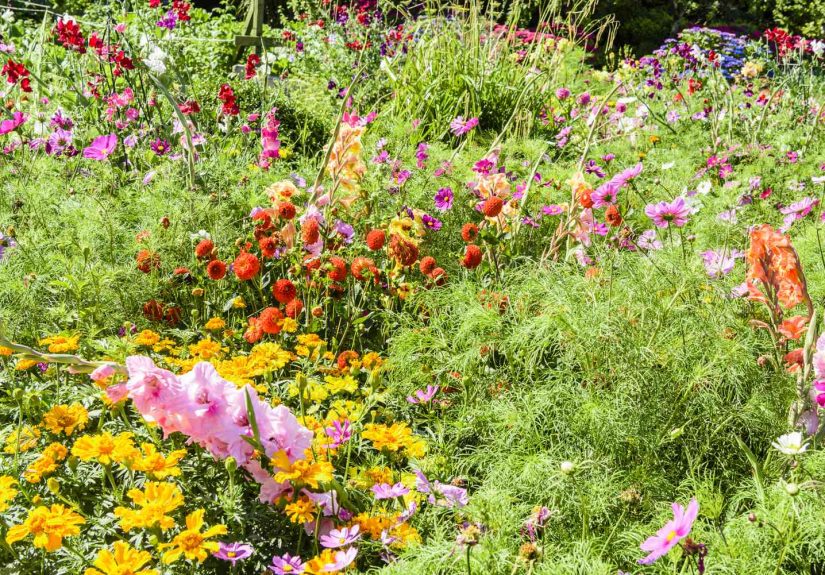
People hear “wildflower garden” and imagine complete randomness. But the most striking gardens use repetition, layering, and bloom sequencing. In other words, the garden can look relaxed without being chaotic.
Design tricks that make a wildflower garden pop
- Plant in drifts: Group the same species in clusters so the color reads clearly from a distance.
- Layer heights: Put shorter plants near paths and taller ones toward the back or center.
- Repeat anchor plants: Use a few key flowers several times throughout the bed to unify the design.
- Mix textures: Pair daisy-like flowers with spikes, umbels, and airy grasses.
- Plan for seasonal handoffs: Let one wave of bloom gracefully pass the baton to the next.
If you want the garden to feel intentional in a suburban or urban yard, add a visual cue of care. That can be a mowed edge, a stone border, a path, or a bench. It tells people, “Yes, this is on purpose,” which is helpful when your relatives are the type to confuse ecology with neglect.
Don’t Forget the Pollinators’ Full Life Cycle
A truly pollinator-friendly garden is not just a nectar bar for adult insects. It also provides places to nest, rest, hide, and overwinter. That means resisting the urge to tidy everything into sterile perfection.
Ways to make your garden more pollinator-friendly
- Leave some bare soil for ground-nesting bees
- Keep a few hollow or pithy stems standing through winter
- Allow some leaf litter to remain
- Include host plants such as milkweed for monarch caterpillars
- Offer a shallow water source with stones for landing
That is right: the slightly messy parts can be useful. Not every dry stem is a problem. Sometimes it is real estate.
Watering, Feeding, and Maintenance
The first season is the most demanding. New plants and fresh seedlings need consistent moisture while they establish roots. After that, many native wildflowers can handle more natural rainfall patterns, though this depends on your region and weather.
Maintenance basics
- Water deeply, not constantly: Encourage roots to grow down.
- Use mulch carefully: Around transplants, mulch can help retain moisture; in seeded areas, too much mulch can interfere with germination.
- Go easy on fertilizer: Rich soil can encourage floppy growth and more weeds.
- Weed early and often: Especially in the first year, remove aggressive weeds before they set seed.
- Delay full fall cleanup: Leave stems and seed heads for habitat and winter interest.
And about pesticides: if you are building a garden for pollinators, routine insecticide use is like opening a bird sanctuary and then installing a jet engine. Minimize chemical use as much as possible. If intervention is absolutely necessary, use the least harmful option and avoid treating blooming plants when pollinators are active.
Common Mistakes That Make Wildflower Gardens Flop
- Scattering seed into existing lawn and expecting magic
- Choosing plants that are not suited to the site
- Using only one bloom season
- Planting single specimens instead of noticeable clumps
- Overwatering or overfertilizing
- Cleaning up the garden too aggressively in fall
- Picking plants only for appearance, not ecological value
Another classic mistake is impatience. Wildflower gardens often look modest in year one, better in year two, and dramatically better in year three. A garden that supports pollinators and looks lush over time is usually built, not bought in a single Saturday.
A Simple Wildflower Garden Formula for Beginners
If you want a straightforward plan, try this beginner-friendly formula:
- Choose a sunny spot.
- Clear weeds thoroughly.
- Pick 8 to 12 regionally appropriate native plants.
- Include at least three bloom periods: spring, summer, and fall.
- Plant each species in groups of three, five, or more.
- Add one or two native grasses for structure.
- Include at least one host plant for butterflies or moths.
- Leave some stems and leaf litter in winter.
That recipe is simple, flexible, and effective. It works whether your garden is a backyard border, a curbside strip, or a larger meadow-style planting.
What Growing a Wildflower Garden Feels Like in Real Life
Here is the part glossy garden photos rarely tell you: growing a wildflower garden is equal parts planning, patience, delight, and occasional mild confusion. The first time you sow or plant one, the space may not look impressive right away. In fact, it may look suspiciously like dirt with ambitions. That is normal. Wildflower gardening teaches you to appreciate progress in stages.
At first, your biggest emotion is usually doubt. You wonder whether the seeds washed away, whether the plugs are too small, whether the neighbor is judging the area you intentionally did not mow, and whether you have somehow spent money to create a deluxe buffet for weeds. Then a few weeks later, the first seedlings appear. They are tiny, almost comically unimpressive, and yet you will stare at them like they are celebrity sightings.
By the first real blooming stretch, something shifts. The garden stops feeling like a project and starts feeling like a place. You notice movement before you notice flowers. A bumble bee muscles into a blossom. A tiny metallic sweat bee appears like a flying jewel. A butterfly flutters through, changes its mind, and then returns for a second pass. That is when the whole idea clicks. You are not just growing plants. You are creating traffic.
One of the most rewarding experiences is watching how the garden changes hour by hour. Morning may belong to bees. Afternoon might bring butterflies. Evening can suddenly feel softer and wilder, with the light catching seed heads and taller stems. The garden never looks exactly the same twice, and that constant change is part of the charm. It feels less like decorating and more like collaborating with the seasons.
You also learn humility fast. Some plants thrive. Some sulk. One species may explode with color while another quietly disappears like it never signed up for this. Even well-researched gardens need edits. That is not failure. It is gardening. Over time, you start reading your space better: where the soil stays moist, where heat builds, where pollinators linger longest, which flowers deserve a repeat performance, and which ones were a nice idea in theory but acted dramatically in practice.
Another real-world lesson is that “messy” and “alive” are often closer than people think. The stems you leave standing through winter, the fallen leaves tucked around the base of plants, the patch of bare ground that looks unfinishedthose details can support nesting and overwintering pollinators. Once you understand that, your definition of a beautiful garden expands. It becomes less about strict perfection and more about visible life.
And then there is the emotional payoff: a wildflower garden makes even ordinary days feel better. You step outside with coffee, and there is motion, sound, color, and a sense that the yard is doing something meaningful without making a speech about it. That is the magic. The garden is beautiful, yes, but it also feels generous. It gives back to the landscape, to wildlife, and honestly to your mood. Not bad for a patch of flowers.
Final Thoughts
If you want a wildflower garden that is overflowing with color and genuinely loved by pollinators, think beyond a random seed mix and start with a smart plan. Choose the right site, use regionally appropriate native plants, build bloom succession from spring to fall, prepare the soil carefully, and create habitat that supports pollinators at every life stage.
Do that, and your garden will become more than pretty. It will become a living, buzzing, fluttering system that looks joyful and works hard. Which, frankly, is the dream. Plenty of color. Plenty of life. And no need for flowers that behave like divas.