Table of Contents >> Show >> Hide
- Why Tiny Human Nature Photos Are So Irresistible
- Why Nature and Kids Make Such a Powerful Pair
- How to Capture the “Tiny Human, Big Nature” Look
- Safety Comes Before the Shot
- Respect Nature While You’re Busy Admiring It
- Think Before You Post: Child Privacy Matters Too
- Captions That Match the Mood
- Why These Photos Often Perform So Well Online
- How to Make the Experience Matter More Than the Post
- Final Thoughts
- Extra Experiences: What These Moments Feel Like in Real Life
There is something wildly charming about a photo of a tiny child standing under a giant redwood, wobbling across a wide beach, or staring up at a mountain that looks like it was personally designed to make humans feel gloriously small. These images are funny, sweet, cinematic, and just dramatic enough to make everyone think, “Wow, nature is huge,” while also thinking, “That kid is definitely about to ask for a snack.”
The appeal of post pictures of tiny humans lost in the majesty of nature goes way beyond social media aesthetics. These photos tap into something deep: our sense of awe, our love of scale, and our fascination with watching children encounter the natural world with fresh eyes. They also work beautifully as visual storytelling. One small person in a giant landscape instantly gives a viewer context, emotion, and perspective without needing a single caption longer than “Weekend magic.”
But the best versions of these photos are not just pretty. They reflect real outdoor experiences, safe family adventures, thoughtful composition, and a healthy respect for both the environment and a child’s privacy. So let’s talk about why these images hit so hard, how to create them well, and what makes them more meaningful than just another camera-roll trophy.
Why Tiny Human Nature Photos Are So Irresistible
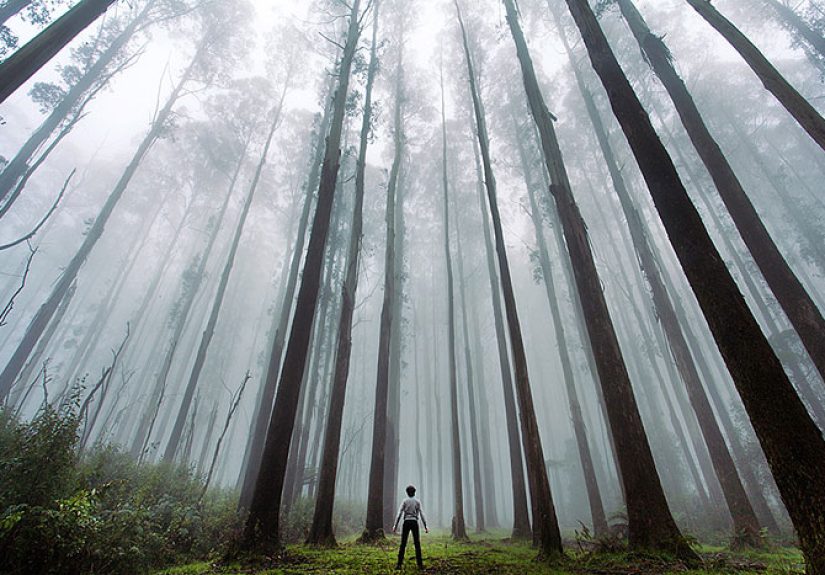
People love photos that create a strong sense of scale. In landscape photography, a person placed in a wide scene helps the viewer understand how large the setting really is. A canyon looks deeper, a waterfall looks taller, and a forest looks far more enchanting when a tiny human appears somewhere in the frame like a cheerful punctuation mark in a giant sentence.
That is one reason these images feel so powerful. They visually communicate proportion in an instant. Instead of showing a mountain by itself, you show a child standing near it, and suddenly the whole scene becomes emotional as well as scenic. The landscape is not just beautiful anymore. It is experienced.
These photos also connect to the old artistic idea of the sublime, the feeling of awe mixed with a tiny shiver of humility when nature reminds us it is big, ancient, and very much not impressed by our Wi-Fi password. That is exactly why a small child in a giant landscape can feel poetic. The image says that the world is enormous, the child is curious, and both facts are wonderful.
Why Nature and Kids Make Such a Powerful Pair
Part of the magic is emotional. Children outdoors tend to look fully engaged. They are not pretending to be relaxed for the camera. They are actually busy inspecting a pine cone as if it contains state secrets. That honesty makes the image feel alive.
There is also a real-life reason these scenes resonate. Time outside supports children’s physical activity, mood, focus, creativity, and emotional well-being. Outdoor play gives kids room to explore, climb, notice details, and build confidence. When a photo captures a child in that setting, it often feels less staged and more truthful than a posed portrait against a generic wall.
In other words, the best nature photos of kids work because they document something meaningful. They are not only visually striking. They also represent curiosity, movement, discovery, and connection to the outdoors. A child on a trail, by a lake, or beneath towering trees is not just “small.” They are part of a bigger story about wonder.
How to Capture the “Tiny Human, Big Nature” Look
1. Let the landscape do the heavy lifting
If your goal is to make a child appear tiny in nature, step back. Then step back again. Then maybe back up a little more, assuming you are not walking into a bush or a suspiciously confident goose. Wide framing is your friend. Large skies, long shorelines, tall trees, rock formations, and winding trails all help build the sense of scale.
2. Place the child with intention
You do not want the child swallowed by the frame to the point that viewers need a magnifying glass and a support group. Position them where the eye naturally lands: near a trail bend, against an open stretch of sand, below a waterfall, or beside a tree line. A tiny figure works best when the viewer can still find them quickly.
3. Use natural gestures instead of stiff poses
A child staring at a mountain, crouching to inspect leaves, walking down a path, or holding an adult’s hand often feels more compelling than a “say cheese” grin. These photos shine when they feel observational. Let the kid be a kid. The majesty will handle the rest.
4. Chase soft light
Morning and late afternoon light can make a landscape feel richer and more dimensional. Harsh noon light tends to flatten details and cause squinting, which rarely improves anyone’s artistic legacy. Golden-hour conditions often make outdoor family photos look more cinematic and less like everyone got startled in a parking lot.
5. Keep a visual anchor
One reason small-subject landscape images work so well is that the human figure gives the viewer a focal point. Without that anchor, a giant scene can feel beautiful but emotionally distant. With it, the photo becomes a story.
Safety Comes Before the Shot
Now for the least glamorous but most important truth: the best outdoor photo is never worth a risky setup. Children should not be placed near cliff edges, unstable rocks, fast-moving water, wildlife, or any terrain that requires a parent to yell, “Hold still, but also don’t move, breathe, or become a cautionary tale.”
Dress kids for the environment, bring water, plan for weather changes, and think about sun protection. Hats, sunscreen, shade breaks, and layers matter. So do snacks. Especially snacks. An exhausted, sun-fried child on a trail is not “immersed in the majesty of nature.” They are two minutes away from a full constitutional crisis.
Safe outdoor photography is also about awareness. Check trail conditions, know the location rules, and do not wander off durable surfaces for a better angle. Nature photography should not damage the place you came to admire.
Respect Nature While You’re Busy Admiring It
If you are posting children in beautiful outdoor settings, it makes sense to model good outdoor ethics too. That means following Leave No Trace basics: plan ahead, stay on marked or durable surfaces, leave what you find, respect wildlife, and be considerate of other visitors. A gorgeous photo loses some sparkle if it was created by trampling wildflowers or teaching kids that “rules are for people without tripods.”
Wildlife deserves extra care. Do not lure animals for photos, approach nests, or let children get too close to creatures that are either stressed, protective, or better equipped for conflict than your family is. The goal is wonder, not chaos.
Some of the most beautiful nature images are quiet precisely because they show respect. A child standing still under giant trees or watching waves from a safe distance often says more than an over-staged scene ever could.
Think Before You Post: Child Privacy Matters Too
There is another layer to this trend that deserves attention: not every sweet outdoor photo needs to be public. Parents and caregivers should think about privacy before posting images of children online. Consider what the image reveals, whether it includes identifying details, and whether the child would feel comfortable with it later.
A scenic photo from behind, from a distance, or without obvious identifying details can often preserve the magic while protecting privacy. You can still share the mood, the scale, and the beauty without broadcasting everything. Disabling geotags, avoiding school logos or house numbers, and asking permission from other parents before posting group shots are all smart moves.
Ironically, the “tiny human in giant nature” style is perfect for privacy-conscious sharing because the child is often small in the frame anyway. The grandeur stays. The oversharing can go take a hike.
Captions That Match the Mood
Once you have the photo, the caption can either elevate the moment or make it sound like a motivational mug. Try to keep it specific, light, and honest. The best captions usually reflect wonder, humor, or a little bit of both.
Caption ideas
- Proof that tiny explorers have giant opinions.
- Just a small human negotiating with a very large forest.
- Nature: 10 out of 10. Trail snacks: still under review.
- Out here feeling beautifully, hilariously small.
- A little awe goes a long way.
- Small boots, big world.
The best social posts keep the tone warm and grounded. They do not need to oversell the moment. The image already did most of the work.
Why These Photos Often Perform So Well Online
From an SEO and content perspective, this kind of imagery works because it combines several high-interest themes: kids outdoors, family adventure, nature photography, emotional storytelling, and shareable visual contrast. It also fits naturally with search intent around family hiking photos, outdoor photo ideas, nature captions, child-friendly travel content, and landscape photography inspiration.
That makes the topic useful for blogs, lifestyle websites, parenting content, outdoor brands, and photography roundups. It is visually sticky. Readers instantly understand the concept, and many want to recreate it themselves. Plus, the emotional contrast between tiny person and giant setting is one of the oldest attention-grabbers in visual storytelling. We may have better cameras now, but humans still love a good reminder that we are adorably small.
How to Make the Experience Matter More Than the Post
For all the fun of sharing these images, the real value is not the upload. It is the outing. The best “tiny humans lost in the majesty of nature” photos usually come from genuine moments: a first glimpse of the ocean, a quiet pause on a trail, muddy boots after rain, a child frozen in awe under tall trees, or a family discovering that rocks are apparently more entertaining than any toy ever manufactured.
When the focus stays on the experience, the pictures become better too. Kids relax. Adults stop barking directions every four seconds. The adventure unfolds naturally. And somewhere in the middle of all that, you get a frame that captures both the scale of the world and the small, sincere wonder of being in it.
That is why this style of photo keeps resonating. It is not only about aesthetics. It is about perspective. The child looks small, but the moment feels huge.
Final Thoughts
If you want to post pictures of tiny humans lost in the majesty of nature, go for it. Just do it thoughtfully. Use the landscape to tell the story, keep the child safe, respect the environment, and think carefully about privacy before sharing. When those pieces come together, the result is more than a trendy image. It becomes a record of awe, play, and connection.
And honestly, in a world full of heavily filtered everything, there is something refreshing about a photo that simply says: here is a kid, here is a mountain, and wow, would you look at that.
Extra Experiences: What These Moments Feel Like in Real Life
There is a very specific feeling that comes with watching a child move through a huge natural space for the first time. Adults usually arrive carrying expectations, schedules, and approximately seventeen items nobody ends up using. Kids arrive and immediately become fascinated by the one stick that looks “special.” Then, somewhere between the parking lot and the scenic overlook, the whole family starts to slow down.
A child in nature notices everything. A patch of moss becomes treasure. A puddle becomes philosophy. A line of ants becomes breaking news. That is part of why these photos feel richer than standard portraits. They capture a kid in discovery mode, not performance mode. The expression is not polished. It is genuine. You can practically see the wheels turning as they take in the size of the trees, the sound of the wind, or the impossible amount of sky.
Sometimes the experience is quiet. A child stands on a dune and just stares at the ocean like they have personally been assigned to inspect it. Sometimes it is chaotic in the best way. They run down the trail, stop to collect a leaf, demand to know why clouds exist, then dramatically announce they are tired exactly twenty minutes after declaring themselves a wilderness champion. And yet those are often the days people remember best.
Parents often think the perfect photo comes from a perfectly managed outing, but that is rarely true. The most memorable images often happen after the plans wobble a little. Maybe the hike is shorter than expected. Maybe the weather shifts and everybody gets windswept hair. Maybe the toddler refuses the scenic overlook but becomes deeply emotional about a fallen log five minutes later. Real outdoor experiences have texture, and the photos feel better when they preserve that texture instead of sanding it down into something overly polished.
There is also something humbling for adults in these moments. A giant landscape has a way of shrinking stress down to size. When you watch a child interact with a huge environment, you remember that wonder does not require much. It is not expensive. It is not complicated. It is often just a path, a view, a little time, and someone small enough to be impressed by everything.
That is why the experience behind the image matters. Years later, the family may not remember the exact caption or which app was used to edit the shadows. They will remember the cold air, the sandy shoes, the snack crumbs in the car, the question about whether birds get bored, and the tiny figure standing in a giant place looking completely amazed. The photo becomes a shortcut back to that feeling.
And maybe that is the real reason people keep posting these pictures. They are not only sharing scenery. They are sharing perspective. They are saying that the world is still enormous, kids are still wonderfully curious, and for one very small, very beautiful moment, everybody got to be part of something bigger than themselves.