Table of Contents >> Show >> Hide
- What makes a DIY “dangerous” (and not just “annoying”)
- A quick “Pro or DIY?” filter (use this before you pick up a tool)
- The 13 most dangerous DIYs (and what to do instead)
- 1) Large tree work (removal or major pruning)
- 2) Knocking down walls
- 3) Gas line repair
- 4) Hazardous material removal and abatement (lead, asbestos, serious mold)
- 5) Roofing work
- 6) Excavation and sitework
- 7) Electrical wiring (especially panels or new circuits)
- 8) Chimney repairs
- 9) Projects involving ladders
- 10) Septic clogs and septic system “fixes”
- 11) Steam heat repairs (and other high-temperature, pressurized heating systems)
- 12) Automotive repairs that require lifting the vehicle
- 13) Pest extermination with heavy chemicals or “bug bombs”
- So what should you DIY?
- Conclusion
- Experiences homeowners recognize (and what they teach us)
DIY is wonderful. It saves money, builds confidence, and gives you the kind of bragging rights that can’t be purchased at any big-box store.
But there’s a category of projects that doesn’t reward courageit punishes it. These are the “one wrong move” jobs, where the best-case scenario is
“you spend twice as much fixing it,” and the worst-case scenario is “your insurance adjuster learns your name and never forgets it.”
The line between a smart weekend project and a dangerous DIY isn’t always obvious. Some tasks look harmless until you add height, electricity,
combustion, heavy loads, hidden toxins, or the mysterious chaos factor known as “old house surprises.” That’s why safety pros and home experts often
repeat a simple rule: if the project can seriously harm you, your home, or your neighbors in seconds, it’s not a learning experienceit’s a professional job.
What makes a DIY “dangerous” (and not just “annoying”)
Most DIY mistakes are inconvenient: a crooked shelf, a paint color that looks like “sad mint,” a cabinet hinge installed at an angle that suggests
your door is trying to escape. Dangerous DIYs are different. They involve forces you can’t easily see, measure, or controlstructural loads, gas,
high voltage, toxic dust, pressurized systems, or unstable materials that fail without warning.
A good shortcut saves time. A bad shortcut becomes a story told at your expense. If a job requires specialized testing, a permit, a licensed trade,
or a strict safety protocol, it’s usually not gatekeepingit’s gravity, chemistry, and physics politely asking you to outsource.
A quick “Pro or DIY?” filter (use this before you pick up a tool)
- Is there a fall risk? Roofs, tall ladders, trees, chimneys, and elevated work platforms change everything.
- Could a mistake cause fire, explosion, or poisoning? Gas lines, electrical work, combustion appliances, and chemicals belong here.
- Could you damage the structure? Load-bearing walls, foundations, and major framing are not “try it and see.”
- Could hidden hazards be present? Lead paint, asbestos, mold, and buried utilities don’t announce themselves.
- Would the fix require a professional anyway? If the “oops” version needs a pro, you’re just pre-paying for regret.
The 13 most dangerous DIYs (and what to do instead)
These projects show up again and again on “don’t try this at home” lists for one reason: they combine high risk with a false sense of simplicity.
The safer move isn’t “never DIY.” It’s “DIY the parts that are actually safe,” and hire out the rest.
1) Large tree work (removal or major pruning)
Big tree jobs are a perfect storm: height, heavy limbs, unstable wood, sharp tools, and sometimes power lines. Even experienced pros treat tree work
with respect because branches can fall unpredictably and trunks don’t always go where you think they should. “Widow makers” (overhead limbs) and
hidden rot can turn a confident plan into instant chaos. If the tree is large, leaning, near structures, or anywhere close to utility lines, call a certified arborist.
2) Knocking down walls
Demolition looks satisfying on video, but removing the wrong wall can compromise your home’s structure. Load-bearing walls support floors, ceilings,
and sometimes major roof elements. When those loads shift, damage may start subtlecracks, sagging, stuck doorsbefore becoming truly dangerous.
Even when removal is possible, the project typically requires careful engineering decisions. If the plan includes “We’ll figure it out as we go,” stop.
3) Gas line repair
Gas is not forgiving. A small mistake can lead to leaks, fire, explosion risk, or carbon monoxide (CO) hazards. Worse, gas-related problems don’t always
announce themselves loudlysometimes the first sign is a detector alarm or symptoms that feel like “just a headache.” If your project involves altering
gas piping, fittings, or connections beyond basic, clearly permitted appliance hookups, this is licensed-pro territory. Your “do it right” standard must be “do it perfectly.”
4) Hazardous material removal and abatement (lead, asbestos, serious mold)
Some hazards don’t hurt you immediatelythey hurt you quietly, over time, or through contamination you carry into living spaces. Disturbing old building
materials can release dangerous dust and fibers. Lead paint dust is a serious concern during renovation in older homes, and asbestos is hazardous when
fibers become airborne. Mold remediation can also require containment and specialized methods depending on scope. If you suspect any of these hazards,
the smart move is testing and professional remediation, not “let’s see what happens.”
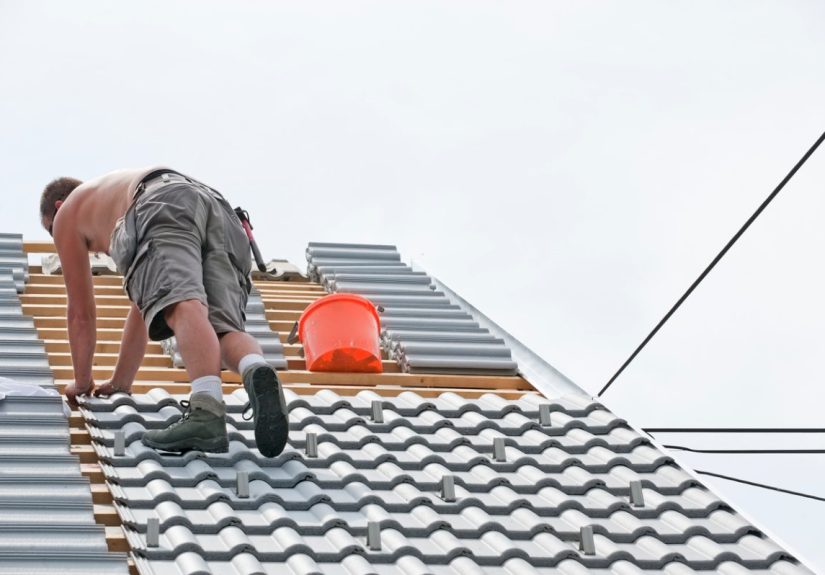
5) Roofing work
Roofing is one of those jobs that seems straightforward until you’re up there and realize everything slopes, slides, and moves faster than your confidence.
Add wind, heat, brittle shingles, and awkward materials, and the risk climbs quickly. Falls are a leading cause of severe injuries in construction, and roofs
are unforgiving surfaces. If the job is more than a minor, safe-access repairor if your plan includes carrying heavy materials up a ladderhire a roofer.
6) Excavation and sitework
Digging isn’t just digging. It can mean underground utilities, unstable soil, drainage issues, and expensive damage that happens in seconds. Hitting a buried
line can cause injury, service outages, or worse, depending on what’s in that line. Even “small” digging projects can create big risks when you don’t know
what’s below. If your project involves significant digging, grading, trenching, or anything near utilities, treat it as a professional job and follow proper locate procedures.
7) Electrical wiring (especially panels or new circuits)
Basic electrical tasks can tempt people into “just one more thing,” and that’s where trouble starts. Improper wiring can create shock hazards now and fire hazards later.
Electrical distribution and lighting equipment is a major cause of home electrical fires, and wiring problems are often hidden behind walls until something fails.
If your project involves the service panel, new circuits, aluminum wiring concerns, or confusing/old setups, don’t DIY it. Electrical work is not a hobbyit’s a licensed trade for a reason.
8) Chimney repairs
Chimneys combine multiple risk types: heights, masonry work, combustion byproducts, and fire safety. A damaged flue or improper repair can impact venting,
which matters because combustion appliances must safely send gases out of the home. Even a “simple” chimney fix can require specialized inspection and cleaning knowledge.
If you’re dealing with cracks, liner issues, or recurring smoke/venting problems, bring in a certified chimney professional rather than guessing from the roofline.
9) Projects involving ladders
Ladders are the most common “I’ll just be up there for a second” lie told in American households. People underestimate ladders because they feel familiar,
but ladder falls cause serious injuries every year. The danger is magnified when you add tools, awkward materials, or rushing. If a project requires repeated ladder trips,
overhead work, or balancing with power tools, rethink the plan. Sometimes the best DIY decision is renting scaffoldingor hiring the person who already owns it.
10) Septic clogs and septic system “fixes”
Septic systems involve biological waste and gases that can be toxic or flammable. Tanks can accumulate gases like methane and hydrogen sulfide,
and confined spaces can become dangerous quickly. Even opening or working around certain parts of a system can expose you to hazards you can’t see.
If your system is backing up, smelling unusual, or acting “off,” call a licensed septic professional. The goal is a safe repair, not an unscheduled science experiment.
11) Steam heat repairs (and other high-temperature, pressurized heating systems)
Steam and hot-water heating systems aren’t just “plumbing with attitude.” They can involve high temperatures, pressure, combustion safety, and specialized controls.
Mistakes can cause property damage and safety hazards, and DIY “adjustments” can make systems less efficient or less safe. Heating equipment is a leading cause of home fires
in winter months, and a heating system that isn’t operating correctly can create risks beyond comfort. Routine maintenance is one thing; repairs to the system itself are best left to HVAC pros.
12) Automotive repairs that require lifting the vehicle
Working on cars is satisfyinguntil the vehicle shifts, the jack fails, or a support point isn’t what you thought it was. Any repair that puts you under a lifted vehicle deserves serious respect.
Injury data and recall history show that lifting equipment can fail, and when it does, the consequences can be severe. If you’re not trained and equipped to lift and support the vehicle safely,
don’t improvise. Use a reputable shop or a qualified mechanic, especially for jobs that require being underneath the car.
13) Pest extermination with heavy chemicals or “bug bombs”
DIY pest control can go wrong fast when people use too much product, use it incorrectly, or underestimate how chemicals move through a home.
Total release foggers (often called “bug bombs”) can create illness and injury risksand because many contain flammable propellants, misuse can even contribute to fire or explosion hazards.
If the infestation is serious, recurring, or involves bed bugs, termites, or rodents, professional integrated pest management is usually safer and more effective than escalating your chemical “strategy.”
So what should you DIY?
Here’s the good news: you can still DIY a lotand do it safely. Painting, patching small drywall holes, swapping hardware, installing shelves correctly,
weatherstripping, basic landscaping (without major digging), and many cosmetic upgrades are great confidence-builders. The trick is to choose projects where
failure is inconvenient, not life-changing.
A smart DIYer isn’t the one who does everything. It’s the one who knows when to stop. The most impressive home improvement skill isn’t using every tool in the garage
it’s having the judgment to say, “This one belongs to someone with a license, a crew, and a liability policy.”
Conclusion
The point of a “don’t try this at home” list isn’t to scare you away from home improvement. It’s to protect you from the handful of projects that can go from “weekend plan”
to “emergency call” faster than you can say, “Hold my ladder.” Tree work, structural changes, gas and electrical repairs, roofing, excavation, septic issues, steam heat repairs,
and chemical-heavy pest control are all high-risk categories where professional help isn’t a luxuryit’s the safest decision.
DIY is best when it’s empowering, not endangering. Choose projects that match your skill level, respect hidden hazards, and save the truly dangerous work for trained pros.
Your future self (and your future ceiling) will thank you.
Experiences homeowners recognize (and what they teach us)
If you’ve ever walked into a home improvement store “just to browse” and left with a cart full of confidence, you’re not alone. The DIY urge is realand honestly, it’s kind of wholesome.
People want to fix things. They want to learn. They want to point at a finished project and say, “I did that,” with the same pride usually reserved for baking bread that doesn’t collapse.
But the most dangerous DIYs have a weird pattern: they often start with good intentions and end with a lesson about limits.
Take ladder projects, for example. Plenty of homeowners can relate to the “quick five-minute job” that turns into an hour of awkward balancing. It starts with cleaning a gutter,
changing a light fixture, or painting a trim line. Then the ladder wobbles a little, the tool belt snags, or someone realizes the ladder is on a surface that is definitely not as level
as it looked from the ground. The real lesson isn’t “never climb.” It’s that height changes risk instantlyand a project that felt simple at eye level becomes a different animal eight feet up.
Roofing has its own version of this story. People often describe the moment they step onto a roof and feel their brain do a tiny recalculation: the pitch is steeper than expected,
the surface is hotter than expected, and the “I’ll just scoot over there” plan is suddenly replaced by careful, slow movement. Even if nothing bad happens, it’s common to come down
thinking, “I could do this… but I don’t actually need to.” That’s a win. Recognizing the risk is part of being skilled, not part of being scared.
Then there are the “mystery house” momentsespecially in older homeswhere a DIYer opens up a wall and discovers a surprise: odd wiring routes, questionable past repairs, or layers of
materials that weren’t part of the plan. This is where hazardous materials become a real concern. Homeowners frequently report that the biggest shock wasn’t how hard the renovation was,
but how quickly it turned into a “pause everything” situation. The smartest DIY decision is sometimes stopping mid-project, calling a professional, and treating that call as progressnot failure.
Tree work creates another kind of learning curve: the one where you realize nature doesn’t follow your schedule. A branch doesn’t care that you watched three videos.
A trunk doesn’t care that you measured twice. Homeowners often describe tree work as deceptively exhausting and unpredictable. The experience usually ends in one of two ways:
either someone backs off and hires an arborist (excellent outcome), or someone pushes forward and spends the rest of the day saying, “Okay, that was way more dangerous than I expected.”
In a perfect world, everyone gets the first ending.
Pest control stories tend to come with a different punchline: “We used too much.” Many people assume more product equals more effectiveness, when it can actually mean more exposure,
more lingering odor, and more unintended consequences. The experience here is a reminder that chemicals are tools, not magic. Professionals don’t succeed because they’re fearless;
they succeed because they follow controlled methods, know what to avoid, and understand how products behave in real homes with pets, kids, vents, and soft furnishings.
And finally, there’s the universal homeowner experience: the project that becomes a “professional reset.” Maybe it’s a gas smell that triggers an immediate call,
a wall removal idea that suddenly feels too risky, or a septic issue that makes you realize some systems aren’t meant for trial-and-error. People often describe the relief they feel
once the right pro is on the jobbecause the goal wasn’t to prove anything. The goal was to have a safe home that works.
In the end, the best DIY stories aren’t about doing the riskiest thing. They’re about making the smartest call. Sometimes that call is picking up a paintbrush.
Sometimes it’s picking up the phone. Either way, that’s still you taking care of your homejust with the right level of backup.