Table of Contents >> Show >> Hide
- Why Bucharest Is the Perfect City for a Tailor-Made Cafe
- The Story Behind Papiota: Where Coffee Meets Craft
- Interior Design: The Beauty of Thread, Steel, and Memory
- Why the Cafe Worked as a Social Space
- Bucharest’s Specialty Coffee Scene and the Rise of Designed Cafes
- Lessons From a Tailor-Made Cafe Design
- How Travelers Can Experience This Side of Bucharest
- Why “Tailor-Made” Is the Perfect Metaphor
- Conclusion: A Cafe Stitched Into Bucharest’s Creative Fabric
- Extended Experience Notes: What It Feels Like to Spend Time in a Tailor-Made Cafe in Bucharest
Some cafes are designed to wake you up. Others are designed to make you linger. And then there are rare little places that feel as if they were stitched together from memory, craft, city history, and one very good cup of coffee. “A Tailor-Made Cafe in Bucharest” is exactly that kind of story: a design-forward look at Papiota, a cafe-bar concept in Romania’s capital that transformed the language of tailoring into a warm, social, and wonderfully tactile hospitality space.
The name itself sets the tone. “Papiota” means “spool” in Romanian, and the space embraced that idea with charming seriousness. Instead of treating sewing as a decorative gimmick, the cafe used it as a complete design vocabulary: yarn spools, vintage sewing machines, industrial shelving, colorful threads, and workshop references all came together to create an interior with personality. It was not a cafe pretending to be stylish. It was a cafe with a storyand, frankly, better accessories than most of us.
Located in Bucharest’s Lipscani area, a district known for its mix of old-city atmosphere, nightlife, creative energy, and restored historic buildings, Papiota captured something very Bucharest: the ability to layer the past and present without making either one feel like a museum exhibit. The result was a tailor-made cafe in the most literal and poetic sensecustom-fitted to its location, its concept, and the people who gathered inside.
Why Bucharest Is the Perfect City for a Tailor-Made Cafe
Bucharest is often described through contrasts. Grand boulevards sit near quiet courtyards. Belle Époque facades meet communist-era apartment blocks. Elegant old buildings share streets with experimental bars, galleries, coffee shops, and small design studios. This visual tension is part of the city’s charm. It gives Bucharest a kind of creative permission slip: old things can be reused, imperfect things can be celebrated, and ordinary urban spaces can become surprising destinations.
That is why a cafe inspired by a tailor’s workshop makes so much sense here. Bucharest has a habit of turning inherited spaces into new social rituals. In Old Town, terraces, restaurants, cafes, and shops fill buildings that have already lived several lives. A tailor’s workshop becomes a cafe. A former industrial zone becomes a fashionable hangout. A historic street becomes a weekend wandering route. The city does not erase its seams; it lets you see them.
Papiota’s concept worked because it understood this local rhythm. It did not drop a polished, anonymous interior into Bucharest and call it design. Instead, it borrowed from the material culture of craft: metal, thread, machinery, wood, memory, and the satisfying geometry of things placed on shelves. The space felt curated, but not stiff. It had character without begging visitors to photograph every corneralthough, naturally, people did.
The Story Behind Papiota: Where Coffee Meets Craft
Papiota was envisioned by two friends, Monica and Andreea, who looked back at familiar objects from Romania’s past and saw design potential rather than outdated clutter. Their inspiration included communist-era decor and the sewing and craft industries that were once part of everyday Romanian life. For an older generation, those objects could feel too closely tied to difficult memories. For a younger creative generation, they could become raw material for reinterpretation.
This is where Papiota became more than a themed cafe. It played with nostalgia in a thoughtful way. The vintage sewing machines were not random props placed near a cappuccino machine because someone once saw a cute cafe on Pinterest. They connected the interior to a real history of work, production, and domestic skill. The spools and threads turned the room into a soft archive of labor. The industrial lighting and shelving gave structure to all that color and texture.
The magic was in the balance. Too many vintage objects and the room could have felt like your eccentric aunt’s storage unit. Too little and the concept would have disappeared faster than foam art on a windy terrace. Papiota landed in the sweet spot: enough objects to tell the story, enough open space to let people actually enjoy themselves.
Interior Design: The Beauty of Thread, Steel, and Memory
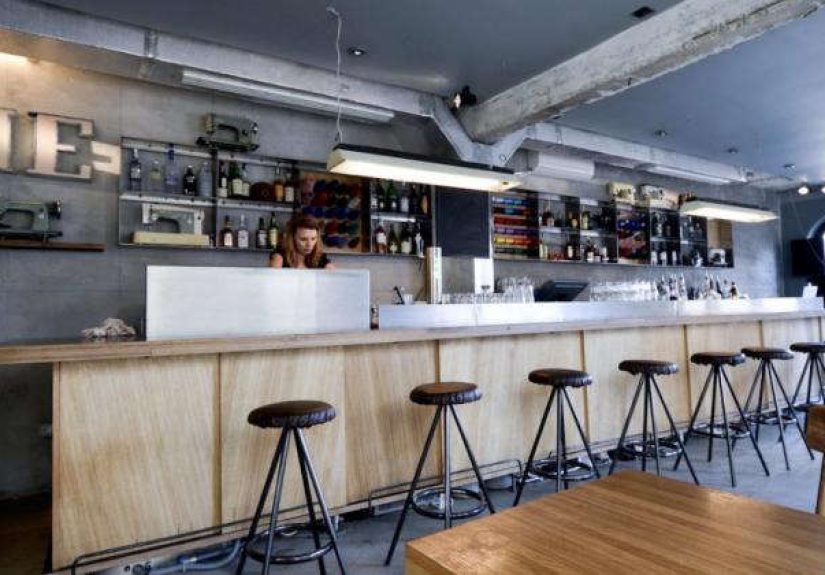
A tailor-made cafe depends on details, and Papiota’s details did the heavy lifting. Steel shelving gave the space an industrial backbone. Racks of yarn spools added color and rhythm. Salvaged sewing machines brought sculptural weight. Factory-style lighting created atmosphere without making the place feel theatrical. Together, these elements built an interior that felt handmade, not mass-produced.
Vintage Sewing Machines as Visual Anchors
The sewing machines were among the most memorable features. They served as visual anchorsdark, mechanical, familiar, and slightly mysterious. A sewing machine has a special design power because almost everyone understands what it does, even if they cannot thread one without declaring war on the entire concept of fabric. In a cafe, that familiarity creates instant warmth.
These machines also suggested patience. They reminded visitors that beautiful things require time: a hem, a dress, a cushion cover, a good espresso, a friendship, a city learning how to reuse its own past. That quiet metaphor made the interior more emotionally interesting than a standard minimalist cafe where the chairs look expensive but emotionally unavailable.
Spools, Threads, and Colorful Order
The spools gave the cafe its signature identity. Arranged in rows, they created pattern and color without relying on wall art. Their cylindrical shape repeated across the room like a visual rhythm. The effect was playful but organizedexactly the kind of detail that makes a small hospitality space feel memorable.
Colorful thread also softened the industrial elements. Metal shelving and salvaged lighting can feel cold if left alone. Add thread, yarn, and craft references, and suddenly the room feels human. It is the difference between “urban industrial concept” and “urban industrial concept where you might actually want to spend a rainy afternoon.”
Why the Cafe Worked as a Social Space
Design is not just about what a place looks like. It is about what the space allows people to do. Papiota worked because it encouraged gathering. It had the casual, conversational feeling of a workshop after the machines have gone quiet. People could meet friends, listen to music, talk, pause, and enjoy the sense that they were inside a story rather than just another commercial interior.
This is especially important in Bucharest, where cafe culture has become part of the city’s everyday creative life. Specialty coffee shops, neighborhood bistros, terrace cafes, and hybrid cafe-bars all play a role in how residents use the city. They are meeting points, workspaces, first-date testing grounds, design showcases, and emergency caffeine stations for people who confidently said they would “just check one email” and then opened fourteen tabs.
Papiota’s tailoring concept made the social experience feel more intimate. A tailor’s workshop is a place of measurements, adjustments, conversations, and trust. Translating that atmosphere into a cafe gave the space an unusually personal mood. Visitors were not just customers; they felt like participants in a small cultural remake.
Bucharest’s Specialty Coffee Scene and the Rise of Designed Cafes
Although Papiota’s identity came from tailoring, it also belongs to a broader Bucharest cafe story. Over the past decade, the Romanian capital has become known for an energetic specialty coffee scene, with respected names such as Origo, BOB Coffee Lab, Frudisiac, Coftale, and other independent cafes shaping the city’s taste for better beans and better interiors.
Origo is a strong example of how Bucharest cafes use design to create identity. Its interior became known for a dramatic installation of hanging cups, custom tables, and lighting inspired by coffee-making tools. That kind of project showed that a cafe could be both a serious coffee destination and a spatial experience. Papiota operated from a different visual world, but the principle was similar: make the concept physical, memorable, and specific.
Newer Bucharest projects continue to explore small-space creativity. Tiny coffee shops, restored interiors, greenhouse bars, minimalist breakfast spots, and art-adjacent cafes all suggest that the city’s hospitality scene is comfortable with experimentation. In that context, Papiota feels like an early and charming example of a design move that now defines much of Bucharest’s appeal: reuse what already exists, add personality, and make the space feel emotionally local.
Lessons From a Tailor-Made Cafe Design
Papiota offers several useful lessons for cafe owners, interior designers, travel writers, and anyone secretly judging cafe chairs while pretending to read a menu.
1. A Strong Concept Beats Expensive Decor
The most memorable thing about Papiota was not luxury. It was clarity. Every major design choice supported the tailor-workshop story. That is what made the cafe feel cohesive. A strong concept can make simple materials feel rich because visitors understand the intention behind them.
2. Local Memory Creates Emotional Value
Using objects connected to Romanian manufacturing and craft history gave Papiota cultural depth. This matters because hospitality spaces are more compelling when they could not exist in exactly the same way anywhere else. A cafe in Bucharest should not feel like a cafe in Brooklyn wearing a fake mustache. It should feel rooted in Bucharest.
3. Texture Makes Small Spaces Feel Alive
Thread, yarn, metal, wood, old machines, and industrial lighting created a layered sensory experience. Texture gives visitors something to notice slowly. It makes a room feel lived-in, even when it has been carefully designed.
4. Nostalgia Works Best With a Fresh Point of View
Papiota did not simply freeze the past. It reinterpreted it. That distinction is crucial. Nostalgic design can become heavy if it treats history as untouchable. Papiota made the past social, colorful, and useful again.
How Travelers Can Experience This Side of Bucharest
For travelers interested in cafes, design, and urban culture, Bucharest rewards slow exploration. Start in Lipscani and the Old Town, where historic streets carry much of the city’s social energy. Look for cafes tucked into older buildings, terraces with mismatched moods, and interiors that reveal layers of renovation. Then move outward toward neighborhoods known for galleries, design shops, parks, and specialty coffee.
The best approach is not to rush from landmark to landmark. Bucharest is a city of pauses. A morning espresso near a quiet street can say as much about the city as a major monument. A restored cafe can reveal how Bucharest handles memory. A small design shop can show where young Romanian creativity is headed. And a place like Papiota reminds visitors that the city’s most meaningful spaces are often the ones made from ordinary materials with unusual care.
When searching for a tailor-made cafe experience in Bucharest today, focus less on whether a single place perfectly matches the Papiota story and more on the qualities it represents: local craft, adaptive reuse, tactile design, friendly informality, and a sense of place. Those qualities still run through the city’s cafe culture.
Why “Tailor-Made” Is the Perfect Metaphor
A tailor-made garment fits because someone measured carefully. A tailor-made cafe works the same way. It fits its neighborhood, its history, its audience, and its purpose. Papiota succeeded because it did not treat design as decoration pasted on at the end. The concept was cut into the pattern from the beginning.
That is why the cafe remains interesting as a design case study. It shows how hospitality can be personal without being precious. It proves that old tools can become new atmosphere. It also shows that a cafe does not need to shout to be memorable. Sometimes all it needs is a spool of thread, a salvaged machine, a few good shelves, and the confidence to let a story unfold naturally.
Conclusion: A Cafe Stitched Into Bucharest’s Creative Fabric
A Tailor-Made Cafe in Bucharest is more than a catchy title. It is a way to understand how Papiota turned craft history into hospitality design. The cafe blended nostalgia, industrial character, color, and local memory into a space that felt relaxed, social, and unmistakably specific. In a city famous for contrasts, Papiota made contrast feel cozy: old and new, work and leisure, machinery and softness, memory and reinvention.
For readers planning a Bucharest itinerary, writing about cafe interiors, or dreaming of opening a small hospitality space with a strong identity, Papiota offers a simple but powerful lesson: the best places are not copied from trends. They are measured, cut, adjusted, and finished like a well-made garment. In other words, they are tailor-made.
Extended Experience Notes: What It Feels Like to Spend Time in a Tailor-Made Cafe in Bucharest
Imagine stepping off a Bucharest street where the buildings seem to disagree politely about which century they belong to. One facade feels Parisian, another looks practical and communist-era, and somewhere nearby a modern cafe sign glows with minimalist confidence. Then you enter a place like Papiota, and the city’s mixed personality suddenly makes sense. The cafe does not try to smooth out Bucharest’s contradictions. It gathers them, lines them up like spools of thread, and turns them into atmosphere.
The first experience is visual. Your eyes move from object to object: sewing machines, shelves, threads, lighting, small industrial details, and the kind of vintage pieces that make you wonder who used them before. There is a special pleasure in a cafe that rewards looking around. Many modern cafes are beautiful in a fast, glossy way; you understand them in five seconds. A tailor-made cafe asks for more time. It gives you little discoveries. It says, “Sit down. Notice things. Your phone can survive without you for three minutes.”
The second experience is emotional. A tailoring-inspired cafe feels different from a generic design cafe because tailoring is tied to the body, memory, and care. Everyone has had clothes adjusted, repaired, handed down, or rescued from the back of a closet. That association gives the space a domestic warmth, even when the materials are industrial. You may not know the full history of the sewing machines or the original workshop, but you feel the presence of work that happened by hand.
The third experience is social. This type of cafe invites conversation because the room itself gives people something to talk about. A first-time visitor might point at a machine and ask whether it still works. A design lover might admire the shelving. A traveler might ask what “papiota” means. A local might remember a grandmother, a factory, a school uniform, or a childhood room with a sewing kit in the drawer. The interior becomes an icebreaker, which is one of the most underrated achievements in hospitality design.
The fourth experience is practical and inspiring. If you are a cafe owner or designer, Papiota shows that a strong concept does not require a huge footprint or extravagant materials. What it requires is discipline. Every object should support the story. Every corner should feel intentional. The space should be comfortable enough for real people, not just attractive enough for a photo shoot. A cafe can be photogenic and still human. In fact, the human part is what makes people return after the photo has already been posted.
Finally, the experience connects you to Bucharest itself. The city is not polished into one easy identity, and that is exactly why it is interesting. A tailor-made cafe reflects Bucharest’s best creative habit: taking fragments of history and making them useful again. You leave with the feeling that design is not only about newness. Sometimes it is about repair, reuse, and reimagination. Sometimes the most memorable cafe in the city is the one that knows how to stitch the past into the present without hiding the seams.