Table of Contents >> Show >> Hide
- Why Make a Bird Suet Feeder From a Coffee Mug?
- Best Mug to Use for a DIY Suet Feeder
- Supplies You Will Need
- Simple Homemade Suet Recipe for a Mug Feeder
- How to Assemble the Coffee Mug Suet Feeder
- Where to Hang Your DIY Bird Suet Feeder
- When to Use Suet: Winter Is the Sweet Spot
- How to Clean a Coffee Mug Bird Feeder
- Birds You May Attract With a Mug Suet Feeder
- Common Mistakes to Avoid
- Creative Variations for Thrifted Mug Suet Feeders
- Backyard Experience: What I Learned Making Mug Suet Feeders
- Conclusion
A thrifted coffee mug can become many things: a pencil cup, a tiny planter, a “World’s Okayest Dad” museum piece, orif you enjoy backyard birdsa charming DIY bird suet feeder. This project is simple, affordable, beginner-friendly, and ridiculously satisfying. For the price of one forgotten mug from a thrift store shelf, you can create a cozy little energy station for woodpeckers, chickadees, nuthatches, wrens, titmice, and other cold-weather visitors who treat suet like the backyard version of a protein bar.
The beauty of a mug suet feeder is that it combines upcycling, birdwatching, and a little kitchen crafting without requiring a full workshop or a garage full of mysterious tools. You do not need to build a wooden box, weld a cage, or pretend you understand the difference between fourteen kinds of screws. You need a sturdy mug, bird-safe ingredients, a hanging method, and a sensible place to put it.
This guide walks through how to make a DIY bird suet feeder from thrifted coffee mugs, what ingredients to use, what to avoid, where to hang it, how to clean it, and how to improve your chances of attracting birds instead of creating a squirrel buffet with ceramic decor.
Why Make a Bird Suet Feeder From a Coffee Mug?
Suet is a high-energy bird food traditionally made from rendered animal fat. It is especially useful in colder months, when birds burn extra calories to stay warm and natural insect sources may be limited. In backyard feeding, suet is best known for attracting clinging birds such as woodpeckers, nuthatches, chickadees, and wrens, although plenty of other feathered guests may stop by if the menu looks promising.
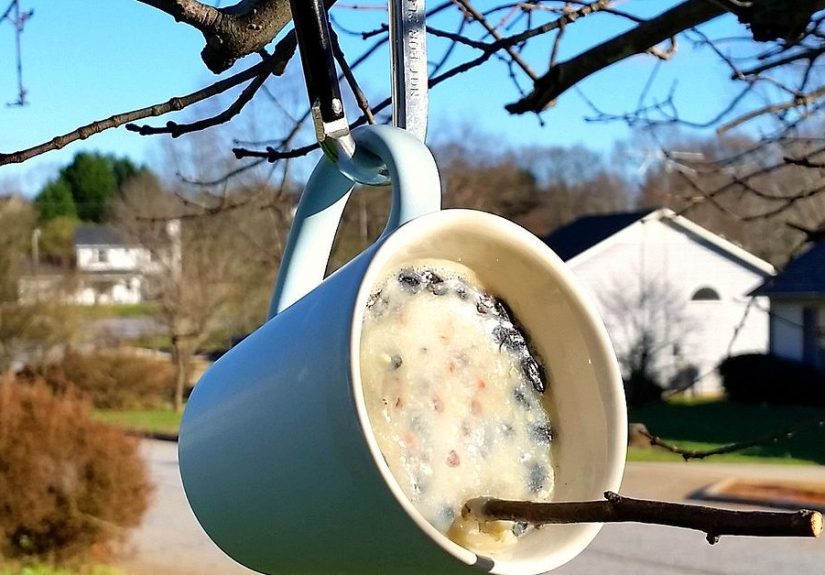
A thrifted coffee mug works well because it already has a built-in handle for hanging, a deep cup for holding the suet mixture, and enough personality to make your backyard look like a tiny bird café. A plain mug is fine. A floral mug is adorable. A mug with a faded office logo becomes comedy gold when a downy woodpecker starts dining from “Accounting Department 2008.”
The Main Benefits
A mug suet feeder is inexpensive, reusable, easy to customize, and usually small enough that the suet gets eaten before it spoils. It also lets you control the ingredients. Commercial suet cakes are convenient, but homemade suet gives you room to use quality fats, seeds, nuts, and grains without unnecessary fillers or heavily processed extras.
Another advantage is cleaning. A ceramic mug can be scrubbed thoroughly, rinsed well, and dried completely before reuse. That matters because bird feeders can spread disease if old food, droppings, mold, or bacteria build up. A feeder that looks cute but cannot be cleaned is not a feeder; it is a decorative germ condo.
Best Mug to Use for a DIY Suet Feeder
Start with a thrifted ceramic coffee mug that has a strong handle and no cracks. Avoid mugs with loose glaze, chips along the rim, peeling decorative coating, or rough broken edges. Birds will land, cling, and peck near the surface, so the mug should be smooth and stable.
A standard 8- to 12-ounce mug is ideal. Oversized mugs can hold too much suet, which may sit outside too long if bird traffic is light. Tiny espresso cups are charming, but they may need refilling every five minutes if your neighborhood chickadees discover them and send invitations.
Look for These Features
Choose a mug with a wide opening, a solid handle, and enough depth to hold the suet mixture securely. A heavier mug is often better than a flimsy one because it swings less in the wind. If the mug is dishwasher-safe, that is a bonus, but handwashing works too.
Do not use antique mugs if you are unsure about the glaze or paint. Some older dishware may contain materials that are not ideal for food use. Since birds will peck directly at the contents, it is smarter to choose a modern, food-safe mug in good condition.
Supplies You Will Need
You can keep this DIY bird suet feeder project very simple. Most supplies are easy to find at thrift stores, grocery stores, hardware stores, or around the house.
- 1 sturdy thrifted ceramic coffee mug
- Natural twine, coated wire, chain, or an S-hook for hanging
- 1 clean twig, small dowel, or wooden spoon handle for a perch
- Rendered beef suet, plain lard, or a cold-weather no-melt suet base
- Unsalted peanut butter, optional
- Black oil sunflower seeds, chopped unsalted peanuts, millet, or cracked corn
- Rolled oats or cornmeal to help bind the mixture
- A saucepan or heat-safe bowl for melting
- A spoon, spatula, and parchment paper
- A refrigerator or freezer for setting the suet
For the safest feeder design, use the mug handle for hanging instead of drilling holes into ceramic. Drilling ceramic can crack the mug and requires proper tools, eye protection, and patience. The handle method is easier and much more forgiving, especially if your DIY style is “enthusiastic but lightly chaotic.”
Simple Homemade Suet Recipe for a Mug Feeder
A good homemade suet mixture should be firm, not greasy, and packed with bird-friendly ingredients. The goal is to provide calories and texture while avoiding foods that can spoil quickly or harm birds.
Basic Cold-Weather Suet Mix
- 1 cup rendered beef suet or plain lard
- 1/2 cup unsalted natural peanut butter
- 1 cup black oil sunflower seeds
- 1/2 cup rolled oats
- 1/2 cup cornmeal
- 1/4 cup chopped unsalted peanuts or dried mealworms, optional
Melt the suet or lard slowly over low heat. Stir in peanut butter until smooth, then remove from heat. Add seeds, oats, cornmeal, and any optional ingredients. The mixture should look thick and scoopable, not soupy. If it seems too wet, add a little more cornmeal or oats.
Let the mixture cool slightly before spooning it into the mug. Press it down firmly so there are no big air pockets. Insert a twig or small dowel into the suet while it is still soft, leaving enough outside the mug to act as a perch. Place the mug in the refrigerator or freezer until the suet is firm.
Foods to Avoid
Avoid salty foods, seasoned meat drippings, bacon grease, sugary leftovers, chocolate, bread, honey, and anything moldy or rancid. Birds do not need your breakfast scraps wearing a fake mustache and calling themselves wildlife cuisine. Keep the recipe plain, clean, and focused on high-energy ingredients.
Peanut butter should be unsalted and used in moderation as part of a firm mixture, not smeared loose in giant sticky blobs. Seeds and nuts should also be unsalted. Dried fruit can be added in very small amounts, but choose unsweetened options and skip anything treated with preservatives or sugar coatings.
How to Assemble the Coffee Mug Suet Feeder
Once the suet has hardened, the assembly is delightfully easy. Tie sturdy twine, wire, or chain through the mug handle. Make sure the knot or connector is secure. If you use twine, choose a natural fiber and check it often for wear. If you use wire, make sure there are no sharp ends sticking out.
The mug should hang with the opening angled slightly upward or sideways so rain does not pour directly into it. A mug hanging straight like a bucket may collect water, soften the suet, and turn your feeder into a sad bird soup. If the mug tends to tilt too far, adjust the hanging loop or add a second support around the body of the mug.
Add a Perch the Smart Way
Birds that cling, such as woodpeckers and nuthatches, may not need a perch, but smaller birds often appreciate one. A short twig pressed into the suet works well. You can also tie a small dowel across the mug opening, but avoid creating tight gaps where a bird could get stuck.
Keep the perch short and simple. A giant branch sticking out of a mug may look whimsical, but it can make the feeder swing wildly in wind or invite larger birds and squirrels to dominate the snack station.
Where to Hang Your DIY Bird Suet Feeder
Placement matters as much as the recipe. Hang the mug feeder where birds can approach safely, retreat to nearby cover, and avoid obvious predators. A tree branch, shepherd’s hook, deck hook, or feeder pole can all work.
Keep the feeder high enough that outdoor cats cannot easily reach it. Avoid placing it deep inside dense shrubs where predators can hide. Birds like nearby cover, but they also need a clear escape route. Think “safe rest stop,” not “mysterious alley behind the snack bar.”
Window Safety
If you hang the feeder near a window, place it very close to the glass or much farther away. Feeders close to windows reduce the chance that birds can build up dangerous speed before a collision. If the feeder is farther out in the yard, give birds enough space to maneuver naturally. Adding window decals, screens, or other visual markers can also help reduce strikes.
Weather Protection
A covered porch, tree canopy, or baffle can help keep rain and snow off the suet. Moisture shortens the life of bird food and can encourage mold. If the suet gets soaked, slimy, or odd-smelling, toss it and clean the mug before refilling.
When to Use Suet: Winter Is the Sweet Spot
Suet is most useful in fall and winter, when birds need extra energy and the cooler air helps keep fat-based foods firm and fresh. In hot weather, traditional suet can melt, turn rancid, or smear onto feathers. That can interfere with the natural function of feathers, which birds rely on for insulation and waterproofing.
If you live in a warm climate, use extra caution. Put out only small portions, choose no-melt formulas designed for warm conditions, and remove leftovers quickly. During spring and summer, many birds have access to insects, seeds, berries, and other natural foods. Feeding suet during nesting season is not always necessary and may attract unwanted visitors.
How to Clean a Coffee Mug Bird Feeder
Cleaning is not the glamorous part of bird feeding, but it is the part that keeps your backyard from becoming a tiny avian health hazard. Wash the mug feeder at least every one to two weeks, and more often during damp, warm, or busy periods. If you see mold, old residue, or spoiled suet, clean it immediately.
Scrape out leftover suet, wash the mug with hot water, scrub the inside and handle area, rinse thoroughly, and dry completely before refilling. The drying step matters because moisture encourages spoilage. If the mug has a narrow handle or decorative grooves, use a small brush to clean those areas.
Clean the Ground Too
The area below the feeder can collect crumbs, shells, and droppings. Sweep or rake beneath it regularly. This helps reduce disease risk and makes the area less attractive to rodents, raccoons, and other guests who did not RSVP.
Birds You May Attract With a Mug Suet Feeder
The birds you see will depend on your region, habitat, season, and food mix. In many American backyards, suet may attract downy woodpeckers, hairy woodpeckers, red-bellied woodpeckers, northern flickers, white-breasted nuthatches, chickadees, titmice, Carolina wrens, and blue jays.
Some birds prefer feeders near trees. Others may need time to discover the new food source. Do not panic if your feeder sits untouched for a few days. Birds are cautious, and a coffee mug full of fat hanging from a tree is, admittedly, a strange restaurant concept.
How to Help Birds Find It
Place the mug near existing bird activity, such as a seed feeder, birdbath, or shrubs where birds already perch. Use familiar ingredients like sunflower seeds or peanuts in the suet. Keep the feeder visible, but not exposed in a way that makes birds feel unsafe.
Once one bold chickadee discovers it, others often follow. Chickadees have the energy of tiny feathered town criers. If something interesting appears in the yard, they seem morally obligated to announce it.
Common Mistakes to Avoid
The first mistake is using the wrong ingredients. Greasy leftovers, salted nuts, sweet baked goods, and seasoned fats are not bird food. The second mistake is putting out too much suet at once. Small portions stay fresher and are easier to monitor.
Another common mistake is ignoring temperature. Traditional suet does best in cold weather. If it melts, drips, or smells bad, remove it. A fourth mistake is hanging the mug where it swings wildly. Birds may avoid a feeder that behaves like a carnival ride during every breeze.
Finally, do not forget maintenance. A dirty feeder can do more harm than good. If you want repeat customers, keep the mug clean, the suet fresh, and the setup stable. Backyard birds may be tiny, but their restaurant standards are higher than they look.
Creative Variations for Thrifted Mug Suet Feeders
Once you make one mug feeder, it is dangerously easy to make more. You can create a small “mug buffet” with different suet blends: one with sunflower seeds, one with chopped peanuts, and one with dried mealworms. Hang them several feet apart to reduce crowding and give smaller birds a better chance to feed.
You can also match mug colors to your garden style. A white mug looks clean and cottage-like. A speckled stoneware mug blends into a natural landscape. A loud novelty mug adds personality, especially when a serious-looking woodpecker lands on it as if attending an important board meeting.
Gift Idea
A DIY bird suet feeder from a thrifted coffee mug makes a thoughtful handmade gift for gardeners, bird lovers, teachers, neighbors, or anyone who already owns too many mugs but somehow still needs one more. Pair the finished mug with a small bag of homemade dry suet mix ingredients and simple care instructions.
Backyard Experience: What I Learned Making Mug Suet Feeders
The first time I made a coffee mug suet feeder, I picked the mug for looks instead of function. It had a cheerful pattern, a quirky shape, and the structural confidence of a potato chip. Once filled with suet, it hung sideways like it had given up on life. Lesson one: choose a mug with a strong handle and a balanced shape. Cute is wonderful, but birds prefer a feeder that does not swing like a haunted porch decoration.
My second lesson was portion control. I packed the mug completely full, proud of my generosity, then realized the birds were not operating on my schedule. Some days the feeder was busy. Other days it sat there, untouched, while the birds argued with the seed feeder instead. Smaller batches worked better. The suet stayed fresher, the mug was easier to clean, and I stopped feeling like I was catering a banquet for guests who might or might not appear.
Placement also made a huge difference. When I first hung the mug too close to an open, exposed area, birds inspected it from a distance but rarely landed. After moving it near a tree with clear escape routes, the traffic improved. Chickadees arrived first, because chickadees seem to have no fear and possibly a neighborhood newsletter. A nuthatch followed, climbing around the mug like it was solving a puzzle. Eventually, a woodpecker discovered it and treated the whole thing like a private dining room.
I also learned that squirrels are not impressed by your intentions. If they can reach the mug, they will reach the mug. If they cannot reach it, they will hold a planning meeting. A baffle or squirrel-resistant pole can help, but the best defense is smart placement. Hang the mug away from easy launching spots like fence rails, low branches, and deck furniture. A squirrel can turn a patio chair into an Olympic platform with very little notice.
Cleaning became part of the rhythm. At first, I treated it like a chore. Later, I realized it was just part of responsible bird feeding, like washing a pet bowl or cleaning a kitchen counter. A quick scrub every week or two kept the mug looking good and smelling normal. If the weather was rainy or unusually warm, I checked it more often. Whenever the suet looked soft, wet, or suspicious, I tossed it. No backyard bird needs mystery pudding.
The most enjoyable part was watching different birds use the feeder in different ways. Chickadees darted in, grabbed a bite, and vanished. Nuthatches approached upside down, because apparently gravity is optional. Woodpeckers braced themselves and worked steadily. Smaller birds sometimes used the twig perch, while clinging birds ignored it completely. That little thrifted mug turned into a tiny stage for daily bird behavior, and it made morning coffee much more entertaining.
The project also changed how I shop at thrift stores. Now I look at mugs differently. I check handle strength, opening size, glaze condition, and weight. A mug is no longer just a mug; it is potential bird infrastructure. The best finds are sturdy, simple, and easy to wash. Bonus points if the mug is funny, because nothing improves backyard birdwatching like a tufted titmouse eating from a cup that says “But First, Coffee.”
Overall, the thrifted coffee mug suet feeder is one of those rare DIY projects that is cheap, useful, charming, and hard to mess up if you follow basic safety rules. Use good ingredients, hang it wisely, keep it clean, and pay attention to the weather. The reward is not just a cute feeder. It is the small daily joy of seeing wild birds visit something you made with your own hands.
Conclusion
A DIY bird suet feeder from thrifted coffee mugs is a smart, creative way to support backyard birds while giving old mugs a second life. It is budget-friendly, beginner-friendly, and endlessly customizable. With a sturdy mug, a clean hanging setup, fresh cold-weather suet, and regular maintenance, you can create a feeder that looks charming and functions well.
The most important rules are simple: choose a safe mug, avoid salty or spoiled ingredients, offer suet mainly in cooler weather, hang the feeder where birds can feed safely, and clean it often. Do that, and your backyard may soon host a rotating cast of woodpeckers, chickadees, nuthatches, wrens, and other lively visitors. Just be warned: once birds start using your mug feeder, ordinary coffee mugs may never look ordinary again.
Note: This article is written as original, publish-ready content based on practical backyard bird-feeding guidance, safe feeder maintenance principles, and real-world DIY experience.