Table of Contents >> Show >> Hide
- Why Clear Christmas Ornaments Work Shockingly Well
- Design Overview: How a Rolling BB-8 Usually Works
- Tools and Materials
- Step-by-Step: Build the Transparent Shell
- Build Option A: Display-First Transparent BB-8 (Fast, Cute, Low-Stress)
- Build Option B: Functional Rolling Transparent BB-8 (The Fun Nerd Version)
- Finishing Touches That Make It Look Like BB-8 (Not Just “A Clear Ball With Hopes”)
- Troubleshooting Guide (Because It’s Not a Real Build Until Something Wobbles)
- Real-World Build Experiences: What Makers Learn the Hard Way (So You Don’t Have To)
- Conclusion
BB-8 is basically a rolling beach ball with a head that refuses to commit. Which is exactly why a
transparent BB-8 build is so satisfying: you get the iconic silhouette and you can show off the
clever mechanics inside like it’s a tiny sci-fi museum exhibit you accidentally built at your kitchen table.
The twist in this project is wonderfully practical: instead of hunting for pricey acrylic spheres, you can use
clear plastic Christmas ornaments as ready-made shells. One ornament becomes the dome “head,” the other
becomes the larger body sphere. It’s budget-friendly, widely available in the U.S., and delightfully on-theme:
a droid made from holiday décor is the kind of chaos BB-8 would support.
This guide walks you through two versions:
(1) a display-first transparent BB-8 (fast, fun, and low-risk), and
(2) a functional rolling build that borrows real DIY BB-8 engineering ideasinternal drive, magnetic head
coupling, stabilization, and optional Arduino control. Pick your level of “I enjoy debugging” accordingly.
Why Clear Christmas Ornaments Work Shockingly Well
Clear ornaments solve three hard problems in one swoop: they’re spherical, they’re lightweight, and they’re easy
to replace if you scratch one (because you absolutely will, at least once, while muttering “it’ll buff out”).
Makers have used ornament halves for BB-8 themed crafts for years, and the same concept scales up nicely when you
want a transparent shell that reveals the guts.
What to look for when shopping
- Two-piece “fillable” plastic ornaments (snap or twist seam). Easier access for an internal drivetrain.
- Thicker gauge plastic if you want a rolling version (thin plastic flexes and scuffs faster).
- Sizes: A larger sphere for the body, a smaller one for the head. Even if you go compact, keep the head visually “dome-like.”
- Spare shells: Buy at least one extra. Consider it your “learning tax.”
Design Overview: How a Rolling BB-8 Usually Works
Most functional BB-8 DIY designs rely on a simple illusion: a robot drives around inside a hollow sphere, pushing
on the inner wall to roll the shell. Meanwhile, the head “floats” on top, held in place by magnetsno visible
struts, no awkward hat-stand energy.
Key systems you’re copying (in a friendly, craft-sized way)
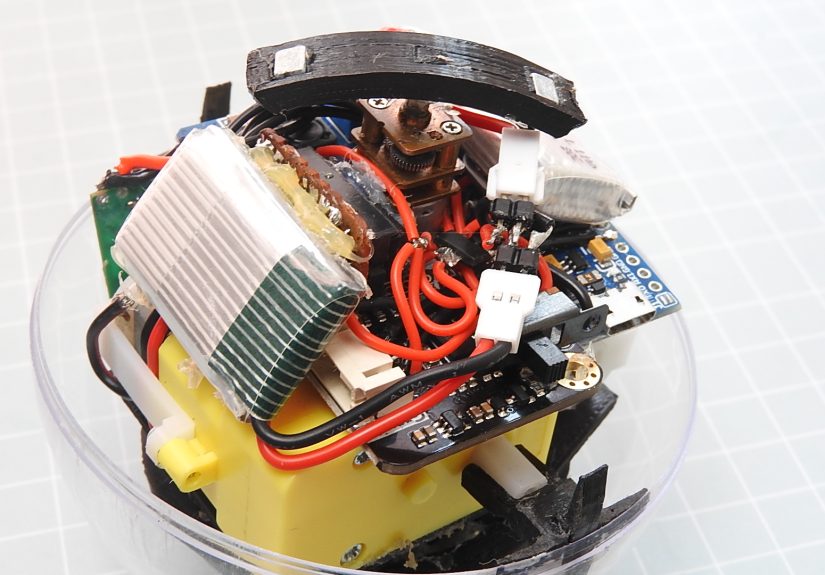
- Internal drive: Wheels push on the inside of the sphere to move forward/back and turn.
- Magnetic head coupling: Magnets in the internal mechanism attract magnets in the head so it stays perched.
- Stabilization: Some builds use a reaction wheel or balancing approach to help keep the internal unit upright and controllable.
- Control electronics: A microcontroller + motor drivers to coordinate movement, head rotation, and stabilization (optional but very cool).
Tools and Materials
Core materials (both versions)
- 1 clear plastic ornament sphere for the body (two-piece fillable type)
- 1 smaller clear ornament for the head (or one ornament you’ll cut into a dome)
- Isopropyl alcohol + microfiber cloth (for cleaning oils/fingerprints)
- Painter’s tape (low tack) and masking film (optional)
- Permanent vinyl decals or paint markers (orange/gray/black), or thin craft tape for panel lines
- Adhesive appropriate for plastic (test first): clear craft glue, plastic-bonding super glue, or epoxy
- Fine sandpaper (800–1500 grit) or a gray scuff pad (for paint adhesion on plastic)
Extra materials for the rolling build
- Small geared DC motors (2 for drive, 1 optional for a head mechanism)
- Motor driver (common options: L293D-style drivers or modern dual H-bridge boards)
- Microcontroller (Arduino-class board works great)
- Battery pack (securely mounted; size depends on your sphere)
- Strong small magnets (neodymium), plus a safe mounting method (epoxy putty or printed/laser-cut holders)
- Chassis material: 3D printed parts, laser-cut plates, or a lightweight frame (foamboard + reinforcements can work for prototypes)
- Optional stabilization: reaction wheel + motor, and basic tuning (PID) if you want to go deep
Safety gear (seriously, use it)
- Nitrile gloves (keeps fingerprints off clear plastic and protects skin from adhesives/paint)
- Eye protection (magnets and super glue are both surprisingly dramatic)
- Respirator or excellent ventilation if using spray paint/primer
Step-by-Step: Build the Transparent Shell
1) Clean and prep the ornament
Clear plastic shows everything: oils, dust, tiny scratches, the emotional damage from one bad glue smear.
Start by cleaning the ornament halves with isopropyl alcohol and a lint-free cloth. Avoid paper towels (they can
leave micro-scratches).
2) Decide your “transparent look” strategy
You have two great options:
-
Mostly transparent (recommended): Add BB-8 panel lines and accents using vinyl, thin tape, and paint markers.
The shell stays clear and the internals are the star of the show. -
Frosted/painted panels: Lightly mask sections and spray a translucent/frosted coat so the droid looks “technical”
while still revealing the mechanism. This also helps hide wiring clutter if your internals aren’t runway-ready yet.
3) Add BB-8 markings without ruining the clear finish
If you want crisp panel shapes, permanent vinyl decals are the cleanest path. If you’re hand-drawing, use paint
markers designed for slick surfaces (test on a scrap ornament first). For painted panels on plastic, scuff the
area lightly, apply a plastic-friendly primer if needed, then build thin coats. Resist the urge to “fix” a drip
while it’s wet. That’s how you get fingerprints that haunt you forever.
4) Plan access points (rolling build)
A display build can be fully sealed. A rolling build should be serviceable. That means:
keep the seam usable and avoid permanently gluing the two body halves together.
Instead, consider small internal tabs, tiny screws through hidden brackets, or removable fasteners. Some builders
use small hook-and-loop dots to keep sphere halves closed while still allowing easy access.
Build Option A: Display-First Transparent BB-8 (Fast, Cute, Low-Stress)
If you want the wow-factor of a transparent BB-8 without the engineering rabbit hole, do this version first.
You’ll still learn the materials and finishing tricks that make the rolling build look professional.
1) Make the head dome
If your “head ornament” is already dome-shaped, you’re golden. If it’s a full sphere, cut it cleanly into a dome
using a fine hobby saw or a rotary tool with a gentle touch. Sand the cut edge smooth.
2) Create a simple “floating head” illusion
For a display build, you can fake the magnetic system with a clear internal post (acrylic rod) or a hidden ring
support that sits just under the dome. If you want the real effect, embed a small magnet inside the dome and
mount a matching magnet on an internal platform inside the body sphereclose enough to attract through the plastic.
3) Style the internals
Since the whole point is transparency, add intentional-looking internal elements: a neat “core” platform, clean
wiring paths, maybe even a small LED strip or diffused light puck. The goal is “droid lab chic,” not “junk drawer
with ambition.”
Build Option B: Functional Rolling Transparent BB-8 (The Fun Nerd Version)
1) Choose an internal drive style
There are several DIY BB-8 drive approaches seen in maker builds:
some use a “hamster” style internal unit rolling around, while others use more stable internal frames with wheels
pushing against the sphere wall. For a compact ornament-sphere build, prioritize simplicity and stability:
two drive wheels with a third support point (ball caster or skid) is a practical starting place.
2) Build a lightweight internal chassis
The internal unit should be:
light enough not to overload the plastic shell,
rigid enough to keep wheel alignment,
and balanced so it doesn’t flop around like a sleepy turtle.
- Prototype material: foamboard + small brackets can work for fit checks.
- Final material: 3D printed parts or thin polycarbonate plates are cleaner and sturdier.
- Mounting: Use screws where possible; reserve glue for non-serviceable parts.
3) Add the magnetic head system
Here’s the classic trick: mount magnets on a small “mast” or top plate inside the sphere so they sit near the
inner surface. Put matching magnets inside the head dome. When the internal unit moves, the magnetic attraction
keeps the head perched and allows it to glide/roll as the body turns.
Tip: magnets are strong, but alignment matters. If your head jitters, it’s often because magnets are slightly
off-center or too close to the seam ridge of the ornament.
4) (Optional) Add head rotation
Many builds add a small gear motor to rotate the magnet assembly so the head can “look around.”
This can be as simple as a small geared motor turning a ring or arm that carries the magnets. Keep it slow and
controlledBB-8’s charm is in subtle head tilts, not blender mode.
5) (Advanced) Stabilization with a reaction wheel
If you want the internal unit to stay more upright and responsive, you can add a reaction wheela spinning mass
that helps control pitch/tilt. This is where things get delightfully technical: you’ll likely be tuning control
loops (often PID) and reading sensors to keep motion smooth. It’s not required for a simple rolling demo, but it
can dramatically improve behavior if you’re chasing that “real droid” feel.
6) Wire up electronics with “see-through manners”
Transparent shells punish messy wiring. Keep leads short, bundle them neatly, and secure them so they can’t rub
the inside of the ornament. Use foam tape, small clips, or printed channels. If you’re using a microcontroller +
motor driver combo, mount them flat and central so the center of mass stays predictable.
7) Test, tune, repeat (the unofficial motto of robotics)
Do your first tests with the sphere open if possiblewatch for wheel slip, motor strain, and any part
that contacts the shell. Then test with the sphere closed on a smooth floor. Expect iteration. The first run is
rarely “BB-8,” and often “confused Roomba.”
Finishing Touches That Make It Look Like BB-8 (Not Just “A Clear Ball With Hopes”)
Panel lines and accents
- Vinyl decals: crisp, removable (carefully), and symmetrical if you use templates.
- Paint pens: great for detail rings and small markings; let them cure fully before handling.
- Masked translucent paint: gives a “technical” look while still revealing internals.
Scuff control and protection
If you’re rolling the sphere, scuffs are inevitable. You can reduce heartbreak by:
using gentle cleaners, avoiding gritty floors, and applying finishes that are compatible with your plastic.
Always test clear coats on a spare ornamentsome sprays can react with plastics or stay tacky.
Troubleshooting Guide (Because It’s Not a Real Build Until Something Wobbles)
My BB-8 won’t roll smoothly
- Check wheel traction (rubber tires help). Smooth plastic + smooth wheels = sad spinning.
- Ensure wheel alignment is square and both sides share similar friction.
- Reduce weight. Clear ornaments aren’t bowling ballstreat them gently.
The head falls off or jitters
- Recenter the internal magnets and confirm polarity (attraction, not repulsion).
- Add a small roller ring or low-friction pads under the dome so it can glide.
- Increase magnet size slightly, but avoid so much force that the head “snaps” into place violently.
I glued something and now it looks like frosted regret
- Use minimal adhesive and apply with a toothpick.
- Switch to a clearer glue designed for invisible bonds on plastic.
- Hide the area with a “panel” decal. Congratulationsit was always part of the design.
Real-World Build Experiences: What Makers Learn the Hard Way (So You Don’t Have To)
A transparent BB-8 made from Christmas ornaments is the kind of project that starts with wild confidence and ends
with you whispering, “Okay, so… magnets are complicated.” And honestly? That arc is part of the charm.
One of the first surprises builders run into is that clear plastic is unforgiving. In opaque builds,
you can hide messy glue joints, rough sanding, and a wire that took a weird route because you ran out of patience.
In a transparent build, every shortcut becomes a permanent exhibit. The good news is you can turn that into a win:
once you accept that your internals are on display, you start building like a neat-freak engineerclean wire runs,
centered components, and mounting choices that look intentional. The droid immediately feels more “real,” even if
it’s still technically a festive ornament with a motor problem.
Another common experience: the seam is your frenemy. Fillable ornaments are perfect because they open,
but that seam ridge can catch on internal parts, interfere with magnet placement, and make the head wobble if the
dome happens to ride near it. Many makers end up rotating the sphere halves until the seam sits in the “least
annoying” position for their drivetrain, then marking alignment points so they can reassemble the sphere the same
way every time. It’s not glamorous, but it’s the difference between smooth rolling and “why is it crab-walking?”
If you attempt the magnetic head system, you’ll probably have one session where the head behaves perfectly… and
the next session where it suddenly slides off like it’s tired of your nonsense. Usually, it’s not randomtiny
shifts in magnet alignment, a slightly different seating of the ornament halves, or a new wire route pushing the
internal magnet plate a few millimeters lower. Builders often learn to treat magnet placement like camera focus:
small changes matter. The most reliable approach is to make the magnet mounts adjustable (slots, shims, or swappable
holders) so you can tune the gap without rebuilding the whole top assembly.
For rolling performance, the biggest “aha” moment is traction. A clear sphere looks light, but once you add a battery,
motors, and a frame, your internal drive is working harder than expectedand smooth plastic inside a smooth plastic
shell can slip. Makers frequently improve performance by adding rubberized wheels, lightly texturing contact points,
and reducing weight wherever possible. If you’re chasing stability, you may also discover that a reaction wheel and
basic tuning can transform the feel from “toy prototype” to “hey, that’s actually controllable.” But most people find
they’re happier (and finish faster) when they aim for a clean, reliable roll firstthen upgrade stabilization later.
Finally, the emotional experience is pretty consistent: the first time your transparent BB-8 rolls across a room with
the head perched on top, you’ll grin like a kid. The second time it bonks into a chair leg and the head pops off,
you’ll sigh like an adult. Both moments are part of the build. The secret is embracing iterationkeep it serviceable,
keep spare ornament shells, and treat every fix as a new “feature.” By the end, you won’t just have a cool droid
you’ll have a project story worth telling every holiday season.
Conclusion
A transparent BB-8 build using Christmas ornaments hits a rare sweet spot: it’s accessible enough to start as a
weekend craft, but deep enough to evolve into a real robotics project if you catch the bug. Start with the display
version to nail the materials and finishing. Then, when you’re ready, upgrade to a rolling internal drive with a
magnetic head systemand optionally go full mad-scientist with stabilization and microcontroller control.
Either way, you end up with a BB-8 that doesn’t just look coolit shows cool. And that’s the whole point.