Table of Contents >> Show >> Hide
- The Quiet Engine of American Health Care
- Why Primary Care Deserves More Respect Than It Gets
- The Irony: We Need Primary Care Most, Yet We Undervalue It
- The Safety Net Is Already Doing the Work
- What the Future of Primary Care Should Look Like
- A Tribute, Properly Said
- Experiences That Make “A Tribute to Primary Care” Feel Personal
Primary care rarely gets the dramatic soundtrack. Nobody gasps when a family doctor adjusts a blood pressure medication, notices a subtle change in mood, orders a screening at the right time, or reminds a patient that “tired all the time” is not actually a personality trait. Yet this is the quiet work that holds modern medicine together. It is the front porch of health care, the place where symptoms first arrive, where trust gets built over years instead of minutes, and where the phrase “let’s keep an eye on that” can mean the difference between early treatment and a much rougher road later.
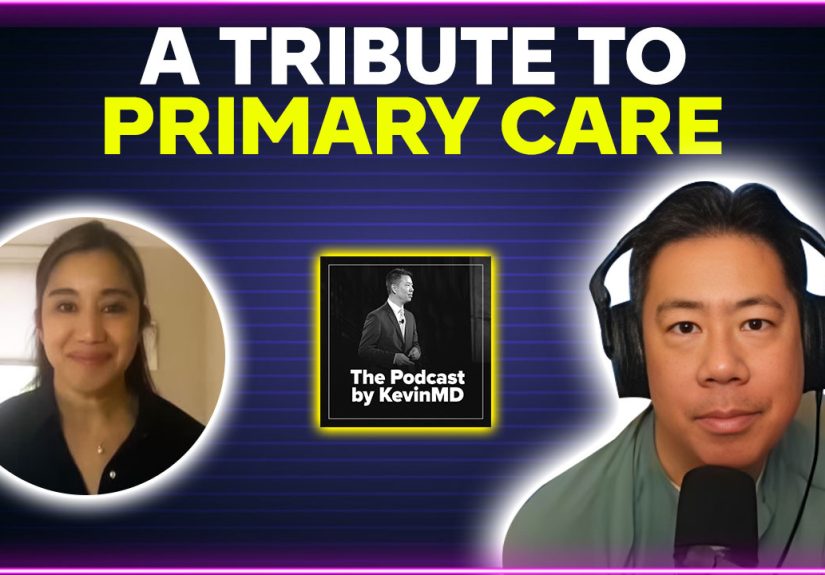
So this is a tribute to primary care: to the family physicians, internists, pediatricians, nurse practitioners, physician assistants, nurses, medical assistants, care managers, front-desk staff, behavioral health partners, and pharmacists who make it work. It is also a tribute to the idea behind it. Primary care is not just a stop on the map before “real medicine” begins. It is real medicine. It is comprehensive, person-centered, continuous, preventive, practical, and often astonishingly efficient. In a health system famous for complexity, primary care is the part that still tries to know your name, your history, your medications, your risks, and occasionally the fact that you always forget to schedule your colonoscopy until someone practically mails you a pen.
The Quiet Engine of American Health Care
At its best, primary care is not a random collection of office visits. It is a long relationship built around first contact, continuity of care, prevention, diagnosis, treatment, coordination, and common sense. It handles the sore throat, the annual physical, the diabetes follow-up, the anxiety discussion, the high cholesterol talk, the vaccine reminder, the blood pressure check, the sports physical, the prenatal referral, the puzzling fatigue, and the uncomfortable-but-important conversation about what happens next.
That breadth matters. A strong primary care system is associated with better health outcomes, fewer hospitalizations, and less unnecessary emergency department use. In other words, when people can actually access good primary care, they tend to do better and cost the system less. That should not be a radical idea, but in American health care, common sense sometimes needs a committee, a white paper, and three pilot programs before anyone calls it wisdom.
Primary care also does something increasingly rare: it treats the patient as a whole person. Not a cardiology problem. Not a billing code with shoes. A person. That means a primary care clinician may be thinking about blood sugar, sleep, grief, family history, access to food, transportation problems, medication costs, work stress, and the specialist note that still has not arrived because apparently fax machines have achieved immortality.
Why Primary Care Deserves More Respect Than It Gets
1. It catches problems early
Preventive care is one of primary care’s superpowers, even if it is not a particularly glamorous one. Vaccines, screening tests, counseling, and routine checkups help detect disease early, when treatment is often simpler and outcomes are better. The value of this work is easy to miss because prevention is, by design, anticlimactic. When primary care works, nothing dramatic happens. The cancer gets found earlier. The stroke risk gets lowered. The infection gets prevented. The patient avoids a crisis they never fully see.
That is one reason primary care can feel invisible. It prevents the headline instead of becoming one. And yet it is exactly where many life-changing conversations begin: “Your blood pressure has been creeping up.” “This lab result needs follow-up.” “That mole does not look quite right.” “You have been feeling down for months, haven’t you?” Heroics are wonderful, but a lot of medicine’s real victories happen before the emergency.
2. It makes continuity of care possible
Continuity of care sounds like health policy jargon, but in plain English it means this: the same practice, and ideally the same clinician, knows you over time. That familiarity can improve care in ways that are hard to measure on a TV drama but easy to feel in real life. A clinician who has seen you for years can notice subtle changes, understand your normal baseline, remember which medication gave you side effects, and recognize when “I’m fine” means “I am absolutely not fine.”
Continuity also improves efficiency. Patients do not have to repeat their life story every visit, and clinicians do not have to solve every problem from scratch. Research on continuity has linked it with reduced mortality, fewer hospital admissions, and lower emergency department use. That is not sentimental nostalgia for the old family doctor trope. It is practical, evidence-based, modern medicine. Relationships are not an optional extra. In primary care, they are part of the treatment model.
3. It coordinates the chaos
American health care can be extraordinary, but it can also feel like six different group projects happening in seven different portals. A patient may have a cardiologist, endocrinologist, dermatologist, therapist, orthopedist, and a lab app that sends notifications at 6:12 a.m. Primary care is often the place where all of that gets translated into one coherent story.
Good primary care coordinates referrals, tracks test results, reconciles medications, manages care transitions, and tries to reduce the chances that something important gets lost between offices. This role is especially important for older adults, people with chronic illnesses, caregivers, and anyone whose medical history can no longer fit on one intake form without violating margins.
4. It supports chronic disease management and whole-person health
Much of modern illness is not a single dramatic event but a long-term condition that needs steady attention. Diabetes, asthma, high blood pressure, depression, arthritis, obesity, and heart disease are not usually solved in one visit. They require monitoring, education, behavior change, medication adjustments, follow-up, and plain old encouragement. Primary care is built for that.
Increasingly, primary care is also expected to help address behavioral health, social needs, and barriers that shape whether people can follow a care plan at all. A person cannot “just eat healthier” if they live in a food desert, “just make the appointment” if they cannot get time off work, or “just follow up” if the nearest clinic is an hour away. Primary care sees those realities up close. That is why newer models are pushing for care management, team-based care, behavioral health integration, and stronger community connections. Not because it sounds trendy, but because life keeps stubbornly interfering with medicine.
The Irony: We Need Primary Care Most, Yet We Undervalue It
Here is the maddening part. The United States spends enormous amounts on health care, yet our outcomes often lag behind those of other high-income countries. One major reason is not a mystery: we have not consistently built a system around accessible, high-quality primary care. We are very good at expensive rescue. We are less consistent at early intervention, continuity, access, and keeping people well in the first place.
Primary care has long been under strain from workforce shortages, administrative burden, payment structures that reward volume more easily than relationship-building, and uneven access across rural communities, underserved neighborhoods, and vulnerable populations. Health Professional Shortage Areas exist for a reason. In many places, finding a primary care appointment can feel a bit like trying to book a beach house in July: technically possible, emotionally risky, and probably not available next Tuesday.
Meanwhile, the work itself has grown more complex. Primary care clinicians are expected to manage chronic disease, preventive care, mental health concerns, medication safety, screening reminders, prior authorizations, care coordination, documentation, quality reporting, and inbox messages that begin with “Quick question” and end 14 paragraphs later. The wonder is not that primary care sometimes struggles. The wonder is that so many professionals keep doing it with intelligence, humor, and real devotion.
The Safety Net Is Already Doing the Work
If you want proof that primary care matters, look at community health centers. Across the United States, HRSA-supported health centers serve more than 32 million people at over 16,200 sites, offering affordable, accessible care in medically underserved communities. These centers do not just fill gaps. They are a living argument for what primary care can be when it is rooted in community, accessibility, and broad service.
They provide medical care, behavioral health, dental services, vision services, preventive support, and help for populations that too often encounter barriers to care. Rural residents, low-income families, older adults, children, people experiencing homelessness, migrant communities, and others often rely on this system not as a backup plan, but as their medical home. If you want to understand primary care’s moral value, start there. The specialty does not merely treat illness; it makes health care reachable.
What the Future of Primary Care Should Look Like
Invest in it like it matters
The future of primary care cannot be built on applause alone. It needs payment models that support time, continuity, prevention, care coordination, and team-based practice. Encouragingly, Medicare and CMS have been testing models that move beyond visit-by-visit reimbursement toward more flexible support for advanced primary care, care management, behavioral health integration, and population health work. That matters because a fifteen-minute visit cannot carry the full weight of modern primary care forever.
Expand team-based, person-centered care
High-quality primary care is not a solo act. It works better when physicians and advanced practice clinicians are supported by nurses, pharmacists, behavioral health professionals, care coordinators, social workers, and front-office teams who know how to navigate the thousand small barriers that can derail good care. Person-centered care means treatment fits the patient’s life, not just the textbook version of the disease.
Make access less ridiculous
Better after-hours access, telehealth where appropriate, easier scheduling, simpler communication, and support for rural and underserved areas can all improve the patient experience. So can reducing clinician burnout and turnover. Every time a patient loses a trusted primary care clinician, continuity takes a hit and the system becomes a little less humane.
Remember what primary care is actually for
Primary care is not supposed to be a referral factory or a paperwork sponge. It is supposed to be the foundation of a well-functioning health system: the place where prevention happens, chronic disease is managed, questions are answered, trust is built, and people are guided through the rest of medicine with intelligence and steadiness. When we forget that, the system becomes more fragmented, more expensive, and harder on patients.
A Tribute, Properly Said
So yes, this is a tribute. To the clinician who remembers a patient’s mother had colon cancer and orders the screening. To the pediatrician who notices a developmental concern early. To the internist who catches a medication interaction before it becomes a hospital admission. To the family physician who treats the ear infection, the hypertension, the anxiety, and the very human fear underneath all three. To the care team that follows up on a missed test result, squeezes in a worried parent, translates specialist instructions into normal English, and somehow keeps a sense of humor while the printer jams for the fifth time.
Primary care is not small medicine. It is broad medicine, patient-centered medicine, long-view medicine. It is the discipline that understands health is not just about dramatic rescue but about steady maintenance, early detection, trusted relationships, and care that fits actual lives. In a fragmented era, primary care still believes in wholeness. In an expensive system, it still believes in value. In a rushed culture, it still believes that knowing a person matters.
And honestly, that deserves more than a tribute. It deserves investment, reform, respect, and a very good chair in every exam room.
Experiences That Make “A Tribute to Primary Care” Feel Personal
The real case for primary care is often found in everyday experiences, not policy memos. It is the adult who goes in for a routine visit because work has been exhausting and leaves with a diagnosis of high blood pressure that could have gone unnoticed for years. It is the parent who brings in a child for a “probably nothing” rash and gets both treatment and reassurance, which, for many parents, is a medically necessary service even if no one puts it that way on the bill.
It is the older patient who does not need dazzling innovation so much as someone patient enough to review the full medication list, explain what changed after the hospital stay, and make sure the next steps actually make sense. It is the caregiver who comes in talking about her husband’s memory problems and, in the course of that conversation, finally admits that she herself has not been sleeping, has not been eating well, and has not felt like herself in months. Primary care often becomes the first safe place where one person’s medical story reveals another person’s invisible burden.
Then there is the patient with diabetes who does not need one heroic lecture but twenty practical conversations over three years. A better breakfast. A medication change. A foot exam. An eye referral. A blood pressure goal. A reminder that perfection is not required and that small improvements count. Primary care is where medicine gets realistic enough to help.
There is also something profoundly human about being known. A patient walks in and the clinician remembers that last year’s chest pain turned out to be grief after a death in the family. Or that the reason medication adherence was poor had less to do with motivation than with price. Or that a teenager saying “I’m just tired” may really be saying “I am overwhelmed, anxious, and trying very hard not to show it.” That kind of recognition is not sentimental fluff. It is diagnostic value.
Even the most ordinary primary care moments have weight. The nurse who calls back with lab results and explains them without rushing. The front-desk staff member who helps an older patient figure out the portal without making them feel foolish. The clinician who says, “Let’s make a plan together,” instead of handing out instructions from a mountaintop. The annual visit that becomes the moment someone finally mentions urinary symptoms, panic attacks, loneliness, memory lapses, or the fact that they have been cutting pills in half because money is tight.
These experiences reveal why primary care matters so deeply. It meets people before they are polished, before they know the right words, before the specialist workup, before the emergency, and often before they even understand what is wrong. It makes room for uncertainty. It creates a place where prevention, chronic disease management, mental health support, family context, and plain common-sense problem-solving can exist together.
That is why a tribute to primary care is ultimately a tribute to relationships, consistency, and attention. Not flashy attention. Not algorithmic attention. Human attention. The kind that notices patterns, remembers context, and treats the patient in front of it as a person with a body, a history, a budget, a family, and a future. When people say they “love their doctor,” they are often describing primary care at its best: not perfect, not magical, but present, steady, and there when it counts.