Table of Contents >> Show >> Hide
- First: Are You Dealing With Scars… or “Marks”?
- Why Acne Scars Happen (And Why Some People Scar More)
- The Main Types of Acne Scars (So You Can Stop Guessing)
- The Scar Audit: How to Build a Plan That Actually Works
- At-Home Care: What Helps (And What’s Mostly Wishful Thinking)
- In-Office Treatments: The Real Game-Changers
- Laser resurfacing (fractional, ablative, non-ablative)
- Microneedling (including RF microneedling)
- Chemical peels (light to deep)
- Dermabrasion and microdermabrasion
- Subcision: the rolling-scar secret weapon
- Dermal fillers: instant “lift,” often temporary
- TCA CROSS for icepick scars
- Punch excision / punch elevation
- Raised scars: steroid injections, cryotherapy, and more
- Skin Tone Matters: Avoiding “Fix One Problem, Create Another”
- How Long Does It Take to See Results?
- Preventing New Scars: The Most Underrated Strategy
- FAQ: Quick Answers to Common Questions
- Real-World Experiences: What People Notice on the Road to Smoother Skin (About )
- Wrap-Up: Your Smooth-Skin Game Plan
- SEO Tags
Acne scars have an unfair talent: they can outstay the breakout that created them, like a party guest who keeps “just one more story” going until sunrise. The good news? You’re not stuck with them. The better news? You don’t need a 47-step routine, a face full of mystery acids, or a second job to fund every laser known to humankind.
This guide breaks down what acne scars are, why they form, which types you might have, and what actually helpsat home and in a dermatologist’s office. We’ll keep it real: most treatments improve scars; they don’t erase your skin’s entire history like a time machine with SPF. But with the right plan, smoother-looking skin is absolutely on the table.
First: Are You Dealing With Scars… or “Marks”?
A lot of people say “acne scars” when they mean “the leftover spot that won’t leave.” These are related, but not identical twins. Knowing which one you have saves you time, money, and emotional energy.
True acne scars (texture changes)
- Indented/pitted scars (skin dips inward)
- Raised scars (skin grows upward)
Post-acne marks (color changes)
- Post-inflammatory hyperpigmentation (PIH): brown/gray marks, more common in medium to deep skin tones
- Post-inflammatory erythema (PIE): pink/red/purple marks, more common in lighter skin tones
Why it matters: color issues often respond to sunscreen + pigment-fading ingredients and time. Texture scars usually need procedures (or at least targeted strategies) to meaningfully improve.
Why Acne Scars Happen (And Why Some People Scar More)
Scars form when inflammation damages the skin’s deeper support structure (hello, collagen). Your body repairs the areabut the “patch job” can be uneven: too little collagen creates indentations, too much creates raised scars.
You’re more likely to scar if you have deep inflammatory acne (nodules/cysts), if breakouts linger untreated, if you pick/squeeze (your fingers are not board-certified), or if you have a genetic tendency toward scarringespecially raised scars like hypertrophic scars or keloids.
The Main Types of Acne Scars (So You Can Stop Guessing)
Atrophic (indented) scars: the “pitted” family
- Icepick scars: narrow, deep little “punctures,” like your skin got poked by a very tiny villain. These can be stubborn and often need targeted treatments.
- Boxcar scars: wider with more defined edgeslike shallow craters or little squares/ovals. These can respond well to resurfacing and combination approaches.
- Rolling scars: wave-like texture caused by tethering under the skin. These often improve when the “tethers” are released and volume/support is rebuilt.
Hypertrophic scars and keloids: the “raised” family
- Hypertrophic scars: raised but stay within the original acne spot
- Keloids: raised and extend beyond the original area (more likely on chest, shoulders, jawline in some people)
Raised scars are treated differently than indented scars. Trying to “scrub them smooth” is like trying to fix a bump in the road by repainting the lines.
The Scar Audit: How to Build a Plan That Actually Works
Before you buy a cart full of products or book “Laser Level 9000,” do a quick audit:
- Is acne still active? Control breakouts firstor you’ll keep making new scars.
- Is it color, texture, or both? Many people have a mix.
- What’s your scar type? Icepick vs rolling vs boxcar matters.
- What’s your skin tone? Some procedures need extra planning to reduce pigment risks.
- What’s your downtime tolerance? “I can hide for 10 days” is different from “I have a wedding Saturday.”
A board-certified dermatologist can identify scar types quickly and recommend a tailored combination. That “combination” part is important: acne scars often respond best when treatments are layered strategically.
At-Home Care: What Helps (And What’s Mostly Wishful Thinking)
Let’s be blunt (but kind): creams and serums rarely erase indented scars on their own. However, at-home care can absolutely help overall smoothness, reduce discoloration, and make in-office treatments work better.
1) Sunscreen: the least exciting MVP
Daily broad-spectrum sunscreen helps prevent dark marks from lingering and reduces contrast between scars and surrounding skin. Think of it as protecting your progresslike putting a lid on leftovers so they don’t become a science experiment.
2) Topical retinoids: texture support + acne control
Retinoids (prescription tretinoin/adapalene/tazarotene or OTC retinol) can help increase cell turnover, support collagen remodeling over time, and treat acnemeaning fewer new scars. Start slowly (2–3 nights/week) and moisturize to reduce irritation.
3) Gentle chemical exfoliants: for tone and surface roughness
AHAs (like glycolic/lactic acid) and BHAs (salicylic acid) can improve brightness and mild unevenness. The key word is mild. Over-exfoliating can worsen irritation and hyperpigmentation, especially in deeper skin tones.
4) Pigment-fading ingredients for dark marks (PIH)
- Azelaic acid (often a favorite for acne + PIH)
- Vitamin C
- Niacinamide
- Hydroquinone (short-term, usually with medical guidance)
- Kojic acid / licorice extract (supporting players)
5) Don’t pick. Seriously.
Picking increases inflammation and makes both scarring and discoloration worse. If you’re a chronic picker, consider acne patches, keeping nails short, and building “hands-busy” habits (stress ball, fidget, anything).
In-Office Treatments: The Real Game-Changers
If you want meaningful improvement in indented acne scars, professional treatments usually do the heavy lifting. The best approach depends on your scar type, skin tone, and goals. Many people do a series of treatments over months.
Laser resurfacing (fractional, ablative, non-ablative)
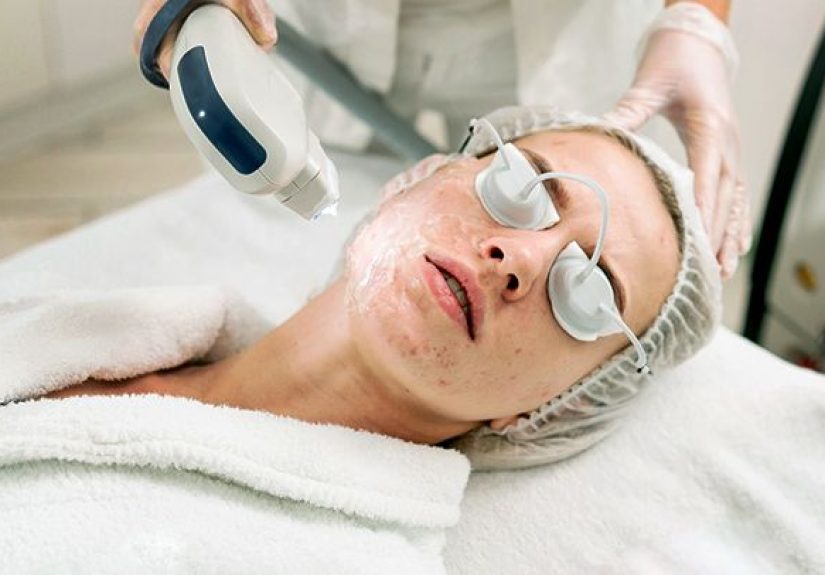
Lasers can improve texture by triggering collagen remodeling and smoothing surface irregularities. “Fractional” treatments target microscopic columns of skin while leaving surrounding areas intact to speed healing. Ablative lasers typically offer stronger results with more downtime, while non-ablative lasers may have less downtime but often require more sessions.
A practical example: someone with widespread boxcar scars might do fractional resurfacing sessions spaced out over time, paired with a pigment-safe skincare routine to reduce the risk of post-treatment darkening.
Microneedling (including RF microneedling)
Microneedling creates controlled micro-injuries that signal collagen production. It’s commonly used for rolling and boxcar scars and can be a solid option for many skin tones. Some practices combine it with platelet-rich plasma (PRP) or specific topicals.
About RF microneedling: it combines needles with radiofrequency energy. It can be effectivebut it’s also more technique-sensitive, and safety matters. Ask who’s performing it, what device is used, and how complications are handled. If your provider acts offended by questions, that’s not “exclusive.” That’s a red flag wearing a designer scarf.
Chemical peels (light to deep)
Peels use a chemical solution to exfoliate and remodel skin. Light and medium peels can help with discoloration and surface texture. Deeper peels can offer more dramatic results but have higher risks and longer recovery. For deeper skin tones, peel choice and prep are especially important to reduce unwanted pigment changes.
Dermabrasion and microdermabrasion
Dermabrasion mechanically “sands” the skin’s surface and can improve certain scars and unevenness. It’s more intensive than microdermabrasion (which is gentler and tends to help more with surface dullness than true pitted scars). The right candidate, technique, and aftercare make all the difference.
Subcision: the rolling-scar secret weapon
Rolling scars often look worse under side lighting because they’re tethered down by fibrous bands. Subcision releases these bands under the skin, allowing the area to lift. It’s frequently paired with fillers, microneedling, or lasers for better overall smoothing.
Dermal fillers: instant “lift,” often temporary
Fillers add volume under indented scars to make the surface look smoother. Some fillers are temporary (months), while others can last longer. Fillers can be especially helpful for wider, shallow atrophic scars. Many dermatologists use them conservatively to avoid an overfilled look.
TCA CROSS for icepick scars
Icepick scars can be narrow and deephard for broad resurfacing alone to fix. A targeted method called TCA CROSS places a high-strength acid precisely into the scar to stimulate remodeling. It’s technique-dependent and best done by experienced hands.
Punch excision / punch elevation
For select deep scars, a dermatologist may surgically remove the scar (punch excision) or lift it (punch elevation), then refine the area later with resurfacing. Think of it like fixing the pothole before repaving the road.
Raised scars: steroid injections, cryotherapy, and more
Hypertrophic scars and keloids may be treated with corticosteroid injections to flatten and soften tissue. Some cases use additional methods like cryotherapy (freezing), lasers for redness/thickness, or silicone gel/sheets as part of a plan. Raised scars can be persistent, and treatment often requires patience and repeat visits.
Skin Tone Matters: Avoiding “Fix One Problem, Create Another”
If you’re prone to hyperpigmentation, certain procedures (especially aggressive peels and some lasers) need extra caution. That doesn’t mean you can’t treat acne scarsit means your plan should be pigment-aware:
- Choose a clinician experienced with your skin tone and scar type
- Consider patch testing or conservative settings first
- Use diligent sun protection before and after procedures
- Discuss pre- and post-procedure skincare to reduce pigment risk
The goal is improvement without the side quest of months-long dark marks.
How Long Does It Take to See Results?
Quick wins exist (fillers can be immediate), but most texture improvement is gradual because collagen remodeling takes time. Many people do a series of sessions spaced weeks apart, then reassess. A realistic mindset is: progress, not perfection.
Also, lighting is a sneaky drama queen. Scars look worse in harsh overhead lighting and better in soft, even light. Track changes with consistent photos in the same lighting and angleotherwise you’ll think nothing’s happening until one day you catch your reflection and go, “Wait… is that smoother?”
Preventing New Scars: The Most Underrated Strategy
The best acne scar treatment is preventing the next one. If you have frequent deep breakouts, talk to a clinician sooner rather than later. Prescription options exist, and for severe or scarring acne, stronger treatments may be considered under medical supervision.
- Start acne treatment earlydon’t “wait it out” if you’re scarring
- Avoid picking/squeezing
- Use sunscreen daily
- Stick to a routine long enough to evaluate it (usually 8–12 weeks)
FAQ: Quick Answers to Common Questions
Can acne scars go away completely?
Many improve significantly, but complete removal is uncommon. The win is softer edges, smoother texture, and less visible contrast.
What’s the “best” acne scar treatment?
The best treatment matches the scar type: subcision for tethered rolling scars, targeted methods for icepick scars, resurfacing for broader texture changes, and injections/silicone-based strategies for raised scars. Combination approaches are common.
Is at-home microneedling worth it?
Many dermatologists caution against DIY microneedling at depths meant to remodel scars due to infection and injury risks. Professional treatments use sterile technique, controlled depth, and proper aftercarekey factors for both safety and results.
Will acne scar treatments make my skin thinner?
When done appropriately, many procedures aim to stimulate healthier collagen remodeling. Overdoing harsh exfoliation or aggressive treatments can irritate the skin barrier, so balance and professional guidance matter.
Real-World Experiences: What People Notice on the Road to Smoother Skin (About )
If you’ve ever searched “acne scar success story” at 1:00 a.m. with one eyebrow raised, you’re not alone. In real life, the journey to smoother-looking skin is less like a movie makeover montage and more like a well-organized playlist: some tracks are immediate bops, others are slow burns, and occasionally one is… confusing.
A common experience is realizing that texture and tone behave differently. People often report that dark marks fade first once they commit to daily sunscreen and a pigment-friendly routine. That’s because PIH is essentially overactive pigment responding to inflammation and when you stop “feeding” it with UV exposure, it gradually quiets down. Texture scars, on the other hand, don’t vanish just because you started using a fancy serum. Many people describe it as, “My skin looks brighter, but the dents are still there.” That’s normaland it’s why procedures exist.
Another pattern: the lighting reality check. People often say they feel great in bathroom lighting, then walk into a parking garage and suddenly their reflection looks like it’s being interrogated by a spotlight. Side lighting exaggerates rolling and boxcar scars. That’s also why progress can feel inconsistent. A helpful habit is taking photos once a month in the same location, same time of day, same angleso you can see true change instead of “today’s lighting mood.”
When people try in-office treatments, they frequently notice that the best results come from combinations, not a single miracle session. For example, someone with rolling scars may feel an immediate “lift” after subcision, then see gradual refinement after microneedling or fractional resurfacing. Others say that lasers improved overall smoothness but still left a few stubborn scars that needed targeted work. This is why dermatology plans often look like a strategy board: treat the tethering, rebuild volume, then resurface for polish.
The emotional side is real, too. People often describe a shift from “I want my old face back” to “I want my skin to look calmer and more even.” That mindset change matters because it helps you measure success by meaningful improvement rather than impossible perfection. Many also share that once scars softeneven 30–60%they feel less urge to cake on heavy makeup or avoid photos. Confidence tends to return in small, ordinary moments: running errands without concealer, sitting by a window, taking a selfie without zooming in to audit pores.
Finally, one of the most repeated “I wish I knew this sooner” lessons is: treat active acne aggressively enough to prevent new scars. People who wait years hoping acne will “just stop” often end up spending more time and money later on scar treatments. The most satisfying scar journeys are usually the ones where acne control and scar repair happen togetherbecause smooth skin isn’t just about fixing yesterday. It’s about not letting tomorrow add new chapters to the story.
Wrap-Up: Your Smooth-Skin Game Plan
If you take nothing else from this guide, take this: acne scars are treatable, but they’re not one-size-fits-all. Identify whether you’re dealing with color, texture, or both. Build a barrier-friendly routine (sunscreen + retinoid is a classic duo), and consider professional treatments based on your scar type. If you can, work with a board-certified dermatologistespecially if you’re prone to hyperpigmentation or have deep, tethered, or raised scars.
Smooth skin again isn’t a myth. It’s a planplus patienceplus the courage to stop picking. (Yes, I’m still looking at your fingers.)