Table of Contents >> Show >> Hide
- Quick Table of Contents
- What Moral Orel Was (and Why It Didn’t Stay “Just a Joke”)
- Adult Swim’s Brand: “Edgy” vs. “Uncomfortable”
- The Turning Point: When Satire Became a Mirror
- So Why Was It Canceled?
- Why Fans Are Re-Litigating It Now
- The Bigger Question: What Comedy Owes the Audience
- The Legacy of a Show That Refused to Stay Fun
- What to Take Away (Even If You Never Watch an Episode)
- Bonus: of Fan Experiences Related to the Topic
- SEO JSON
Content note: This article discusses themes of family dysfunction and abuse in general terms (no graphic details).
There are two kinds of “dark comedy” on TV. One kind throws a punch and keeps walkingsmirking, shrugging, and
pretending it didn’t hear the sound it made. The other kind throws the punch… then turns around and asks,
“Hey, why did that land so hard?”
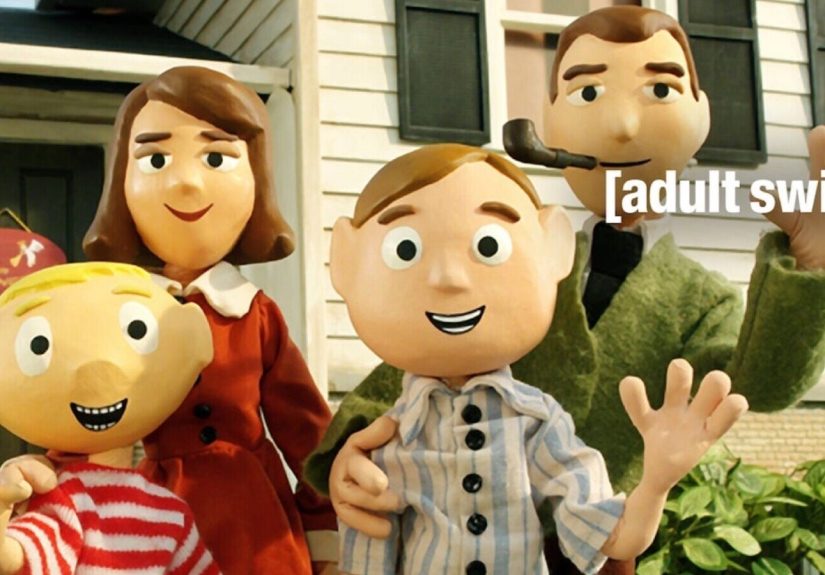
Moral Orel is the rare animated show that did the second thing on a network famous for doing the first.
For years, Adult Swim built a reputation on midnight chaos: jokes that were loud, fast, and often intentionally
tasteless. Then a stop-motion series arrived that initially looked like another edgy parodyuntil it slowly,
deliberately, and kind of bravely started treating its own premise like a crime scene.
Today, as clips circulate and rewatch threads blow up, fans aren’t just reminiscing. They’re confronting an
uncomfortable idea: did Moral Orel get canceled because it made Adult Swim feel bad about the kind of
“abuse jokes” the network could laugh atuntil the show insisted on showing the emotional reality behind them?
Quick Table of Contents
- What Moral Orel Was (and Why It Didn’t Stay “Just a Joke”)
- Adult Swim’s Brand: “Edgy” vs. “Uncomfortable”
- The Turning Point: When Satire Became a Mirror
- So Why Was It Canceled?
- Why Fans Are Re-Litigating It Now
- The Bigger Question: What Comedy Owes the Audience
- The Legacy of a Show That Refused to Stay Fun
- What to Take Away (Even If You Never Watch an Episode)
- Bonus: of Fan Experiences
- SEO JSON
What Moral Orel Was (and Why It Didn’t Stay “Just a Joke”)
On paper, Moral Orel sounds like a neat little pitch you can sell in a hallway:
“Stop-motion kid in a small town learns religious lessons… badly.” The early episodes lean into that:
a sweet, eager kid applies moral advice too literally, chaos follows, and the adults “correct” him in ways
that reveal how warped the town’s values really are.
That’s the hook: satire aimed at hypocrisy. But the show’s real trick is that it doesn’t stop at pointing
and laughing. It keeps tugging at the thread until the sweater unravels, then stands there holding a sad pile
of yarn like, “So… are we still doing the laugh track thing, or…?”
Stop-motion that looked like comfortand wasn’t
Part of the emotional whiplash comes from the aesthetics. Stop-motion can feel nostalgiclike childhood crafts,
clay figures, and toy-box imagination. Adult Swim viewers were already primed for stop-motion as a medium for
ridiculous, anything-goes humor. Moral Orel used the same tactile style, then smuggled in something sharper:
consequences.
It’s one thing to make a quick joke at 1:17 a.m. It’s another thing to build a world in 3-D, give it a town map,
and then ask what happens when the “joke” is someone’s daily life. Moral Orel asked that question until the
room got quiet.
Adult Swim’s Brand: “Edgy” vs. “Uncomfortable”
Adult Swim’s identity has long been built on boundary-pushing. But “pushing boundaries” can mean two very different
things:
- Edgy: shock, provocation, taboo references, fast laughs.
- Uncomfortable: emotional honesty, moral discomfort, and the sense that the joke is on you.
Adult Swim excelled at “edgy.” The network specialized in comedy that felt like it was daring you to be offended
and daring you to admit you were entertained anyway. In that environment, Moral Orel looked at first like it
belonged: it was irreverent, it targeted cultural hypocrisy, and it wasn’t afraid of going dark.
But then it did something weird for late-night comedy: it got responsiblenot “polite,” not “safe,”
but responsible in the sense that it treated harm as harm. It made it harder to laugh without thinking.
That’s a dangerous move for a programming brand built on effortless, consequence-free shock.
The difference between “taboo” and “truth”
A taboo joke often works because it stays abstract. It’s a word, a reference, a quick cutaway.
Moral Orel started pulling taboo topics out of abstraction and placing them inside character arcs.
When that happens, audiences don’t just reactthey reflect. And reflection is not always a ratings-friendly mood.
The Turning Point: When Satire Became a Mirror
Many fans describe the show’s evolution like a trapdoor: you think you’re walking onto a familiar Adult Swim stage,
thenwhoopssuddenly you’re in a drama about why people become the way they are.
The first season’s structure feels almost like a fable: a sermon, a misinterpretation, a lesson gone sideways.
Over time, the show shifts away from “Orel causes trouble” to “Orel witnesses the damage adults do.” That’s a huge
tonal change, because it relocates the comedy. The laugh isn’t in the kid’s mistake anymore. The laugh (if there is
one) is trapped inside the adults’ hypocrisyand the sadness underneath it starts showing through.
How the show “weaponized” sincerity
Here’s the genius (and the risk): Orel’s sincerity isn’t just a character trait. It’s a tool.
When a child is genuinely trying to be good, the adults around him look worsenot in a cartoon-villain way,
but in a painfully familiar way. The show turns “religious satire” into a broader critique of:
- performative morality (“look holy,” not “be kind”)
- social conformity (“fit in,” not “tell the truth”)
- community complicity (“everyone knows,” so no one says anything)
That critique can be hilariousuntil it starts being accurate. Then it becomes… the kind of thing that makes a
network executive stare at a script and hear their own brand heartbeat in the distance.
So Why Was It Canceled?
“Canceled” is rarely one clean reason. It’s usually a stew: creative direction, audience response, internal politics,
brand anxiety, and someone in a meeting saying, “This is not what we ordered.”
With Moral Orel, the public story that surfaces again and again is that the show got too dark for Adult Swim’s
comfortparticularly after a third-season episode often cited as a final breaking point. The show’s creator later
described the vibe as the network feeling it was “getting too depressing.” That’s not the same as “too offensive.”
It’s closer to: “This is making people feel something we can’t joke our way out of.”
Clue #1: The show didn’t “fit,” even if it performed
In interviews, people involved with the show have pointed to a brand mismatch. Even among Adult Swim’s lineup,
Moral Orel wasn’t just “weird” or “edgy”it was spiritually heavy. It asked viewers to sit with discomfort.
That’s not a dealbreaker for art; it is a dealbreaker for a programming block built like a party.
The show’s stop-motion style may have lured curious viewers in, but some decided early that it “wasn’t funny” in the
way they expected. And in the attention economy, “not funny” is a harsher sentence than “controversial.”
Clue #2: Season 3 was cut down
Reports and episode counts suggest the third season was shortened from an intended longer run, with unproduced
scripts left behind. That kind of production cut is a classic sign that the decision wasn’t “We love this, do more.”
It’s “Let’s wrap this up… gently… before it becomes a whole situation.”
Clue #3: The show turned “abuse jokes” into an indictment
Here’s the heart of what fans are confronting: Adult Swim could host a lot of jokes about harm when those jokes stayed
weightless. But Moral Orel started showing the emotional gravity that those jokes usually dodge.
When you treat a serious subject like a quick gag, the audience can keep a safe distance. When you treat it like a
lived reality, the audience gets closerand starts asking questions that don’t feel like entertainment anymore:
- Who gets hurt when we laugh?
- Why did we laugh the first time?
- What does it mean that this was “normal” comedic material for so long?
Those questions aren’t just aimed at viewers. They’re aimed at the network that greenlit the culture around those jokes.
And it’s tough to keep selling “anything goes” when one of your own shows is basically saying, “Yeah… and here’s what
that does to people.”
Why Fans Are Re-Litigating It Now
The internet loves rediscovery. But Moral Orel isn’t being rediscovered like an old song that still slaps.
It’s being rediscovered like an old diary entry that makes you whisper, “Oh… I was not okay, huh?”
A few cultural forces make this reappraisal feel especially loud:
- Clip culture: Short scenes circulate without context, highlighting how emotionally intense the show can be.
- Changing comedy norms: Audiences are more willing to critique “punching down” and more interested in accountability.
- Adult animation grew up: Modern animated series regularly mix comedy with trauma, regret, and consequences.
In the mid-2000s, the idea of an “adult cartoon” often meant a promise: you won’t have to take this seriously.
Today, a lot of adult animation sells itself on the opposite promise: you’ll laugh, and then you’ll feel weird about it.
Moral Orel did that earlyand fans now see it as ahead of its time.
Fans aren’t just mad it endedthey’re mad at the reason
Plenty of cult shows get canceled, and fans make peace with it (eventually). What keeps Moral Orel spicy is the
sense of hypocrisy: a network comfortable with edgy comedy supposedly drew the line when a show asked for empathy.
That’s why the discourse isn’t only “bring it back.” It’s “look at what got rejected.”
Fans hear the implied message: “You can joke about harm, but don’t make us feel it.”
And that message feels especially gross when the show’s whole point was that communities often hide harm behind
respectability, ritual, and a smile.
The Bigger Question: What Comedy Owes the Audience
Comedy is allowed to be dark. It’s allowed to be offensive. It’s allowed to be messy.
The more interesting question is: what is the joke doing?
Three kinds of “dark jokes,” and why the third one scares networks
- Taboo-as-thrill: “Can you believe we said that?” The laugh is adrenaline.
- Taboo-as-cynicism: “Everything is awful, so nothing matters.” The laugh is distance.
- Taboo-as-revelation: “Everything is awful, and it matters a lot.” The laugh catches in your throat.
Adult Swim built an empire on the first two. Moral Orel drifted into the third. And the third kind has a
side effect: it makes brands look back at their own catalog and wonder what they’ve been normalizing.
That’s not a comfy feeling to monetize. It’s not a fun mood for a late-night lineup. And it’s not what you want when
you’re trying to be the cool table in the cafeteriaespecially if the cool table survives by pretending nobody gets
hurt.
The Legacy of a Show That Refused to Stay Fun
Even with a shortened run, Moral Orel left a fingerprint on adult animation: the idea that a cartoon can be
hilarious and emotionally devastating without apologizing for either.
Why it still matters
- It treated satire like a responsibility: not just mocking institutions, but showing the human cost.
- It trusted the audience to handle discomfort: even if the network didn’t want that discomfort associated with its brand.
- It proved “funny” isn’t the only metric: some stories land because they’re honest, not because they’re light.
The irony is that many modern shows now operate in the lane Moral Orel helped sketch: humor plus consequence,
comedy plus character damage, satire plus sadness. If Moral Orel debuted laterafter audiences were trained by
years of prestige storytellingits “too depressing” reputation might have been a selling point.
What to Take Away (Even If You Never Watch an Episode)
The conversation around Moral Orel isn’t just about a cancellation. It’s about a cultural shift:
we’re getting better at noticing when “jokes” are a way of not dealing with reality.
Fans confronting the show’s ending are also confronting themselvestheir old laughs, their old blind spots, and the way
media taught everyone to treat certain kinds of harm as punchlines. That’s not fun. It’s not easy. It’s also exactly
why the show remains unforgettable.
The weird truth is: Adult Swim didn’t just cancel a show. It arguably canceled a mirror.
And now the mirror keeps showing up anywaypixelated, clipped, reposted, and discussed by people who have realized
that sometimes the darkest joke isn’t what a show says… it’s what a network is willing to laugh at.
Bonus: of Fan Experiences Related to the Topic
If you spend enough time in Moral Orel fan spacesrewatch threads, clip compilations, late-night Discord chats,
or those “I can’t believe this aired” TikTok stitchesyou’ll notice a pattern: people don’t talk about the show like a
normal comedy. They talk about it like a memory they didn’t fully process the first time.
One common experience is the “two-watch phenomenon.” Fans often describe a first watch that feels like edgy satire
with stop-motion charm, followed by a second watchyears laterwhere the same scenes land completely differently.
The jokes that once felt like transgressive fun suddenly read as warning signs. The town’s “quirks” stop being quirky.
The hypocrisy stops being a gag and starts feeling like a recognizable social ecosystem: everyone smiling, everyone
performing righteousness, everyone looking away at the exact wrong moment.
Another shared experience is the group-chat whiplash. Someone posts a clip expecting laughsbecause it’s Adult Swim,
because it’s a cartoon, because it’s literally made of little clay peopleand the replies come back like:
“Why am I sad?” “I forgot it got like that.” “This is… too real.” The humor still exists, but it’s paired with
a dawning realization that the show was never satisfied with cheap shock. It kept circling back to a single, stubborn
idea: jokes can hide damage, and communities can hide damage even better.
Fans also describe a strange kind of gratitude mixed with frustration. Gratitude because Moral Orel was willing
to take serious themes seriouslyespecially at a time when adult comedy often treated anything painful as a fast punchline.
Frustration because the show’s cancellation feels like a lesson in how entertainment systems work: boldness is welcome
until it threatens the brand story. “Edgy” is profitable. “Empathy” can be… inconvenient.
And then there’s the fandom’s ongoing ritual: trying to explain Moral Orel to someone who hasn’t seen it.
Fans usually start with a joke (“It’s like a religious satire in stop-motion!”) and then pause, recalibrate, and add:
“But it gets really heavy.” That pause is practically part of the show’s legacy. It’s the moment you realize you’re not
recommending a sitcomyou’re recommending an emotional experience that just happens to include jokes.
In a way, that’s the clearest “fan confrontation” of all: the realization that the show didn’t just cross lines.
It crossed into sincerity, and it made people carry the weight afterward. For many fans, that’s exactly why it mattered
and exactly why it didn’t fit neatly into the kind of late-night comedy slot where you’re supposed to laugh, snack,
and forget by morning.