Table of Contents >> Show >> Hide
- First, the big truth: An air fryer is basically a compact convection oven
- How they work (and why the results feel different)
- Air fryer vs. convection oven: the key differences that actually matter
- Cooking conversions: How to adapt recipes between air fryer and convection oven
- Best use cases: What each appliance is genuinely great at
- Which should you choose? A practical decision guide
- Safety and success tips (because crisp is great, but “cooked through” is non-negotiable)
- Bonus: Real-world experiences that help you decide faster
- Conclusion: The best choice is the one you’ll actually use
Choosing between an air fryer and a convection oven can feel like deciding between a sports car and a minivan. Both get you where you’re going, but one is built for quick zips and crispy corners, and the other is built to haul a whole meal (and maybe a dessert) in one trip.
Here’s the good news: the “air fryer vs. convection oven” debate isn’t about right or wrong. It’s about matching the appliance to your cooking habits, space, and what you actually make on a Tuesday night when you’re hungry and mildly impatient.
First, the big truth: An air fryer is basically a compact convection oven
If you’ve heard someone say, “An air fryer is just a convection oven,” they’re not being dramatic. They’re being (annoyingly) correct. Both use a fan to move hot air around food so it browns more evenly and cooks faster than a traditional “still air” oven. The difference is how intensely they do itand how much food they can handle at once.
How they work (and why the results feel different)
How an air fryer works
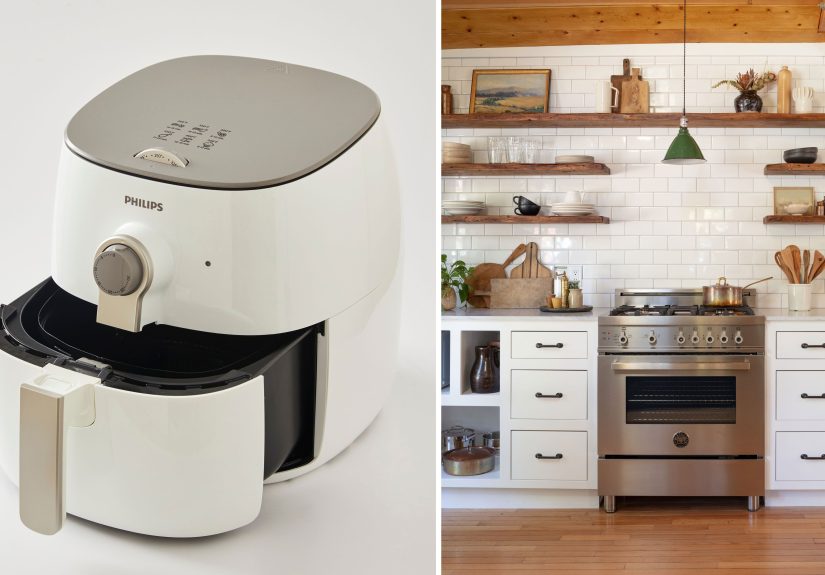
An air fryer is a countertop appliance with a heating element and a strong fan that pushes hot air around a small cooking chamber. Because the space is tight, heat builds quickly and the air moves fast, which helps food brown and crisp efficientlyespecially when it’s sitting in a perforated basket or on a vented tray. In other words: it’s a tiny hot tornado with a purpose.
Air fryers are famous for turning frozen foods (fries, nuggets, pizza rollsno judgment) into crunchy, snackable success. They’re also great for reheating leftovers that you don’t want to turn soggy in the microwave.
How a convection oven works
A convection oven can be a full-size wall oven/range or a countertop convection toaster oven. Either way, it uses a fan (and usually an exhaust system) to circulate hot air. The big advantage is capacity: you can roast a whole chicken, bake multiple trays of cookies, or cook a complete sheet-pan dinner without playing “batch-cooking Tetris.”
Many modern ovens now include an “air fry” setting. That mode is still convection cooking, but typically with more aggressive airflow and/or heat management designed to mimic the crispier finish people expect from countertop air fryers.
Air fryer vs. convection oven: the key differences that actually matter
1) Cooking speed and preheat time
Air fryers tend to preheat faster and cook small portions faster because you’re not heating a big oven cavity. For a couple of servings of salmon, a handful of frozen fries, or a tray of roasted broccoli, an air fryer can feel like a weeknight superpower.
Convection ovens still cook faster than conventional ovens, but you’re usually heating more metal and more air. That extra space is a feature (hello, capacity), but it can add a little time when you’re only cooking a small amount.
2) Crispiness and browning
Air fryers are engineered for crisping. The compact chamber and strong airflow make it easier to dry the surface of food, which supports browning and crunchespecially with a light coating of oil or when cooking naturally fatty foods (like chicken thighs or wings).
Convection ovens brown well too, but the airflow is often less concentrated around the foodespecially in larger ovens. You can still get crisp results, but you may need a bit more time, a higher rack position, a convection-friendly pan, or a strategy like using a wire rack over a sheet pan.
3) Capacity and batch cooking
This is where convection ovens dominate. If you cook for a family, meal prep, host friends, or just enjoy making more than two servings at once, a convection oven is the practical choice.
Air fryers are best for small-to-medium batches. You can cook for more people, but you’ll likely do it in roundsand everyone knows the first round gets eaten “for quality control.”
4) Versatility
Convection ovens are all-around workhorses: bake, roast, broil, toast (in countertop models), and handle big pans and multiple dishes. If you’re the kind of person who bakes cookies, roasts vegetables, and makes casseroles, the convection oven is a better “one appliance to rule them all.”
Air fryers can roast, reheat, and even bake smaller items, but they’re not always ideal for delicate baked goods or large-format baking. They’re the specialists that happen to do a few generalist tasks pretty well.
5) Energy use and kitchen heat
For small meals, air fryers can be more efficient because they heat a smaller space and often run for shorter times. They also spill less heat into your kitchen, which matters if you live somewhere warm (or your AC already sounds like it’s working overtime).
For large meals, a convection oven can be more sensible because you can cook more food at once. Efficiency isn’t only about wattsit’s also about whether you’re cooking dinner in one cycle or three.
6) Cleanup and maintenance
Air fryers are convenient until you meet the basket after cooking bacon. Many baskets and trays are dishwasher-safe, but grease can cling to perforations and corners. If you air fry a lot, regular cleaning matters (and helps prevent smoke and lingering odors).
Convection ovens usually require less frequent deep-cleaning for day-to-day use, but when they do get messy, cleaning a full oven is… a personality test.
7) Counter space and storage
Basket-style air fryers take up space but are generally smaller than toaster oven-style “air fryer ovens.” Convection toaster ovens often demand serious countertop real estate, but they replace multiple appliances (toaster + oven + air fry function) if you use them enough.
Cooking conversions: How to adapt recipes between air fryer and convection oven
If you want your food to come out right (and not “crispy on the outside, still auditioning to be raw on the inside”), use these conversion rules as starting points and adjust based on your appliance and portion size.
Convection oven conversion basics
- Reduce temperature by about 25°F compared with conventional oven directions (common convection guidance).
- Start checking for doneness 20–25% earlier than the stated bake/roast time.
- Use the middle rack for even airflow unless a recipe suggests otherwise.
Air fryer conversion basics
- Reduce cooking time (often by roughly 15–30%) for comparable oven directions, especially with small portions.
- Consider lowering the temperature slightly (often 10–25°F) if food browns too fast before cooking through.
- Don’t overcrowd: give food space so the air can do its job.
- Shake or flip halfway for even browningespecially fries, wings, and veggies.
Pro tip: If you’re using an oven’s “air fry” mode, follow the manufacturer’s advice for rack placement and cookware. Many brands recommend a basket/tray that maximizes airflow, and some suggest skipping preheating for certain packaged frozen foods.
Best use cases: What each appliance is genuinely great at
Air fryer wins for…
- Frozen foods (fries, tots, nuggets) with maximum crunch and minimal effort
- Reheating leftovers like pizza, fries, or fried chicken so they don’t go limp
- Small-batch roasting (Brussels sprouts, broccoli, asparagus)
- Quick proteins like salmon fillets, chicken thighs, pork chops (especially when you want browning)
- Snacky cooking when you want “fast and crispy” more than “large and elaborate”
Convection oven wins for…
- Big meals (whole chicken, turkey breast, sheet-pan dinners)
- Baking (cookies, cakes, breadsespecially in full-size ovens)
- Multiple trays at once (meal prep, party food, holiday cooking)
- Roasting large vegetables (squash halves, multiple pans of potatoes)
- One-and-done cooking when you don’t want to cook in batches
Which should you choose? A practical decision guide
Choose an air fryer if…
- You cook for one to three people most nights
- You want fast, crispy results with minimal preheating
- You reheat leftovers often and hate soggy texture
- You don’t want to heat up your whole kitchen for a small meal
- You like easy “set it and forget it” cooking (with a quick shake halfway)
Choose a convection oven if…
- You cook for a family or regularly cook multiple components at once
- You bake frequently (cookies, muffins, breads, casseroles)
- You want space and flexibility more than maximum crispiness
- You prefer fewer batches and bigger pans
- You want an appliance that can handle holidays and hosting
Consider a “best of both” option if…
- You want crisping power but need more room than a basket air fryer offers
- You like the idea of a convection toaster oven with an air-fry mode that can toast, bake, broil, and air fry
- You already own a convection oven and mainly want better crisping (an oven air-fry setting plus the right tray can get you close)
Safety and success tips (because crisp is great, but “cooked through” is non-negotiable)
- Use a food thermometer for meats and poultry. For example, poultry should reach 165°F internal temperature for safety.
- Avoid overcrowding. Airflow is the whole point of air frying and convection cooking.
- Use the right cookware. Perforated trays, wire racks, and baskets improve airflow and crisping.
- Watch sugar and marinades. Sweet sauces can brown fast (or burn) in high-airflow appliancesadd them near the end when possible.
- Don’t expect wet batter magic. Beer-battered fish and tempura-style coatings generally don’t “air fry” like deep frying without adjustments.
Bonus: Real-world experiences that help you decide faster
Reading specs is helpful, but most people decide whether they love an air fryer or a convection oven based on everyday friction: how it fits into real life, how forgiving it is when you’re distracted, and whether cleanup feels like a small task or an epic quest.
One common “aha” moment with air fryers is realizing that airflow is the recipe. When people feel underwhelmed, it’s usually because the basket is too full. Fries stacked like a tiny potato skyscraper don’t crisp evenly; they steam. The air fryer works best when food is in a single layer or close to it, with enough space for hot air to circulate. That’s why many folks end up cooking in two rounds for truly crispy wings or friesand why they sometimes keep the oven as the “big batch” backup.
Another real-life pattern: air fryers become the go-to for lunches, snacks, and “small dinner energy”. Think quesadillas, reheated pizza, roasted chickpeas, quick salmon, crispy tofu, or a tray of veggies you can toss into a bowl with sauce. People who don’t love to cook often like air fryers because they provide a clear finish line: timer done, food browned, minimal guesswork. It feels less like “baking” and more like “press a button, receive crunch.”
Convection ovens, on the other hand, win loyalty from people who cook with more “meal architecture.” If you’re the type to roast veggies while a protein cooks and a side warms, a convection oven supports that multi-part plan. Home cooks often say convection is the difference between “good enough roast chicken” and “wow, that skin actually browned nicely,” especially when you use a rack and manage airflow. And if you bake, convection can feel like a cheat code for even browningthough it also teaches a lesson: cookies can go from golden to “oops” faster than expected when air is moving.
Many people who buy an air fryer expecting deep-fryer results report a reset in expectations: it doesn’t taste like fast-food fried chicken, but it can deliver a satisfying crisp exterior with far less oil. That “less oil” experience is often practical rather than preachyless splatter, less lingering fried smell, and less grease pooling on the plate. When people love their air fryer, it’s usually because it makes weeknight food easy, not because it makes it “health food.”
Cleanup is another deciding factor in real households. Basket air fryers are quick to clean when you’re cooking something dry or lightly oiled, but greasy foods can gum up the perforations. Some people handle this by lining the basket with perforated parchment, soaking immediately after cooking, or choosing recipes that don’t aerosolize grease. Convection ovens avoid daily basket scrubbing, but they can collect splatter over timeespecially if you roast at high heat often. In practice, air fryers feel like “small, frequent cleaning,” while ovens feel like “big cleaning, less often.”
A final real-world tip: if you’re torn, people often find the happiest middle ground with a convection toaster oven that includes an air-fry mode. It’s not as instantly fast as a compact basket air fryer, but it’s more versatile, fits more food, and can replace multiple appliances. For many kitchens, that’s the sweet spot: crisp when you want it, capacity when you need it, and fewer gadgets playing bumper cars on the countertop.
Conclusion: The best choice is the one you’ll actually use
If your priority is fast, crispy food in small batchesespecially frozen snacks, quick proteins, and re-crisping leftoversan air fryer is the fun, efficient pick. If your priority is cooking larger meals, baking, and handling multiple dishes at once, a convection oven is the more versatile workhorse. And if you want a middle path, a convection toaster oven with an air-fry setting can deliver strong everyday value without locking you into one style of cooking.
The real win isn’t choosing the “best” appliance on paperit’s choosing the one that makes your weeknight cooking easier, tastier, and less likely to end with you eating cereal at 9 p.m. over the sink.