Table of Contents >> Show >> Hide
- Who Is Arturo Montanelli?
- Why the Lecco Setting Matters
- The Power of Concrete, Steel, and Raw Wood
- Minimalism, but Make It Livable
- How the House Reflects Italian Design Values
- Lessons Designers and Homeowners Can Steal, Respectfully
- Why This Architect Visit Still Resonates
- Extra Experience: What Visiting Arturo Montanelli’s Italy Feels Like
- Conclusion
Some houses try to impress you in the first five seconds. They show up wearing sequins at breakfast, yelling about “luxury” before you have even found the coffee. Arturo Montanelli’s work, at least in the Lecco residence that inspired this architect visit, plays a very different game. It is quieter, leaner, and far more confident. Instead of showing off, it settles into the landscape and lets the materials do the talking. And the materials, to be fair, have excellent taste.
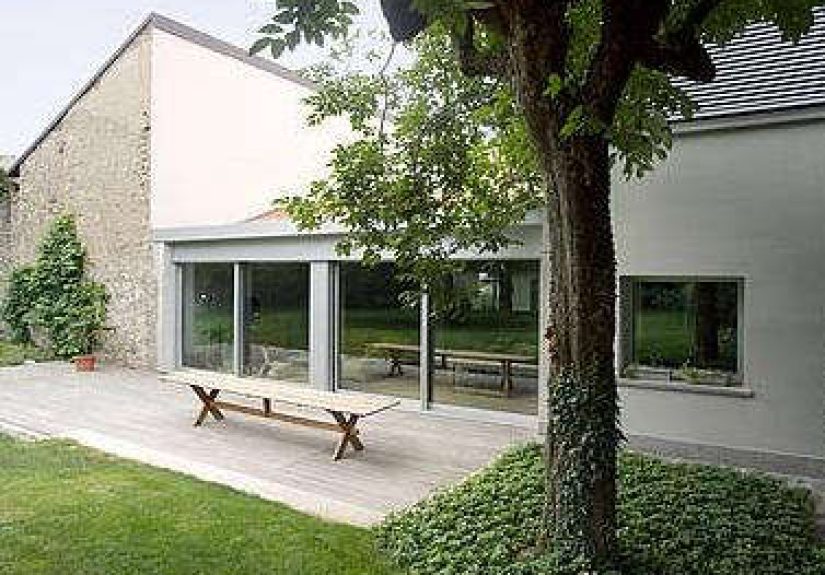
Set in Lecco, near Milan and at the southeastern edge of Lake Como’s dramatic terrain, the house associated with Montanelli is remembered for its restrained modernism and its use of concrete, steel, and raw wood. That combination sounds stern on paper, but in practice it creates a home that feels calm rather than cold, minimal without becoming joyless, and disciplined without acting like it swallowed an architecture textbook whole. In other words, this is Italian residential design with a pulse.
This article takes a closer look at what makes Arturo Montanelli in Italy such an intriguing subject for design lovers. It also explores why this project still feels fresh: its material honesty, its relationship to place, its balance of ruggedness and warmth, and its refusal to drown in decorative noise. If you like architecture that whispers instead of shouts, welcome. You are among friends.
Who Is Arturo Montanelli?
Arturo Montanelli is an architect and engineer associated with Lecco, Italy, where his practice has developed work shaped by local environmental and landscape conditions. Public project profiles connect his studio to an architectural philosophy centered on quality across the full process of design and construction, collaboration with clients and consultants, and careful attention to how buildings sit within their surroundings. That last point matters because it helps explain why his residential work feels so rooted rather than imposed.
Montanelli’s portfolio is not limited to private homes. Publicly listed projects tied to his practice include CampusPoint in Lecco, an educational and office project, as well as residential and showroom work in Como and Milan. That range matters. Architects who move between homes, institutional spaces, and adaptive interventions often develop a sharper understanding of circulation, material durability, and what people actually do inside buildings once the photographers leave. Spoiler: they live there.
In the case of the Lecco house featured in the architect visit, Montanelli’s approach appears especially clear. The home is low-key, modern, materially restrained, and deeply interested in atmosphere. It does not beg for applause. It earns it slowly.
Why the Lecco Setting Matters
You cannot really talk about an architect visit in this part of Italy without talking about place. Lecco sits at the southern end of the eastern branch of Lake Como, in Lombardy, north of Milan. The larger lake region is framed by mountains, layered views, shifting light, and a long history of villas, workshops, stone construction, and cultivated landscapes. This is not a backdrop that tolerates architectural nonsense for long. A house here has competition, and the competition is called geography.
That is precisely why the best architecture in northern Italy often avoids cheap spectacle. In settings like Lake Como and the Lecco area, a successful house needs to engage with light, climate, topography, and view corridors. It also needs to respect the visual weight of the landscape. A flashy building might briefly dominate an Instagram feed, but the mountain will still win the argument.
Montanelli’s work seems to understand this. Rather than fighting the surroundings, the design language associated with him leans into restraint. The structure becomes a frame for experience, not an ego trip made of expensive finishes. The result is a home that feels more Italian in the meaningful sense: attentive to craft, proportion, material depth, and the slow choreography between indoors and out.
The Power of Concrete, Steel, and Raw Wood
The most frequently cited detail about this Arturo Montanelli house is its material palette: concrete, steel, and raw wood. That trio is doing a lot of heavy lifting, both visually and emotionally.
Concrete gives the house gravity
Concrete often gets blamed for every bad building decision made since the middle of the 20th century, which is unfair. In disciplined hands, it can create quiet strength, thermal stability, and a sense of permanence. In homes across Italy and beyond, concrete is often softened by daylight, open space, and tactile finishes. Here, the effect is not bunker chic for people who own too many black turtlenecks. It is structure made visible, honest, and composed.
Steel adds precision
Where concrete brings mass, steel brings line. Thin profiles, crisp edges, and strong frames help minimal architecture avoid feeling mushy. Steel can sharpen openings, support larger spans, and visually organize a room without cluttering it. In a house like this, steel likely acts like punctuation: understated but essential.
Raw wood brings the human temperature back up
And then comes the hero that saves modernism from becoming emotionally unavailable: wood. Raw wood introduces grain, softness, and imperfection. It absorbs light differently than metal or concrete, and it reminds the eye that not every surface needs to behave like a spreadsheet. In Italian design culture, even modern work often prizes traditional materials and craft, and wood is central to that continuity. It turns austerity into warmth.
Together, these materials create what might be called a muted modernist vibe. That phrase is useful because it suggests the house is not sterile. It is calm. The palette is limited, but the experience is rich.
Minimalism, but Make It Livable
One of the smartest things about the design associated with Arturo Montanelli is that it appears to understand a truth many minimalist houses miss: people are not museum exhibits. They own books, leave cups on tables, open windows, and occasionally commit the crime of relaxing. Good residential minimalism must allow for life.
This is where material depth becomes so important. When a house strips back color and ornament, surfaces have to do more. A wall is no longer just a wall; it becomes texture, shadow, and mood. A floor becomes continuity. A stair becomes sculpture. A window becomes a long conversation with the landscape.
That approach aligns with broader architectural thinking about blending houses with nature and treating the outdoors as part of the living experience. The best homes do not simply provide a view; they create a relationship between interior rhythms and exterior conditions. Light changes. Weather changes. Seasons change. The house does not resist those shifts. It reveals them.
So when Montanelli’s Lecco residence is described as low-key, that should not be mistaken for plain. It is curated restraint. Every decision has to be more exact because there are fewer distractions. That is harder than decorative excess, not easier. Anyone can add one more object. It takes nerve to stop.
How the House Reflects Italian Design Values
Italian design has long balanced innovation with reverence for craft. Even when new production methods and modernist ideas transformed architecture and interiors, Italian designers continued to prize materials like wood, stone, glass, and marble. That cultural attitude helps explain why houses in Italy often feel polished without seeming mass-produced.
In the Montanelli project, that sensibility shows up in the marriage of rawness and refinement. Concrete and steel could have tipped the house into industrial severity. Wood pulls it back. The muted palette could have become flat. Texture gives it depth. The modernist lines could have felt abstract. The relationship to landscape makes them legible and lived-in.
There is also something distinctly northern Italian about the mood. The house does not rely on postcard clichés of Mediterranean exuberance. It is not all lemons, shutters, and dramatic hand gestures from the balcony. Instead, it embraces a more composed, alpine-adjacent elegance: restrained colors, careful structure, and a respect for atmosphere. That does not make it less Italian. It makes it specifically of its place.
Lessons Designers and Homeowners Can Steal, Respectfully
You may not be building a house in Lecco with a sweeping Italian landscape outside your windows. Tragic, I know. But there are still plenty of useful lessons here.
1. Limit the palette
Choosing fewer materials often produces a stronger result than trying to fit every beautiful sample into one project. Concrete, steel, and wood work because each one has a job to do.
2. Let texture replace clutter
If you want a calm interior, you do not need to make it boring. Grain, matte finishes, stone, brushed metal, and natural light can create richness without visual chaos.
3. Design for context, not just style
A house should respond to where it is, not just to what is trending online. Climate, landscape, privacy, and daily routines matter more than whatever algorithm is currently obsessed with boucle.
4. Warm up modern architecture
Minimalist homes often succeed or fail based on whether they remember humans have feelings. Raw wood, thoughtful proportions, and soft natural light can make a rigorous house feel welcoming.
5. Build atmosphere, not just rooms
The most memorable houses are not always the most decorated. They are the ones that control mood: the shift from shadow to sunlight, the feel of a stair underfoot, the view framed at the end of a hallway, the quiet of a room that knows exactly what it is doing.
Why This Architect Visit Still Resonates
Years after it first circulated, Architect Visit: Arturo Montanelli in Italy still resonates because it captures something timeless. Not trendy-timeless, which usually lasts about 14 minutes. Actual timelessness. The house trusts proportion over gimmick, materials over styling, and place over performance.
It also reflects a larger shift in how many design lovers now think about beauty. More and more, people are drawn to homes that feel grounded, tactile, and emotionally quiet. They want spaces that offer relief from visual overload. They want architecture that can age with grace. They want rooms that look better in morning light than they do under a dozen strategically placed lamps during a photo shoot.
Montanelli’s work, at least in this example, seems to understand that instinctively. It is rigorous, but not icy. Minimal, but not empty. Modern, but not rootless. That is a rare balance.
Extra Experience: What Visiting Arturo Montanelli’s Italy Feels Like
A visit to a house like Arturo Montanelli’s in Lecco does not begin with a grand flourish. It begins with a slowdown. The road, the air, the changing light off the lake region, the mountains keeping their own counsel in the background, all of it prepares you for architecture that does not rush to explain itself. You do not walk in and get hit with a chandelier performing an opera. You walk in and feel the quiet tighten into focus.
The first thing you notice is the confidence of the materials. Concrete is not hidden behind something friendlier. Steel does not apologize for being steel. Raw wood does what raw wood does best: it softens the scene without making it sentimental. There is a discipline to the space, but not a harsh one. It feels edited, not deprived. Like someone removed all the visual small talk so the house could finally say something meaningful.
As you move through the rooms, the experience becomes less about individual objects and more about transitions. One threshold opens to another. A darker, more enclosed area gives way to light. A window does not just frame a view; it calibrates your pace. You pause more. You look longer. Even the air seems to travel differently through spaces planned with this kind of restraint. The home encourages a sort of mental unclenching, which is impressive for a building made partly of concrete.
Then there is the landscape, the silent co-author of the whole project. In this part of Italy, scenery is not decorative background; it is active presence. The surrounding geography makes every opening count. You understand why a loud, overdesigned interior would fail here. The architecture has to be strong enough to hold its own and humble enough to let the outdoors remain the star. That balance is what makes the visit memorable. Nothing feels accidental, yet nothing feels desperate to impress.
What lingers most is the mood. You remember the texture of surfaces, the calm of the palette, the way natural light lands on wood and changes the emotional temperature of a room. You remember how the house feels composed rather than finished, as if it could keep revealing itself through different hours of the day. Morning would belong to the cool clarity of concrete. Late afternoon would belong to the wood. Evening would belong to shadow and steel outlines.
And that is probably the best compliment you can pay a house like this: it stays with you not because it shouted, but because it never needed to. Arturo Montanelli’s Italy, at least through this visit, feels like architecture stripped of bluff and vanity. It reminds you that modern design can still be warm, that restraint can still be sensual, and that a home can feel deeply luxurious without resorting to obvious tricks. It leaves you wanting to borrow the mood, the discipline, and maybe a little of the view.
Conclusion
Architect Visit: Arturo Montanelli in Italy is compelling because it shows how much power there is in architectural restraint. In Lecco, near the magnetic landscape of Lake Como and within reach of Milan’s design culture, Montanelli’s work demonstrates that a house does not need ornamental excess to feel rich. Concrete, steel, and raw wood are enough when they are handled with care, balanced by light, and tied to a strong sense of place.
The project also offers a useful reminder for anyone interested in Italian architecture, modern house design, or minimalist interiors: good design is rarely about adding more. It is about knowing what matters, what lasts, and what can quietly make daily life feel better. Montanelli’s house does exactly that. It gives modernism a soul, keeps the landscape in the conversation, and proves that understatement can be every bit as dramatic as spectacle. Sometimes more so.