Table of Contents >> Show >> Hide
- The Short Answer: Scientists Are Trying, But It Is Not Jurassic Park
- What Was the Tasmanian Tiger?
- Why Do Scientists Want to Bring It Back?
- How Would Scientists Bring the Tasmanian Tiger Back?
- What Progress Has Been Made So Far?
- The Big Scientific Challenge: A Proxy Is Not the Original
- Could a Revived Tasmanian Tiger Survive in the Wild?
- Ethical Questions: Should We Bring Back the Tasmanian Tiger?
- Why the Tasmanian Tiger Captures the Public Imagination
- So, Are Scientists Bringing the Extinct Tasmanian Tiger Back From the Dead?
- Experience Notes: What This Topic Feels Like Beyond the Lab
- Conclusion
- SEO Tags
The Tasmanian tiger, officially known as the thylacine, has been gone for nearly a century. Yet in labs filled with sequencers, cell cultures, and enough scientific ambition to make a movie villain jealous, researchers are trying to answer a question that sounds impossible: can we bring this striped marsupial predator back from the dead?
The Short Answer: Scientists Are Trying, But It Is Not Jurassic Park
Yes, scientists are actively working to revive the Tasmanian tiger. No, they are not opening a freezer, thawing out a perfectly preserved animal, and pressing a giant red “restart species” button. The current effort is based on de-extinction, a field that uses ancient DNA, genome editing, stem-cell science, cloning techniques, and assisted reproduction to create an animal that closely resembles an extinct species.
The best-known modern effort is led by Colossal Biosciences, a U.S.-based biotechnology company, in collaboration with researchers connected to the University of Melbourne’s TIGRR Lab. Their goal is not simply to make a striped animal for a zoo exhibit. The larger pitch is to build tools that could also help living endangered marsupials, including species threatened by habitat loss, disease, invasive predators, and shrinking genetic diversity.
Still, there is one major reality check: no living Tasmanian tiger has been born yet. As of now, the project is in the scientific-development stage. Researchers have made progress in reconstructing the thylacine genome, comparing it with living relatives, developing marsupial stem cells, and exploring artificial reproductive methods. That is impressive. It is also very different from having a baby thylacine trotting around Tasmania like it owns the place.
What Was the Tasmanian Tiger?
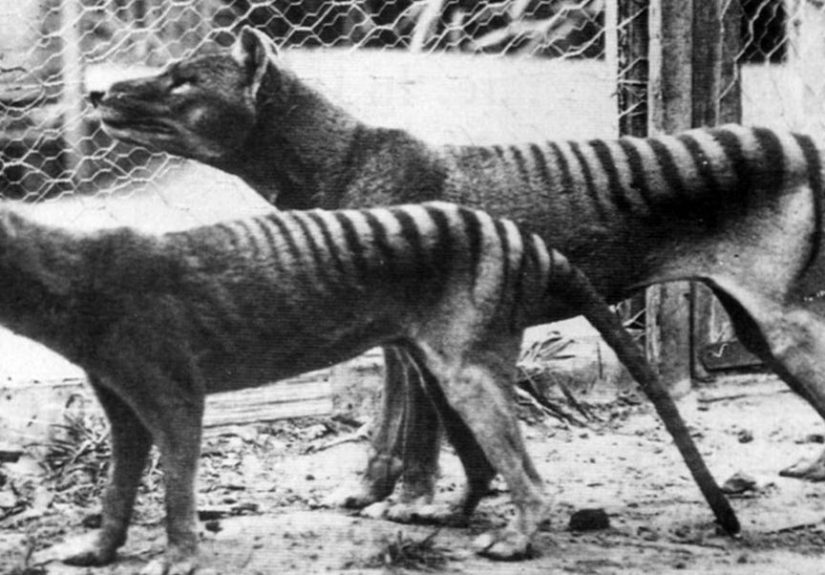
The Tasmanian tiger was not actually a tiger. It had stripes, yes, but calling it a tiger is like calling a raccoon a tiny masked banker. The thylacine was a carnivorous marsupial, meaning it belonged to the same broad mammal group as kangaroos, wallabies, wombats, and Tasmanian devils. It looked strangely dog-like, with a stiff tail, a narrow head, sandy-brown fur, and dark stripes across its back and rump.
Its scientific name, Thylacinus cynocephalus, roughly points to its pouched, dog-headed appearance. It was the largest carnivorous marsupial of recent times and once lived across mainland Australia, Tasmania, and New Guinea. By the time Europeans colonized Tasmania, the species had already disappeared from much of its earlier range, but it still survived on the island.
The thylacine became a target after settlers blamed it for killing sheep and poultry. While it may have taken livestock occasionally, historians and scientists generally believe its reputation as a sheep-destroying menace was exaggerated. Habitat loss, hunting, bounty programs, disease, and ecological pressure all helped push the animal toward extinction. The last known captive thylacine died at Beaumaris Zoo in Hobart on September 7, 1936, only shortly after the species received legal protection.
Why Do Scientists Want to Bring It Back?
There are three big reasons scientists are interested in bringing back the Tasmanian tiger: ecological restoration, scientific discovery, and conservation technology.
1. Restoring a Lost Predator
The thylacine was an apex predator in Tasmania, meaning it sat near the top of the food chain. Apex predators can shape ecosystems by influencing prey behavior, reducing overpopulation, and helping maintain balance. When such animals vanish, ecosystems may shift in unpredictable ways. Supporters of thylacine de-extinction argue that returning a thylacine-like predator could eventually help restore missing ecological functions.
2. Advancing Marsupial Conservation
The tools needed to create a thylacine-like animal could be useful for living marsupials. Stem-cell methods, genome sequencing, artificial womb research, genetic rescue, and reproductive technologies may help preserve species that are endangered today. In other words, even if the Tasmanian tiger never fully returns, the science developed along the way could still matter.
3. Testing the Limits of Modern Genetics
The thylacine project is also a test case for ancient DNA science. Researchers are asking whether damaged DNA from museum specimens can be used to guide the engineering of living cells. That challenge is enormous. Ancient DNA is usually fragmented, chemically damaged, and incomplete. Rebuilding a useful genome is like trying to reconstruct a shredded instruction manual after a possum used half the pages as bedding.
How Would Scientists Bring the Tasmanian Tiger Back?
The basic plan involves several steps. First, scientists study DNA from preserved thylacine specimens. Then they sequence the genomes of the thylacine’s closest living relatives, especially small carnivorous marsupials such as the fat-tailed dunnart. After that, they compare the extinct animal’s genome with the living relative’s genome to identify key differences.
Next comes gene editing. Researchers would edit cells from a living relative so that those cells carry many thylacine-like genetic traits. The edited nucleus could then be placed into an egg cell, creating an embryo. That embryo would need to develop either in a surrogate marsupial or with help from artificial reproductive systems, including artificial pouch or artificial womb technology.
If everything worked, the result would be a thylacine-like joey. It would not be a perfect clone, because scientists do not have living thylacine cells. It would be a genetically engineered proxy: a living animal designed to resemble the extinct thylacine in important biological traits.
This distinction matters. A true clone requires intact living cells or nuclei from the original animal. The thylacine has been extinct too long for that. Museum specimens can provide DNA information, but they cannot provide a fully functional living cell ready for cloning. So the realistic goal is not “copy and paste the Tasmanian tiger.” It is more like “rebuild many of the important features using a close living relative as the starting template.”
What Progress Has Been Made So Far?
Scientists have made several major steps. One of the biggest is the reconstruction of a high-quality thylacine genome using preserved specimens, including unusually well-preserved material from museum collections. This gives researchers a much clearer genetic blueprint than they had in the past.
Teams have also worked on sequencing related marsupials, developing stem-cell lines, and studying which parts of the genome may influence thylacine traits such as skull shape, body form, and other distinctive features. These steps are not glamorous in the way a baby animal photo is glamorous, but they are essential. Before anyone can create a thylacine-like animal, scientists need reliable maps, editable cells, and a way to turn those cells into embryos.
Colossal has also promoted progress in marsupial reproductive technology. That part is especially important because marsupials develop differently from placental mammals. A thylacine joey would be born extremely underdeveloped and would normally continue growing in a pouch. Recreating that life cycle is far more complicated than simply borrowing methods used for dogs, sheep, or cattle.
The Big Scientific Challenge: A Proxy Is Not the Original
The phrase “bringing back the Tasmanian tiger” is catchy, but it can be misleading. Many scientists argue that de-extinction does not truly resurrect a species. It creates a proxy organism that may look, act, or function like the extinct species in some ways.
Think of it like restoring an old song from a damaged record. You can remove static, rebuild missing notes, and make it sound close to the original. But if half the band is gone and you are using modern musicians to fill in the gaps, it is not exactly the same performance.
This debate became louder after Colossal announced gene-edited animals described as dire wolves. Critics pointed out that those animals were genetically modified gray wolves with selected dire-wolf-like traits, not exact recreations of the extinct species. The same concern applies to the Tasmanian tiger. Even a successful animal would likely be a thylacine-like marsupial, not a perfect biological duplicate of the thylacine that disappeared in 1936.
That does not make the science useless. A proxy animal might still restore some ecological functions. It might also help researchers develop technologies that protect endangered species. But honest language matters. The public deserves to know whether scientists are reviving a species, approximating a species, or creating a new animal inspired by an extinct one.
Could a Revived Tasmanian Tiger Survive in the Wild?
Creating a thylacine-like animal in a lab would only be the beginning. The harder question is whether it could live a healthy life and, eventually, whether a population could survive in the wild.
A young thylacine would need proper development, nutrition, immune protection, social behavior, and hunting instincts. Some behaviors are genetic, but others are learned. Since there are no living thylacines to teach young animals how to be thylacines, scientists would face a serious animal-welfare challenge. How do you raise a predator when its entire culture, if we can call it that, vanished decades ago?
Reintroduction would also require careful ecological planning. Tasmania has changed since 1936. Roads, farms, towns, invasive species, disease dynamics, and climate pressures all affect the landscape. Even if suitable habitat remains, scientists and policymakers would need to study whether a thylacine-like predator could fit into the modern ecosystem without causing new problems.
Supporters argue that Tasmania is one of the more realistic places for de-extinction because the thylacine vanished relatively recently and parts of its habitat remain recognizable. Critics counter that saving living species should come first. Both arguments deserve attention. Conservation is not a fantasy league where extinct animals automatically get drafted ahead of endangered ones.
Ethical Questions: Should We Bring Back the Tasmanian Tiger?
The Tasmanian tiger story carries emotional weight because humans helped cause its extinction. That makes de-extinction feel like a chance to correct a historical mistake. But ethics are complicated.
One concern is animal welfare. Failed pregnancies, unhealthy embryos, developmental problems, and captive breeding stress are real possibilities in experimental reproductive science. Any serious de-extinction project must show that it can minimize suffering, not simply chase headlines.
Another concern is conservation priorities. Money, talent, and public attention are limited. Some biologists worry that flashy de-extinction projects could distract from protecting habitats, controlling invasive species, reducing climate threats, and saving endangered animals that are still alive. After all, preventing extinction is usually cheaper and kinder than trying to reverse it later.
There is also the question of public storytelling. If people start believing extinction is reversible, they may take biodiversity loss less seriously. That would be disastrous. De-extinction should not become an excuse for environmental laziness. It should be a reminder that extinction is a tragedy, not a temporary inconvenience.
Why the Tasmanian Tiger Captures the Public Imagination
The thylacine has something most extinct animals do not: film footage. Grainy black-and-white videos show the last known captive thylacine pacing in a zoo enclosure, yawning, turning, and looking painfully real. This is not a dinosaur reconstructed from bones. This is an animal modern humans filmed, photographed, hunted, misunderstood, and lost.
That closeness makes the story haunting. The thylacine did not vanish in some ancient ice age. It disappeared in the age of newspapers, cameras, and modern governments. Its extinction feels recent enough to be embarrassing. It is like realizing you misplaced something priceless and only noticed after the trash truck left.
That emotional pull explains why “Tasmanian tiger de-extinction” performs so strongly in search engines and social media. People are fascinated by the possibility of seeing an animal return after being officially written off as gone forever. The story combines science, guilt, mystery, hope, and a very photogenic striped backside. From an SEO perspective, it has everything: curiosity, controversy, and a big question with no simple answer.
So, Are Scientists Bringing the Extinct Tasmanian Tiger Back From the Dead?
Scientists are trying to bring back a thylacine-like animal, but the phrase “back from the dead” needs careful handling. The project is real. The tools are real. The progress in ancient DNA, genome reconstruction, stem cells, and marsupial reproduction is real. But a living, breathing Tasmanian tiger has not yet returned.
The most accurate answer is this: scientists are attempting to create a genetically engineered proxy for the extinct Tasmanian tiger using DNA information from preserved specimens and cells from living marsupial relatives. If successful, the result may look and function much like a thylacine, but it would not be a perfect resurrection of the original species.
That may sound less magical, but it is still extraordinary. Even a partial success could change conservation biology. It could help researchers preserve endangered marsupials, develop better reproductive tools, and deepen our understanding of how genes shape animals. The Tasmanian tiger may never return exactly as it was, but the effort to revive it is already reshaping how scientists think about extinction.
Experience Notes: What This Topic Feels Like Beyond the Lab
Reading about the Tasmanian tiger de-extinction project feels different from reading about many other scientific stories. Some science topics are fascinating but distant, like particles colliding in a machine or galaxies doing dramatic galaxy things somewhere far beyond our grocery bills. The thylacine feels close. You can watch old footage of it. You can see its stripes. You can imagine the last one pacing in a zoo while the world failed to understand what was being lost.
For many readers, the first experience is wonder. The idea that scientists can extract information from old specimens and use it to guide modern genome editing is astonishing. It makes the past feel less sealed off. A museum specimen is no longer just a preserved reminder; it becomes a library. Every bone, tooth, skin sample, and jarred tissue may hold data that future scientists can read more clearly than anyone expected.
The second experience is discomfort. The same story that inspires awe also raises hard questions. If humans helped erase the thylacine, do we have a responsibility to try to repair the damage? Or would bringing back a proxy animal be more about human pride than ecological healing? It is easy to cheer for the comeback until you remember that any living animal created through this process would need a safe life, not just a dramatic headline.
The third experience is humility. The thylacine reminds us that extinction is not abstract. It is not just a word in a biology textbook. It is the silence after a species stops moving through the world. Once an animal is gone, the relationships it had with prey, competitors, parasites, plants, landscapes, and even human cultures begin to fade. A lab may rebuild parts of the genome, but it cannot easily rebuild the full world the animal knew.
That is why this topic is so powerful for students, families, conservationists, and science fans. It turns a big question into a personal one: what kind of future do we want? One where we use technology to repair damage? One where we prevent damage before repair is needed? Ideally, both. The best lesson of the Tasmanian tiger is not that extinction can be undone with enough money and clever equipment. The better lesson is that living species are precious right now.
If a thylacine-like joey is born one day, the world will probably react with amazement, debate, memes, and at least one headline writer using the phrase “tiger king” even though the animal is not a tiger. But the deeper story will be about responsibility. Bringing back a lost predator would not close the book on extinction. It would open a new chapter in conservation, one where scientific power must be matched by patience, honesty, and care.
Conclusion
Scientists are not casually reviving the Tasmanian tiger like a character returning for a surprise season finale. They are working through one of the most difficult challenges in modern biology: using damaged ancient DNA, living relatives, genome editing, stem cells, and reproductive technology to create a thylacine-like animal. The progress is real, but the animal is not back yet.
The most responsible way to view the project is with excitement and caution at the same time. De-extinction could produce powerful conservation tools, especially for endangered marsupials. It could also create ethical problems if hype outruns animal welfare, ecological planning, or public understanding. The Tasmanian tiger may one day return in some form, but the bigger message is already here: extinction matters, and saving species before they disappear is still the best technology we have.