Table of Contents >> Show >> Hide
- Why Basements Are Having a Moment
- 13 Surprisingly Cool Underground Amenities in Real American Homes
- 1. Immersive Home Theaters
- 2. Sports Bars and Fan Caves
- 3. Wine Cellars and Tasting Rooms
- 4. Basement Game Arcades
- 5. Kid-Approved Play Zones
- 6. Home Gyms and Training Studios
- 7. Wellness Spas, Saunas, and Relaxation Rooms
- 8. Creative Studios and Craft Rooms
- 9. Work-From-Home Office Suites
- 10. Guest Suites and In-Law Apartments
- 11. Music, Podcast, and Recording Studios
- 12. Storm Shelters and Safe Rooms
- 13. Light-Filled Walk-Out Living Rooms
- Planning Your Own Beautiful Basement
- Real-Life Basement Experiences: What Homeowners Love (and Regret)
For decades, the American basement was the home of dusty holiday décor, mystery boxes, and one very lonely water heater.
These days, though, that same square footage is getting a serious glow-up. Designers and homeowners across the country are
turning unfinished basements into enviable underground retreats packed with style, comfort, and some seriously cool amenities.
Inspired by real projects featured by Bob Vila and other U.S. home-design pros, this guide walks you through
13 surprisingly cool basement amenities you can actually find in American homes todayplus practical tips
for planning your own makeover. From home theaters and sports bars to storm shelters and wellness spas, your basement might
be the most underrated real estate you own.
Why Basements Are Having a Moment
Rising home prices, multigenerational living, and the work-from-home boom have all pushed homeowners to squeeze more function
out of every square foot. The basement is an obvious candidate: it is already under your roof, it has utilities nearby, and
it can usually be remodeled for less cost per square foot than an above-ground addition.
Modern building techniques make basements feel less like dungeons and more like stylish lower-level suites. Better lighting,
moisture control, and soundproofing mean you can put high-value amenities downstairs without feeling like you are “settling
for the basement.” Instead, you are creating a bonus level for living, entertaining, and relaxing.
13 Surprisingly Cool Underground Amenities in Real American Homes
1. Immersive Home Theaters
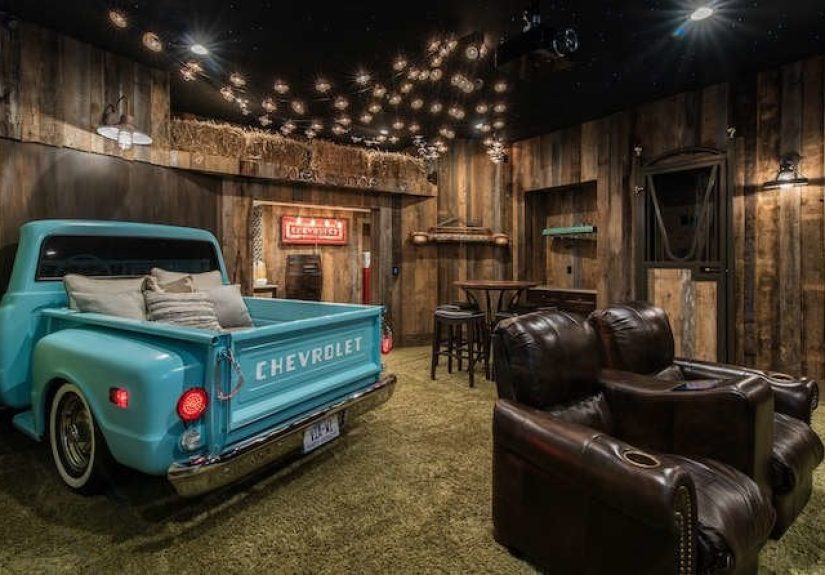
When you cannot agree on a movie at the living room TV, a dedicated basement home theater feels like a tiny multiplex
under your feet. Many real homes now feature tiered recliners, surround sound, blackout walls, and snack stations where
the laundry room used to be. A basement is perfect for a theater because you are already working with low light, few
windows, and natural sound isolation from upstairs.
To make a theater feel luxurious instead of cave-like, choose dimmable recessed lighting, cozy carpeting or area rugs,
and dark but warm paint colors (think charcoal, navy, or espresso). Add an elevated back row with bar-height seating so
friends can eat, sip, and heckle the movie without blocking anyone’s view.
2. Sports Bars and Fan Caves
In countless American basements, game day has moved downstairs. Real-world examples combine a full wet bar, multiple TVs,
and pub-style seating. Some homeowners add a shuffleboard table or arcade cabinet so there is always something to do during
commercial breaks. The bar can be as serious as custom cabinetry and stone counters, or as simple as a freestanding unit
with a mini fridge and floating shelves.
Design your fan cave around your favorite team’s colors, but use them as accentsbar stools, pillows, framed jerseysrather
than painting the walls neon. That way, the space still works on non-sports days as a hangout, party room, or second living
room.
3. Wine Cellars and Tasting Rooms
Basements are naturally cool and dark, which makes them ideal for storing wine. In some upscale American homes, the old
storage room has become a glass-fronted wine cellar with custom racks, mood lighting, and a tiny tasting table tucked in the
corner. Others keep it simple with climate-controlled wine fridges built into a bar wall.
You do not need a huge collection to justify a basement wine zone. Even a 4-by-6-foot alcove can hold wall-mounted racks,
a countertop for opening bottles, and a pair of stools. The result feels like a private wine bar you can visit in your
slippers.
4. Basement Game Arcades
Think retro arcade meets modern family room. Homeowners are filling their lower levels with pool tables, ping-pong,
foosball, dart boards, pinball machines, and video-game lounges. A game-focused basement is perfect for teens and
visiting friendsit gives them space to be loud and competitive without disturbing the rest of the house.
To lay out a game room, measure carefully: big tables need 5 to 6 feet of clearance around them so players can move freely.
Combine durable flooring (vinyl plank or carpet tiles) with wall protection in cue-stick zones, and add plenty of task
lighting directly over the fun.
5. Kid-Approved Play Zones
In many families, the basement is the kid kingdom. Instead of a random pile of toys, recent renovations turn lower levels
into organized play zones: climbing walls, reading nooks, indoor slides, LEGO stations, and art tables with wipeable
surfaces. Sturdy storage cubbies keep chaos under control and make cleanup a five-minute task instead of a weekend project.
Safety is critical in play spaces. Choose low-VOC materials, cover support posts with padding, and keep the floor soft with
rugs, foam tiles, or wall-to-wall carpeting. A kid-friendly basement is like having a mini indoor playground that is
always open and never charges admission.
6. Home Gyms and Training Studios
From basic treadmill corners to fully equipped training studios with squat racks and mirrors, home gyms are a basement
staple in real American houses. The concrete slab is perfect for heavy lifting equipment, and the separation from living
areas keeps clanking weights and workout music out of the main floor.
To avoid the “dark dungeon gym” vibe, install plenty of bright LED lighting and at least one large mirror wall. Rubber
flooring tiles or gym mats protect the foundation and your joints. Consider zoning the gym: one area for cardio machines,
one for strength, and one for yoga or stretching.
7. Wellness Spas, Saunas, and Relaxation Rooms
Some homeowners are turning their basements into wellness retreats complete with infrared saunas, steam showers, soaking
tubs, and massage rooms. While spa-level plumbing and ventilation require professional design, the payoff is a quiet,
hotel-style escape only a flight of stairs away.
Even if you do not go full spa, a “relaxation room” with soft lighting, a sound machine, and comfortable chaise lounges can
transform your lower level into a stress-free zone. Think of it as a reset button for busy days.
8. Creative Studios and Craft Rooms
For artists, hobbyists, and crafters, a finished basement means finally having a place where glitter can roam freely. Real
projects include sewing studios, woodworking corners, pottery wheels, and digital-creation labs. The lower level’s distance
from main living areas makes it easier to leave works-in-progress out without cluttering the kitchen table.
The secret to a great studio is storage and surfaces: pegboards, open shelving, labeled bins, and a large, durable worktop.
Add bright task lighting and easy-to-clean flooring so you are not afraid to spill paint or sawdust.
9. Work-From-Home Office Suites
After the remote-work surge, many homeowners realized the basement might be the quietest spot in the house. In some
real-world remodels, designers carved out office suites with separate entrances, built-in desks, soundproof walls, and
even tiny conference corners for video calls.
A basement office works best when it borrows as much natural light as possiblethrough egress windows, glass doors, or
light wells. Use warm finishes and greenery so you do not feel like you are working in an underground bunker. And do not
forget strong Wi-Fi and plenty of outlets.
10. Guest Suites and In-Law Apartments
Finished basements often double as guest suites, giving visitors a private space with a bedroom, bathroom, and small
sitting area. In some American homes, lower levels are upgraded further into in-law apartments with kitchenettes and
separate entrancesideal for adult kids, grandparents, or long-term guests.
When adding sleeping space in a basement, code-compliant egress windows or doors are non-negotiable for safety. Layer
soft textiles, quality mattresses, and warm lighting so the suite feels like a boutique hotel rather than a spare-room
afterthought.
11. Music, Podcast, and Recording Studios
Drums, amps, and sound checks are much easier to live with when they are underground. Many aspiring musicians and content
creators have transformed basement corners into recording studios with acoustic panels, rugs, and strategically placed
foam. The natural separation from the main house makes basement studios perfect for late-night jam sessions.
Focus on sound control: double-layered drywall, solid-core doors, and area rugs help reduce echo. A simple setup with a
decent microphone, interface, and laptop on a sturdy desk can rival entry-level commercial studioswithout hourly rates.
12. Storm Shelters and Safe Rooms
In parts of the United States prone to severe weather, basements often house storm shelters or
reinforced safe rooms. These spaces are designed to protect occupants from tornadoes and high winds with hardened walls,
secure doors, and carefully anchored structures. Some are simple concrete rooms; others integrate built-in benches,
emergency supplies, and communications gear.
If you are planning a safe room, work with local professionals who understand building codes and FEMA or ICC standards.
You can keep the room multipurposemaybe it doubles as a storage closet or mini officewhile still providing a secure
shelter when severe weather hits.
13. Light-Filled Walk-Out Living Rooms
Not all basements are fully underground. Daylight basements and walk-out lower levels use sloped lots to
bring in natural light and direct access to the backyard. Many newer American homes treat this level as an everyday living
floor with a family room, bar, and dining area opening directly to a patio or pool.
To create this feel in an existing home, enlarge windows where code allows, add glass doors to a walk-out wall, and keep
finishes consistent with the main floor. When your basement looks and feels like the rest of your home, you have truly
unlocked a whole new level of living space.
Planning Your Own Beautiful Basement
Start with Moisture, Safety, and Codes
Before dreaming about theater seating or neon bar signs, deal with the basics: water management, insulation, and egress.
Address any leaks or dampness, install proper drainage and vapor barriers, and check whether you need sump pumps or
dehumidifiers. Building codes will dictate ceiling height, emergency exits, and stair safetyespecially if you are adding
bedrooms or rental units.
Think in “Zones,” Not Just Rooms
A basement rarely has to serve only one purpose. Instead of declaring it purely a gym or purely a theater, think in zones:
media lounge, workout corner, craft zone, bar area, or homework station. Use furniture, lighting, rugs, and half walls to
define spaces without chopping up the floor plan.
Layer Lighting for a Non-Basement Feel
Good lighting is the fastest way to make a basement feel finished. Combine recessed ceiling lights with wall sconces,
table lamps, and under-cabinet strips. Dimmer switches let you shift from “movie time” to “party mode” instantly. If you
have tiny windows, keep walls light and reflective to bounce that daylight around.
Choose Durable, Cozy Materials
Basements deal with more humidity and temperature swings than upstairs spaces. Choose water-resistant flooring such as
luxury vinyl plank, tile with area rugs, or basement-safe carpet. Pick mold-resistant drywall and insulation, and avoid
super-fragile finishes. The goal is a space that looks luxurious but can handle spilled drinks, rowdy kids, and the
occasional dropped dumbbell.
Do Not Forget Storage
Yes, you are upgrading your basementbut you still need somewhere to stash holiday décor. Plan built-in cabinets under
stairs, storage rooms behind the main entertainment areas, or drawers under banquettes. Finished basements that combine
beautiful living zones with smart storage truly earn their keep.
Real-Life Basement Experiences: What Homeowners Love (and Regret)
Talking to homeowners and remodelers about finished basements feels a bit like listening to campfire storiessome
heartwarming, some full of cautionary tales. A common theme: almost no one regrets finishing their basement, but many
people wish they had planned a little differently.
One couple in the Midwest turned their dark, concrete basement into a combined theater and sports bar. Their favorite
part is the flexibility: on Friday nights, it becomes a movie zone for the kids, complete with blankets and popcorn. On
Sunday afternoons, the adults take over and turn it into a fan cave with multiple games on at once. Their one regret? They
underestimated how fast the bar would become a snack magnet and now plan to add more closed storage to hide the clutter.
In the Southeast, a family carved out a daylight basement guest suite for visiting grandparents. Initially, it was just a
bedroom with a basic bath. After the first extended stay, they realized their guests were trooping upstairs constantly for
coffee and snacks. The next phase of the remodel added a small kitchenette with a fridge, microwave, and coffee bar. Now
the suite feels like a private apartment, and everyone has a bit more breathing room.
Another homeowner in tornado country invested in a reinforced safe room off the basement rec area. For most of the year,
it functions as a well-organized storage closet with shelves full of board games, seasonal décor, and emergency supplies.
During severe weather season, however, it transforms into a literal lifesavera place where the family can shelter with
pets, flashlights, and a battery radio. Their biggest takeaway: planning for safety does not have to feel scary; it can be
quietly integrated into a beautiful design.
Many people with basement gyms admit they were tempted to splurge on equipment first and think about finishes later. The
ones who are happiest did the opposite: they invested in good lighting, quality flooring, mirrors, and ventilation, then
slowly built up their equipment collection. Because the space feels bright and inviting, they actually use it instead of
letting it become a storage zone for laundry baskets and forgotten treadmills.
Homeowners with creative or craft studios often rave about the mental shift that comes from having a dedicated space. One
amateur painter said that before finishing the basement, she only painted a few times a year because setting up and
cleaning up in the dining room was such a hassle. Now, she has a permanent easel, organized paints, and a big utility sink
downstairs. The basement has become her “underground sanctuary,” and she paints several evenings a week.
Finally, almost everyone agrees on one surprise: a beautiful basement tends to become the most popular level of the house.
Friends gravitate to the cozy sectional and game tables; kids drift downstairs to play; adults enjoy a quiet coffee on the
walk-out patio. When you treat the basement as a true extension of your homenot just a storage lockeryou gain an entire
new lifestyle space without moving or building an addition.
Whether you dream of a cinematic home theater, a buzzing sports bar, a peaceful spa, or a practical storm shelter, your
basement is brimming with potential. With thoughtful planning, smart materials, and a bit of design courage, you can turn
that “below deck” space into the coolest level of your home.