Table of Contents >> Show >> Hide
- So, what “modern tiny house” are we talking about?
- A quick tour of the most popular customizable Amazon tiny-home styles
- 1) Foldable container-style homes: modern, modular, and surprisingly flexible
- 2) Expandable “cabin-style” tiny homes: choose your layout like a menu
- 3) A-frame tiny homes: dramatic design, customizable light and space
- 4) Compact modern prefab cabins: tiny, polished, and storage-smart
- 5) DIY kit cabins: maximum customization, because you’re the builder now
- What “fully customizable” really means in practice
- The not-so-tiny checklist: what to confirm before you click “Buy Now”
- 1) Zoning and where you can legally put it
- 2) Building code: does your jurisdiction recognize tiny house standards?
- 3) Foundation and site prep
- 4) Utilities: water, sewer/septic, and power
- 5) Heating, cooling, and insulation
- 6) Delivery logistics
- 7) What exactly is included?
- 8) Warranty, support, and return policy
- What does an Amazon tiny house really costall in?
- Customization ideas that make small space feel big
- Who should buy a customizable tiny house from Amazon?
- Conclusion: customizable tiny living, minus the fantasy math
- Real-World Experiences: What It’s Like to Actually Live With a Customizable Amazon Tiny House
- SEO Tags
If you’ve ever added “paper towels” and “a new phone charger” to your Amazon cart and thought,
What else could I responsibly purchase in one click?congratulations. The internet has an answer:
a modern tiny house. Not a dollhouse. Not a fancy shed with delusions of grandeur. An actual
prefab, shippable, set-it-up-and-start-living-in-it kind of homeoften with electrical and plumbing
already planned, and with customization options that range from “pick a color” all the way to
“design your own layout like you’re starring in a budget-friendly HGTV episode.”
The headline version is simple: Amazon (through third-party sellers) lists a growing lineup of modern tiny homes
that you can customize inside and outlayouts, finishes, window styles, sometimes even bedroom counts.
The real story is even better: these listings are a crash course in the new era of factory-built housing,
where “tiny” can mean anything from a 140-square-foot minimalist pod to an expandable container-style home
that unfolds into something that feels shockingly… normal.
So, what “modern tiny house” are we talking about?
“Modern tiny house at Amazon” isn’t one single productit’s a category of prefab and modular-style homes
sold by various brands and sellers. But the models that go viral (and sell the “fully customizable” dream)
tend to fall into a few repeatable patterns:
-
Foldable or expandable container-style homes that arrive compact, then unfold or expand on-site.
These are often offered in sizes like 20-foot and 40-foot, with bedroom/bathroom variations. -
Cabin-style prefab “tiny homes” with a cozy exterior (sometimes with a porch), often marketed as
move-in ready or nearly ready. - A-frame or “glamping-modern” structures that lean heavily into big windows and vertical space.
-
DIY kit cabins that ship as a shellmeaning you supply the sweat, the finishing touches,
and most of the decisions.
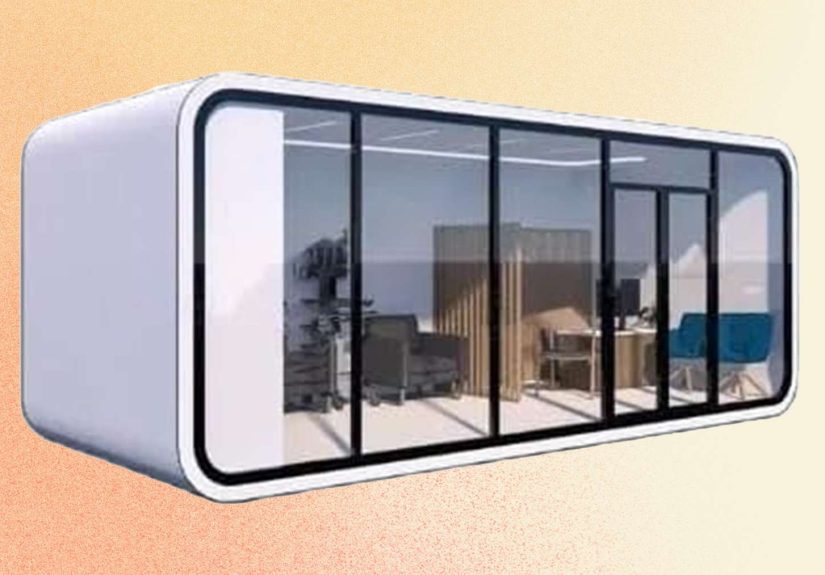
One of the most talked-about “customizable” modern options is a foldable container-style home with a sleek,
futuristic look: curved rooflines, modern siding, and floor-to-ceiling windows. These listings often let you pick
between sizes (like a 20-foot one-bed/one-bath versus a 40-foot two-bed/one-bath) and choose exterior colors
(think sage green, charcoal gray, sand beigebecause even tiny houses deserve a good wardrobe).
What makes it “fully customizable” (and why that phrase can mean different things)
“Fully customizable” is marketing shorthand for: “We’ll build this to your preferenceswithin the limits of our
platform and pricing.” Sometimes customization looks like a dropdown menu: pick the size, pick the color, pick
the layout. Other times it’s more like ordering a custom cake: you message the seller, discuss your needs,
confirm what’s possible, and pay extra for upgrades.
The important part is this: customization is real, but it’s not magic. You can often customize:
- Layout: open studio vs. divided rooms, bedroom count, placement of interior walls.
- Finishes: flooring, lighting, cabinet styles, fixtures, sometimes wall panels.
- Windows and doors: larger windows vs. fewer windows for privacy, window styles, sliding vs. swing doors.
- Exterior: colors, siding materials on certain models, porch add-ons on some listings.
- Furnishing packages: select listings advertise optional “fully furnished” setups.
What you usually can’t customize as freely: structural engineering, code compliance for your specific county,
and the laws of physics. (If you want a rooftop terrace on a home that was never designed to carry that load,
your dream is not “custom”it’s “a conversation with an engineer.”)
A quick tour of the most popular customizable Amazon tiny-home styles
1) Foldable container-style homes: modern, modular, and surprisingly flexible
Foldable container-style homes get attention because they’re built for fast setup. They arrive compact and are
designed to deploy quickly on-site. Many listings pitch them as guest houses, backyard offices, or even full-time
living spaces. On some models, the “customization” starts with size: a smaller version might be one bed/one bath,
while a larger version adds an extra bedroom.
The modern appeal is obvious: clean lines, big windows, contemporary finishes, and the promise of a controlled
factory build instead of a months-long construction saga that turns you into a full-time project manager who cries
in the driveway. (No judgment. It happens.)
2) Expandable “cabin-style” tiny homes: choose your layout like a menu
Another common listing type is an expandable, cabin-style tiny home offered in 20- and 40-foot lengths, often
advertised as customizable down to the interior layout and finishes. Some are marketed with multiple bedroom
configurationslike choosing between two or three bedrooms based on lifestyle.
These models typically emphasize: durable steel framing, simpler assembly compared to traditional builds,
and “traditional home” amenitieskitchenette space, bathroom, sleeping areas, and a living area that’s meant to
fit real furniture (not just one heroic beanbag chair).
3) A-frame tiny homes: dramatic design, customizable light and space
A-frame models are for people who want their tiny home to look like a stylish retreat instead of a rectangle
that politely exists. Some listings describe A-frame tiny homes that can be expanded significantly (in some cases,
advertised up to hundreds of square feet), with customization options like added rooms, different window styles,
and selectable kitchen/bath finishes.
The signature feature is vertical space: loft sleeping areas, open layouts, and the ability to turn the “tiny”
footprint into something that feels airy. If you’ve ever wanted your home to feel like a cozy lodge without actually
having to own a lodge, this is the vibe.
4) Compact modern prefab cabins: tiny, polished, and storage-smart
At the smaller end of the spectrum are modern prefab cabinssome under 200 square feetwith sleek minimalist
design, clever storage, and big windows. These often market themselves as “small but complete,” with pre-planned
plumbing and electrical support, and a bathroom layout designed to be functional in tight quarters.
These are especially popular for backyard guest spaces, creative studios, or minimalist weekend escapes where you
want “comfortably tiny” instead of “camping, but with better Wi-Fi.”
5) DIY kit cabins: maximum customization, because you’re the builder now
Then there are the kit cabinsoften made of wood (like Nordic spruce) and sold as a shell. These can offer
surprisingly generous square footage, sometimes including a loft. The big advantage is freedom: you can decide
where the kitchen goes, whether you add a bathroom, how you finish the interior, and what the space becomes
(office, guest suite, art studio, “escape pod,” etc.).
The tradeoff is obvious: you’re signing up for a build. It’s not “move-in ready.” It’s “you’re going to know
what a drill bit tastes like by the end of this project.”
What “fully customizable” really means in practice
Here’s the honest translation of most customizable tiny-house listings:
You’re customizing within a product system. Sellers may offer multiple floor plans, optional
room dividers, alternate bedroom arrangements, and finish upgrades. Some will also coordinate changes through
direct messaging (for example, selecting window styles or choosing between a more private window layout and a
floor-to-ceiling window wall).
The best approach is to treat customization like ordering a car:
you want the trim level, the options package, and a clear list of what’s included before you commit.
Don’t assume “customizable” means “anything goes.” Assume it means:
“There are options. Some cost extra. And you should get it in writing.”
The not-so-tiny checklist: what to confirm before you click “Buy Now”
Buying a tiny home online can be smartbut only if you do the unsexy homework. Use this checklist so the dream
doesn’t turn into a very expensive yard ornament.
1) Zoning and where you can legally put it
Many people discover the hard way that “I own it” and “I can place it” are two different sentences.
Tiny homes can be treated differently based on whether they’re on a permanent foundation or on wheels.
Some areas allow tiny homes only as accessory dwelling units (ADUs) on property that already has a primary home.
2) Building code: does your jurisdiction recognize tiny house standards?
If your home is on a foundation, your local building department may look to tiny-house-specific guidance such as
Appendix Q in the International Residential Code (IRC), which was created to address small dwellings.
That said, not every jurisdiction adopts the same code version, and some “tiny homes” marketed online expand beyond
what many people consider “tiny.” Translation: local rules win.
3) Foundation and site prep
Even “portable” models often need a level basecommonly a concrete pad or an engineered foundation solution.
Ask the seller what they recommend and what conditions void the warranty. Plan for drainage, access, and setbacks.
4) Utilities: water, sewer/septic, and power
Many listings say electrical and plumbing are “included” or “installed,” which usually means the home is built
with the internal systems in place. You still need hookups: electrical service, water supply, and a sewer/septic
plan. These costs can rival the home itself, depending on your property.
5) Heating, cooling, and insulation
A tiny home can be cozy… or it can become a metal box that teaches you the true meaning of condensation.
Confirm insulation type/values, climate suitability, and whether HVAC is included, optional, or your problem.
6) Delivery logistics
How is it shipped? Do you need a forklift, crane, or special access for a truck? What happens if your road is narrow,
your driveway is steep, or your HOA has Opinions?
7) What exactly is included?
Ask for a full inclusion list. Does “kitchen” mean cabinets and a sink, or cabinets and a sink and appliances?
Does “bathroom” include fixtures, water heater, ventilation? Clarify the finish level so you can budget accurately.
8) Warranty, support, and return policy
This matters more than people think. A tiny home is a complex product. You want clarity on warranty length,
what’s covered, and who provides support (seller, manufacturer, or you and your toolbox).
What does an Amazon tiny house really costall in?
The list price can look like a mic drop (“A house under $10K!”), but the all-in cost is where reality lives.
Think of the home price as the base unit. Your true budget includes:
- Unit price: the house itself (varies widely by size and finish level)
- Shipping and delivery handling: sometimes included, often not
- Site prep: grading, pad/foundation, drainage
- Utility hookups: electric service, water line, sewer/septic connection
- Permits and inspections: local requirements vary
- Finishing costs: upgrades, appliances, furniture, decking/porch add-ons
- Ongoing costs: insurance, maintenance, heating/cooling, taxes (if applicable)
Here are three realistic “scenario budgets” to help you think clearly:
Scenario A: Backyard office or studio (the “commute-free” build)
You choose a smaller modern prefab cabin or compact foldable model. You prioritize power, lighting,
and climate control. You might not need full sewer if it’s not a dwelling (depending on local rules).
All-in, the cost can land far above the listing price once you factor in site prep and electrical work
but it can still be cheaper (and more fun) than building a traditional addition.
Scenario B: Guest house / ADU (the “in-laws are coming” build)
You choose an expandable model or a larger foldable container home with a defined bathroom and kitchenette.
You’ll likely need full utility hookups, permits, and inspections. This is where planning matters most:
the home might be fast, but the legal and utility work often isn’t.
Scenario C: Full-time living (the “this is my real address” build)
For full-time living, you’ll want robust insulation, reliable HVAC, code compliance for your location,
and a layout that supports daily lifestorage, cooking, laundry, and privacy. This is also where financing,
insurance, and zoning can become the deciding factors, not the floor plan.
Customization ideas that make small space feel big
Customization isn’t just about aesthetics. In a small footprint, the right choices can make the home feel
twice as usable. Try these upgrades that deliver big impact:
Go “window smart,” not just “window big”
Floor-to-ceiling windows are gorgeous, but privacy and heat gain are real. A balanced approach:
big windows where you want the view, higher-set windows where you want light without living in a fishbowl.
Pick storage like you mean it
Built-in cabinets, tall pantry-style storage, and under-bench compartments can turn “tiny” into “efficient.”
If you’re choosing between a cute accent wall and an extra closet, choose the closet. Future-you will write
you a thank-you note on a perfectly organized clipboard.
Use flexible rooms
Many customizable layouts allow rooms to shift purpose: second bedroom vs. office, workout room vs. storage,
divided spaces vs. open plan. Design around your real life, not your fantasy life. (If you haven’t done yoga since
2019, maybe don’t dedicate your precious square footage to a “yoga room.”)
Who should buy a customizable tiny house from Amazon?
Great fit if you want:
- A backyard office, studio, or creative retreat
- A guest house or ADU (where legally allowed)
- A weekend cabin-style escape that doesn’t require years of planning
- A modular starting point you can personalize over time
Not a great fit if you want:
- A “no homework” purchase (zoning and permits still exist)
- A traditional mortgage-friendly home without special financing hurdles
- Something you can drop anywhere without utility planning
- A build with zero coordination (delivery and setup can be a project)
Conclusion: customizable tiny living, minus the fantasy math
The appeal of a modern customizable tiny house at Amazon is real: faster-than-traditional building,
flexible layouts, stylish design, and a surprisingly broad range of price points. Some models give you a sleek,
foldable modern home with options for size and exterior color. Others let you choose room configurations, finishes,
window styles, and even optional furnishing packages. And if you want maximum control, kit cabins can become whatever
you’re willing to build.
The key is to treat the listing like the start of the process, not the finish line. Confirm zoning, code expectations,
foundation needs, utility hookups, delivery logistics, and what’s actually includedthen customize with confidence.
Done right, “Add to Cart” becomes “Add to Lifestyle.” Done wrong, it becomes “Add to Backyard Storage.” Choose wisely.
Real-World Experiences: What It’s Like to Actually Live With a Customizable Amazon Tiny House
The most helpful way to understand these customizable tiny homes is through real-life-style scenariosbecause the
experience isn’t just “I bought a small house.” It’s “I bought a small house and then discovered I needed to become
the mayor of Permitsville for a month.” Below are composite experiences based on the most common use cases and
predictable surprises people run into with modern prefab tiny homes.
Experience #1: The Backyard Office That Made Mondays Less Illegal
A lot of buyers start with the “backyard office” dream: separate space, real door, fewer interruptions, and a
psychological boundary between work and home that doesn’t involve balancing a laptop on a bed. Customization matters
here more than you’d think. People who love their setup typically choose a layout with open space (so the room doesn’t
feel like a closet) and prioritize power outlets, lighting placement, and HVAC.
The biggest “aha” moment: sound and temperature control. A modern prefab cabin with good insulation and thoughtfully
placed windows feels quiet and focused. A less-prepared setup can feel like you’re working inside a drum solo. The best
customization decisions are often boring: upgraded insulation, better seals, and window placement that brings in light
without turning your Zoom calls into a squinting contest.
Experience #2: The Guest House That Saved Everyone’s Relationship
The guest house use case is where these customizable layouts shine. People often choose a foldable or expandable model
because it creates a more “home-like” interiorsleeping area, small living zone, and a dedicated bathroom. Customization
tends to focus on privacy: do you want giant windows everywhere, or a more private window plan with selective “light
zones”? When guests are involved, privacy becomes a love language.
The unexpected win is flexibility. A guest house can be a guest house, then a home gym, then a teen hangout space,
then a creative studio, then a very peaceful place to hide during holiday family debates. The people happiest with
this setup tend to pick neutral finishes and a layout that can shift purpose without major reconstruction.
Experience #3: The “Weekend Cabin” That Finally Got Used
Traditional cabin projects can be slow and expensive. Prefab tiny homes make the “we actually go there” version of a
weekend place more achievable. Buyers who do this well often customize around maintenance: durable exterior materials,
easy-to-clean flooring, and a simple layout. Big windows are popular for views, but smart buyers balance them with
security and shading.
The biggest surprise is that tiny living forces you to decide what matters. You don’t bring “everything.” You bring
what you’ll use. People describe the experience as strangely freeing: less clutter, fewer chores, more time outside.
When the layout worksgood storage, usable kitchenette, bathroom that doesn’t feel like a spaceship bathroomyou stop
thinking about the square footage and start thinking about how calm you feel.
Experience #4: The “Oops, Utilities” Moment (and how to avoid it)
The most common stress point is utilities and setup. Even when a listing advertises plumbing and electrical “included,”
you still need a real plan for power, water, and waste. People who avoid regret typically do two things early:
(1) call local officials or a contractor to confirm what’s required, and (2) budget for surprises. The smoothest installs
happen when the site is prepared before delivery: level pad, clear access, and a plan for hookups.
The upside is that once the infrastructure is in place, the tiny home becomes incredibly usablefast. That’s the real
advantage of prefab: the house portion can be quick, and customization lets you tailor it to your life. But the
experience teaches a valuable lesson: the house is the fun part; the prep work is the part that keeps the fun from
turning into chaos.